Mysterious Organic Compound on Titan and Pluto May Reveal Secrets of Alien Chemistry
A mysterious light‑absorbing material on Titan and Pluto may unlock hidden chemistry and prebiotic pathways in the outer solar system.
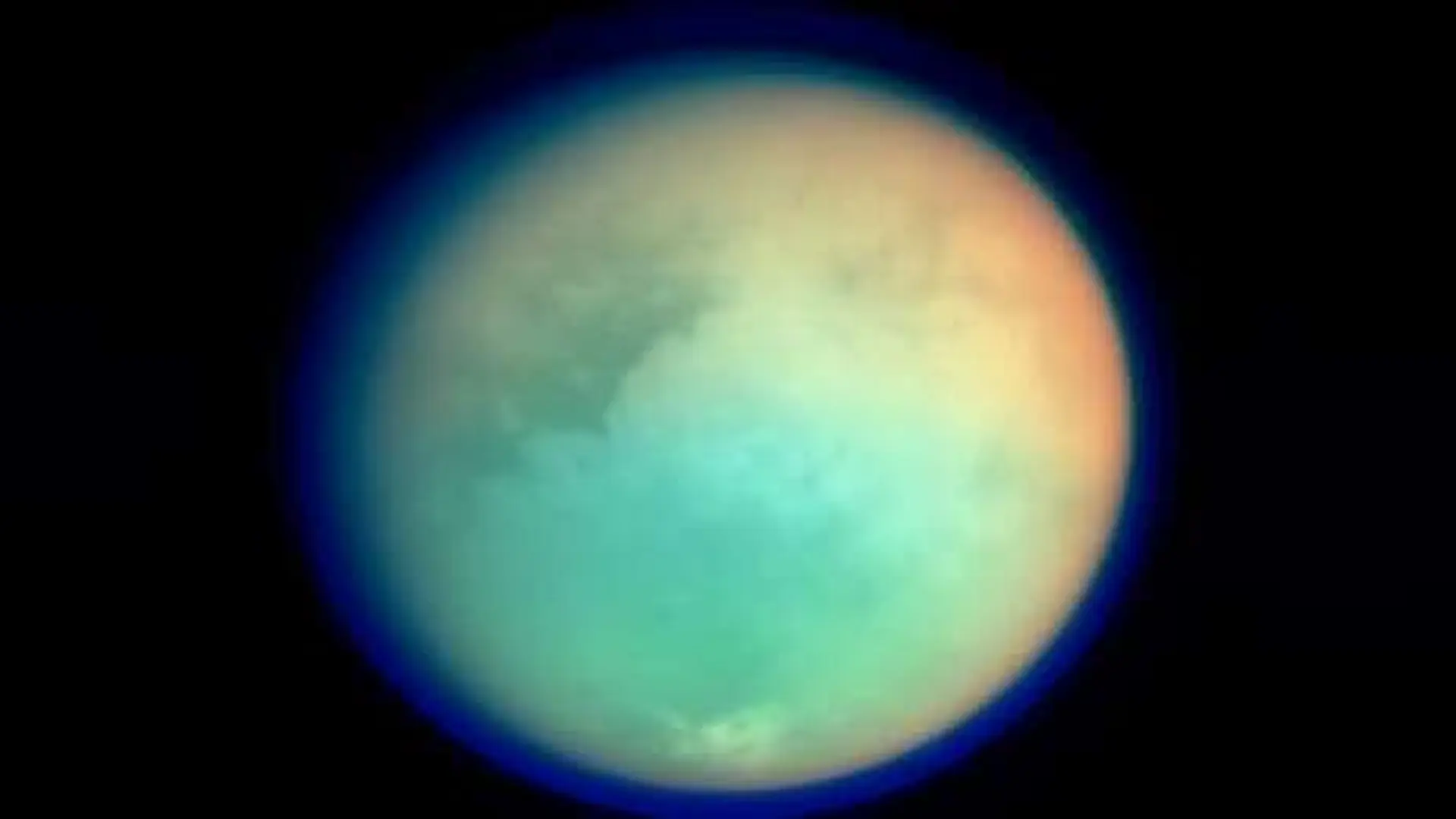
A team of planetary scientists has identified a puzzling spectral feature on the surfaces of Titan and Pluto, a discovery posted on arXiv that could reshape our view of organic chemistry in the outer solar system and inform the search for habitable conditions beyond Earth.
Mysterious Absorption Detected on Titan and Pluto
Both bodies display an unusual absorption pattern that has long defied explanation. Titan’s thick atmosphere, dominated by nitrogen and methane, obscures direct visual study, yet cutting‑edge spectroscopic analysis is now revealing layers of chemistry previously hidden from view. The data indicate that the unidentified material is widespread and may represent a new class of organic compounds.
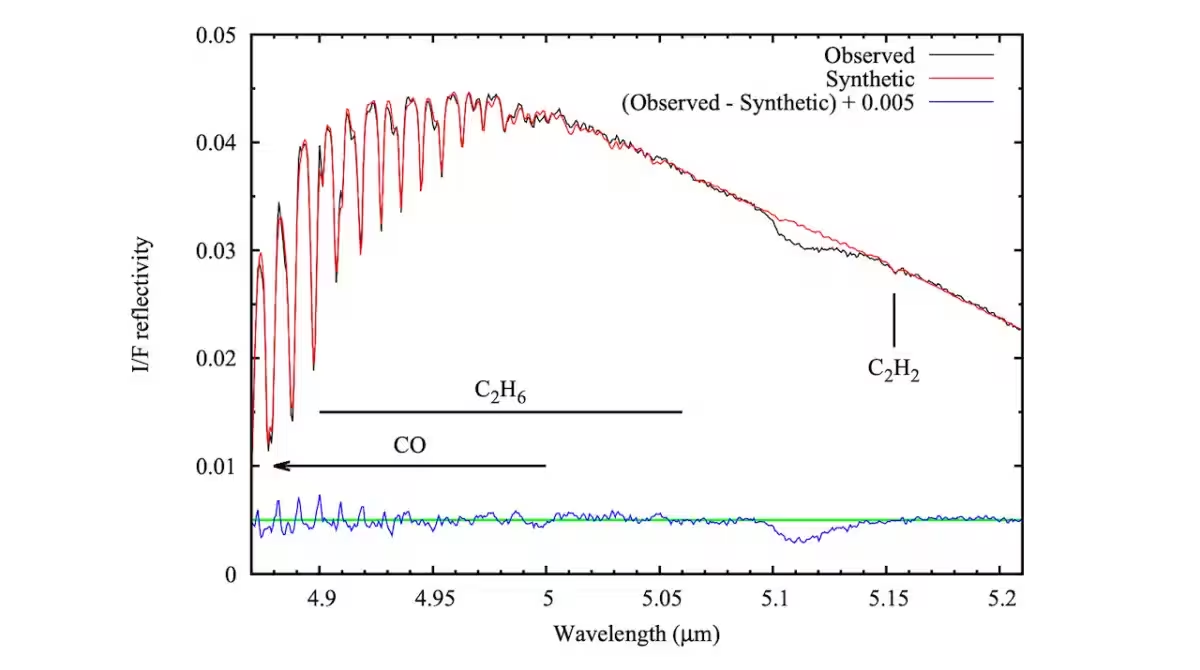
The presence of this feature could illuminate Titan’s prebiotic chemistry, offering clues about the moon’s potential to support life‑like processes. Researchers stress that deciphering these pathways is crucial because Titan remains a prime laboratory for studying complex organics beyond Earth.
How Atmospheric Processes May Create the Unknown Material
“Both atmospheres are mostly nitrogen and methane, so you have, in both, this chemistry in which haze particles are produced and they can snow down and accumulate on the surface,” explains planetary chemist Bézard. Photochemical reactions high in the sky generate the haze, which then drifts downward, forming layered deposits of organic matter.
On Titan, these deposits interact with a mixture of surface ices, sparking reactions that scientists are still working to characterize. A similar mechanism appears to operate on Pluto, despite its thinner atmosphere and greater solar distance, hinting at a shared chemical engine across distant icy worlds.
Researchers compare spectral fingerprints gathered by missions such as Cassini and New Horizons with laboratory models to pinpoint the substance responsible for the odd signature. “We have a few candidates, but it will not be a simple compound,” Bézard notes. “Whatever it is, it will be a surprise.”
What the Find Means for Extraterrestrial Chemistry
If the mysterious absorber proves to be a complex organic material, it could refine models of chemical evolution on frozen bodies and shed light on how life‑essential molecules might arise in environments far from the Sun.
The study, posted on arXiv, combines observational data with laboratory simulations of Titan‑like and Pluto‑like atmospheres to narrow down the identity and role of the material. Ongoing work aims to determine how such compounds form, migrate, and influence the geological and atmospheric history of these remote worlds.
Future exploration concepts for the outer solar system could leverage these insights, prioritizing landing sites or orbital observations that target the newly identified surface compounds for direct analysis.
This article has been fact checked for accuracy, with information verified against reputable sources. Learn more about us and our editorial process.
Last reviewed on .
Article history
- Latest version
Reference(s)
- Bézard, B.. “An unidentified absorption feature at 5.11 $μ$m on the surface of Titan and Pluto from JWST spectroscopy.” arXiv.org <https://arxiv.org/abs/2606.13350>.
Cite this page:
- Posted by Bilal Abbasi