Researchers Have Discovered a 4.5-Billion-Year-Old Meteorite in the Desert Containing Traces of a Moon-Sized World
Ancient meteorite from lost world discovered in Sahara revealing early solar system secrets
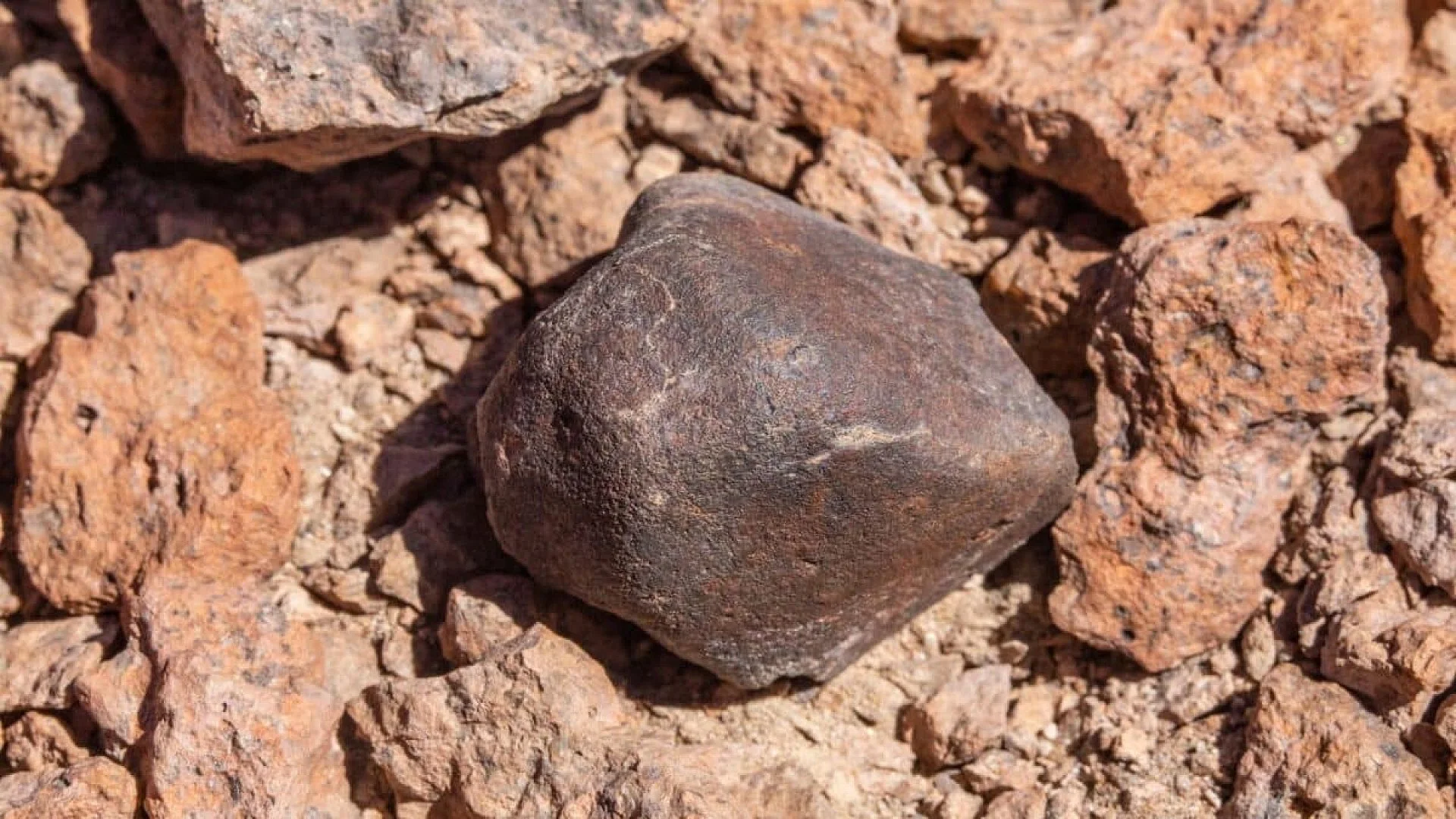
A rock recovered from the Sahara is allowing researchers to peer into a planetary environment that may have vanished long ago. By analysing the composition of this 4.5‑billion‑year‑old fragment, scientists have uncovered clues that it originated inside a sizeable protoplanet that was later broken apart during the tumultuous infancy of the solar system.
Designated NWA 12774, the specimen belongs to the angrite class, one of the most uncommon meteorite groups known. A recent paper in Earth and Planetary Science Letters argues that the body from which it came was considerably larger than the modest asteroids previously associated with angrites.
Only about 68 angrites have been catalogued out of roughly 80,000 meteorites recovered on Earth, making each new analysis a potential window into the first few million years after the Sun ignited. As noted in a press release from the University of Colorado Boulder, NWA 12774 stands out as an especially intriguing example.
Mineral Profile Defies Earlier Expectations
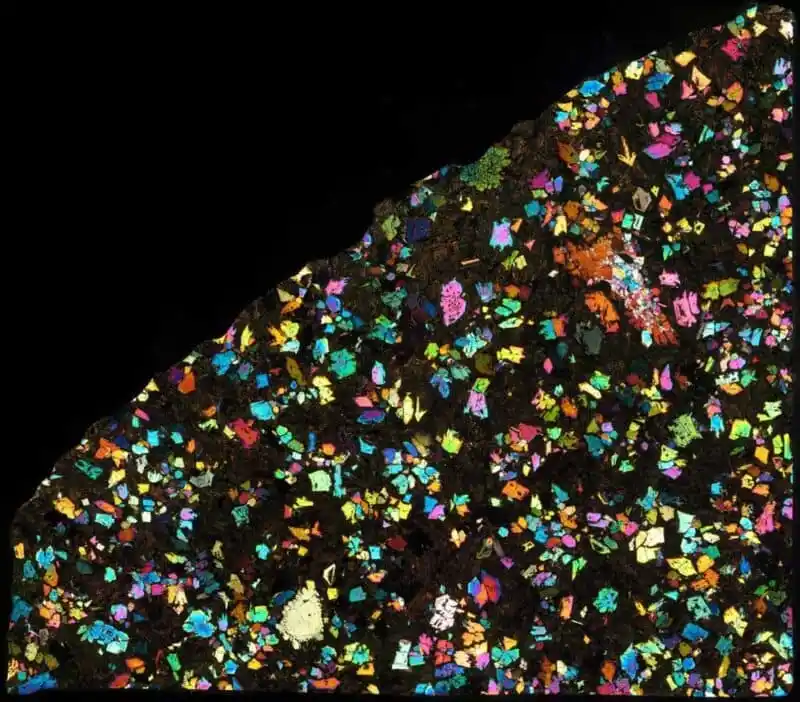
Detailed examinations revealed a composition that clashes with traditional views of angrites. These rocks are typically low in silica—a key component of terrestrial planets such as Earth—leading researchers to assume they derived from relatively small, asteroid‑like sources. However, the presence of clinopyroxene, a mineral common in Earth’s crust and mantle, was unexpected.
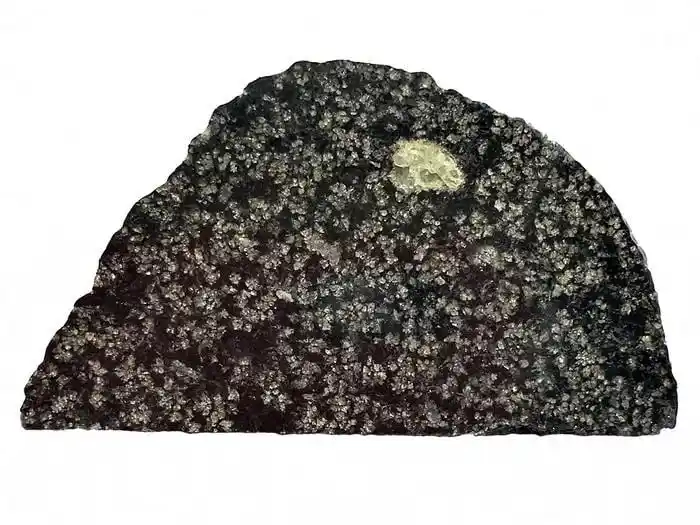
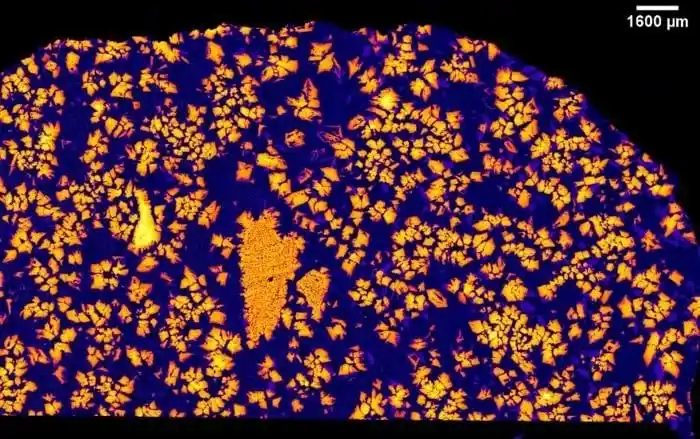
Further inspection showed that the crystals contain unusually high aluminium concentrations. Aaron S. Bell, an Earth scientist at the University of Colorado Boulder and co‑author of the study, emphasized the significance:
“The ingredients that built the angrite source differ fundamentally from those that formed Earth and Mars. This points to a distinct evolutionary route in planetary development during the solar system’s early epochs.” The question then becomes: what kind of object could generate such conditions?
Simulations Indicate High‑Pressure Formation
To address that puzzle, the team created a computational model that estimates the pressure required to produce the observed mineralogy. The modelling effort spanned roughly a year before yielding results.
Published in Earth and Planetary Science Letters, the analysis suggests formation pressures of at least 17.5 kilobars. For perspective, the deepest ocean trench on Earth experiences pressures near one kilobar.
These pressure levels are inconsistent with formation inside a small asteroid, implying that the parent body must have been large enough to sustain such internal forces. The finding reshapes the conventional picture of angrite origins and hints at a planetary‑scale precursor.
Size Estimate Suggests Moon‑Scale Protoplanet
From the pressure constraints, the researchers infer that the source body was at least 1,200 miles in diameter, with the possibility of being even larger. The sharp edges of the mineral grains indicate they likely formed close to the surface, as deeper burial would have altered their shape.
If the material originated near the exterior, the progenitor could have been comparable in size to the Moon (about 2,200 miles across) and perhaps approached the dimensions of Mars.
“Within four million years of the solar system’s birth, you’re creating bodies the size of the Moon,” Bell added. “That represents an extremely rapid accretion timescale.”
The ultimate fate of this hypothesised protoplanet remains uncertain. The authors propose that catastrophic collisions in the early solar system may have shattered the body, dispersing fragments that later merged into Earth and other terrestrial planets.
This article has been fact checked for accuracy, with information verified against reputable sources. Learn more about us and our editorial process.
Last reviewed on .
Article history
- Latest version
Reference(s)
- Ye, Yvaine. “Rare meteorite provides evidence of giant early planet.” CU Boulder Today <https://www.colorado.edu/today/2026/06/01/rare-meteorite-provides-evidence-giant-early-planet>.
- Bell, Aaron S.., et al. “High-pressure clinopyroxene in Northwest Africa 12774 and new geobarometric evidence for a planetary embryo-sized angrite parent body.” Earth and Planetary Science Letters, vol. 685, July 1, 2026, pp. 120029 Elsevier BV, doi: 10.1016/j.epsl.2026.120029. <https://www.sciencedirect.com/science/article/pii/S0012821X26002128?dgcid=author>.
Cite this page:
- Posted by Bilal Abbasi