Astronomers Just Found a Four-Carbon Sugar in Deep Space, and It Didn’t Form the Way Anyone Expected
Scientists find rare sugar in distant space boosting chances for alien life’s building blocks
A team of astronomers has reported the presence of erythrulose, a four‑carbon ketose sugar, inside a massive cloud of gas and dust located close to the Milky Way’s central region. This marks the inaugural detection of a sugar of this size beyond the Solar System.
The findings appear in a paper led by Izaskun Jimenez‑Serra and posted on the arXiv preprint server. Over many years, researchers have catalogued a surprising array of organic compounds within the dense molecular reservoirs that fill interstellar space.
Such discoveries matter because a number of these molecules resemble the chemistry that preceded life on Earth. While erythrulose adds a new piece to that puzzle, its existence in a distant cloud raises fresh questions that scientists are eager to explore.
First Identification of a Four‑Carbon Sugar in Space
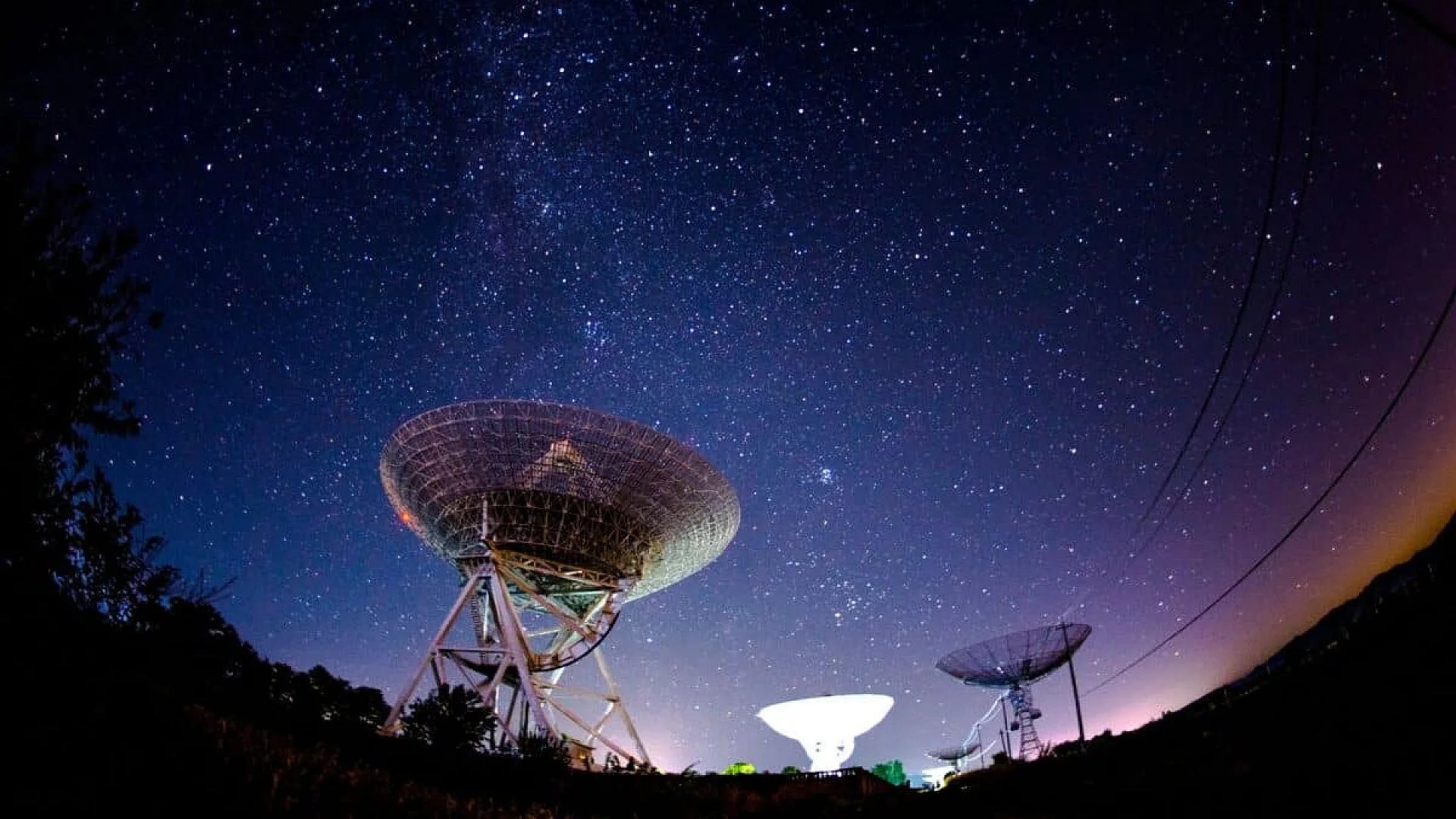
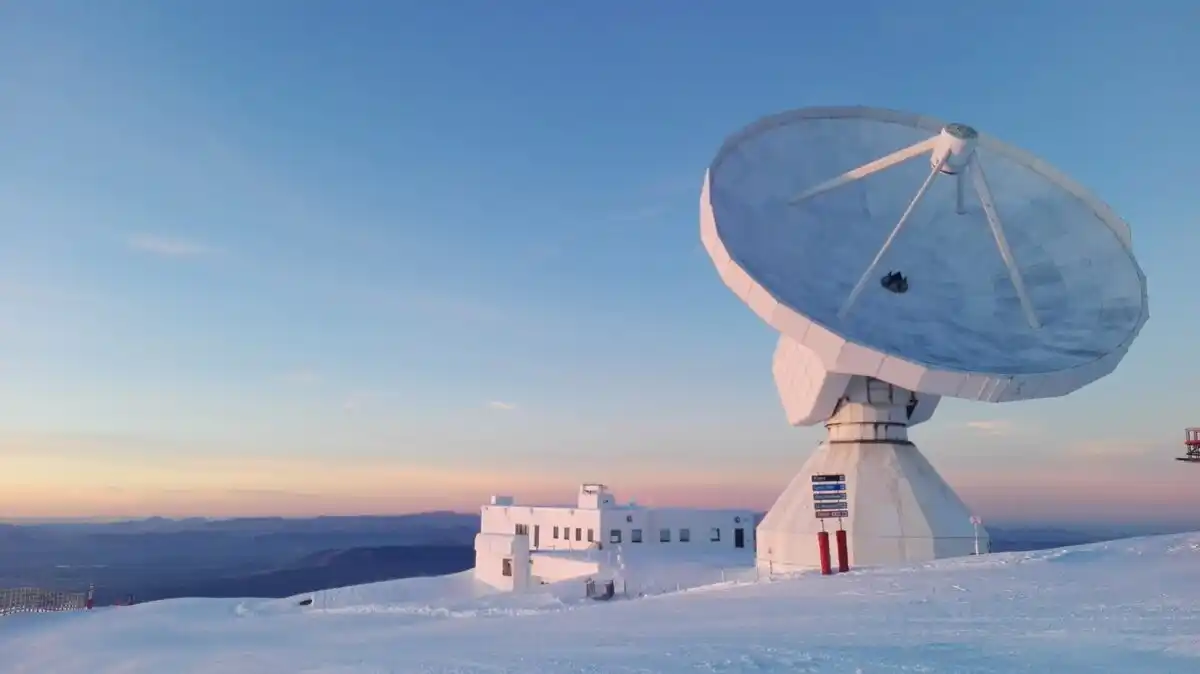
The compound was located in the cloud known as G+0.693‑0.027, a region already celebrated for its rich molecular inventory. Detection relied on data from the 40‑meter Yebes antenna and the 30‑meter IRAM dish, both tuned to capture the faint radio emissions that molecules emit.
The researchers describe in the arXiv preprint that they sifted through a crowded spectral landscape until the characteristic lines of erythrulose emerged. Statistical analysis indicated a false‑alarm probability of just 0.2 %, reinforcing confidence in the identification.
Erythrulose belongs to the ketose family and contains four carbon atoms. Although astronomers have catalogued many larger organic species in interstellar clouds before, this is the first confirmed case of a four‑carbon sugar in the cosmic medium.
Unexpected Chemical Imbalance in the Cloud
Equally striking was the scarcity of three‑carbon sugars, which are often thought to serve as stepping stones toward more complex sugars. The analysis shows erythrulose appears at least eight times more plentiful than glyceraldehyde‑type molecules.
To probe this anomaly, the team employed sophisticated computational models. The simulations suggest the sugar may arise through a pathway that bypasses the expected sequential addition of single carbon atoms.
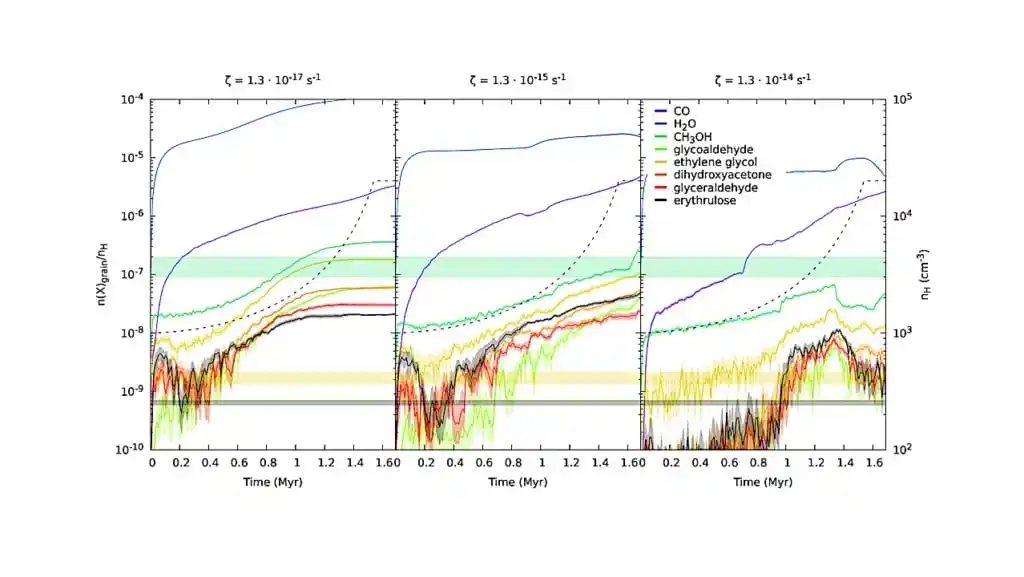
The calculations indicate that two‑carbon fragments may combine on the icy mantles of dust grains, which are constantly bombarded by cosmic rays and hydrogen atoms. This environment could foster the direct assembly of a four‑carbon sugar, eliminating the need for an intermediate three‑carbon stage.
Implications for the Origins of Genetic Molecules
The result is attracting interest because it may shed light on how the first informational polymers formed. Modern organisms rely on DNA and RNA, both built on the five‑carbon sugar ribose—a molecule that is difficult to synthesize under pre‑biotic conditions.
Researchers have proposed that simpler nucleic acid analogues, such as Threose Nucleic Acid (TNA), could have preceded RNA. TNA is based on the four‑carbon sugar threose. The study notes that ketose sugars like erythrulose can isomerize into aldose sugars such as threose when liquid water is present.
By linking erythrulose to a potential precursor of TNA, the discovery provides a concrete chemical bridge between interstellar organics and molecules that could have seeded early Earth. The authors also point out that the Late Heavy Bombardment—a period of intense asteroid and comet impacts—likely delivered vast amounts of organic material, including compounds like those identified in this cloud, to the young planet.
This article has been fact checked for accuracy, with information verified against reputable sources. Learn more about us and our editorial process.
Last reviewed on .
Article history
- Latest version
Reference(s)
- Jimenez-Serra, Izaskun. “Detection of a four-carbon sugar in interstellar space.” arXiv.org <https://arxiv.org/abs/2606.03313>.
Cite this page:
- Posted by Bilal Abbasi