Scientists Confirm Stonehenge’s 6-Ton Altar Stone Was Carefully Chosen and Moved by Humans, Not Ice
Massive Stonehenge boulder’s arrival debunked as natural phenomenon new study reveals
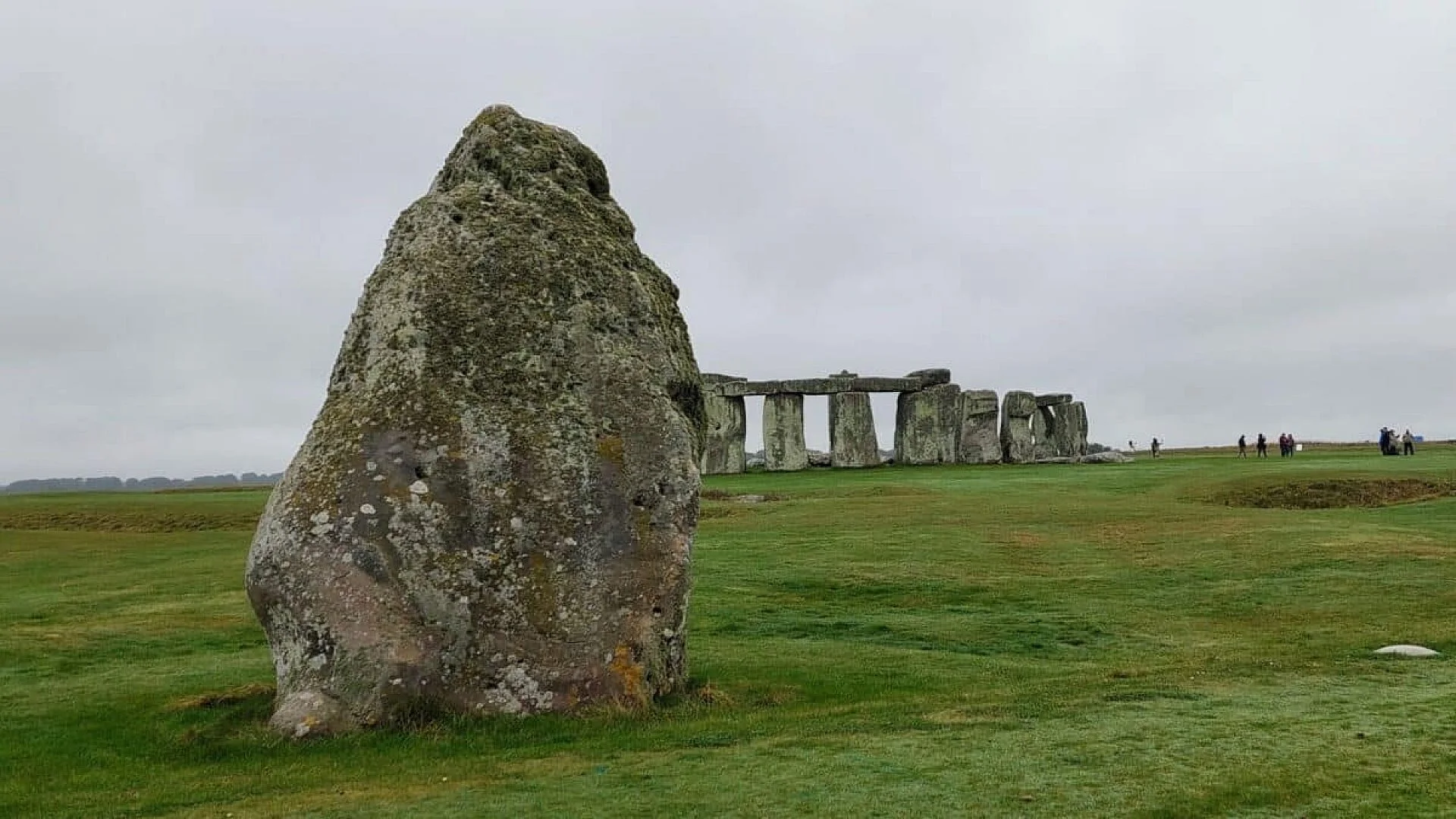
The imposing sandstone block that dominates the centre of Stonehenge has confounded archaeologists for generations. Weighing close to six tonnes and extending roughly five metres, the monolith is believed to have originated in north‑east Scotland, yet new research shows that glacial transport is improbable. The balance of evidence points to human hands moving the stone over an extraordinary journey.
For about 4,500 years it has lain partially sunken within the monument’s inner circle, serving as a pivotal element of the ancient layout. Pinpointing its source helps scholars reconstruct the logistical capabilities and material preferences of the monument’s builders.
Tracing the Stone’s Provenance
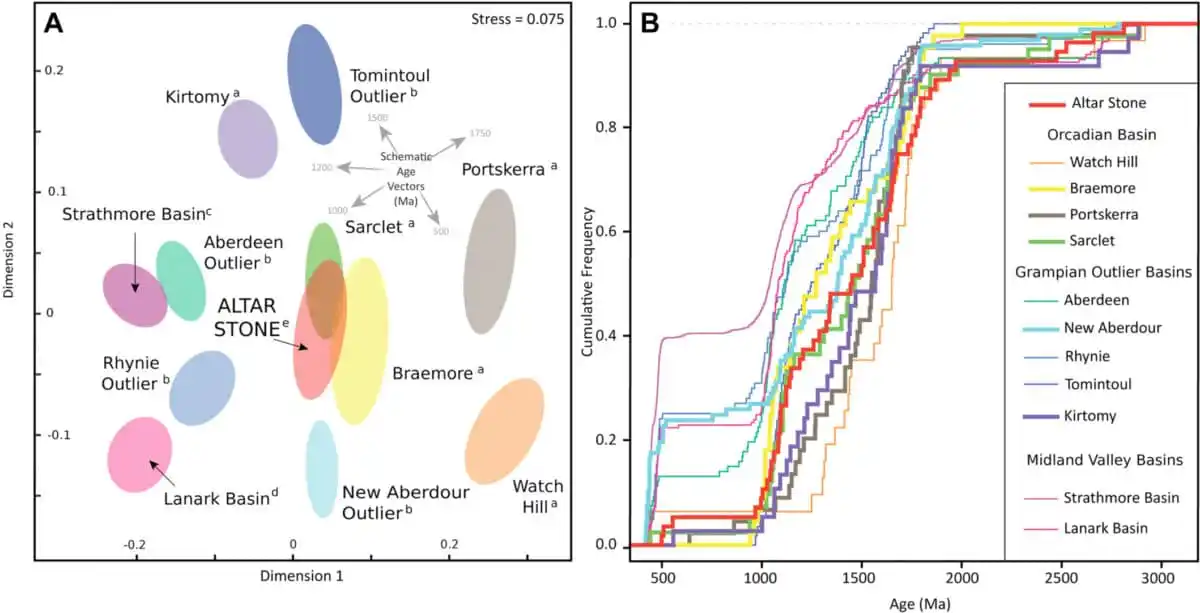
Debate has raged over whether the block arrived by natural forces or deliberate effort. Chemical profiling led Anthony Clarke of Curtin University to identify the rock as a sandstone from the Orcadian basin in north‑east Scotland.
“We can get an age and the chemical composition for each of those grains and build up a fingerprint, which we can then forensically compare to other rocks throughout the UK and Ireland.”
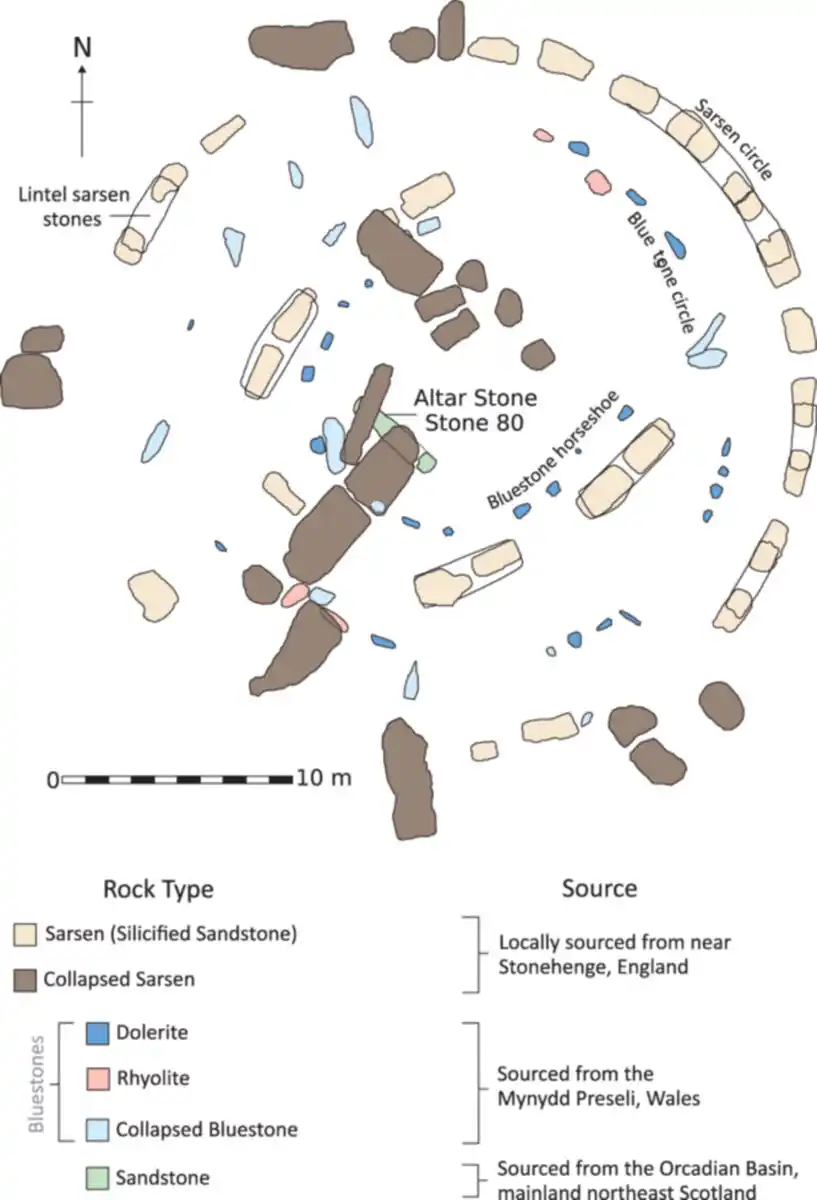
In a 2024 investigation, Clarke’s team matched the stone’s mineral signature to outcrops in the Orcadian basin, confirming a provenance in north‑east Scotland and estimating a transport distance of roughly 750 kilometres across Britain.
Was Glacial Drift a Viable Theory?
Before the geochemical “fingerprint” was established, some scholars suggested that the last ice age might have carried the block. The hypothesis was examined in a paper published in Journal of Quaternary, where ice‑flow simulations and stratigraphic data were employed to test the idea.
Clarke explained that the dominant glacial movement from the Orcadian region was northward, with only a modest southward component that deposited debris on Dogger Bank, a submerged ridge in the North Sea. Had ice delivered the stone there, the human transport leg would have been reduced by a few hundred kilometres.
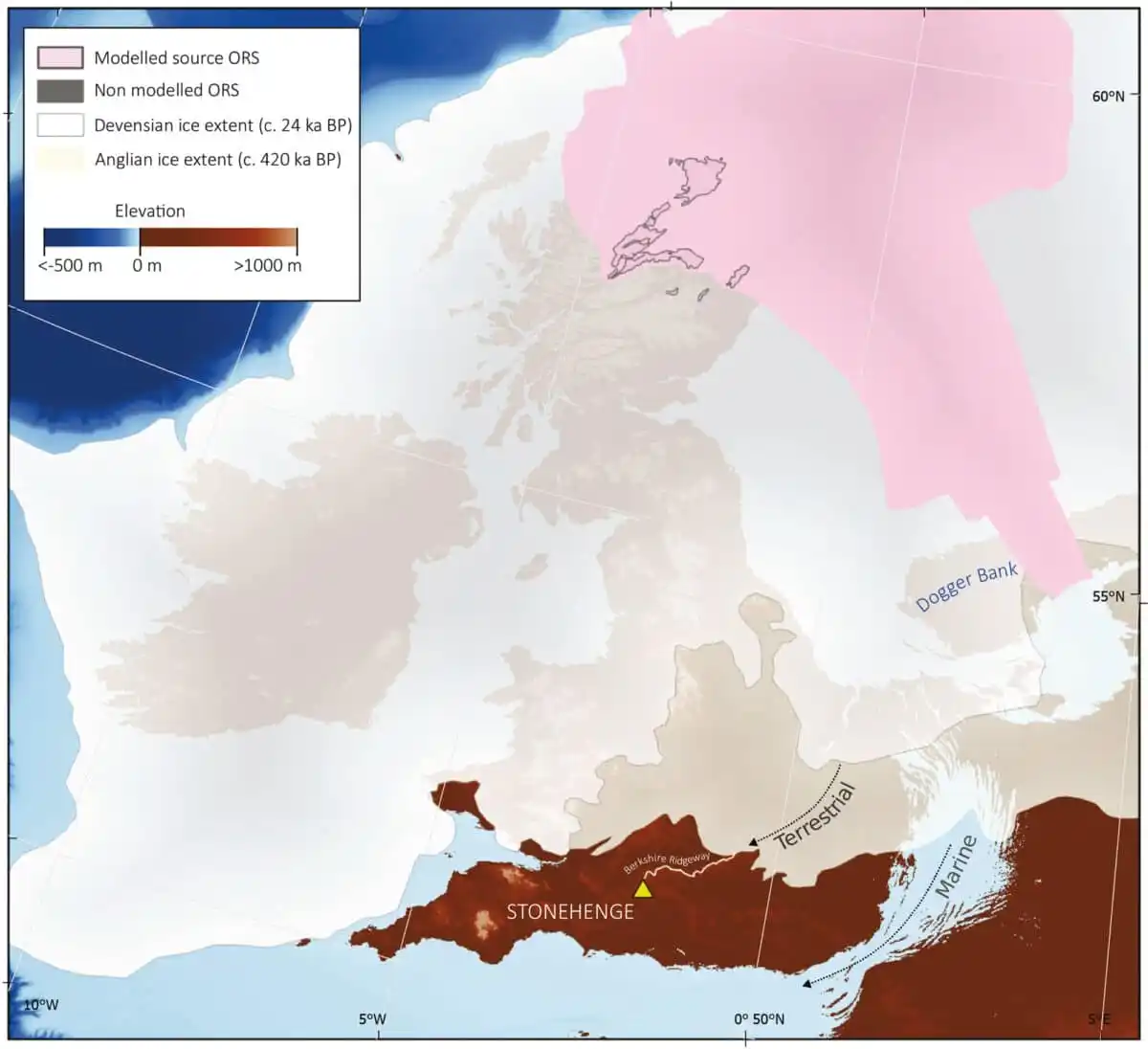
Chronology undermines the glacial scenario: Dogger Bank became submerged around 8,000 years ago, whereas Stonehenge’s construction is dated to roughly 5,000 years ago. The authors noted that invoking glacial transport would require “an increasingly elaborate set of circumstances,” making human agency the far more plausible explanation.
How Prehistoric Builders Moved Massive Stones
Transporting a six‑tonne block over hundreds of kilometres may appear daunting, yet other sarsen stones at the site weigh between 25 and 30 tonnes and were moved by prehistoric crews across tens of kilometres.
“These people that erected Stonehenge weren’t in any rush. This could have been much like the pyramids, a multi-year endeavor, so it doesn’t need to happen on our modern timescales of months,” explained Clarke.
Clarke draws a parallel with modern material choices, asking why societies favor particular rocks for aesthetic or symbolic reasons. He adds, “Why do we select marble from Italy for our kitchens? Why do we select certain gemstones to wear around our necks? Humans have always had a fascination with finding the right rock.”
The provenance study underscores that Stonehenge’s construction involved deliberate material selection, not merely the relocation of any stone. Ongoing sampling may eventually pinpoint the exact outcrop in north‑east Scotland that yielded the altar stone.
This article has been fact checked for accuracy, with information verified against reputable sources. Learn more about us and our editorial process.
Last reviewed on .
Article history
- Latest version
Reference(s)
- “Public Staff Profile - Staff Portal.”, April 12, 2019 Staff Portal <https://staffportal.curtin.edu.au/staff/profile/view/anthony-clarke-2d868ecb/>.
- Clarke, Anthony J. I.., et al. “From Highlands to Henge: Refining the Provenance and Transport Pathways of Stonehenge's Altar Stone.” Journal of Quaternary Science, June 4, 2026 Wiley, doi: 10.1002/jqs.70080. <https://onlinelibrary.wiley.com/doi/10.1002/jqs.70080>.
Cite this page:
- Posted by Bilal Abbasi