The Rubber Keeping Undersea Tunnels Sealed Is Breaking Down from Within Faster Than Anyone Expected
Engineers built undersea tunnels to last a century yet rubber seals quietly fail sooner
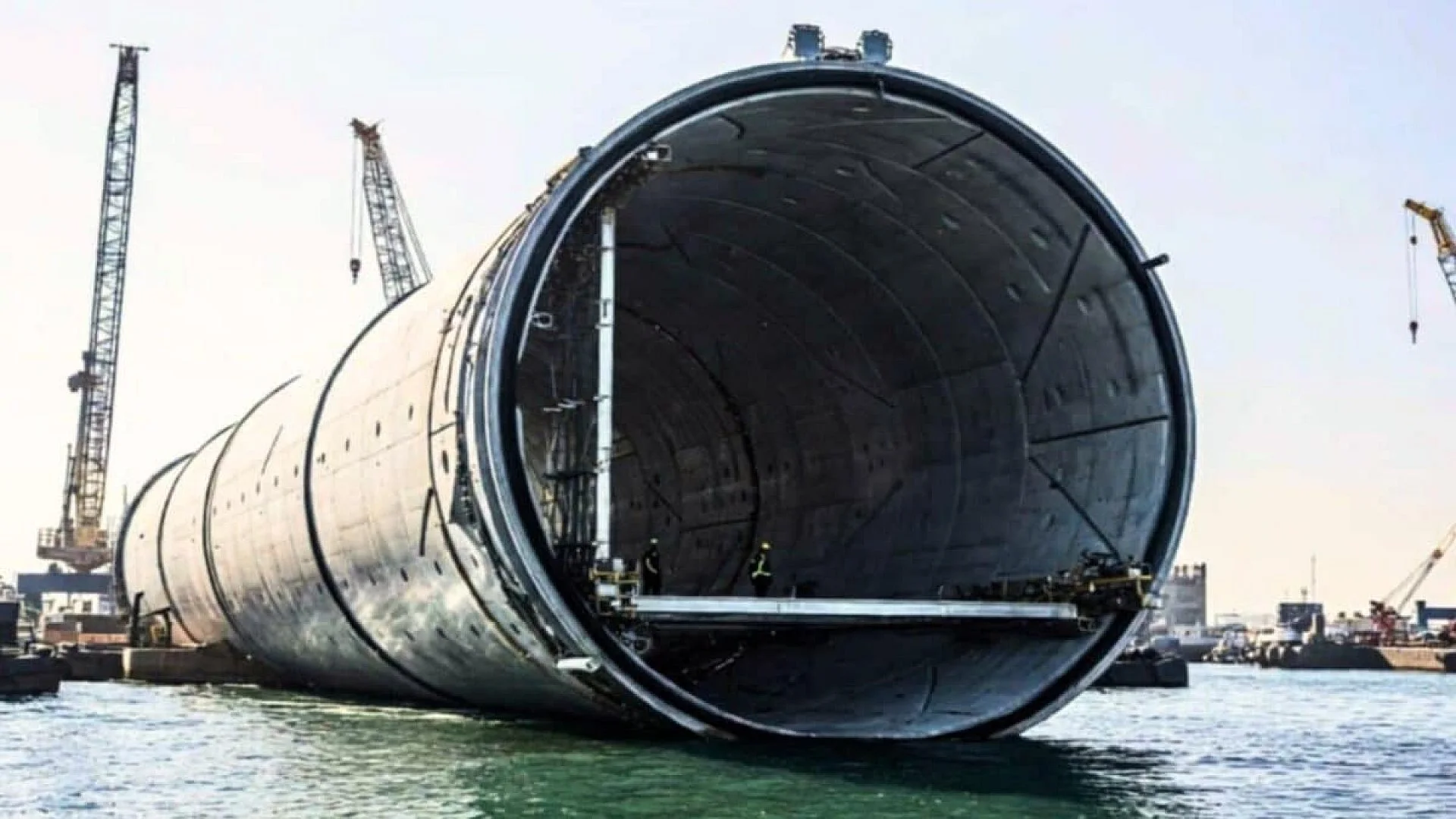
A new investigation by researchers at Shijiazhuang Tiedao University shows that the rubber gasket used to seal the joints of immersed undersea tunnels loses its waterproofing capacity much faster than earlier calculations suggested. The study, which combined sustained compression with seawater exposure, reveals a substantial shortfall in the long‑term contact pressure that the seal can generate.
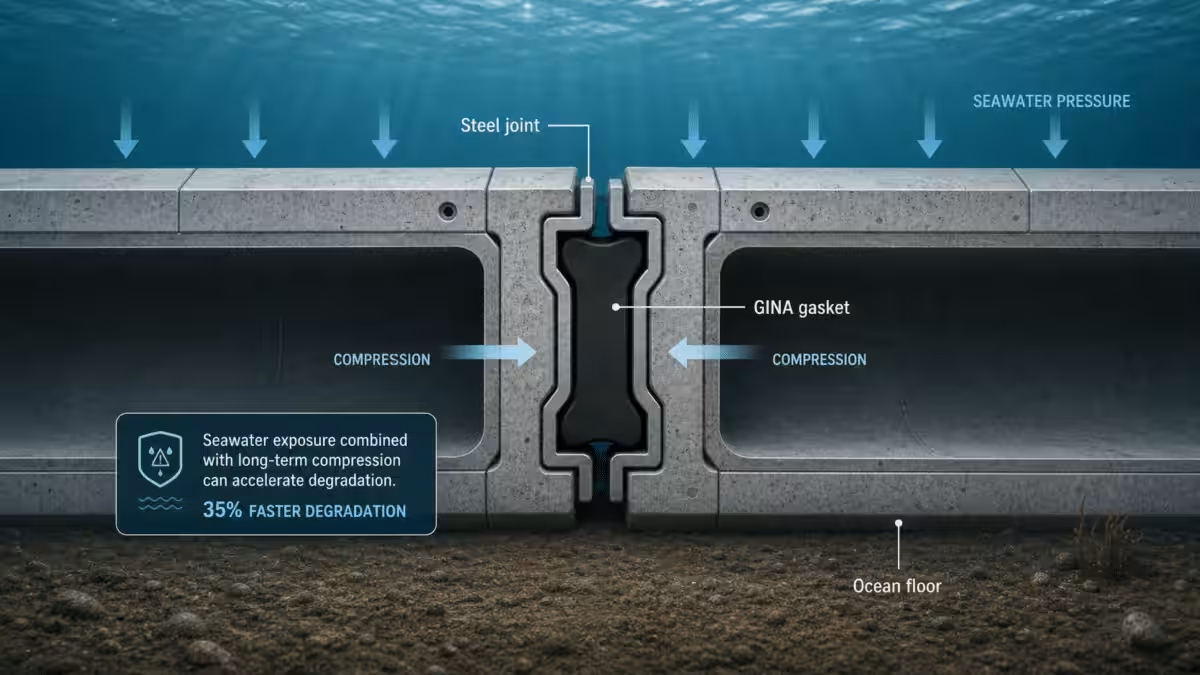
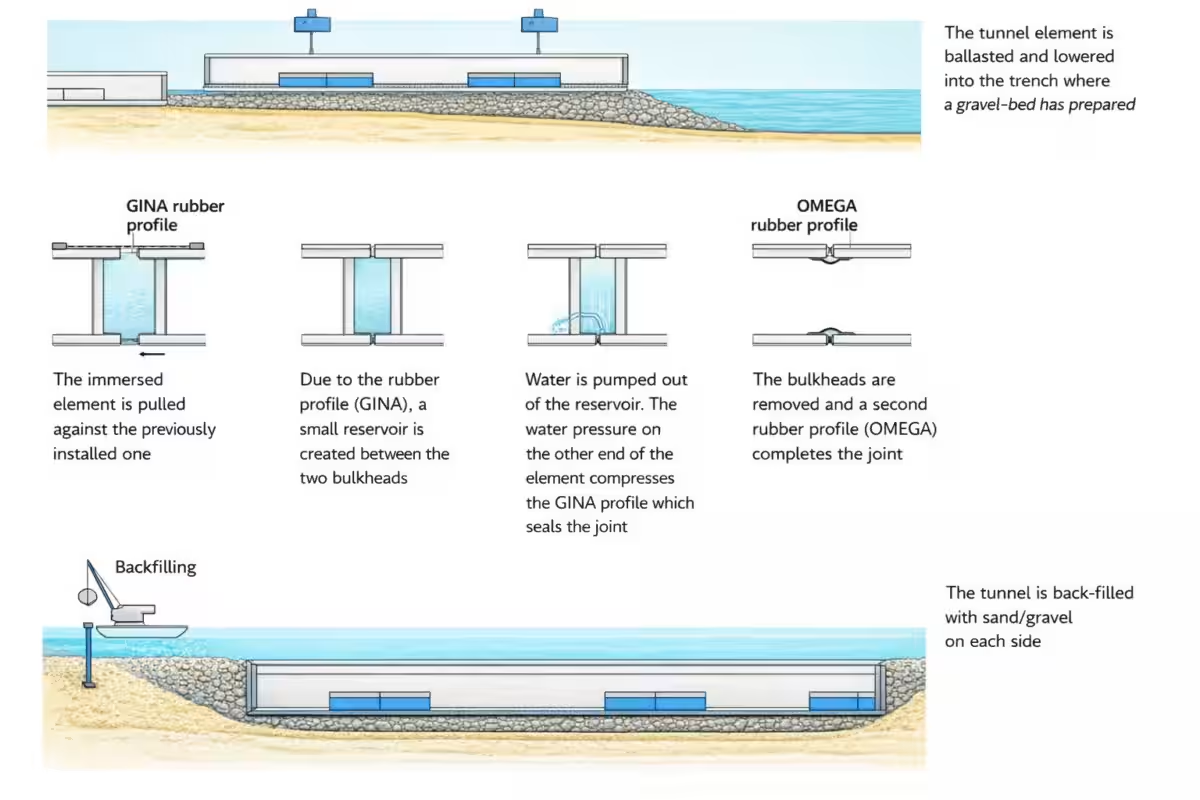
The component, known as the GINA gasket, is a dense rubber strip sandwiched between steel end caps at each joint of prefabricated tunnel sections. When the sections are lowered into a trench on the seabed, the gasket is compressed, creating an outward pressure that blocks seawater from infiltrating the joint. This load remains in place from the moment the tunnel is closed.
To evaluate real‑world performance, the team extracted samples from the operational Yuliangzhou tunnel in China and subjected them to a custom‑built rig that simultaneously applied constant compression and continuous seawater contact. Results were published in Tunnelling and Underground Space Technology.
Combined stress reveals faster degradation
Earlier research had examined only the effects of seawater on gasket material, overlooking the mechanical stress that the seal endures daily. When both factors were introduced together, the gasket’s sealing force declined dramatically. The revised model predicts a contact pressure of 1.51 MPa after a century—down from the previously estimated 2.32 MPa, a reduction of roughly 35 percent. Overall, the gasket loses about 67.66 percent of its original sealing capability over the simulated service life.
The minimum pressure required to prevent leakage is set at 0.61 MPa. Although the new 100‑year estimate remains above that threshold, the safety margin is far tighter than designers had assumed, leaving less room for variables such as sediment movement, construction tolerances, or gradual joint shift.
Hardness increase masks loss of elasticity
During the accelerated aging tests, the gasket’s measured hardness rose by 14.18 percent and its density grew by 5.88 percent. A field engineer relying on visual inspection or a standard durometer would likely conclude that the rubber remained robust. In reality, the polymer network that provides elasticity was fracturing at the molecular level.
The authors note that the temperature at which the rubber stiffens shifted upward by roughly 5.8 °F. This paradox—harder material yet weaker sealing force—highlights why hardness alone is an unreliable indicator of waterproofing performance.
Degradation followed a three‑stage curve: an initial rapid drop, a slower steady decline, and a final tapering phase. Accelerated testing detected significant internal changes within just 90 days, indicating that a sizeable portion of performance loss can occur well before the nominal design life expires.
Lower edge proves most vulnerable
Not all sections of the gasket experience the same load. The bottom edge endures the lowest contact stress, making it the weakest point. Earlier measurements on the Yuliangzhou tunnel showed that once the gap between adjoining sections exceeds about 1.85 inches, the seal’s ability to block water deteriorates sharply.
Rotational misalignment of tunnel sections further aggravates the issue by altering the pressure distribution and shifting the seal away from the lower edge. Thus, the geometry of each joint, not just the material chemistry, dictates when and where leaks will emerge.
Calls for revised monitoring and design practices
The researchers propose that operators prioritize direct measurement of joint contact stress—especially at the gasket’s lower edge—rather than relying on surface hardness as a proxy for seal health. Incorporating both compression and seawater aging data into rubber compound selection and initial compression targets could improve the reliability of future immersed tunnels.
By treating the 100‑year design benchmark as the start of a proactive maintenance regime, operators can schedule inspections and interventions based on actual load distribution and geometry, rather than on average seal condition alone.
This article has been fact checked for accuracy, with information verified against reputable sources. Learn more about us and our editorial process.
Last reviewed on .
Article history
- Latest version
Reference(s)
- “Redirecting.” <https://linkinghub.elsevier.com/retrieve/pii/S0886779825008909>.
Cite this page:
- Posted by Bilal Abbasi