Scientists Reveal the Strange Deep-Sea Creature That Can Devour an Entire Whale Skeleton and Survive for Years
Scientists discover bizarre deep-sea creatures thriving around whale falls on ocean floors
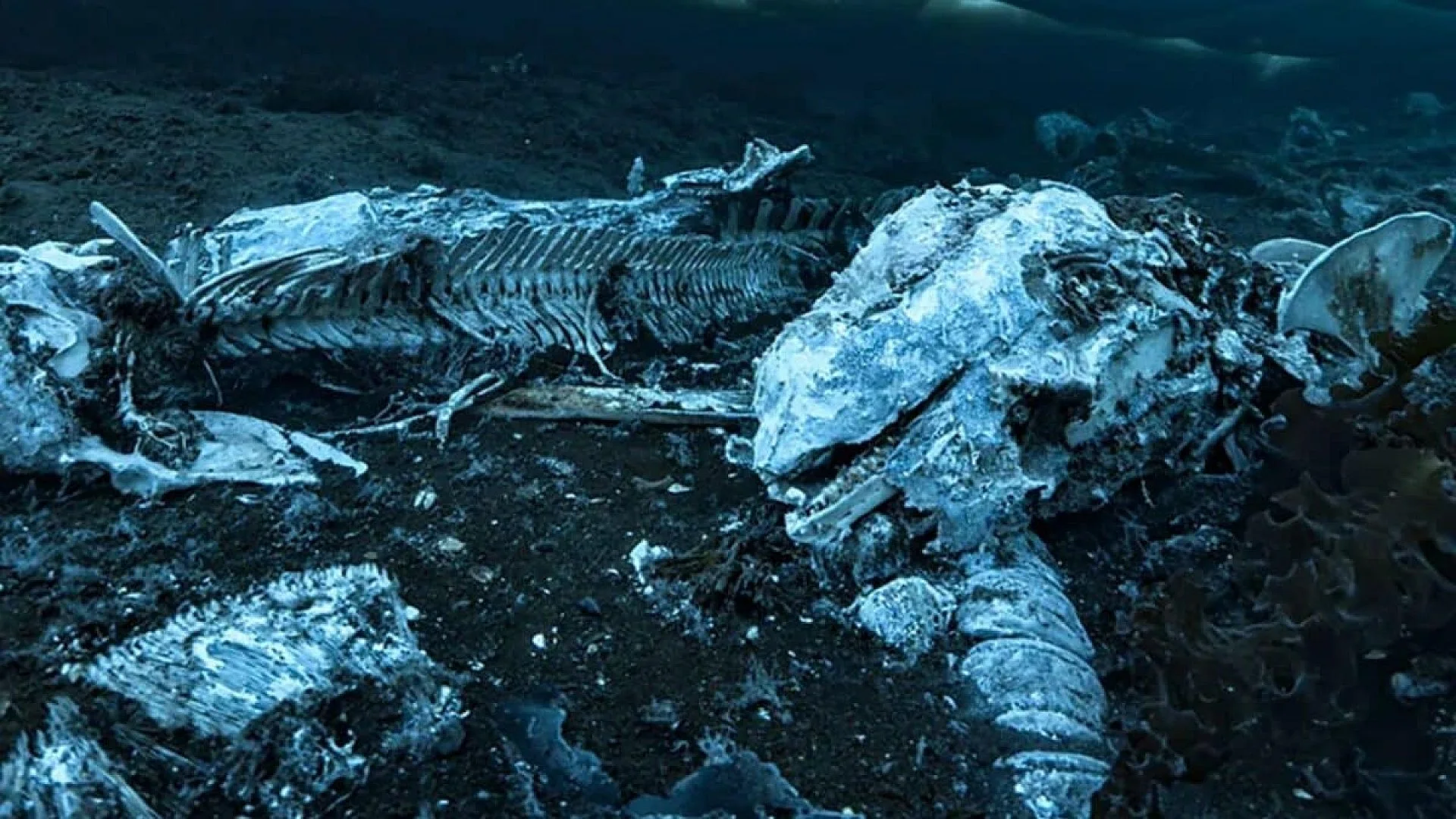
When a whale dies and its body sinks into the abyss, the massive supply of meat, blubber and bone transforms the seafloor into a rare feast. A single carcass can contain enough nutrients to sustain entire ecosystems for years, turning an otherwise barren trench into a bustling hotspot of deep‑sea life.
Rapid arrival of large scavengers
The first responders are predators that can smell a meal from miles away. According to Adrian Glover, a deep‑sea ecologist at London’s Natural History Museum, these early arrivals include sleeper sharks, hagfish and swarms of scavenging amphipods. Their initial task is to strip away the soft tissues, exposing the whale’s skeleton underneath. This “mobile scavenger stage” can endure for several years, as reported by BBC News, which highlights the unusual role of hagfish—animals that possess a skull but lack a vertebral column and feed by burrowing into the carcass from the inside.
Rattail fish, which can dwell at depths of up to 4,000 meters, also converge on the remains. Their large eyes detect faint bioluminescence, while chin barbels and a keen sense of smell guide them to carrion hidden in the darkness.
Bone‑eating worms dominate the later phase
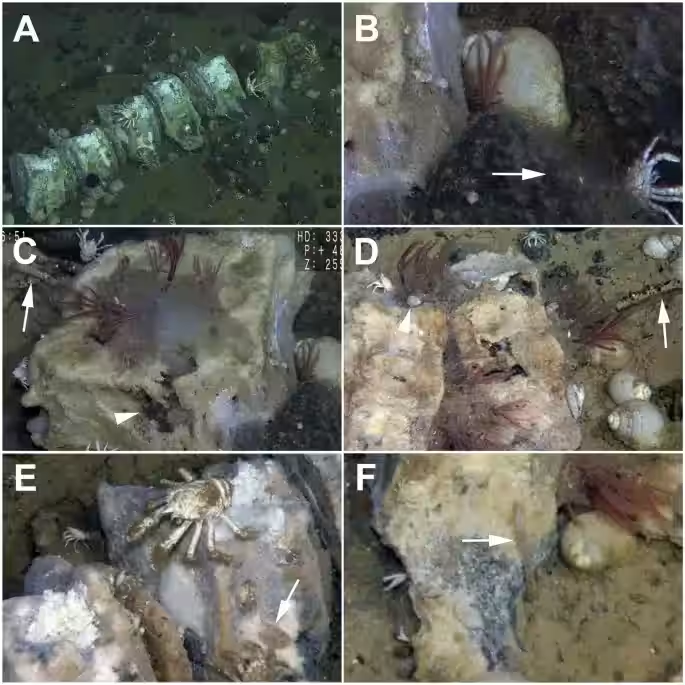
As the flesh disappears, a new suite of organisms takes over, most notably the polychaete worms of the genus Osedax. First identified on a whale skeleton in 2005, the species Osedax mucofloris earned the nickname “bone‑eating snot‑flower.” During the enrichment‑opportunist stage, these worms appear in massive numbers, using acidic secretions to dissolve bone and access the embedded collagen.
Glover explained that the worms “inject acid into the bones, allowing them to break down the material and access nutrients trapped inside.” Greg Rouse, curator of benthic invertebrates at the Scripps Institution of Oceanography, added:
“They decalcify the bone, getting to the collagen,” he said. “The bone then becomes very spongy and can be torn apart by crabs and other scavengers.”
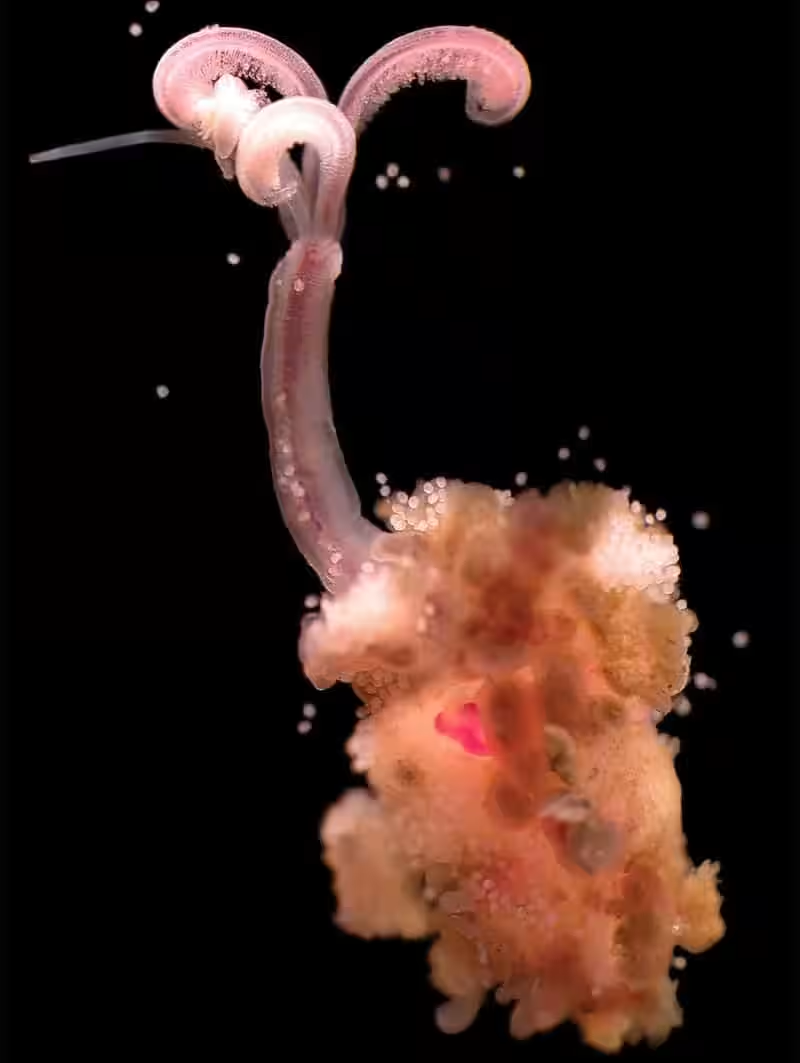
A single whale fall can host a full life cycle of Osedax, from settlement to reproduction and eventual die‑off, over a span of a decade. Before the skeleton is exhausted, the worms release larvae that drift with currents, increasing the odds of colonizing another deep‑sea carcass.
Sulphur‑driven communities extend the lifespan of the carcass
Even after bone‑eaters have largely consumed the skeleton, microbes continue to transform the remaining organic matter. In the sulphophilic phase, bacteria break down residual compounds within the bones, releasing hydrogen sulfide. This chemical fuels chemosynthetic organisms that rely on chemical energy instead of sunlight.
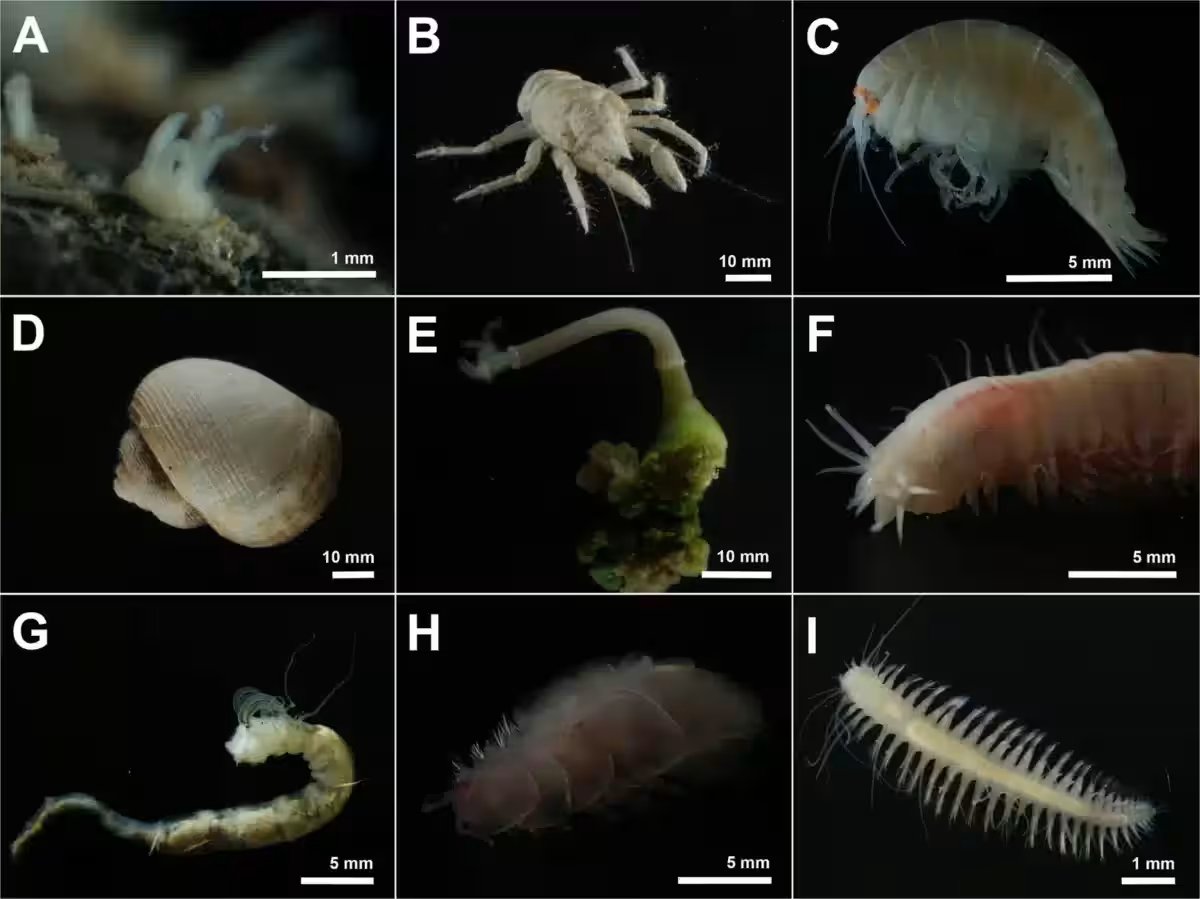
The BBC notes that many of these microbes form symbiotic relationships with invertebrates, supplying the majority of their nutritional needs. This sulfur‑based ecosystem can endure for as long as fifty years, allowing a single whale’s remains to sustain a complex community long after the animal’s final breath.
“The ability of organisms to evolve to exploit these remarkable, weird, amazing adaptations to these unusual environments… we’re constantly surprised,” Glover said.
This article has been fact checked for accuracy, with information verified against reputable sources. Learn more about us and our editorial process.
Last reviewed on .
Article history
- Latest version
Reference(s)
- “Adrian Glover | Natural History Museum.” <https://www.nhm.ac.uk/our-science/people/adrian-glover.html>.
- Latham, Katherine. “'We’re constantly surprised': The strange deep-sea creatures that eat whales.”, March 14, 2026 BBC <https://www.bbc.com/future/article/20260311-the-strange-deep-sea-creatures-that-eat-whales>.
- <https://grouse.scrippsprofiles.ucsd.edu/>.
Cite this page:
- Posted by Bilal Abbasi