French Engineers Created a Material 10 Times Tougher Than Conventional Ceramics Using Only a Freezer
What if a cutting-edge material with extraordinary properties didn’t rely on complex synthetic chemistry? A group of researchers in France has introduced a ceramic that defies the limitations of traditional substances.
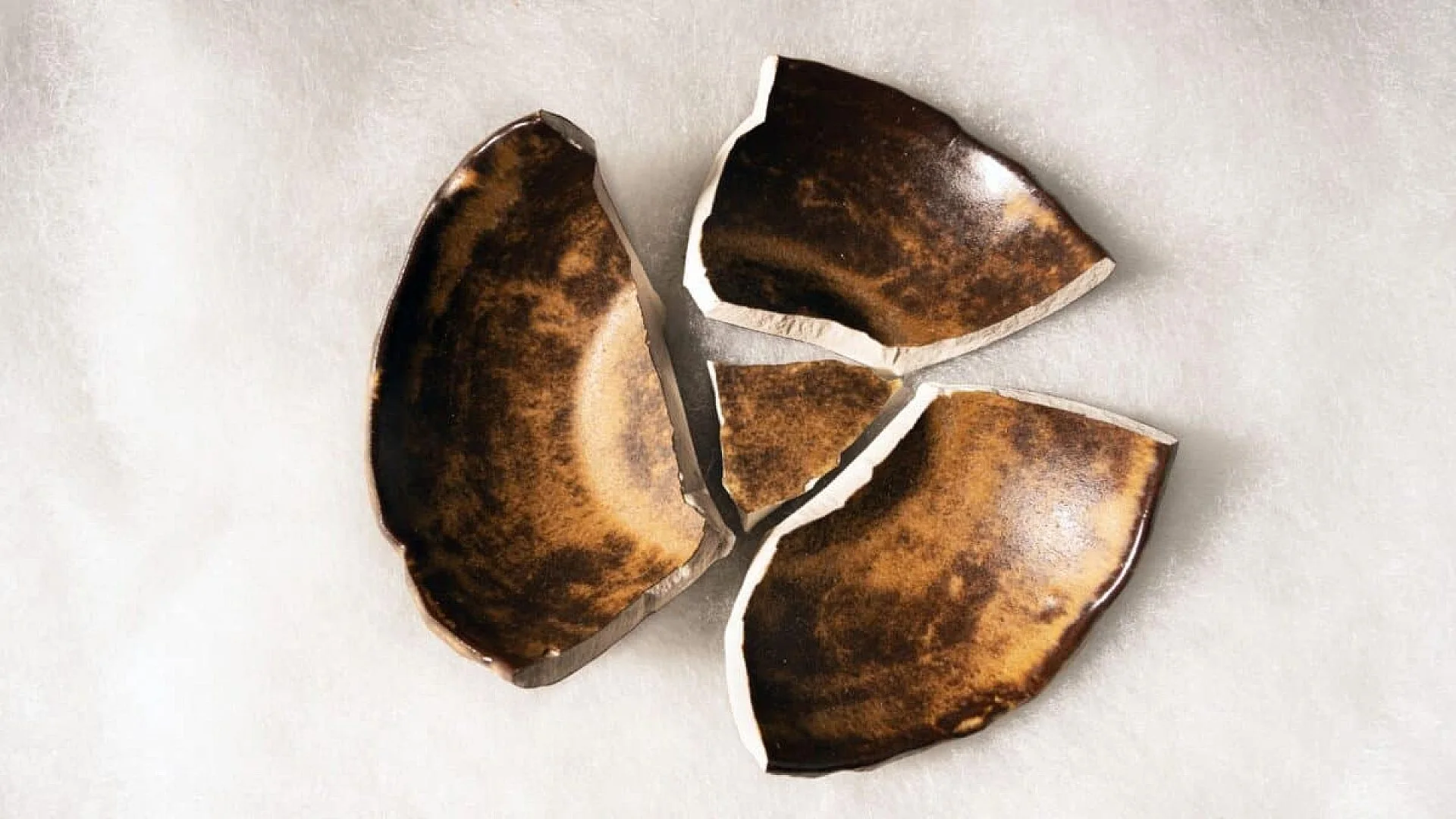
Scientists in France have created a revolutionary ceramic material that is ten times more durable than conventional ceramics by harnessing the power of water, alumina powder, and precise temperature control. Inspired by the unique architecture of nacre, the material found in abalone shells, the researchers have successfully replicated a natural structure that slows the spread of cracks.
Ceramics are widely used in industry due to their exceptional hardness, rigidity, and heat resistance. However, their primary weakness lies in their brittleness, which makes them prone to cracking and breaking under stress or impact.
To address this issue, the French researchers developed a bioinspired material that boasts fracture resistance up to 10 times greater than traditional ceramics.
Nacre’s Secret to Strength
The project drew inspiration from nacre, the material lining the shells of abalone and other mollusks. Composed mainly of aragonite, a brittle mineral form of calcium carbonate, nacre displays remarkable resistance to fracture despite its composition.
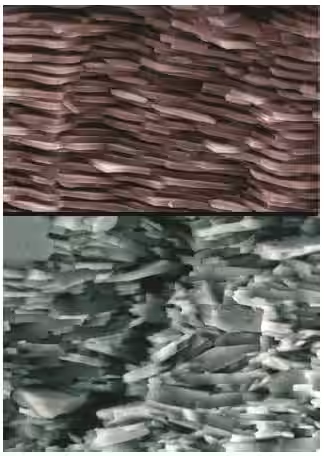
According to a press release by ENS Lyon, the explanation for nacre’s strength lies in its internal organization. The material is built from microscopic mineral layers assembled like bricks and connected by biological matter acting as mortar. When a crack forms, it cannot move in a straight line, but instead must weave around each layer, losing energy along the way.
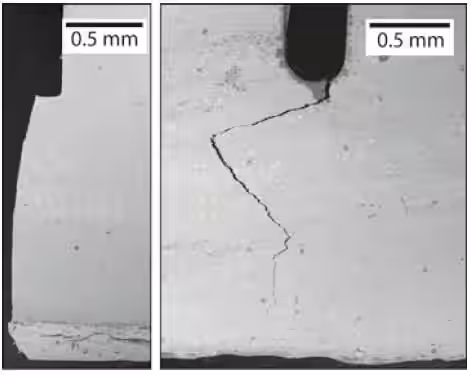
Researchers attempted to recreate this structure using ceramic particles, focusing on organizing its architecture rather than altering its chemistry. This choice ultimately shaped the entire process.
Ice Crystals Shape the Ceramic
The manufacturing process begins with microscopic alumina platelets suspended in water. The suspension is then cooled under carefully controlled conditions to direct the growth of ice crystals.
As reported by the paper available on Nature Materials, the growing ice crystals push the alumina particles aside, forcing them to align into stacked layers. Once the ice is removed, the remaining porous structure is densified at high temperature to produce a solid ceramic.
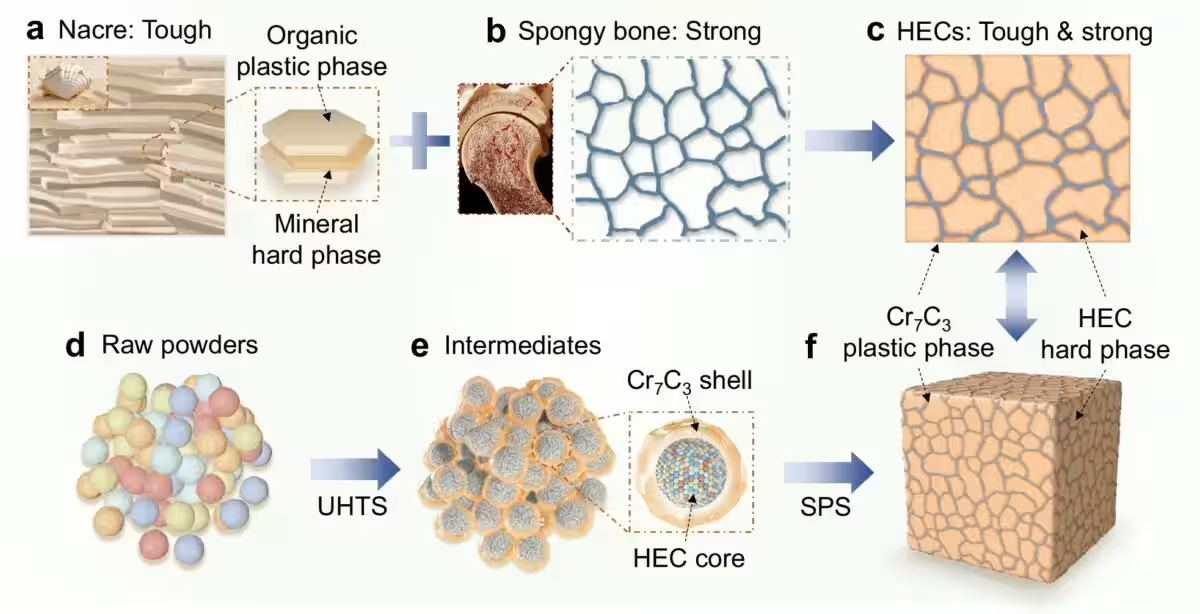
The resulting architecture resembles natural nacre. Cracks moving through the material are repeatedly diverted around the aligned alumina platelets rather than crossing directly through the ceramic.
Researchers reported that this mechanism improves toughness by a factor of 10 compared with conventional ceramics. Fractures are not completely prevented, but their progression becomes far harder to sustain.
Built for Extreme Conditions
The ceramic maintains its properties at temperatures of at least 600 °C, according to the research teams. That temperature range exceeds the limits of many polymer-reinforced systems currently used to improve toughness.
The process could also be adapted to other ceramic powders, provided they are available in platelet form. The National Institute of Applied Sciences of Lyon explained that the manufacturing method is therefore linked to structural organization rather than to alumina alone.
Researchers say the material could eventually be used in industries facing extreme heat and mechanical stress, including aerospace, energy systems, and industrial furnaces. The study also pointed out to possible applications in ballistic protection. Alumina ceramics are already found in some armor plates, and making them tougher without adding extra weight could significantly improve their impact resistance.
The research also stands out for the simplicity of its ingredients. Alumina is one of the most abundant oxides on Earth, and the process relies on relatively simple physical effects involving freezing and particle movement.
This article has been fact checked for accuracy, with information verified against reputable sources. Learn more about us and our editorial process.
Last reviewed on .
Article history
- Latest version
Reference(s)
- “Un matériau innovant inspiré de la nacre dix fois plus tenace qu'une céramique classique.” <https://www.ens-lyon.fr/actualite/lecole/medias-et-presse/un-materiau-innovant-inspire-de-la-nacre-dix-fois-plus-tenace>.
- Bouville, Florian. “Strong, tough and stiff bioinspired ceramics from brittle constituents - Nature Materials.”, vol. 13, no. 5, pp. 508-514. Nature, doi: 10.1038/nmat3915. <https://www.nature.com/articles/nmat3915>.
- “Un matériau innovant inspiré de la nacre dix fois plus tenace qu’une céramique classique.”, October 1, 2014 INSA Lyon <https://www.insa-lyon.fr/fr/un-mat%C3%A9riau-innovant-inspir%C3%A9-de-la-nacre-dix-fois-plus-tenace-qu%E2%80%99une-c%C3%A9ramique-classique>.
- Ross, Lisa. “Alumina Ceramics: Properties, Purity Grades, and Key Applications.”, May 6, 2026 Advanced Ceramic Materials <https://www.preciseceramic.com/blog/everything-about-alumina-ceramics.html>.
Cite this page:
- Posted by Bilal Abbasi