Divers Entered One of the Ocean’s Mysterious Blue Holes and Discovered Something Unexpected Deep Below the Surface
Explorando los misterios de los agujeros azules: un reciente buceo revela hallazgos sin resolver
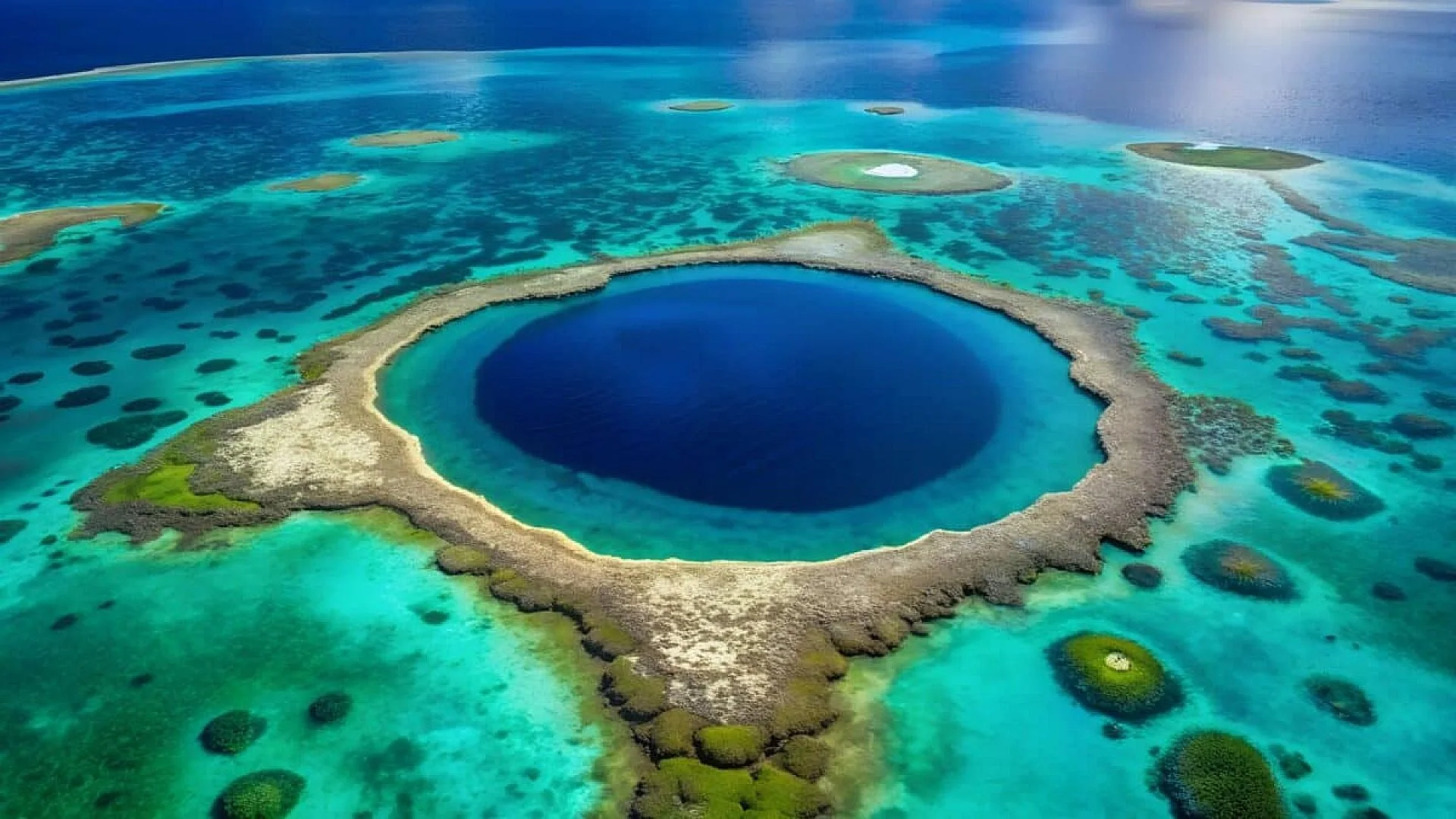
Even though the seas are a familiar backdrop for many, a large portion of them remains a frontier. Among the most striking examples are blue holes – enormous underwater sinkholes that puncture the seafloor in locations such as Belize, Florida, Mexico and China, descending hundreds of feet and staying largely enigmatic to scientists.
Their crystal‑clear water and dramatic vertical walls have long drawn the attention of divers, while researchers are now turning their focus to the hidden ecosystems they harbor, from bustling life at the rim to oxygen‑deprived zones teeming with unusual microbes.
Delving Into the Secrets of Submarine Cavities
A blue hole might sound like a simple geological feature, but its true nature is far more complex. According to the National Oceanic and Atmospheric Administration (NOAA), scientists have only a fragmentary picture of these formations. Locating them is a major hurdle; some openings sit several hundred feet beneath the surface, while others are too narrow for most autonomous underwater vehicles to penetrate. The global tally of blue holes remains uncertain.
“The first reports of blue holes did not come from scientists or researchers, but actually came from fishermen and recreational divers. Now, the two groups are working together to conduct scientific surveys and exploration of these mysterious holes.”
During a 2020 survey of Florida’s Green Banana Blue Hole, Emily Hall of Mote Marine Laboratory described the experience as moving from an apparently empty stretch of Gulf water into a sudden, vibrant chasm.
“You’re in the middle of the Gulf of Mexico and you don’t see anything all around,” she told The New York Times, recalling that from the surface there was virtually no sign of what was hidden below. “Then this hole opens up, and it’s booming with life.”
Why the Entrances Thrive With Marine Life
The immediate vicinity of a blue hole often appears stark, yet the cavity itself acts like an underwater oasis. Hall explained to the BBC that divers first encounter swaths of seagrass and soft coral before entering zones where animal abundance spikes dramatically.
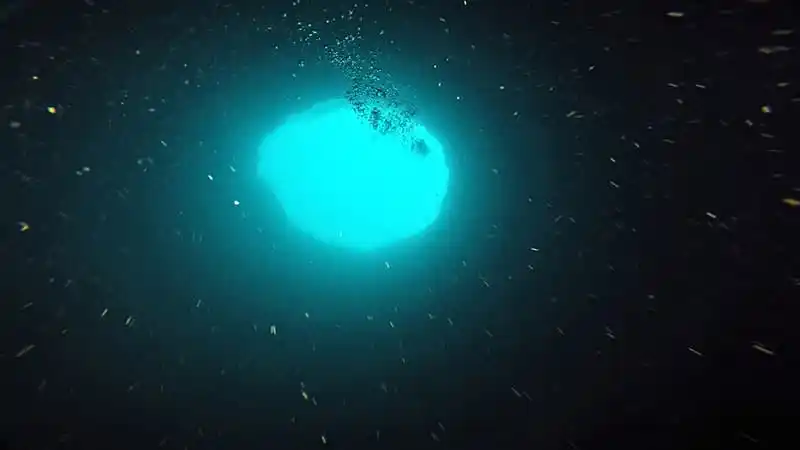
Credit: Mote Marine Laboratory
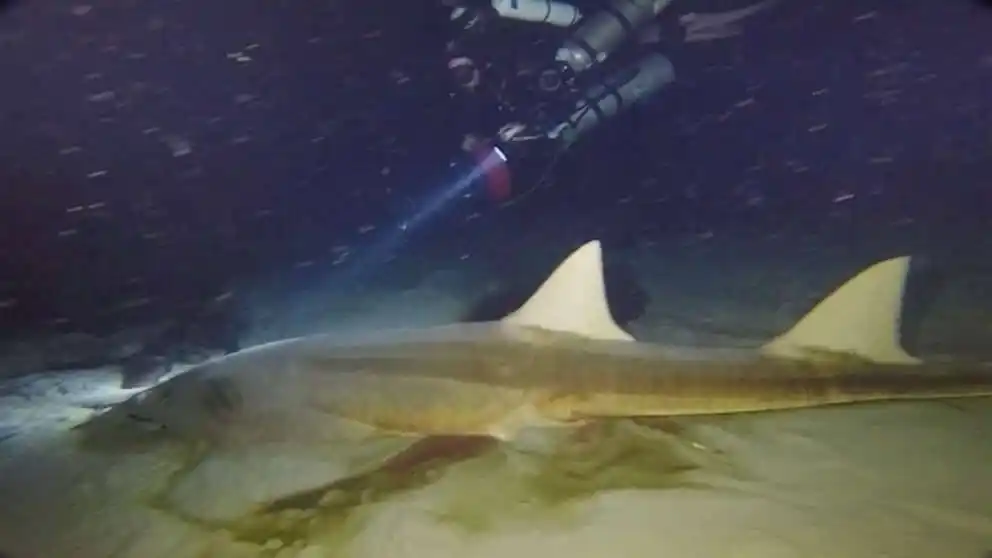
Inside Green Banana, divers reported sightings of sea turtles, moon jellyfish, schools of barracuda, dolphins and dense shoals of fish. Underwater photographer Kristin Paterakis described the expedition as a continuous parade of wildlife encounters.
Depths That Conceal New Puzzles
Exploring blue holes is not only technically demanding, it can also be hazardous. Belize’s iconic Great Blue Hole plunges roughly 125 meters (410 feet), well beyond the limits of most recreational divers. The primary physiological risk at such pressures is nitrogen narcosis, sometimes referred to as the “martini effect,” which can impair judgment.
A 2018 dive into the Great Blue Hole turned tragic when explorer and submarine pilot Erika Bergman encountered the bodies of two divers on the seafloor. Local authorities later decided to leave the remains in situ.
At greater depths, oxygen becomes scarce, allowing only specialized microbes to thrive. Nastassia Patin of the University of Miami and NOAA reported that samples from Amberjack Hole were dominated by a little‑known archaeal lineage, making up about 60 % of the community.
“These expeditions open up a wide new area of research for microbial ecology, biogeochemistry, maybe even paleoclimate research,” explained Patin. “We have only scratched the surface of blue hole life and look forward to learning much more about these systems in the next few years!”
Also ReadThe Rubber Keeping Undersea Tunnels Sealed Is Breaking Down from Within Faster Than Anyone Expected
This article has been fact checked for accuracy, with information verified against reputable sources. Learn more about us and our editorial process.
Last reviewed on .
Article history
- Latest version
Reference(s)
- “Scientists Embark on Journey to the “Deep” to Explore Blue Holes - NOAA Ocean Exploration.”, July 16, 2020 NOAA Ocean Exploration <https://oceanexplorer.noaa.gov/expedition/20blue-holes/>.
- “Dr. Emily Hall | Mote Marine Laboratory & Aquarium.”, March 22, 2024 Mote Marine Laboratory & Aquarium <https://mote.org/staff/dr-emily-hall/>.
- <https://www.nytimes.com/2020/07/25/science/blue-hole-florida-ocean.html>.
- “What do we know about the ocean's mysterious blue holes?.”, July 31, 2020 BBC Newsround <https://www.bbc.co.uk/newsround/53571896>.
- <https://www.scubadiving.com/authors/kristin-paterakis>.
- “The Great Blue Hole in Belize.”, December 29, 2025 EU Space Policy <https://eu-space.europa.eu/components/earth-observation-copernicus/image-of-day/great-blue-hole-belize>.
- “Nastassia Patin - NOAA/AOML.”, August 16, 2021 NOAA's Atlantic Oceanographic and Meteorological Laboratory <https://www.aoml.noaa.gov/people/nastassia-patin/>.
Cite this page:
- Posted by Bilal Abbasi