Gamma‑Ray Pulsations Detected From Ultra‑Fast Pulsar 3,900 Light‑Years Away, Upending Models
Astronomers detect gamma‑ray pulses from an extreme millisecond pulsar only 3,900 light‑years away, opening fresh insights into high‑energy stellar physics.
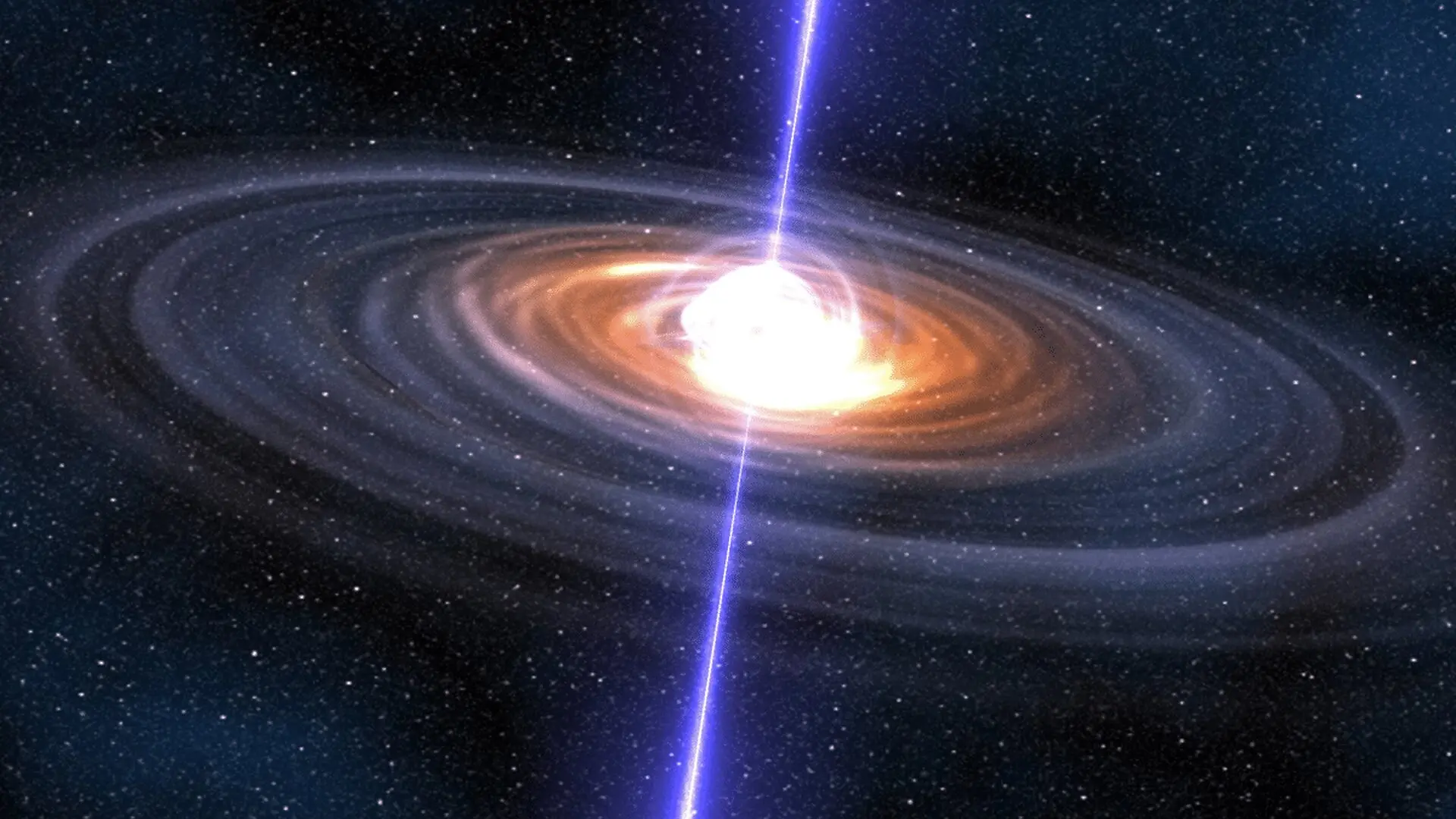
Researchers have detected gamma‑ray pulsations from PSR J0435+3233, a rapidly spinning millisecond pulsar situated roughly 3,900 light‑years away. The finding, presented in a pre‑print on arXiv, marks the object as a scarce gamma‑ray source whose attributes strain existing neutron‑star theories.
Fast‑Spinning Pulsar Exhibits Remarkable Traits
PSR J0435+3233 first emerged in 2026 thanks to the Five‑hundred‑meter Aperture Spherical Telescope (FAST). Orbiting a companion star, it completes a rotation in about 3.2 milliseconds, translating to more than three hundred turns each second.
Millisecond pulsars belong to the class of neutron stars whose spin rates have been boosted through a recycling process, during which matter transferred from a binary partner spins up the remnant star and powers it as a celestial lighthouse.
What sets this newcomer apart is its unusually high period derivative—a metric of how quickly the spin slows. Measurements indicate a value at least a hundred times larger than those typical for most millisecond pulsars.
The star also radiates a spin‑down power of roughly 58.9 undecillion erg s⁻¹, placing it among the most energetic members of its class. Its surface dipole magnetic field is estimated at about 12.6 billion gauss, further emphasizing its atypical nature.
These extreme characteristics prompted astronomers to search for high‑energy photons, leading them to mine archival observations from NASA’s Fermi Gamma‑ray Space Telescope.
Fermi Data Pinpoints a Matching Gamma‑ray Source
Led by Mengqing Zhang of Yunnan University, a team sifted through nearly 17.7 years of Fermi‑LAT observations spanning 0.1–500 GeV to test the link between the pulsar and high‑energy emission.
“Motivated by these properties, we analyzed about 17.7 years of Fermi-LAT (Fermi-Large Area Telescope) observations in the 0.1–500 GeV energy range for this pulsar,” the researchers wrote in the paper.
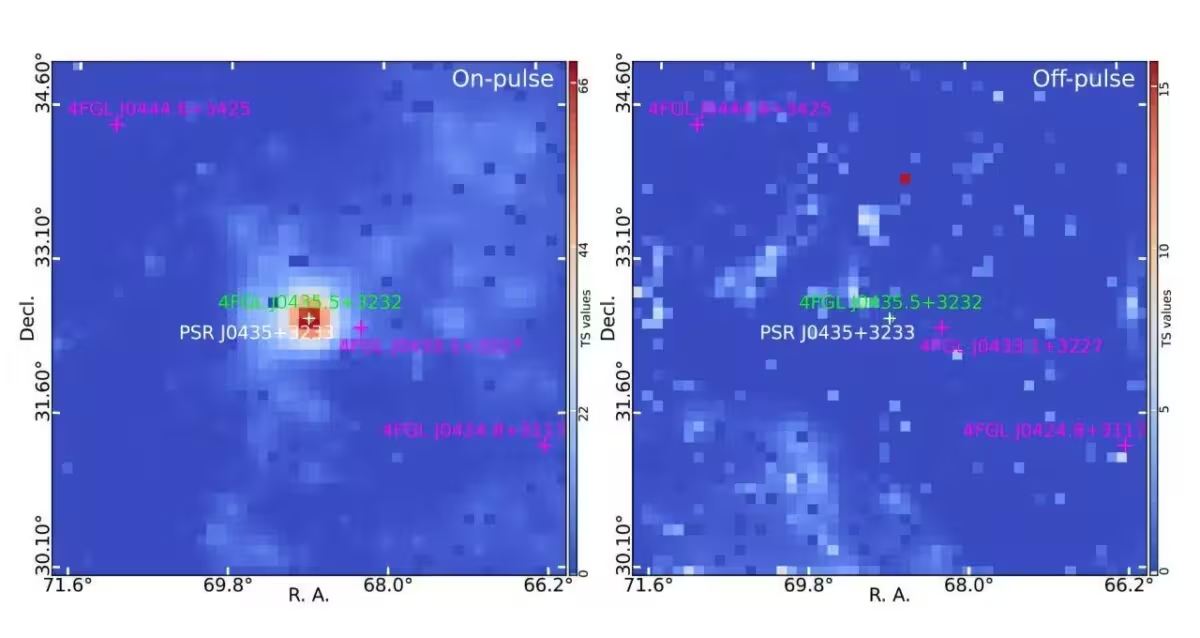
The analysis uncovered a gamma‑ray source designated 4FGL J0435.5+3232, positioned merely 0.01 degrees from the radio timing coordinates of PSR J0435+3233. Such close spatial agreement strongly suggested a physical connection.
Subsequent timing work revealed gamma‑ray pulses synchronized with the star’s 3.2‑ms rotation. The high‑energy signal was concentrated within a phase window between 0.44 and 0.69, with the remainder of the rotation showing no significant emission.
The phase‑restricted pattern reinforced the interpretation that the gamma‑ray detections originate from the pulsar’s magnetosphere rather than an unrelated background object.
These results cement PSR J0435+3233 as a bona fide gamma‑ray millisecond pulsar, expanding the roster of extreme neutron stars observable at high energies.
Efficiency Puzzle Challenges Conventional Wisdom
Despite a spin‑down power comparable to that of youthful, energetic pulsars, the object exhibits an exceptionally low apparent gamma‑ray efficiency.
The team derived a gamma‑ray luminosity near 0.626 decillion erg s⁻¹, implying an efficiency of only about 1 × 10⁻⁵. In other words, a minuscule fraction of the rotational energy is converted into observable gamma rays.
This mismatch raises questions about particle acceleration mechanisms within the magnetospheres of ultra‑fast millisecond pulsars and highlights the possible role of beam geometry and viewing angle in shaping the detected signal.
“Our detection establishes PSR J0435+3233 as a gamma‑ray MSP, and the striking combination of its high spin‑down power and low apparent gamma‑ray efficiency provides a new probe of particle acceleration, radiation beaming, and viewing geometry in the magnetospheres of millisecond pulsars with extreme rotational properties,” the scientists wrote.
The pre‑print, available on arXiv, contributes a valuable data point for models that seek to explain how neutron stars generate high‑energy photons under extreme magnetic and rotational conditions.
Future Observations May Unveil More Secrets
The confirmation of gamma‑ray pulsations offers a promising laboratory for probing the physics of ultra‑rapidly rotating neutron stars, especially given the pulsar’s strong magnetic field and atypical energy budget.
Coordinated campaigns across the electromagnetic spectrum—ranging from radio to X‑ray—could clarify the structure of the star’s magnetic environment and shed light on why such a potent rotator yields comparatively weak gamma‑ray output.
As next‑generation observatories increase their sensitivity, additional extreme pulsars are likely to emerge, each providing fresh insight into the evolution, particle acceleration, and energy release mechanisms of some of the universe’s densest objects.
This article has been fact checked for accuracy, with information verified against reputable sources. Learn more about us and our editorial process.
Last reviewed on .
Article history
- Latest version
Reference(s)
- Zhang, Mengqing. “Discovery of $γ$-Ray Pulsations from the Extreme-Spin-Down Millisecond Pulsar PSR J0435+3233.” arXiv.org <https://arxiv.org/abs/2607.16119>.
Cite this page:
- Posted by Karan Das