NASA Astronaut and Russian Cosmonauts Touch Down in Kazakhstan After Historic ISS Mission
NASA astronaut and two Russian cosmonauts safely return to Earth after completing their International Space Station mission.
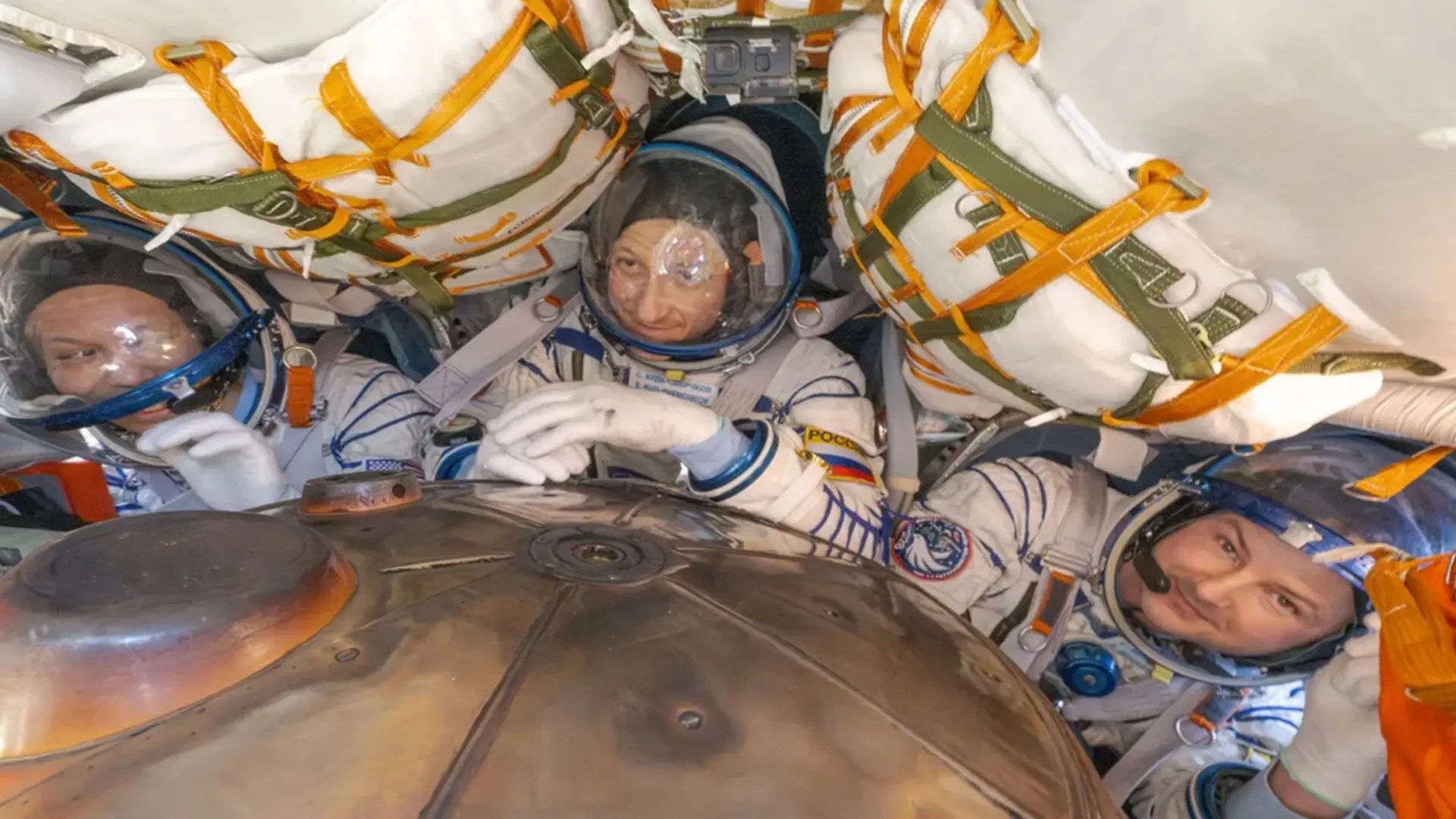
A NASA astronaut together with two Russian cosmonauts have completed a safe return to Earth aboard the Soyuz MS‑28 spacecraft, concluding another multinational expedition on the International Space Station. The crew’s departure, coordinated with mission control centers worldwide, marks a continuation of collaborative human‑spaceflight efforts amid ongoing transitions in the sector.
Soyuz MS‑28 Safely Delivers Crew Back to Earth
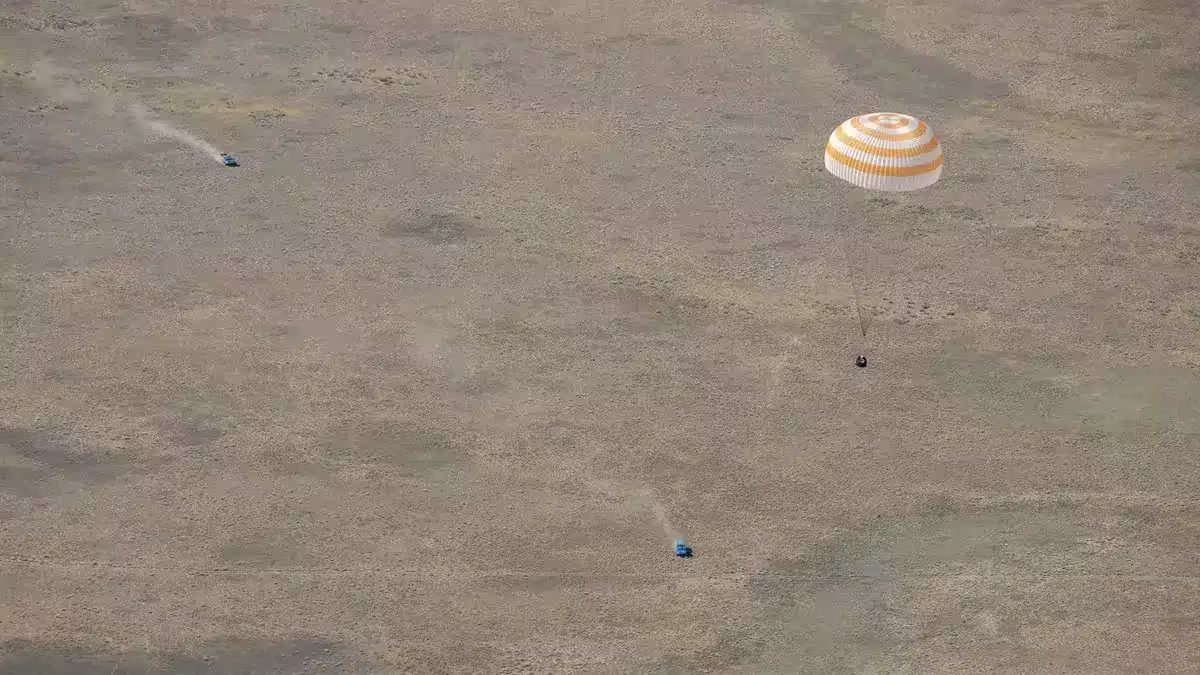
The Soyuz MS‑28 capsule carried three crew members from the orbital laboratory toward the Kazakh steppe, following the established sequence for crewed descents. After detaching from the station, the spacecraft performed a series of orbital adjustments, entered Earth’s atmosphere, and deployed its parachutes in a tightly timed operation that required real‑time coordination between ground teams and the crew.
Onboard were NASA astronaut Jonny Kim and Roscosmos cosmonauts Sergey Ryzhikov and Alexey Zubritsky, who spent several months conducting scientific investigations, performing maintenance, and supporting daily station activities. Their contributions helped sustain the station’s research agenda and operational integrity.
Touchdown occurred in a remote area of Kazakhstan, where recovery personnel were positioned to retrieve the capsule and assist the crew. After egress, the astronauts underwent initial medical examinations before beginning a structured rehabilitation program.
NASA Underscores Global Cooperation on the Space Station
NASA confirmed the successful conclusion of the mission and reiterated the International Space Station’s role as a laboratory for scientific discovery and multinational partnership. The station continues to host contributions from NASA, Roscosmos, the European Space Agency, JAXA, and the Canadian Space Agency.
Experiments conducted in microgravity are intended to inform future deep‑space endeavors, including upcoming lunar missions under NASA’s Artemis program and prospective journeys to Mars. The ongoing crew rotation system, enabled by spacecraft such as Soyuz, sustains a continuous human presence in low Earth orbit.
The return of the Soyuz MS‑28 team illustrates the steady operational cadence that underpins the station’s long‑term research agenda, reinforcing the value of international collaboration for sustained exploration.
Astronauts Begin Rehabilitation After Re‑entry
Re‑adjusting to Earth’s gravity presents physiological challenges after months in weightlessness; muscle strength, bone density, balance, and cardiovascular function all undergo adaptation. Following landing, the crew entered a rehabilitation protocol designed to restore physical performance and monitor health outcomes.
Medical specialists tracked recovery metrics while researchers gathered data on the effects of extended spaceflight. Insights gleaned from the Soyuz MS‑28 crew will help shape countermeasures for longer missions slated for the Moon and beyond.
Beyond the scientific implications, the landing marked a personal milestone for each astronaut, closing a chapter defined by rigorous research, technical problem‑solving, and life aboard one of humanity’s most sophisticated orbital platforms.
Looking Ahead: Expanding Human Spaceflight
The successful touchdown of Soyuz MS‑28 arrives as human spaceflight enters a transformative era. While low Earth orbit activities continue to expand, agencies are gearing up for missions that will venture farther into the solar system.
The International Space Station remains a proving ground for technologies and operational procedures that will underpin forthcoming lunar expeditions, particularly those associated with NASA’s Artemis campaign.
Reliability demonstrated by spacecraft such as Soyuz reinforces confidence in crew‑transport capabilities that have supported decades of human presence in space. Each mission, launch, experiment, and safe return adds a layer of knowledge that will guide the next generation of exploration.
This article has been fact checked for accuracy, with information verified against reputable sources. Learn more about us and our editorial process.
Last reviewed on .
Article history
- Latest version
Reference(s)
- “NASA Astronaut Chris Williams, Crewmates Return from Space Station - NASA.” NASA <https://www.nasa.gov/news-release/nasa-astronaut-chris-williams-crewmates-return-from-space-station/>.
Cite this page:
- Posted by Karan Das