Water Frost Discovered on Mars’s Equatorial Volcano Olympus Mons 150,000 Tons Daily
Morning frost on Mars appears then disappears, uncovering an unexpected hidden water cycle and surprising scientists.
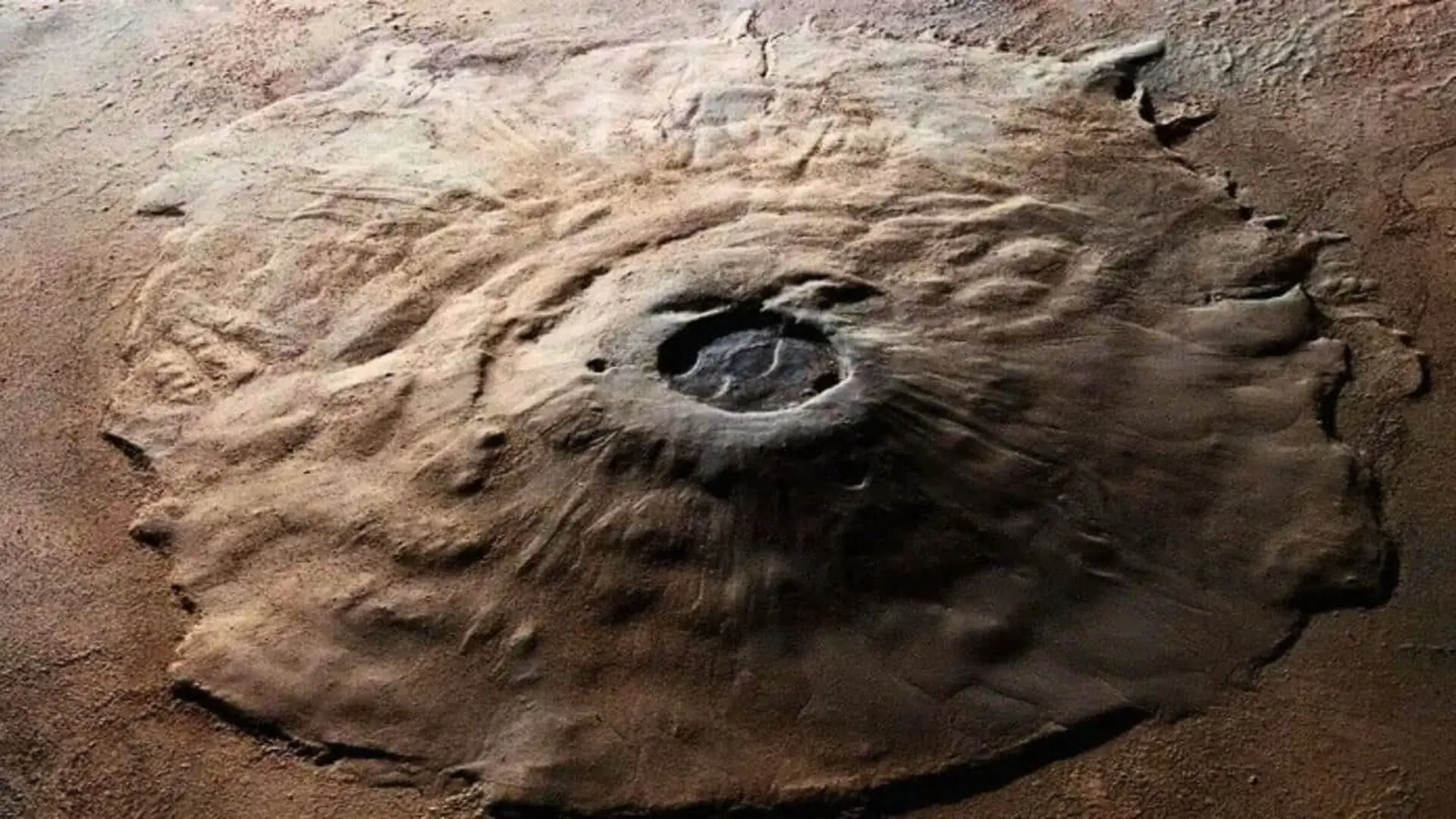
During certain Martian seasons, a delicate veil of frost forms each dawn on the flat floors of the Tharsis volcano calderas, only to disappear under the midday sun. The coating measures roughly 10 µm—about the thickness of a human hair—yet it extends over such a broad area that scientists estimate the daily exchange of water between the planet’s surface and its thin atmosphere reaches roughly 150,000 metric tons across the region. By the afternoon, the frost has vanished completely.
The phenomenon was documented in a paper appearing in Nature Geoscience, with Adomas Valantinas of Brown University as the lead author. The investigators identified the icy deposits inside the calderas of four Tharsis giants—Olympus Mons, Arsia Mons, Ascraeus Mons and Ceraunius Tholus. This marks the first confirmed observation of water frost at Mars’s equatorial belt, a zone previously thought too warm and arid to host surface ice.
What lets Olympus Mons to dominate the Martian landscape
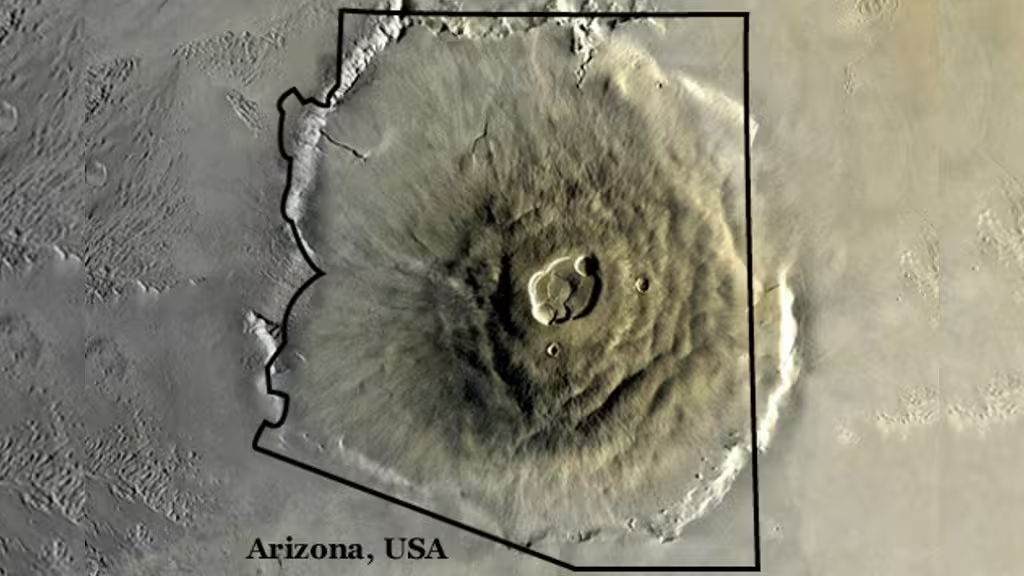
Olympus Mons towers about 72,000 feet above the surrounding terrain—more than twice the height of Earth’s Mount Everest—and its base spreads across roughly 370 miles, an area comparable to the U.S. state of Arizona. The volcano’s immense breadth means that its opposite rim drops below the horizon when viewed from the summit, preventing a full view of the edifice from any single point on its own surface. By both height and volume, it remains the solar system’s largest volcano.
On Earth, moving tectonic plates carry volcanic hotspots across the crust, producing chains such as the Hawaiian islands. Mars, however, appears to lack a comparable plate‑recycling system, causing volcanic output to concentrate in a single region—the Tharsis Rise—for billions of years. Continuous lava buildup in the same spot created not only Olympus Mons but a suite of record‑size volcanoes within the same province.
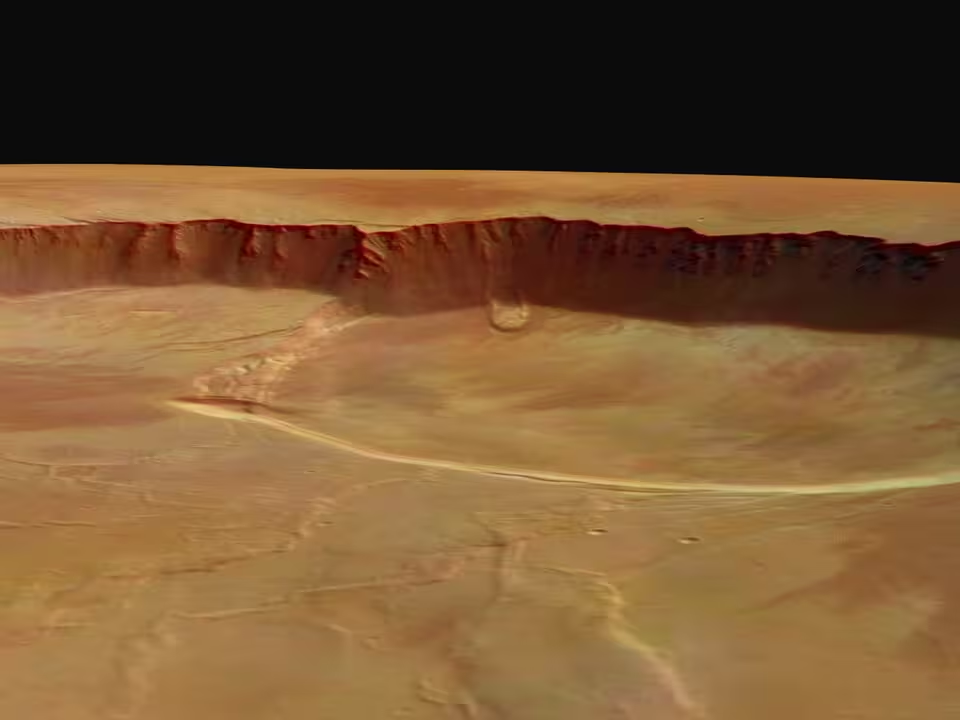
The result is a plateau extending about 5,000 km and rising roughly 5 km above the planet’s average elevation, with Olympus Mons anchoring its western edge. According to ESA’s Mars Express mission, the summit crater is a nested assemblage of overlapping depressions, each formed by a separate collapse event as underlying magma chambers emptied at different stages of the volcano’s evolution.
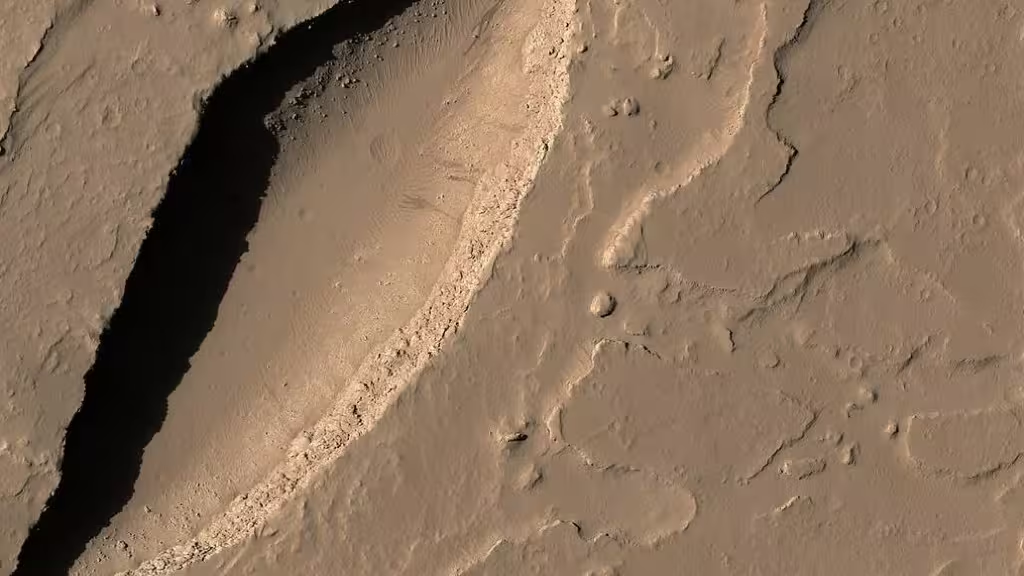
Spanning roughly 80 km in diameter and descending about 3 km, the caldera walls display extensional fractures and mass‑movement features that chronicle successive geological episodes. High‑resolution stereo images from the HRSC camera on Mars Express, collected as early as 2004, have mapped these structures in detail.
How the summit crater traps moisture
The frost forms because the caldera creates a micro‑environment unlike the surrounding slopes. At summit altitude, the ambient pressure inside the depression falls to near 110 Pa, considerably lower than at the volcano’s base, while the sheltered basin dampens wind speeds relative to exposed flanks.
Fine‑grained, high‑emissivity dust covering the crater floor loses heat more rapidly overnight and warms more slowly after sunrise, extending the period of sub‑freezing surface temperatures each morning. This combination allows water vapor to condense and persist longer than it would on adjacent terrain.
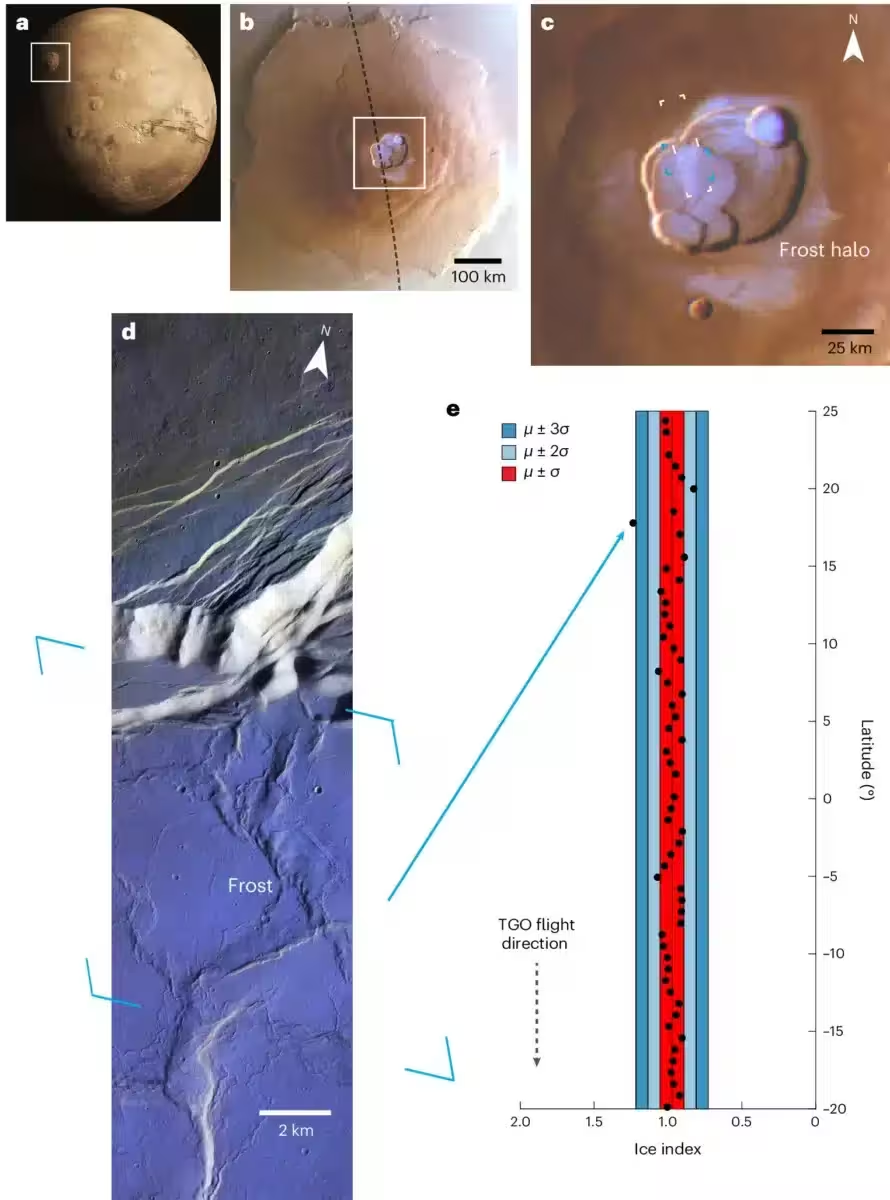
The Brown University team explains that the water vapor feeding the frost originates from the polar ice caps. During colder seasons, sublimation of the caps drives a massive atmospheric circulation toward the equator via Hadley cells. Upslope winds along the volcano’s flanks transport this moisture upward, where it condenses overnight on the chilly caldera surfaces.
Observations show the frost appearing around 07:00 local solar time and disappearing within a few hours as temperatures rise. Valantinas notes that earlier expectations dismissed equatorial frost because the combination of intense sunlight and thin atmosphere generally keeps surface temperatures too high for ice, a contrast to Earth’s frost‑capped peaks.
ESA’s trio of instruments validates the icy deposits
Confirming the presence of water ice required cross‑checking three independent data sets to rule out CO₂ frost or dust. The Colour and Stereo Surface Imaging System (CaSSIS) on the Trace Gas Orbiter first captured high‑resolution colour images that revealed bluish stains on the crater floor and rim.
Five days later, the High Resolution Stereo Camera (HRSC) aboard Mars Express independently recorded the same diffuse layer across the interior, while the NOMAD spectrometer on the Trace Gas Orbiter supplied a spectral signature that identified the material as water ice rather than carbon dioxide.
Carbon‑dioxide frost forms only when surface temperatures drop below about 140 K. Climate models placed the caldera’s temperature at the time of detection near 150 K—warm enough to preclude CO₂ frost yet still suitable for water‑ice condensation. This temperature gap eliminated the most plausible alternative and cemented the identification as water ice. After sifting through more than 30,000 images, the researchers confirmed 13 distinct frost events across the four calderas.
Most orbital missions prioritize afternoon lighting, by which time the frost has already sublimated, explaining why earlier surveys missed the feature. CaSSIS’s capability to image at dawn provided a critical window that previous instruments rarely accessed.
This article has been fact checked for accuracy, with information verified against reputable sources. Learn more about us and our editorial process.
Last reviewed on .
Article history
- Latest version
Reference(s)
- Valantinas, A.. “Evidence for transient morning water frost deposits on the Tharsis volcanoes of Mars - Nature Geoscience.”, vol. 17, no. 7, pp. 608-616. Nature, doi: 10.1038/s41561-024-01457-7. <https://www.nature.com/articles/s41561-024-01457-7>.
- <https://www.esa.int/Science_Exploration/Space_Science/Mars_Express/Olympus_Mons_-_the_caldera_in_close-up>.
- “Southern part of the Olympus Mons caldera – perspective view.” <https://www.esa.int/ESA_Multimedia/Images/2004/02/Southern_part_of_the_Olympus_Mons_caldera_8211_perspective_view>.
Cite this page:
- Posted by Karan Das