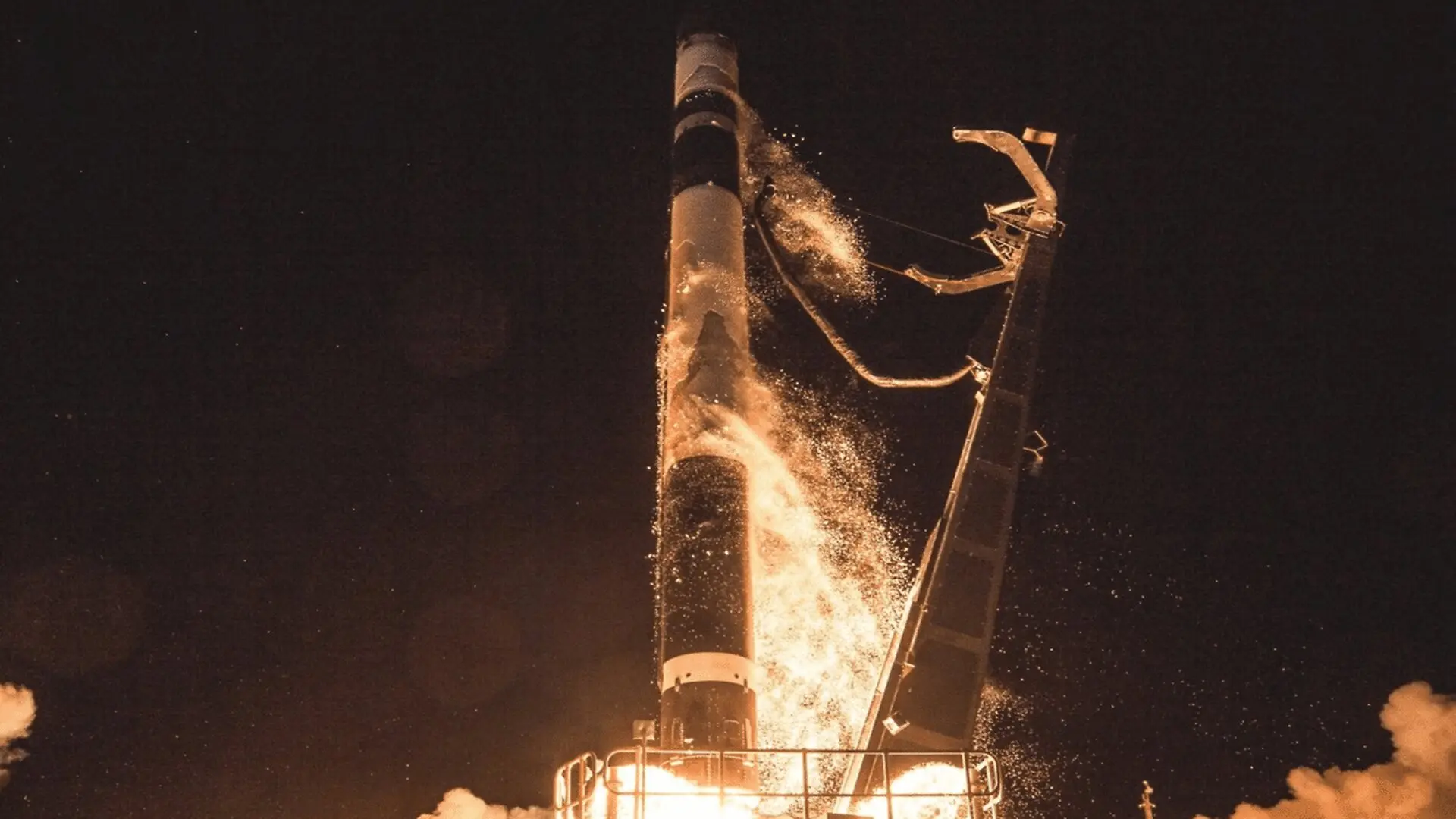
In a striking demonstration of how quickly commercial space services can be mobilised, Rocket Lab launched a U.S. Space Force payload less than 17 hours after receiving its go‑ahead. The rapid turnaround highlights the growing reliance of national security agencies on private‑sector launch capability and sets a fresh benchmark for “tactical” space missions.
Launch Executed With Minimal Lead Time
The flight formed part of the Space Force’s Victus Haze initiative, which probes how swiftly launch firms and satellite operators can react to unfolding orbital scenarios. After the formal Notice To Launch arrived, Rocket Lab lifted off a little over 16 hours and 40 minutes later, eclipsing the previous fast‑response record by more than ten hours.
The lift‑off took place from Launch Complex‑1 on the Māhia Peninsula, using the company’s Electron launch vehicle. Turning a theoretical “launch‑on‑demand” concept into an operational reality required tight coordination among launch crews, spacecraft engineers, mission control, and range officials, all while preserving safety protocols.
The VICTUS HAZE mission explained.
Phase 1: Launch on demand
The @USSpaceForce’s @USSF_SSC called, told us to launch, and just 16 hours 42 minutes hours later, Electron successfully left the pad from LC-1.
Once the Electron booster delivered its payload to low‑Earth orbit, Rocket Lab’s Pioneer spacecraft started a series of proximity‑operations maneuvers. The satellite is tasked with locating and closing in on another object launched earlier in the same demonstration.
According to a Rocket Lab update posted on June 22,
“[Pioneer] is now fully commissioned and conducting complex orbital maneuvers to chase down another spacecraft on orbit and conduct Rendez:vous and Proximity Operations (RPO).”
The target is the Jackal satellite built by True Anomaly, which serves as a stand‑in for an adversarial or uncooperative object. Demonstrating the ability to perform rendezvous, monitoring, and interaction in a compressed schedule is increasingly valuable as both governments and commercial actors seek better situational awareness of the crowded orbital environment.
Rendezvous and proximity activities rank among the most demanding tasks in contemporary spaceflight, requiring precise navigation, real‑time communications, and strict separation management. Victus Haze combines these challenges with an ultra‑fast launch cycle, showcasing an end‑to‑end responsive‑space capability.
Space Force Evaluates Rapid‑Response Potential
Beyond setting a timing record, Victus Haze aims to prove that commercial partners can supply the United States with on‑demand orbital options, especially in contested or crisis situations. Lt. Col. Lincoln Miller, who oversees the Space Safari system, stressed the strategic weight of the test:
“Rendezvous and Proximity Operations on such short timelines are certainly not trivial, especially in a crisis or conflict scenario, but this demonstration of our ability to commission a complex and capable space vehicle within less than 72 hours, and immediately begin an RPO scenario thereafter, shows that we can field capability to deny adversaries first‑mover advantage into novel orbits.”
Miller’s remarks reflect a broader shift toward speed and adaptability in space warfare planning. If satellites can be launched, powered up, and maneuvered within days—or even hours—the conventional lead times that have defined space missions may become obsolete.
For the Space Force, data gathered from Victus Haze will inform future acquisition strategies and help shape the architecture of national‑security space operations.
Vertical Integration Gives Rocket Lab a Competitive Edge
A distinctive element of the mission was Rocket Lab’s role as the sole supplier for launch, spacecraft construction, and post‑launch operations. By consolidating these functions under one roof, the company avoided the typical coordination delays that arise when multiple contractors are involved.
CEO Peter Beck framed the accomplishment as a glimpse of modern space power:
“This is what modern space power looks like: the ability to reinforce and reimagine national security space architecture at will.”
He added a forward‑looking statement about the company’s mission:
“We’re proud to be providing the nation with those next‑generation space capabilities, today.”
Beck’s comments underscore Rocket Lab’s ambition to become a go‑to provider for rapid‑response launch services as defense agencies increasingly seek flexible, end‑to‑end solutions.
Fact Checked
This article has been fact checked for accuracy, with information verified against reputable sources. Learn more about us and our editorial process.
Das, Karan. “Rocket Lab Sets Record With 16-Hour Turnaround, Hinting at Future Tactical Space Ops.” BioScience. BioScience ISSN 2521-5760, 24 June 2026. <https://www.bioscience.com.pk/en/subject/space-science/rocket-lab-sends-space-force-spacecraft-to-orbit-less-than-17-hours-after-launch-order>.
Das, K. (2026, June 24). “Rocket Lab Sets Record With 16-Hour Turnaround, Hinting at Future Tactical Space Ops.” BioScience. ISSN 2521-5760. Retrieved June 24, 2026 from https://www.bioscience.com.pk/en/subject/space-science/rocket-lab-sends-space-force-spacecraft-to-orbit-less-than-17-hours-after-launch-order
Das, Karan. “Rocket Lab Sets Record With 16-Hour Turnaround, Hinting at Future Tactical Space Ops.” BioScience. ISSN 2521-5760. https://www.bioscience.com.pk/en/subject/space-science/rocket-lab-sends-space-force-spacecraft-to-orbit-less-than-17-hours-after-launch-order (accessed June 24, 2026).