Scientists Uncover Evidence of a Planet That Vanished From Our Solar System
A colossal missing planet may have triggered the early solar system’s violent chaos, reshaping Jupiter’s and Uranus’ moons
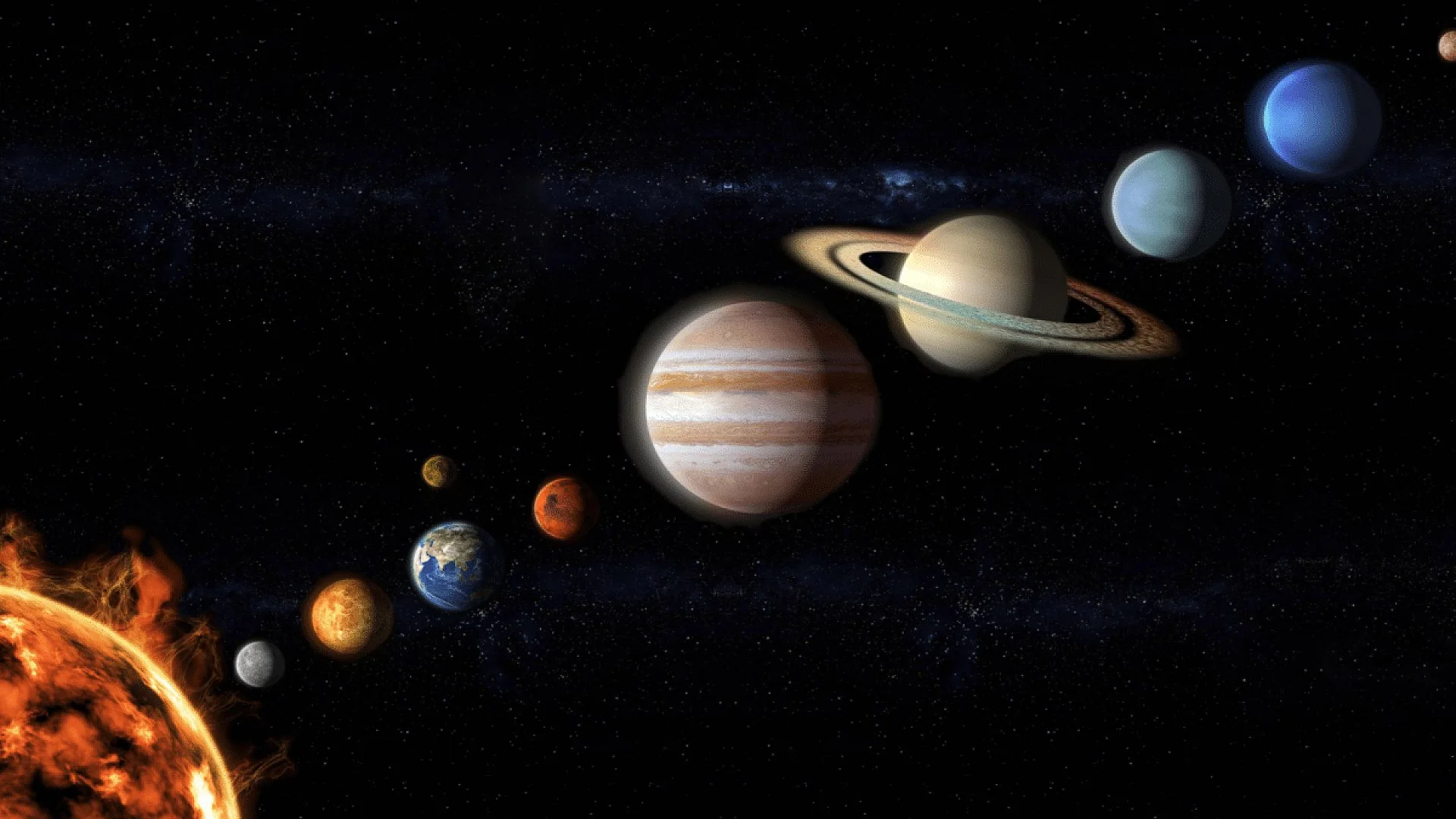
New research in Icarus proposes that the young solar system may once have harbored an extra giant planet. Its ejection billions of years ago could account for the surprising orbits of Jupiter, Uranus and their satellites, offering a fresh perspective on the violent processes that sculpted the outer planets.
Revisiting the Nice Model: A Period of Cosmic Upheaval
Around 4 to 4.5 billion years ago, the outer planets entered a chaotic phase now described by the Nice Model instability. In this era, the trajectories of Jupiter, Saturn, Uranus and Neptune were repeatedly reshaped by intense gravitational encounters, creating a cascade of near‑collisions that rippled through the nascent system.
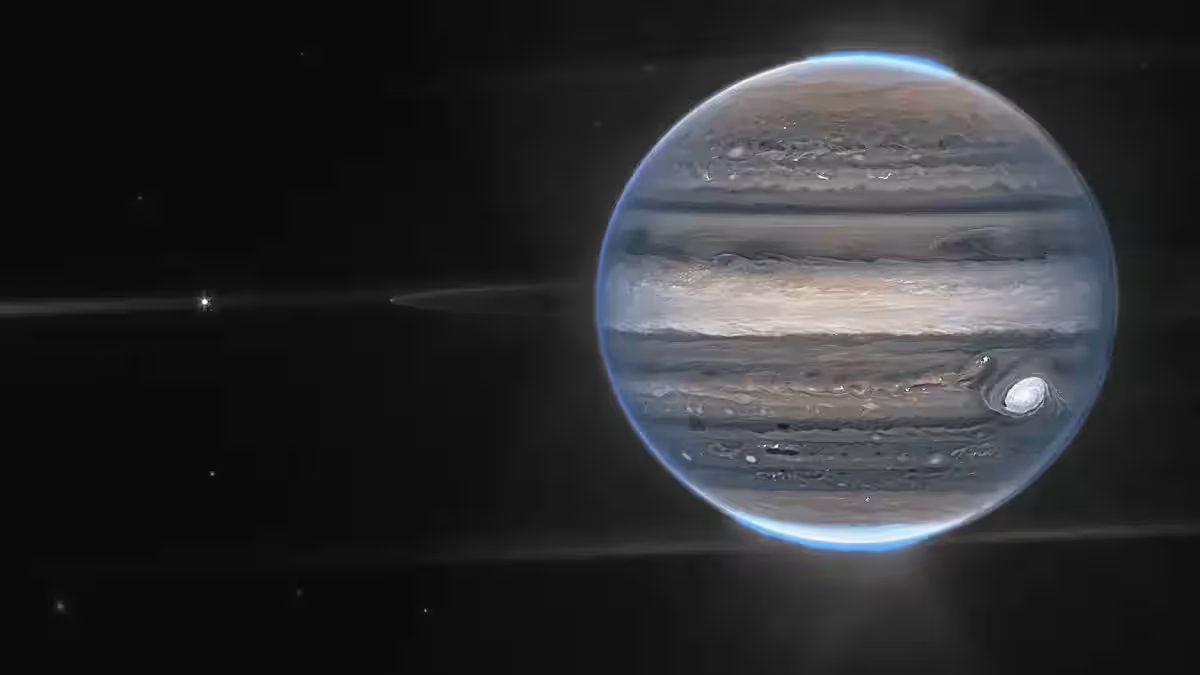
The survival of the massive planets’ satellite systems through such turbulence has long puzzled scientists. Were these moons fortunate survivors, or did they form from debris generated by the same cataclysmic events? To investigate, a team examined 122 high‑resolution simulations that replicate the modern configuration of the outer planets.
Modeling a Violent Early Solar Neighborhood
Using state‑of‑the‑art computational tools, the researchers followed the gravitational interplay of planets, moons, the Sun and passing asteroids over millions of years. Several runs began with five or six giant planets, echoing versions of the Nice Model in which one or more extra giants are ultimately expelled from the system.
The authors write in their paper,
“We find that the survival probability for the Jovian and Uranian moon systems are both less than 15%.”
Such a low odds ratio underscores the precarious nature of the early environment, where repeated close approaches between massive bodies frequently led to moon destruction.
The Birth of Uranus’s Irregular Satellites
When the simulated giants approached Uranus, its strong gravitational pull often shredded existing moons. Rather than being ejected, many fragments collided, forming debris clouds that later coalesced into new satellites.
This mechanism may explain the origin of Miranda, one of Uranus’s most distinctive moons. The study, published in Icarus, suggests that Uranus’s satellite system endured at least two major upheavals: a colossal impact that tipped the planet’s axis, followed by the giant‑planet instability. The aftermath produced a battered yet surprisingly stable moon system.
Jupiter’s Satellite Survival Puzzle
Jupiter’s moons faced analogous hazards. The frequent close encounters with other gas and ice giants made their endurance improbable. Only a minority of the simulations preserved both the planetary arrangement and the full complement of Jovian moons, highlighting the exceptional circumstances required for the present‑day configuration.
Collectively, the results point to a solar system shaped by a blend of chance and violent reshuffling. They illuminate why certain moons persisted unchanged while others may have been rebuilt from the fragments of catastrophic collisions.
This article has been fact checked for accuracy, with information verified against reputable sources. Learn more about us and our editorial process.
Last reviewed on .
Article history
- Latest version
Reference(s)
- Clement, Matthew S.., et al. “The fragility of the Uranian moons during the giant planet instability.” Icarus, vol. 453, July 1, 2026, pp. 117056 Elsevier BV, doi: 10.1016/j.icarus.2026.117056. <https://www.sciencedirect.com/science/article/abs/pii/S0019103526001223?via%3Dihub>.
Cite this page:
- Posted by Karan Das