Scientists Test a Smartphone-Sized Device Designed to Keep Astronauts’ Clothes Free of Bacteria on Mars
Revolutionäre Technologie testet Bakterienbekämpfung für Astronauten im Weltall
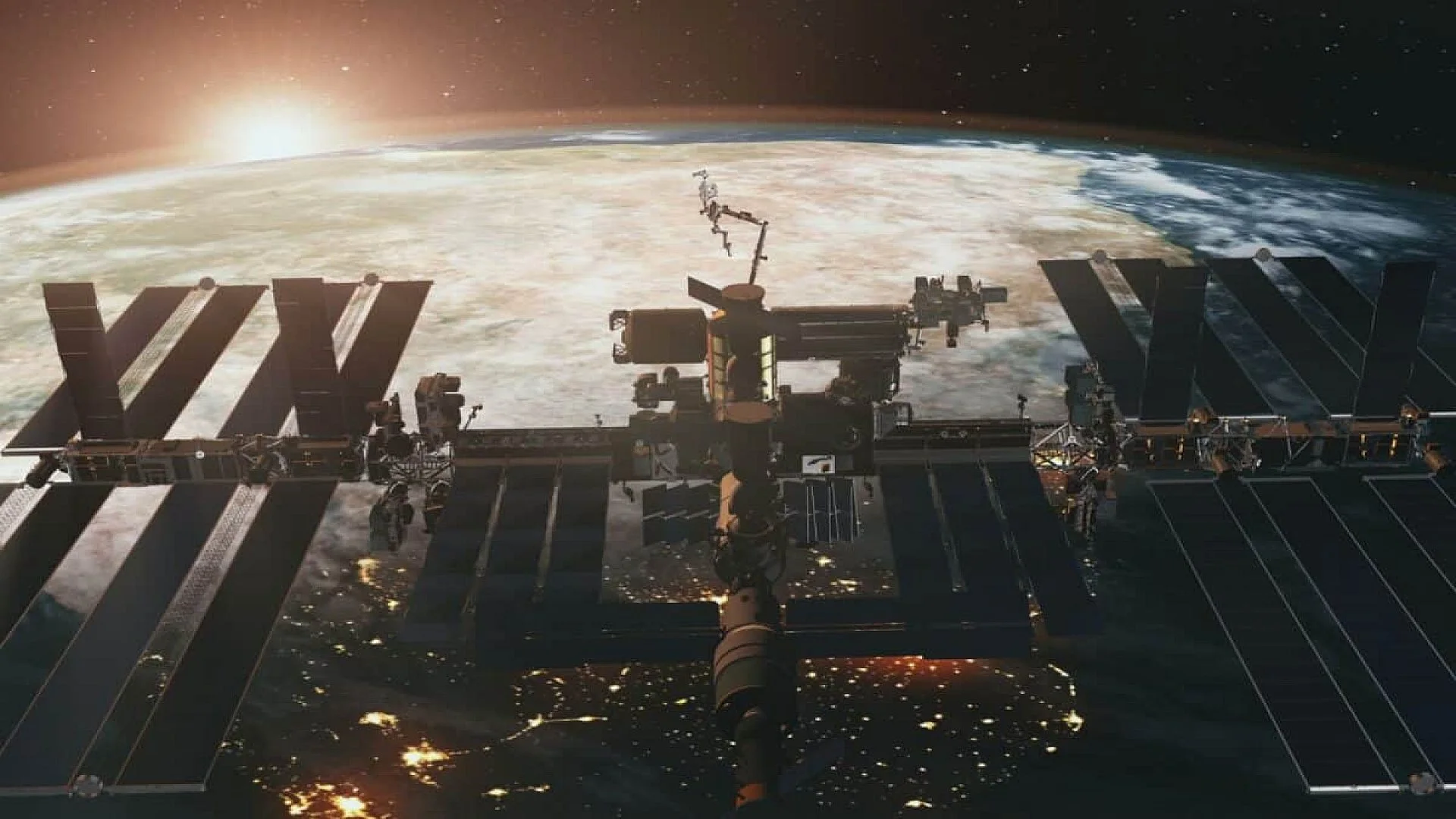
A compact plasma generator may soon give astronauts a way to sterilize clothing without water, offering a lightweight solution for long‑duration missions to the Moon or Mars.
Extended stays in space bring hygiene challenges that go beyond life‑support hardware. Crews confined to a habitat for months must control microbial growth on everyday items, a task that becomes critical when resupply trips are impractical.
On the International Space Station, garments are simply worn until they are too soiled and then discarded, a practice made possible by frequent cargo deliveries. Future outposts on the lunar surface or Mars will need more sustainable cleaning methods to protect crew health.
Microbial Hotspots Inside the Station
Even with rigorous cleaning protocols, the ISS remains a reservoir for bacteria. Swabs from handrails, vents and other high‑traffic surfaces reveal dense microbial colonies that are invisible to the naked eye.
Live Science notes that some ISS microbes have adapted to metal surfaces, while microgravity can alter bacterial behavior, raising concerns for both crew members and spacecraft components.
The issue isn’t limited to apparel. Upcoming habitats will likely contain more fabric‑based furnishings—couches, bedding and other soft materials—that could serve as reservoirs for microorganisms over long periods.
“You have a couch that six astronauts, or however many, are sitting on day in, day out. How do you keep that thing sanitized so that they don’t spread germs to each other?” Gabe Xu, a professor at the University of Alabama, told Live Science.
Cold Plasma Put to the Test on Space‑Derived Bacteria
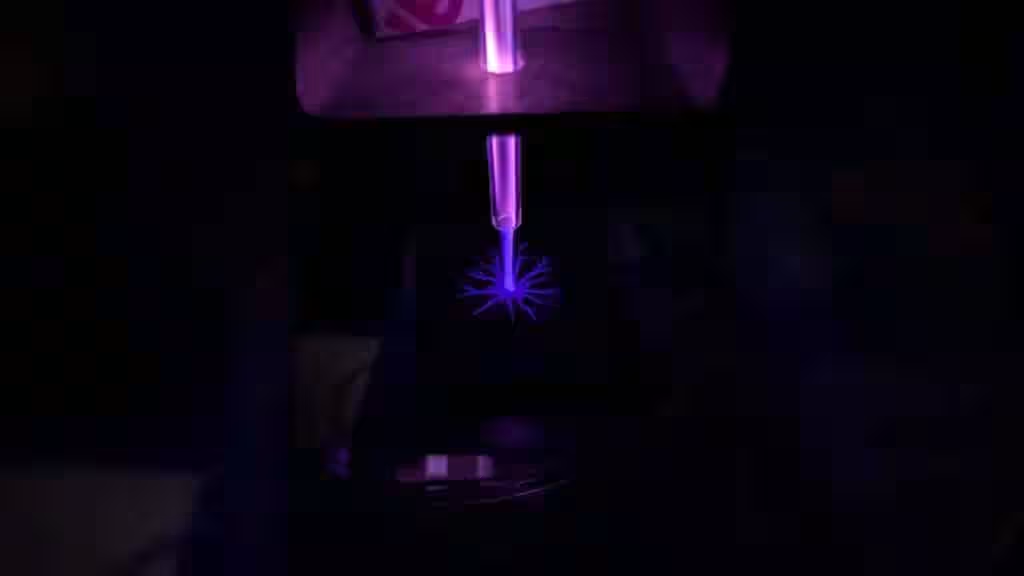
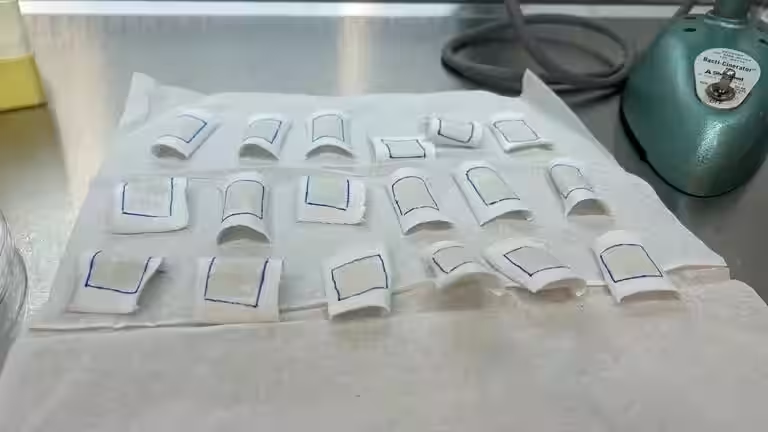
To evaluate the technology, Xu teamed up with Chelsi Cassilly, a NASA planetary‑protection engineer. They focused on Staphylococcus caprae, a skin‑associated bacterium previously identified aboard the ISS. Small squares cut from a standard cotton T‑shirt were inoculated with the organism, then exposed to a compact device that emits a bright‑purple plasma plume.
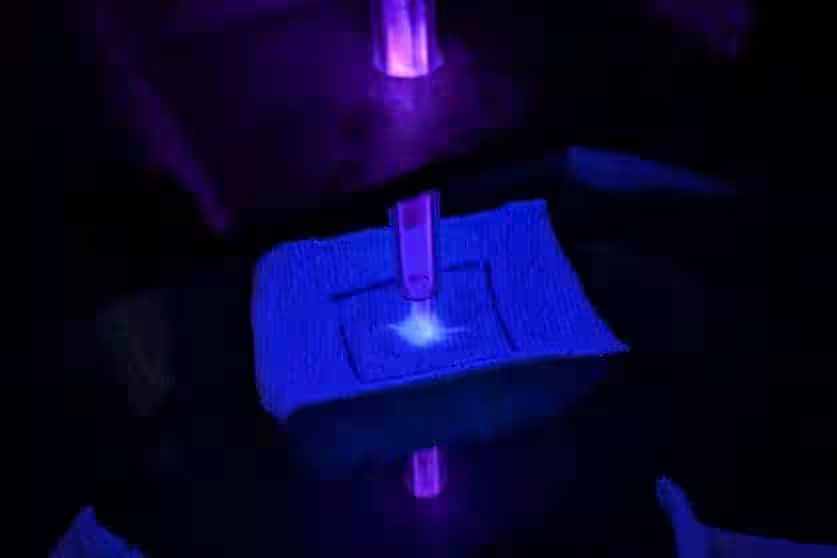
Plasma, an ionized gas, carries energetic particles that can initiate chemical reactions. When directed at the contaminated cloth, the jet proved more effective than the ISS’s current dry‑vacuum and chemical‑wipe approaches at reducing bacterial load, though it was not intended to erase visible stains.
“It is not going to remove the coffee stains from anyone’s T‑shirt,” Xu said. “But it will remove the stuff that will make you sick.”
Dry, Electricity‑Driven Disinfection
The researchers observed that the plasma generated reactive oxygen and nitrogen species, which infiltrated the fibers and compromised bacterial membranes through oxidative stress. Exposure times ranged from half a minute to five minutes, with no measurable damage to the cotton.
“We think that it’s probably not any worse than just normal wear and tear,” Xu told Live Science.
Because the system relies only on electricity and a supplied working gas, it eliminates the need for water‑intensive laundering equipment—a major advantage for habitats where every kilogram of resource is accounted for.
The team plans to expand testing to additional microbial strains that are known to thrive in human‑occupied spaces or that are routinely produced by occupants. “We’re focusing on things that we know exist up there, or that we know that people produce just as a matter of fact throughout their day, since these are the things that would likely be in a space habitat,” Xu explained.
Preliminary results were shared at The Astrobiology Science Conference in Madison, with the ultimate goal of turning the plasma source into a handheld sanitizer for routine use in spacecraft and future planetary bases.
This article has been fact checked for accuracy, with information verified against reputable sources. Learn more about us and our editorial process.
Last reviewed on .
Article history
- Latest version
Reference(s)
- Kuthunur, Sharmila. “Astronauts could use lightning-like plasma jets to kill germs on the moon and Mars, demo hints.”, June 1, 2026 Live Science <https://www.livescience.com/space/astronauts-could-use-lightning-like-plasma-jets-to-kill-germs-on-the-moon-and-mars-demo-hints>.
- “UAH | Engineering | Faculty & Staff | The University of Alabama in Huntsville.” <https://www.uah.edu/eng/faculty-staff/kunning-gabriel-xu>.
- <https://www.agu.org/abscicon>.
Cite this page:
- Posted by Karan Das