Blue Origin’s New Glenn Erupts In Massive Explosion At Cape Canaveral Facility During Launch Pad Testing
Blue Origin’s New Shepard rocket faces setback after explosion during crucial ground test
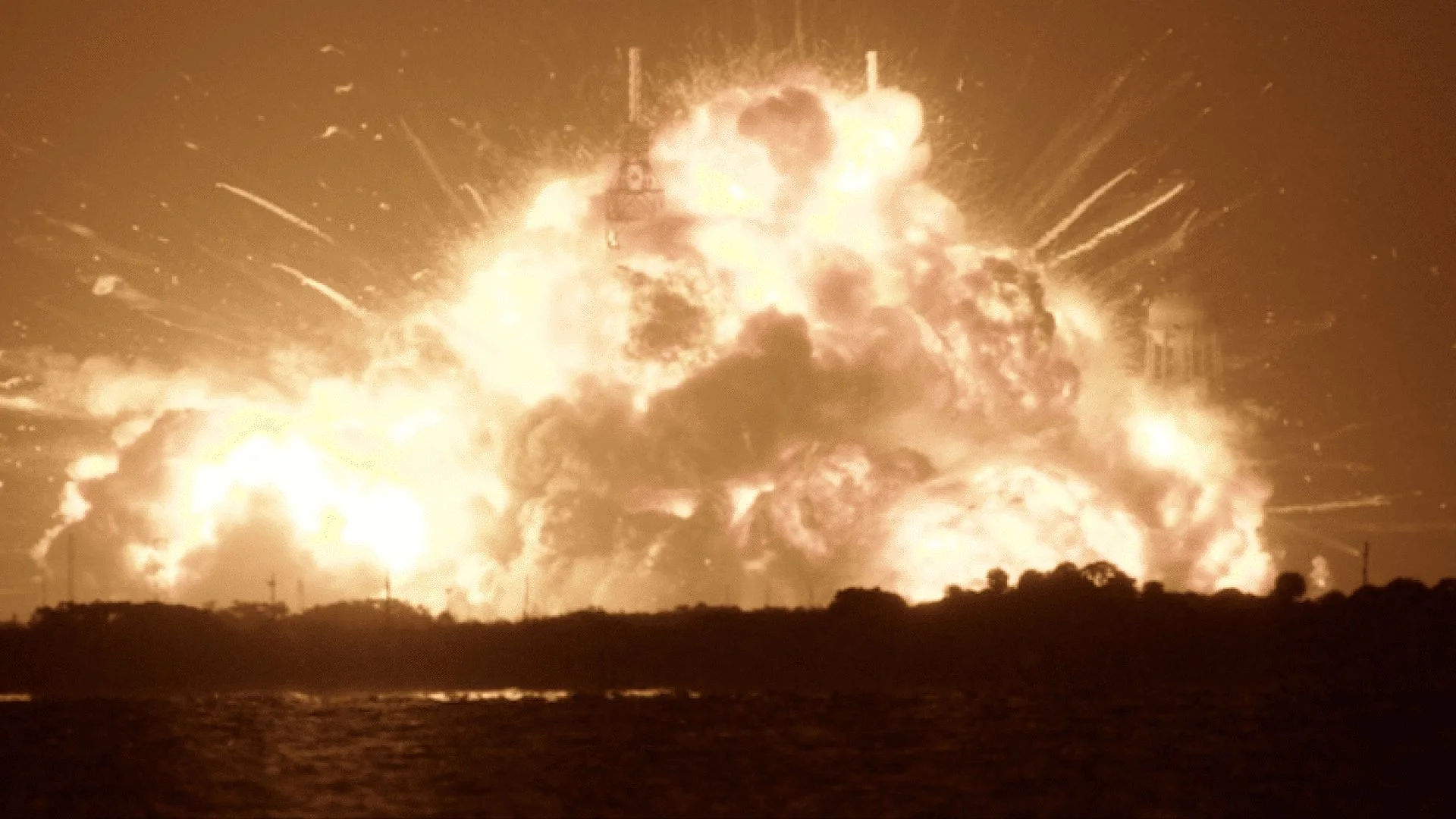
During a routine static‑fire trial at Cape Canaveral’s Launch Complex 36, Blue Origin’s New Glenn heavy‑lift rocket detonated, marking a major setback for the privately funded aerospace firm. The blast, which occurred while the vehicle was tethered to the pad, destroyed the 322‑foot launch system and damaged surrounding infrastructure, raising concerns about the company’s upcoming commercial and lunar launch timetable.
Static‑Fire Test Ends in Catastrophe
A static‑fire test is intended to verify engine performance under launch‑like conditions without actually leaving the ground. For the New Glenn program, the exercise was meant to confirm propulsion readiness ahead of a scheduled mission that would have placed satellites into orbit. Instead, the test culminated in a violent explosion that left the rocket in ruins and sent shockwaves through the aerospace community.
The vehicle, one of the tallest privately developed launchers at roughly 322 feet (98 meters), was designed to carry heavy commercial payloads, national‑security missions, and future deep‑space projects. Its loss not only represents a costly hardware failure but also threatens to disrupt a tightly coordinated launch cadence in an increasingly crowded market.
Blue Origin’s Leadership Reacts
Blue Origin quickly acknowledged an “anomaly” during the hot‑fire test, confirming that all crew members were safe. The company shared a statement on its official account, noting that investigators were already working to determine the cause.
Jeff Bezos later issued a public comment, stressing personnel safety and the company’s resolve to rebuild:
“All personnel are accounted for and safe. It’s too early to know the root cause, but we’re already working to find it. Very rough day, but we’ll rebuild whatever needs rebuilding and get back to flying.”
We experienced an anomaly during today’s hotfire test. All personnel have been accounted for. We will provide updates as we learn more.
— Blue Origin (@blueorigin) May 29, 2026
The incident will prompt a thorough investigation involving engineers, launch operators, and regulators before any further flights are cleared.
Strategic Role of New Glenn
New Glenn sits at the core of Blue Origin’s long‑term vision to become a leading orbital transport provider. Capable of lifting up to 45 metric tons to low‑Earth orbit, the rocket was poised to serve a range of customers—from large satellite operators to defense agencies and lunar exploration partners.
Its payload capacity is especially valuable as both governments and private firms eye missions beyond Earth’s orbit, where heavy‑lift launchers are essential for delivering the substantial hardware required for lunar bases and deep‑space ventures.
Consequently, the loss of a fully assembled vehicle during testing carries implications that extend well beyond the immediate financial hit, potentially reshaping development timelines and market expectations.
Repercussions for Satellite Deployments and Moon Projects
Fortunately, the 48 Project Kuiper satellites slated for a future launch were not loaded onto the rocket at the time of the test, averting a larger setback for Amazon’s broadband constellation.
Nonetheless, the destruction of the launcher will likely push back deployment schedules. A replacement vehicle must be built, integrated, and qualified, a process that could shift launch windows that were already coordinated months in advance.
Analysts also note that any delay in heavy‑lift capability could ripple through broader lunar‑related plans, as agencies rely on such rockets to move large payloads for surface infrastructure and deep‑space missions. Ongoing forensic analysis will aim to determine whether the failure was an isolated incident or indicative of a systemic issue within the program.
This article has been fact checked for accuracy, with information verified against reputable sources. Learn more about us and our editorial process.
Last reviewed on .
Article history
- Latest version
- Posted by Karan Das