Hubble Space Telescope Could Plummet to Earth Sooner Than Expected
Hubble Space Telescope slowly, inevitably spiraling toward Earth’s re-entry future.
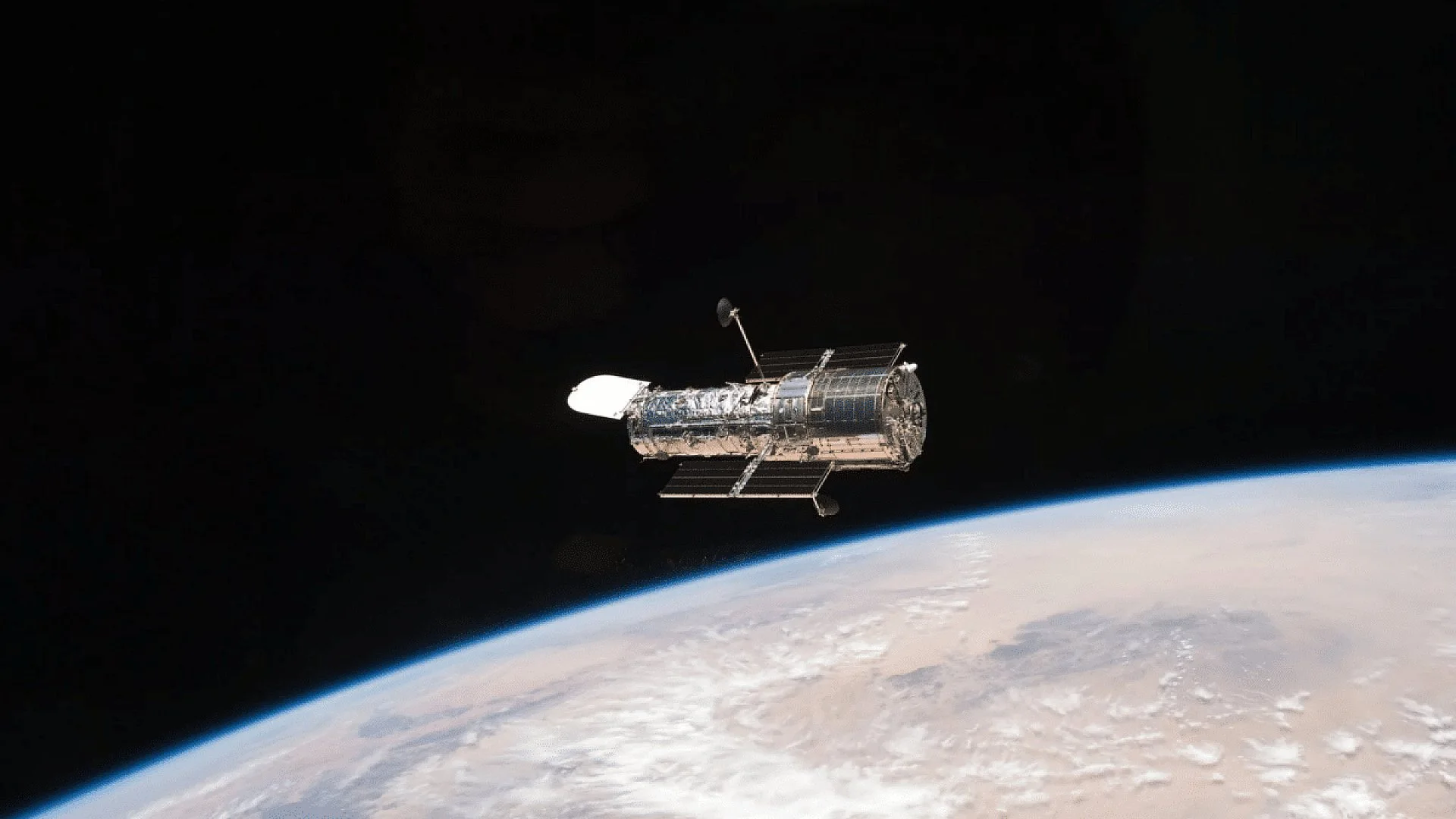
After more than thirty years of reshaping cosmic knowledge, the legendary Hubble Space Telescope is approaching the final phase of its orbital life. Recent analyses indicate that the observatory could plunge back into Earth’s atmosphere as soon as 2029, potentially scattering fragments over a swath of thousands of kilometres. NASA officials stress that the probability of harm to people is minimal, yet the inevitable descent underscores the end of an era for one of humanity’s most consequential scientific instruments.
Three Decades, Billions of Kilometres, Millions of Discoveries
Launched in 1990, Hubble has raced around Earth at roughly 28,163 km per hour (17,500 mph), accumulating more than 6 billion kilometres of travel. The telescope’s archive now exceeds 1.3 million observations, delivering iconic images and data that anchored the measurement of the universe’s age at 13.8 billion years and helped confirm the presence of dark energy through studies of Type Ia supernovae and Cepheid variables.
Space‑walk missions were pivotal in prolonging Hubble’s service. NASA notes, “After crews finished a series of three‑ to five‑day extravehicular activities, the STOCC controllers and Johnson Mission Control readied the telescope for release” and often “used the shuttle’s thrusters to lift Hubble into a modestly higher orbit, delaying the natural decay caused by atmospheric drag.” These maneuvers kept the observatory operational far beyond its original design horizon.
Because it’s been a while, here is an update of my plot on the altitude of the Hubble Space Telescope versus time
— Jonathan McDowell (@planet4589.bsky.social)2026-02-25T06:11:10.872Z
The Growing Threat of Orbital Decay
Hubble was never intended to remain aloft indefinitely. Even at the edge of the atmosphere, lingering drag incrementally reduces orbital velocity, gradually pulling the satellite lower. The retirement of the Space Shuttle fleet eliminated the option of a planned retrieval, leaving the telescope to follow an uncontrolled re‑entry trajectory.
A recent decay model, assuming average solar activity, suggests the most probable re‑entry window falls in 2033. Simulations estimate a debris corridor spanning 350 to 800 kilometres, making precise impact forecasting difficult. In worst‑case projections, fragments could intersect densely populated regions such as Macau, Hong Kong or Singapore, though the likelihood of casualties remains low.
Evaluating Re‑entry Hazards
NASA points out that predicting Hubble’s descent involves a complex interplay of solar flux, geomagnetic conditions and orbital mechanics. The study calculates an average casualty probability of roughly 1 in 330 along the telescope’s inclination, markedly higher than the agency’s target risk threshold of 1 in 10,000. While the odds of serious injury are slim, the potential for debris to reach inhabited zones warrants continuous monitoring.
Researchers recommend that future risk assessments incorporate refined solar‑cycle forecasts and updated demographic data to sharpen probability estimates. Such proactive modeling aims to protect public safety while allowing Hubble to conclude its historic mission with minimal disruption.
This article has been fact checked for accuracy, with information verified against reputable sources. Learn more about us and our editorial process.
Last reviewed on .
Article history
- Latest version
Reference(s)
- “Jonathan McDowell (@planet4589.bsky.social).” Bluesky Social <https://bsky.app/profile/did:plc:vqtp5dj2o6rqnge56sz2db5a?ref_src=embed>.
- “Jonathan McDowell (@planet4589.bsky.social).”, February 25, 2026 Bluesky Social <https://bsky.app/profile/did:plc:vqtp5dj2o6rqnge56sz2db5a/post/3mfnzjhkvhc27?ref_src=embed>.
Cite this page:
- Posted by Karan Das