DARPA Builds Robotic Satellite Mechanic For Missions 22,000 Miles Above Earth
DARPA to launch robotic spacecraft for in-space satellite repair and upgrades 22,000 miles above Earth
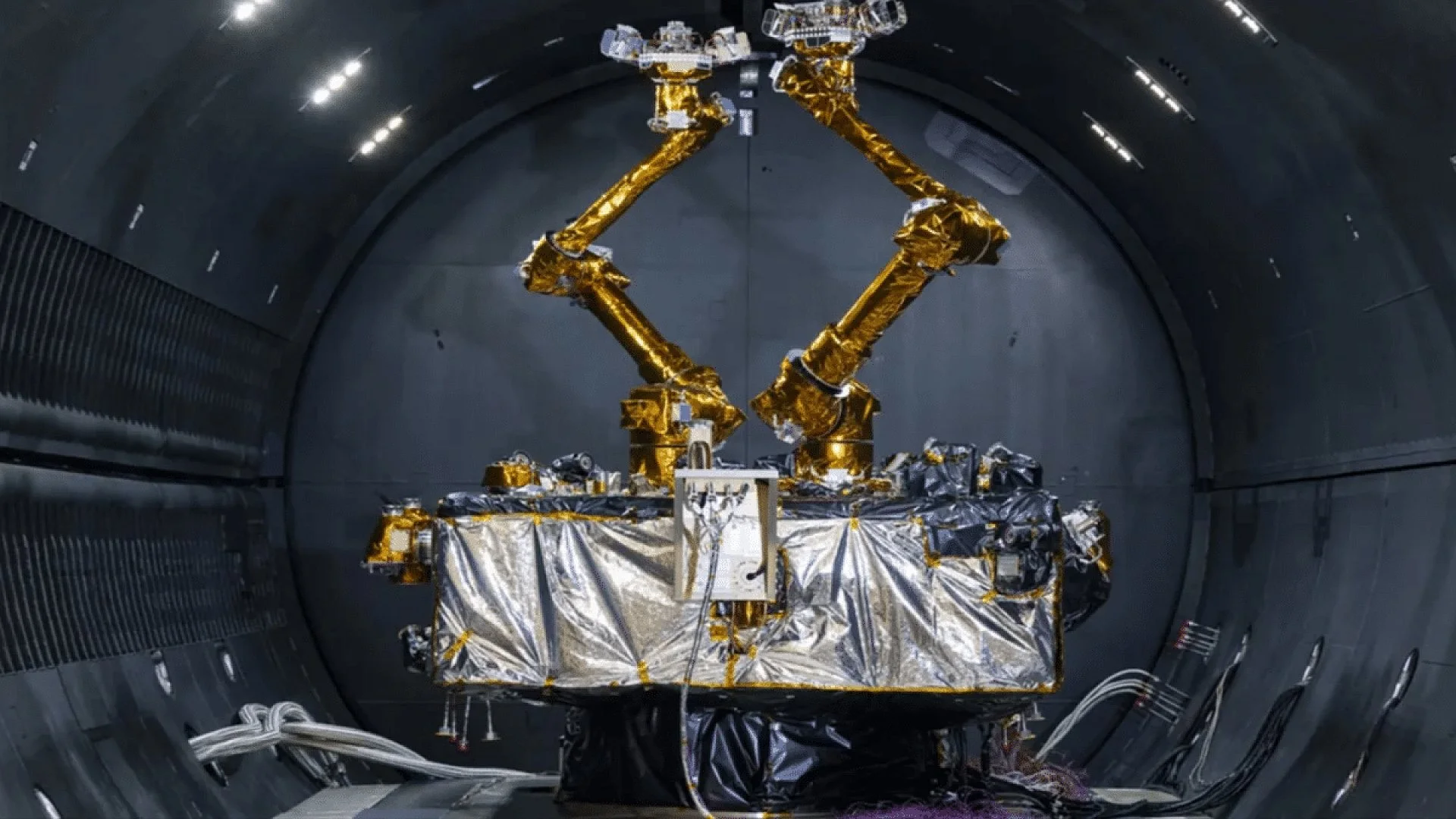
The Defense Advanced Research Projects Agency (DARPA) is gearing up for a groundbreaking orbital‑servicing demonstration that could change how high‑value satellites are maintained. The program, called Robotic Servicing of Geosynchronous Satellites (RSGS), aims to launch a robotic spacecraft capable of repairing and upgrading satellites positioned roughly 22,236 miles above Earth, potentially as early as this summer.
A Robotic Technician for the Highest Orbits
Geosynchronous satellites have long faced a harsh limitation: once their propellant depletes or components fail, there is virtually no way to intervene. Their altitude, far beyond the International Space Station, makes crewed missions impractical with today’s technology. RSGS intends to flip that script by deploying a service vehicle equipped with sophisticated manipulation tools into the most valuable orbital belt encircling the planet.
The craft’s chief function will be to rendezvous with aging or faulty satellites and carry out precise maintenance tasks while remaining in orbit. DARPA describes the core of the effort as a “highly dexterous robotic servicing suite”. This system is expected to conduct inspections, adjust orbital positions, investigate anomalies, relocate spacecraft, and install new payloads. The operations demand exacting accuracy because geostationary assets often cost hundreds of millions of dollars and support critical communications, weather forecasting, military surveillance and other global services.
Unlike low‑Earth‑orbit platforms that can be replaced relatively cheaply, geostationary satellites are built for exceptionally long service lives. A single mission that can add several years to that lifespan could dramatically reshape the satellite market. Program engineers also hope that in‑orbit servicing will allow future satellites to be launched with fewer redundant systems and reduced fuel loads.
Why the Geostationary Belt Is So Valuable
Orbiting at roughly 22,236 miles, geosynchronous satellites travel at the same rotational speed as Earth, staying fixed over a single region. This stationary viewpoint makes GEO indispensable for telecommunications, defense monitoring, weather prediction, navigation support and climate observation.
Reaching that altitude requires substantially more energy than low‑Earth‑orbit missions, and each launch represents a major financial commitment. Operators typically expect these spacecraft to operate reliably for about 15 years or longer. Yet even when hardware remains functional, rapid advances in technology can render payloads obsolete well before the satellite’s mechanical end of life.
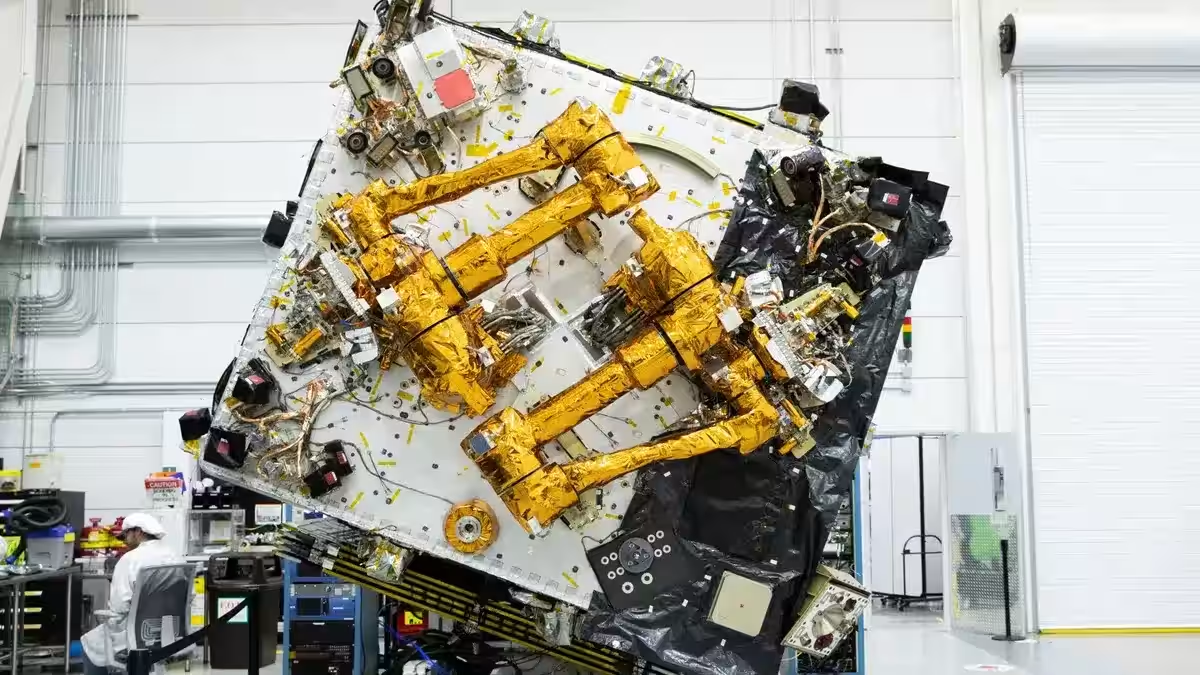
Credit: Northrop Grumman
DARPA highlights the problem in its mission brief: “Even fully functional satellites often have their operational lives cut short simply because they carry obsolete payloads — a frustrating situation for owners of assets worth hundreds of millions of dollars. With no support once in orbit, GEO satellites are equipped with redundant systems and maximum fuel capacity, which increases their complexity, weight, and expense,” the agency explained in a statement.
The urgency grows as orbital congestion worsens. Decommissioned satellites are typically moved to “graveyard” orbits after they run out of fuel, adding to the debris challenge and complicating long‑term traffic management. By fielding a vehicle that can service multiple satellites over extended missions, DARPA and its partners hope to foster a more sustainable operating model for the geostationary environment.
From Early Setbacks to Near‑Launch Status
The RSGS effort has navigated a protracted development timeline. First announced in 2017, the program set out to prove robotic servicing at GEO—a capability never before demonstrated. Over the years, the project encountered contractor turnover, pandemic‑related supply chain disruptions and technical integration hurdles involving the service payload.
Initially led by Maxar Technologies, the original contractor withdrew in 2019. The program later shifted to SpaceLogistics, a Northrop Grumman subsidiary, which took charge of marrying the robotic suite to the spacecraft bus. Engineers reported significant challenges adapting DARPA’s complex payload for flight readiness.
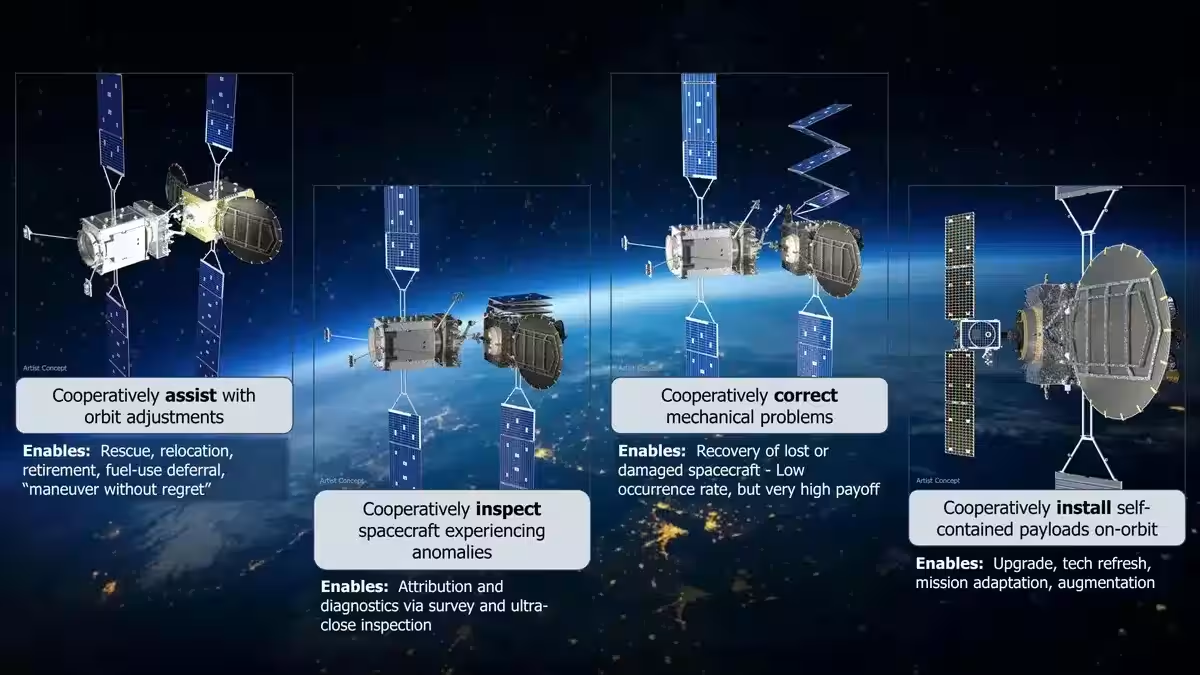
Image credit: DARPA
Nearly a decade after its inception, DARPA reports that the spacecraft is approaching launch readiness. If the schedule holds, the vehicle will spend about ten months traveling to geosynchronous orbit using electric propulsion, after which it will conduct a series of demonstration flights to validate the robotic servicing concept under real‑world conditions.
The initiative also draws support from NASA and the U.S. Naval Research Laboratory, underscoring the strategic importance of in‑orbit servicing for future national space infrastructure. The collaboration reflects a growing consensus that maintaining assets in space may become as critical as building them.
Toward a Sustainable Satellite Architecture
RSGS envisions a future where satellites are not static, disposable platforms but evolving systems that receive upgrades, component swaps, inspections and repairs while remaining operational. Such a shift could overhaul the economics of space missions. Instead of engineering satellites to survive unaided for decades, manufacturers could design them for periodic servicing, potentially lowering launch costs, easing engineering constraints and increasing adaptability to rapid technology changes.
DARPA summarized its long‑term ambition in a recent statement:
“By transitioning from a paradigm of disposable space assets to one of sustainable, upgradable, and resilient satellites, RSGS aims to fundamentally alter space operations for both the public and private sectors,” officials wrote of the mission in a separate statement. “With launch on the horizon, the RSGS program is poised to pave the way for a more resilient and sustainable infrastructure in space.”
Global competition in orbital servicing is accelerating. Companies such as Astroscale and Thales Alenia Space are developing parallel technologies as governments and commercial operators recognize the growing value of satellite maintenance and debris‑mitigation solutions. DARPA’s effort may become one of the first large‑scale proofs that robotic repair can function reliably at geostationary distances.
This article has been fact checked for accuracy, with information verified against reputable sources. Learn more about us and our editorial process.
Last reviewed on .
Article history
- Latest version
Reference(s)
- “Darpa Program Rsgs Mrv High Quality.” <https://www.darpa.mil/sites/default/files/gallery/2026-05/darpa-program-rsgs-mrv-high-quality.jpg>.
- “Robotic Servicing of Geosynchronous Satellites technology to launch in 2026 | DARPA.” <https://www.darpa.mil/news/2026/robotic-servicing-geosynchronous-satellites-technology-launch-2026>.
Cite this page:
- Posted by Karan Das