Astronomers Uncover How a Dying Binary Star Pair Sculpted the Stunning Crystal Ball Nebula 1,500 Light-Years Away
A dying binary star pair sculpts the mesmerizing Crystal Ball Nebula, revealing hidden stellar death complexity
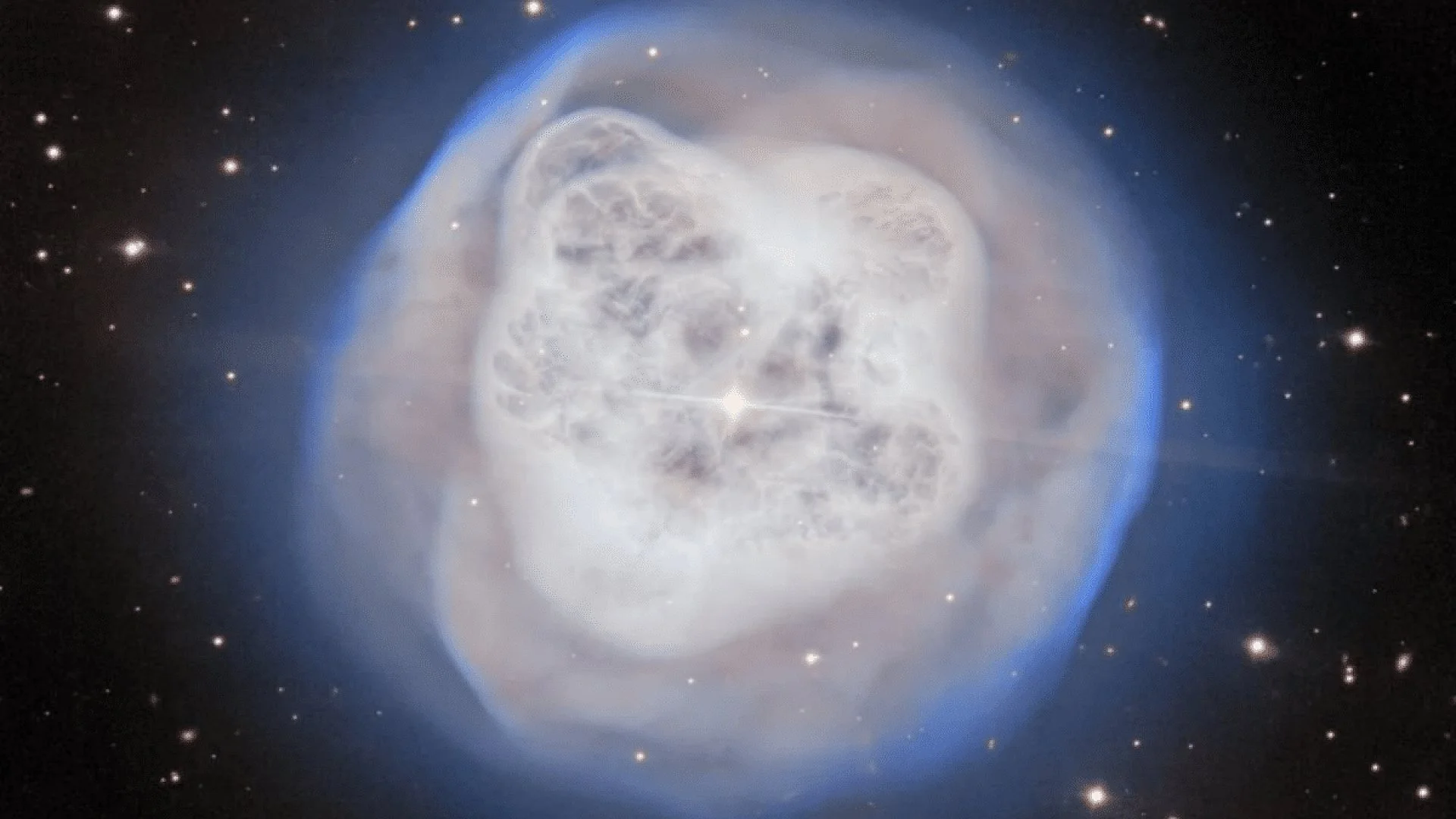
A new set of images from Gemini North and the James Webb Space Telescope has revealed the Crystal Ball Nebula (NGC 1514) in unprecedented detail, showcasing a tangled web of gas and dust around a dying binary star system located roughly 1,500 light‑years from Earth.
How dying stars write their final chapters
The term “planetary nebula” is a historical misnomer coined by William Herschel, who thought these glowing shells resembled planets through his early telescopes. In truth, they mark the last gasp of stars with masses up to several times that of the Sun. When nuclear fusion stalls, the outer envelopes are blown away, forming expanding bubbles that later become distorted by uneven ejections and turbulent flows.
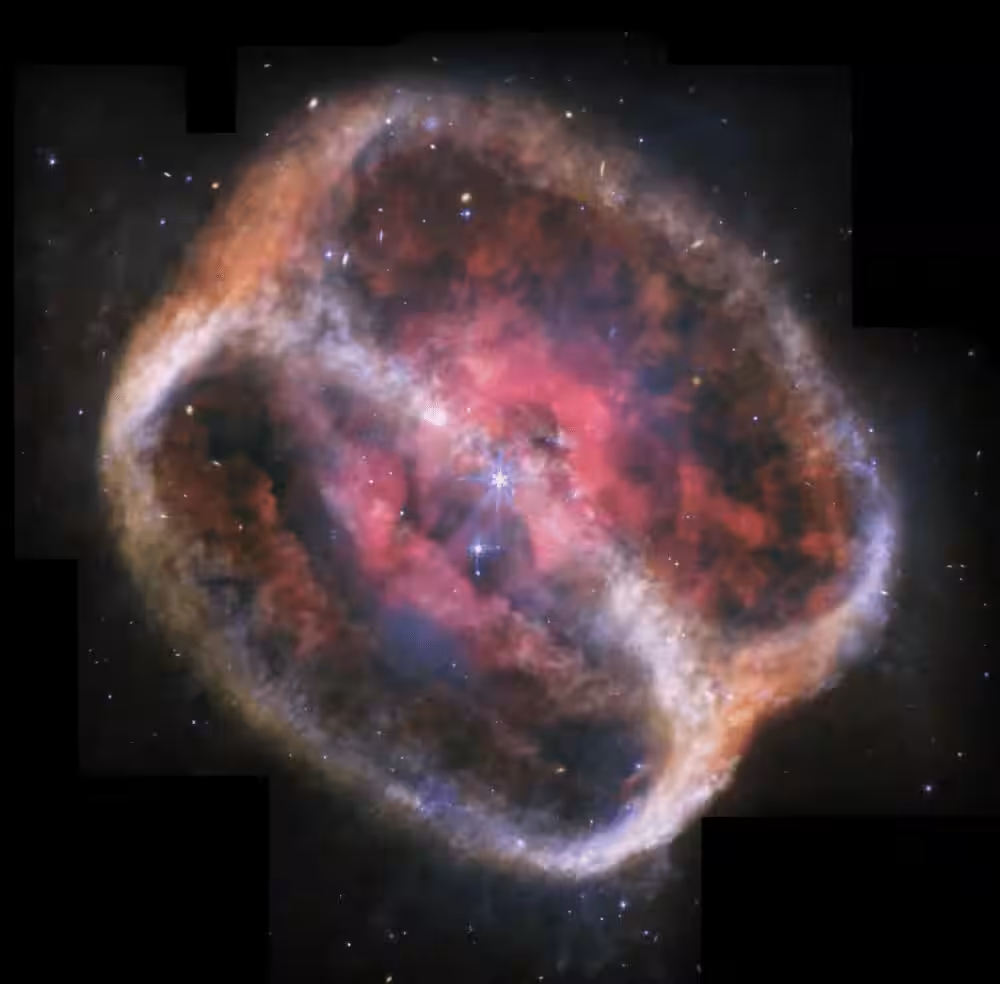
The Crystal Ball Nebula stands out for its intricate filaments, dense knots, and cavernous voids. Infrared observations from JWST have uncovered structures invisible to traditional optical surveys, notably a pair of concentric dust rings encircling the nebula.
“Scientists believe that one of these stars, which was once several times more massive than our sun, released its outer layers while in the throes of death,” NOIRLab wrote in a statement accompanying the image.
Binary forces shape the nebular architecture
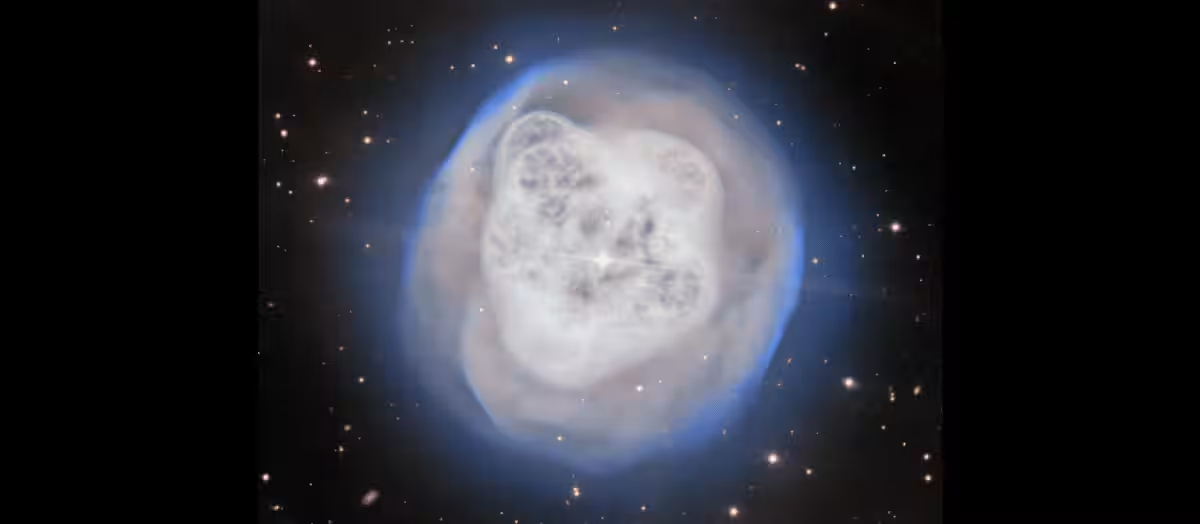
NGC 1514’s asymmetrical silhouette arises from a central pair of stars locked in a nine‑year orbit—the longest period measured for any planetary nebula. Their mutual gravity and contrasting stellar winds carve the uneven, layered shells that give the nebula its striking appearance.
“As the progenitor star and its binary companion orbit each other, they mold the expanding shell of gas with their strong, asymmetrical winds, forming the lumpy layers we see today,” NOIRLab noted.
One component is a scorching, sub‑luminous O‑type core that has been stripped of much of its envelope, while its partner—a luminous A0III giant—provides the illumination that makes the surrounding gas glow. This partnership offers a real‑time laboratory for studying how binary interactions dictate the final morphology of dying stars.
Infrared eyes reveal concealed dust structures
JWST’s mid‑infrared vision has exposed a hidden system of dust rings that likely originated from an early burst of mass loss. Subsequent fast winds from the binary pair have reshaped these rings, underscoring the layered complexity of stellar death. The Gemini North images complement this picture, highlighting the wispy, multi‑lobed morphology produced by the interaction of radiation, gas, and dust over millennia.
Analyses from 2025 indicate that the rings are dominated by dust rather than gas, offering clues about how binary systems recycle material and influence the surrounding interstellar environment.
A fleeting phase in cosmic time
Planetary nebulae such as NGC 1514 persist for only a few × 10⁴ years before their material disperses into the galactic medium, seeding future generations of stars with heavy elements forged during the progenitor’s lifetime. Observations of these short‑lived structures provide a snapshot of the final acts of stellar evolution, capturing the interplay of winds, binary dynamics, and mass ejection.
The Crystal Ball Nebula thus serves as a vivid illustration of how dying stars leave behind intricate, luminous relics that both fascinate astronomers and enrich the cosmos.
This article has been fact checked for accuracy, with information verified against reputable sources. Learn more about us and our editorial process.
Last reviewed on .
Article history
- Latest version
Reference(s)
- “Gaze into the Crystal Ball Nebula and See the Light Emitted by a Dying Star 1500 Years Ago - The cosmic splendor of NGC 1514 is revealed in this new image from the Gemini North telescope in Hawai‘i.” www.noirlab.edu <https://noirlab.edu/public/news/noirlab2613/>.
Cite this page:
- Posted by Karan Das