NASA’s Perseverance Rover Spots a Strange Rock Tower on Mars That Appears to Be Carefully Stacked
NASA’s Perseverance rover découvre un empilement rocheux bizarre sur Mars révélant le passé géologique de la planète
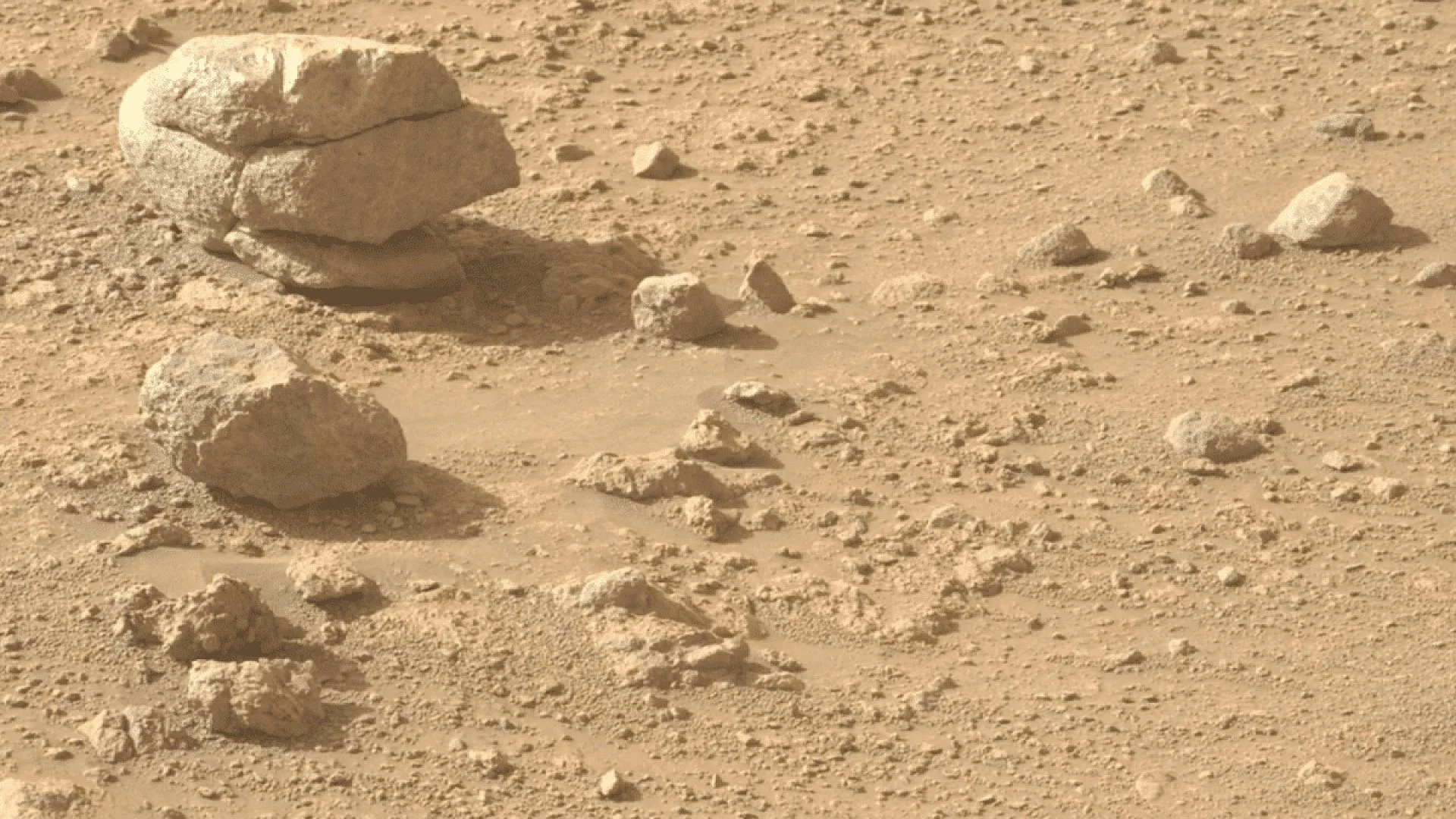
On Sol 1859 (May 13, 2026), NASA’s Perseverance rover captured a striking arrangement of rocks that appears as a tiny tower on the Martian plain. The Mast‑cam Z system delivered a high‑resolution view of the dusty terrain, offering scientists a fresh clue about the Red Planet’s geological past.
An Unusual Rock Stack Revealed by Perseverance
The formation looks almost purposeful, resembling a cairn, yet experts stress its natural origin. On Earth, similar piles often serve as trail markers, but on Mars the structure likely resulted from processes such as wind abrasion, episodic water flow, or the gradual fracturing of a single boulder over eons. Multiple angles recorded by Mast‑cam Z show crisp edges and faint layering that point to geological activity rather than any artificial placement.
Three distinct segments give the impression of separate stones balanced atop one another. NASA analysts propose that the “stacked” appearance may be the outcome of a solitary rock that cracked and reshaped over time. Data from the earlier Curiosity rover have repeatedly demonstrated that Martian winds dominate the landscape, carving, smoothing, and relocating rocks across plains and cratered zones for hundreds of millions of years.
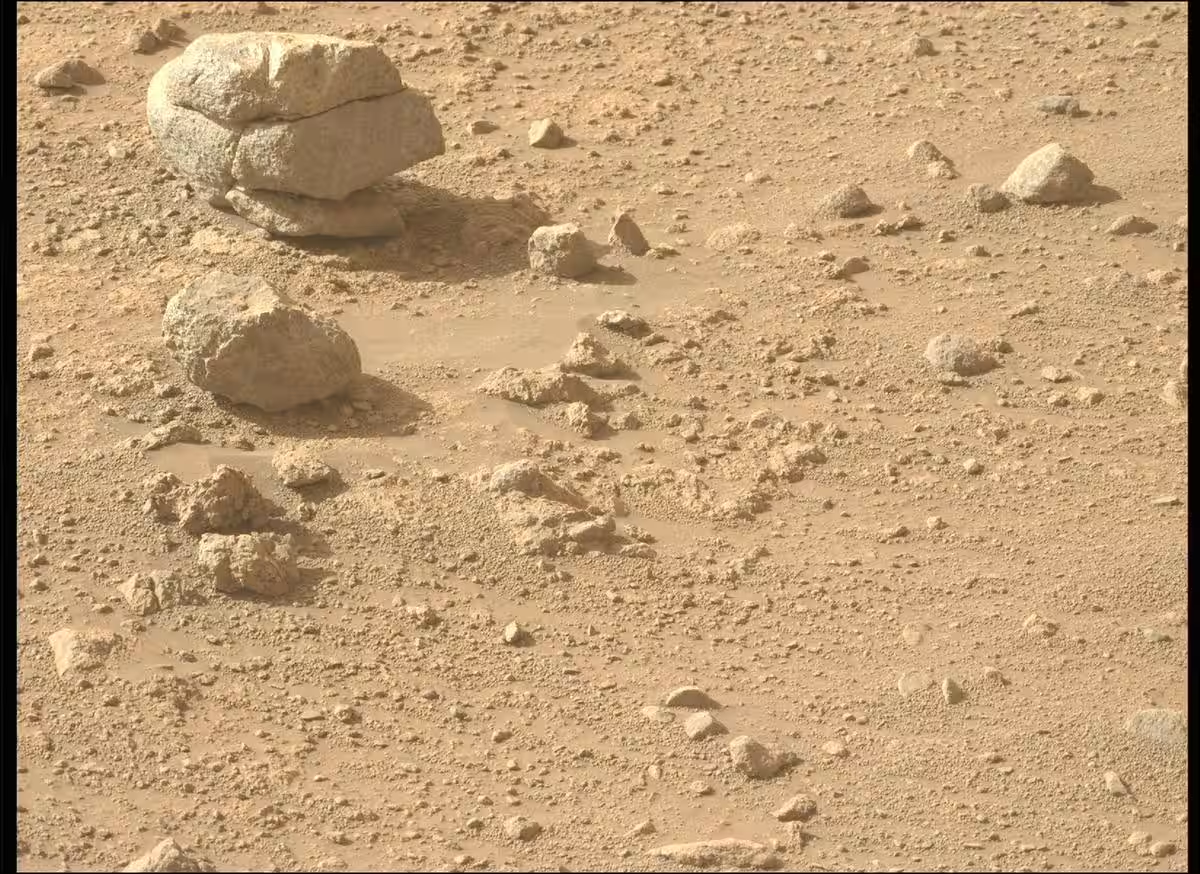
Image Credit: NASA/JPL-Caltech/ASU
Why This Find Matters for Martian Science
While odd rock shapes have been photographed on Mars before—ranging from smooth spheres to banded cliffs—each new example enriches the catalog of geological oddities that help researchers infer the planet’s ancient climate. Unlike the famously misinterpreted “face” captured by Viking in 1976, this image provides straightforward evidence of natural forces shaping the surface.
Studying such structures allows scientists to refine models of past wind speeds, weathering rates, and sediment transport. By tracing how rocks fracture, erode, and settle, researchers can better estimate the conditions that might have once supported liquid water and, possibly, microbial life.
Interpretations from NASA Researchers
NASA teams stress that no human activity could have produced the arrangement; the rover itself is the only nearby instrument. Analyses of data from both Curiosity and Perseverance confirm that wind and intermittent water flow are sufficient to sculpt dramatic rock forms that may appear intentional but are entirely natural.
These observations also feed into planning for future human exploration. Knowledge of rock stability, erosion patterns, and terrain consistency is essential for designing safe rover routes, selecting landing sites, and eventually constructing habitats on the Martian surface.
A Glimpse into Mars’ Ancient Environment
Every unusual rock, whether stacked, fractured, or layered, records the interplay of wind and water that once acted on Mars. By decoding these signatures, scientists can reconstruct how the planet transitioned from a wetter, more active world to the arid landscape observed today. Perseverance’s ongoing documentation ensures that each discovery is captured with the precision required for rigorous scientific analysis.
As NASA continues to return images from the Red Planet, formations like this tower will remain focal points for investigation, reminding us that even modest details can illuminate vast planetary histories.
This article has been fact checked for accuracy, with information verified against reputable sources. Learn more about us and our editorial process.
Last reviewed on .
Article history
- Latest version
Reference(s)
- “Images from the Mars Perseverance Rover - NASA.” <https://mars.nasa.gov/mars2020/multimedia/raw-images/ZL0_1859_0831974139_738EBY_N0880620ZCAM09915_0630LMJ>.
Cite this page:
- Posted by Karan Das