Scientists Finally Know Why Earth Keeps Heating Up While One Layer of the Atmosphere Keeps Freezing
The planet’s surface is experiencing rising temperatures, yet high above it, the trend is reversing. Researchers might have at last pinpointed the cause.
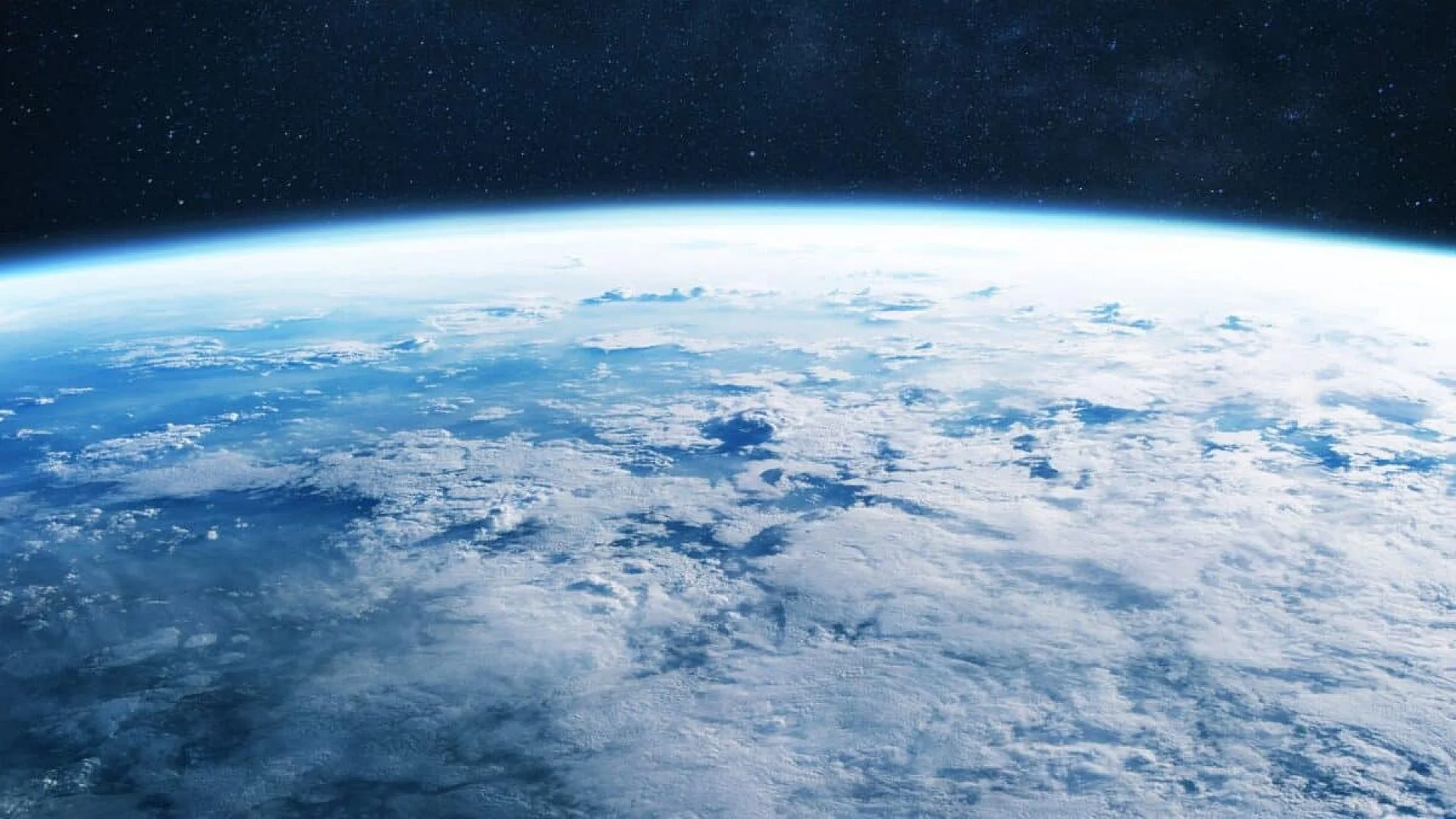
Earth’s surface is experiencing a warming trend, but in the upper atmosphere, temperatures have been steadily decreasing for years. Researchers claim to have identified the underlying mechanism behind this phenomenon, which has been observed since the 20th century.
A recent study published in Nature Geoscience by scientists from Columbia University sheds light on the process. The authors explain how infrared radiation behaves in the upper atmosphere and how certain wavelengths are more efficient at cooling than others.
The Stratosphere’s Cooling Mechanism
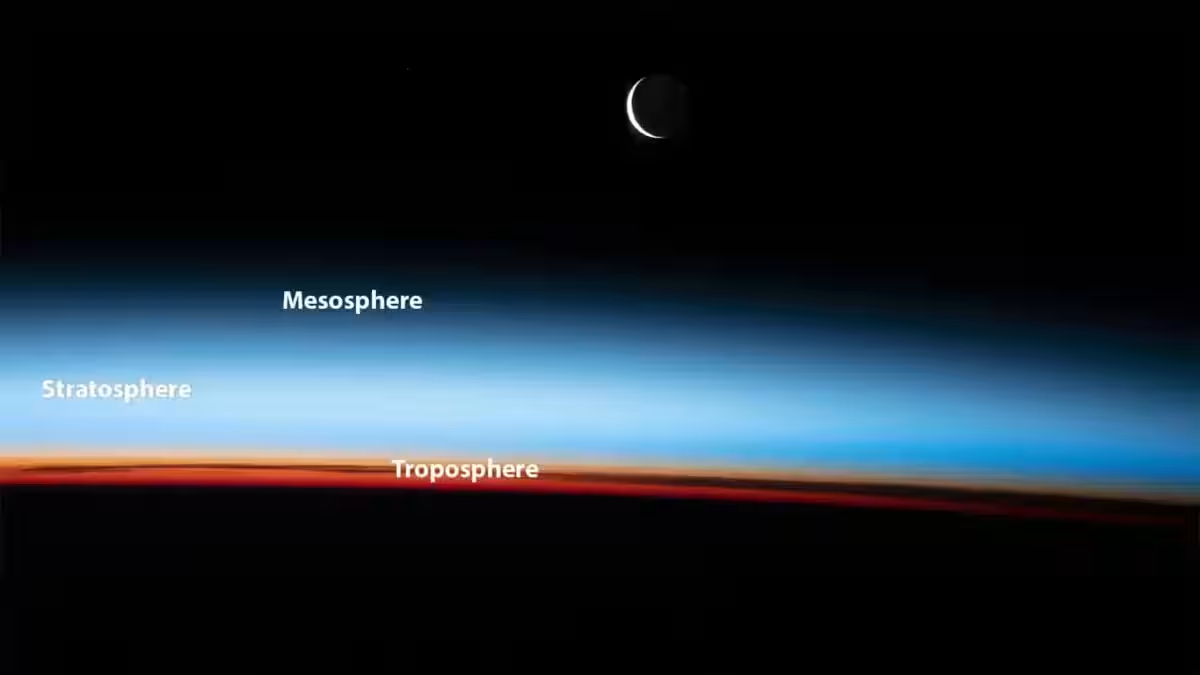
The stratosphere, spanning from approximately 11 to 50 kilometers above Earth’s surface, is a crucial region where carbon dioxide absorbs and emits infrared energy. The study reveals that rising CO2 levels enhance the stratosphere’s ability to release heat, leading to a gradual cooling effect.
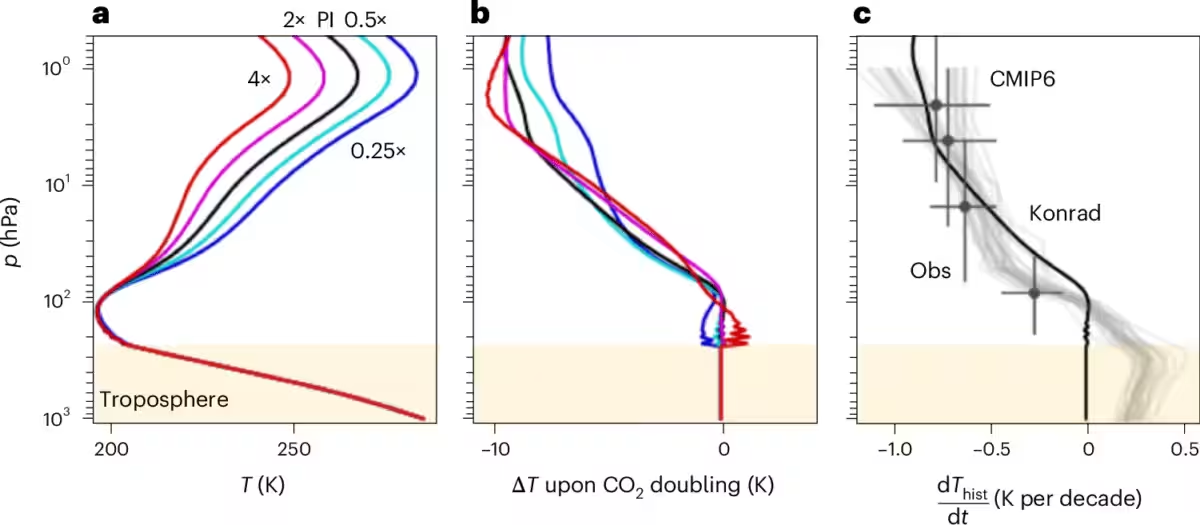
Researchers found that the stratosphere has cooled by around 2°C since the mid-1980s. This phenomenon was first predicted in the 1960s by climatologist Syukuro Manabe, who later received a Nobel Prize for his work.
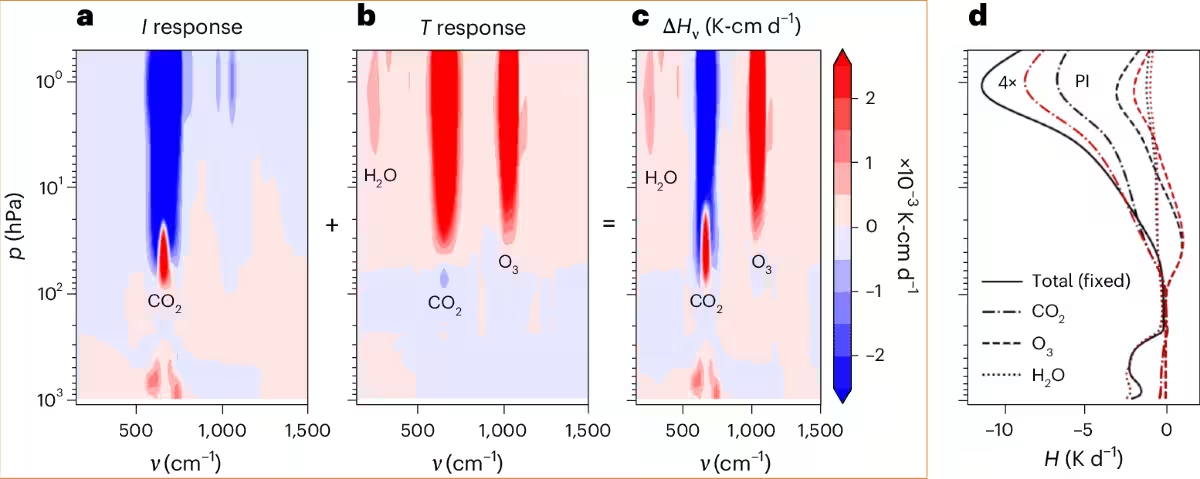
The Columbia team analyzed the behavior of different infrared wavelengths in the atmosphere and identified a specific range, dubbed the “Goldilocks zone,” where infrared radiation escapes into space with high efficiency. As atmospheric CO2 levels continue to rise, this zone expands.
“It’s those changes in efficiency that are going to ultimately be what’s driving stratospheric cooling,” Cohen explained in comments accompanying the Nature Geoscience publication.
The researchers also examined the impact of ozone and water vapor on atmospheric heat transfer. However, their analysis revealed that both gases play a relatively minor role in stratospheric cooling compared to carbon dioxide.
The cooling effect is not uniform throughout the stratosphere. The models indicate that temperatures drop more rapidly at higher altitudes, with the strongest cooling occurring near the stratopause, the upper boundary of the stratosphere.
A Key Climate Signal Becomes Clearer
The study also aligns with several atmospheric trends observed by scientists over the years. One of the clearest findings is that every time atmospheric CO2 levels double, temperatures near the stratopause drop by approximately 8°C.
Researchers from the Columbia Climate School suggest that the results point to a feedback effect tied to Earth’s energy balance. As the stratosphere cools, the planet sends less infrared energy out into space, resulting in more heat being trapped closer to Earth’s surface.
The team emphasizes that the study was not intended to prove the existence of global warming. Instead, it aimed to improve our understanding of how part of the atmosphere responds to rising greenhouse gas levels.
The research may also have implications for scientists studying atmospheres beyond Earth, including those of planets in our solar system and distant exoplanets.
This article has been fact checked for accuracy, with information verified against reputable sources. Learn more about us and our editorial process.
Last reviewed on .
Article history
- Latest version
Reference(s)
- “Nobel Prize in Physics 2021.” NobelPrize.org <https://www.nobelprize.org/prizes/physics/2021/manabe/biographical/>.
- Cermak, Alicia. “What is the habitable zone or “Goldilocks zone”? - NASA Science.”, February 21, 2017 NASA <https://science.nasa.gov/exoplanets/what-is-the-habitable-zone-or-goldilocks-zone/>.
- Cohen, Sean. “Stratospheric cooling and amplification of radiative forcing with rising carbon dioxide - Nature Geoscience.”, vol. 19, no. 5, pp. 507-512. Nature, doi: 10.1038/s41561-026-01965-8. <https://www.nature.com/articles/s41561-026-01965-8>.
Cite this page:
- Posted by Karan Das