Space Launch Costs Plummet 96% Since 1960, Paving Way for Solar Power and Asteroid Mining
Cambridge researchers claim orbital solar power, asteroid mining and space manufacturing are becoming economically viable as launch costs drop 96% since 1960.
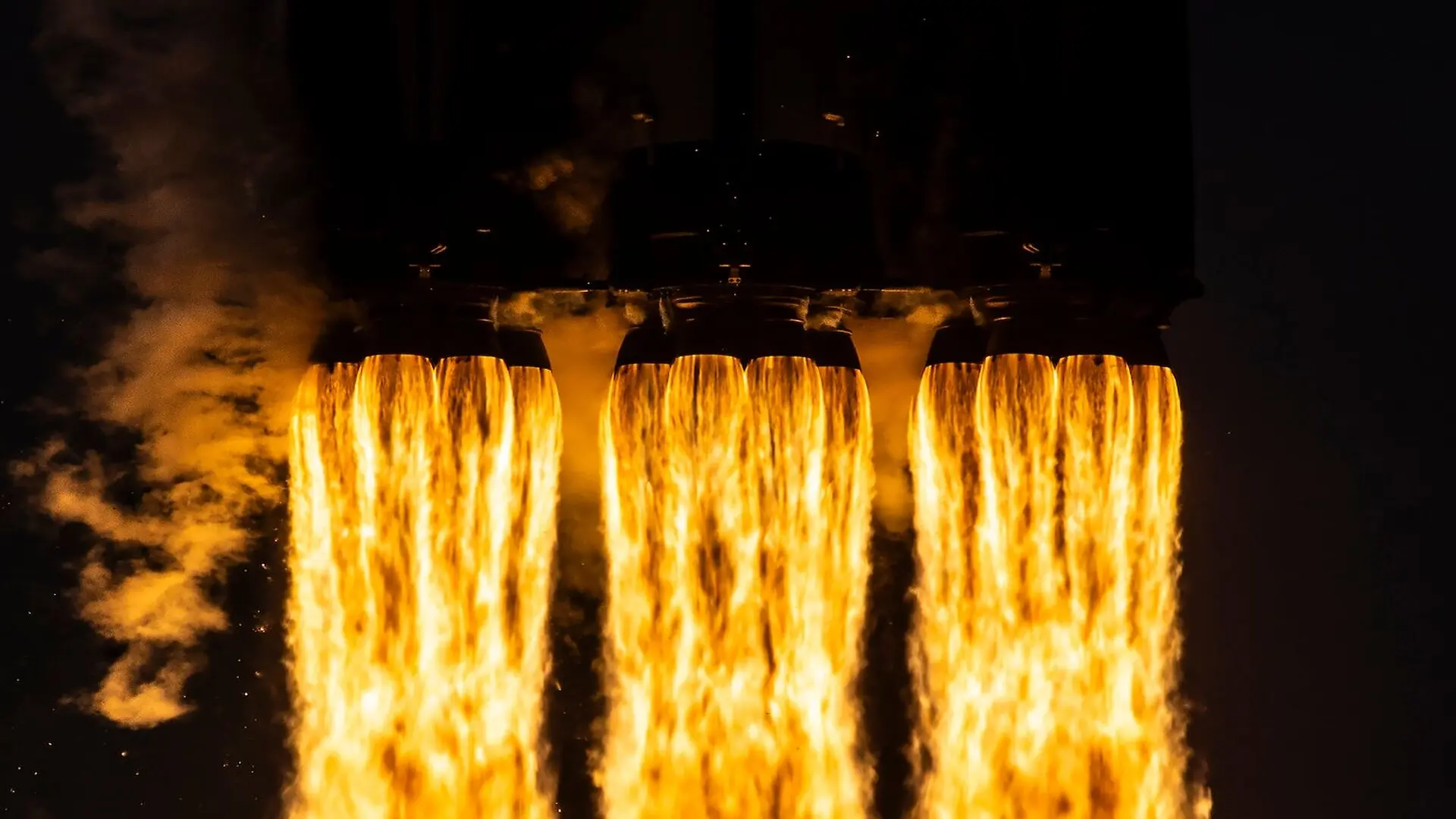
Cambridge scholars argue that low‑orbit solar farms, asteroid extraction and off‑world manufacturing may soon become economically viable.
Launch Prices Drop Sharply, Opening Door to Space‑Based Industries
New analysis from the University of Cambridge shows that the cost of sending material into orbit has fallen dramatically, making a range of commercial activities in space increasingly plausible.
In the early days of the space era, delivering a kilogram of payload cost well over $87,000 (2024 dollars). By 2025, that figure had shrunk to $3,868 – a 96 % reduction – and the model predicts further declines to $1,569 by 2030 and potentially $273 by 2040.
The researchers built a database covering more than 4,400 launches from 1960 to 2025, representing over 330 distinct rocket designs. By calculating each mission’s “unit flyaway cost” – the total expense of manufacturing, maintaining and launching a vehicle, exclusive of R&D – they were able to test the applicability of Wright’s Law, which links cost drops to cumulative production.
Their findings reveal that each time the total payload sent to orbit doubles, the average cost per kilogram falls by 21.2 %. This learning curve is steeper than that observed for many historic technologies.
For comparison, solar‑panel production – often cited as a benchmark learning curve – achieved a 99.8 % price reduction between 1975 and 2023, but its per‑doubling decline sits at 20.2 %, slightly slower than that of launch services. Even the 19th‑century steamship revolution saw a modest 15.5 % cost drop per payload doubling.
“Space is no longer a science‑fiction fantasy or a purely scientific pursuit, it is becoming a marketplace,” said Alessio Terzi, lead author of the study, in a press release. “Rapidly falling launch costs could open the way to space colonization and commercial activity far beyond low Earth orbit.”
The study, published in PNAS Nexus, highlights that the current trajectory could enable ventures such as orbital solar power stations, asteroid mining operations, and manufacturing facilities that produce fiber‑optic cables or bioprinted organs in microgravity.
However, the analysis also flags a concentration risk: SpaceX presently delivers roughly 80 % of payloads to orbit. Its upcoming reusable Starship system could drive costs even lower, but a dominant market player may also discourage competition and raise concerns about monopoly power.
Another emerging issue is orbital congestion. As launch costs decline, low Earth orbit may become saturated with debris, complicating safe access and increasing the risk of collisions.
Despite these challenges, the authors argue that the steep learning curve suggests ample room for further cost reductions, potentially ushering in an economic boom comparable to the steamship era, but on a much smaller scale.
This article has been fact checked for accuracy, with information verified against reputable sources. Learn more about us and our editorial process.
Last reviewed on .
Article history
- Latest version
Reference(s)
- “Space cargo costs could fall more than 90% by 2040, study suggests.” University of Cambridge <https://www.cam.ac.uk/stories/space-cargo-costs-set-to-plummet>.
Cite this page:
- Posted by Zara Tariq