Canadian Wildfires Cloak New York in Yellow Haze, Pushing AQI to Hazardous
Canada’s massive wildfires blanket the Northeast US in gray, orange and yellow haze, pushing air pollution to hazardous levels.
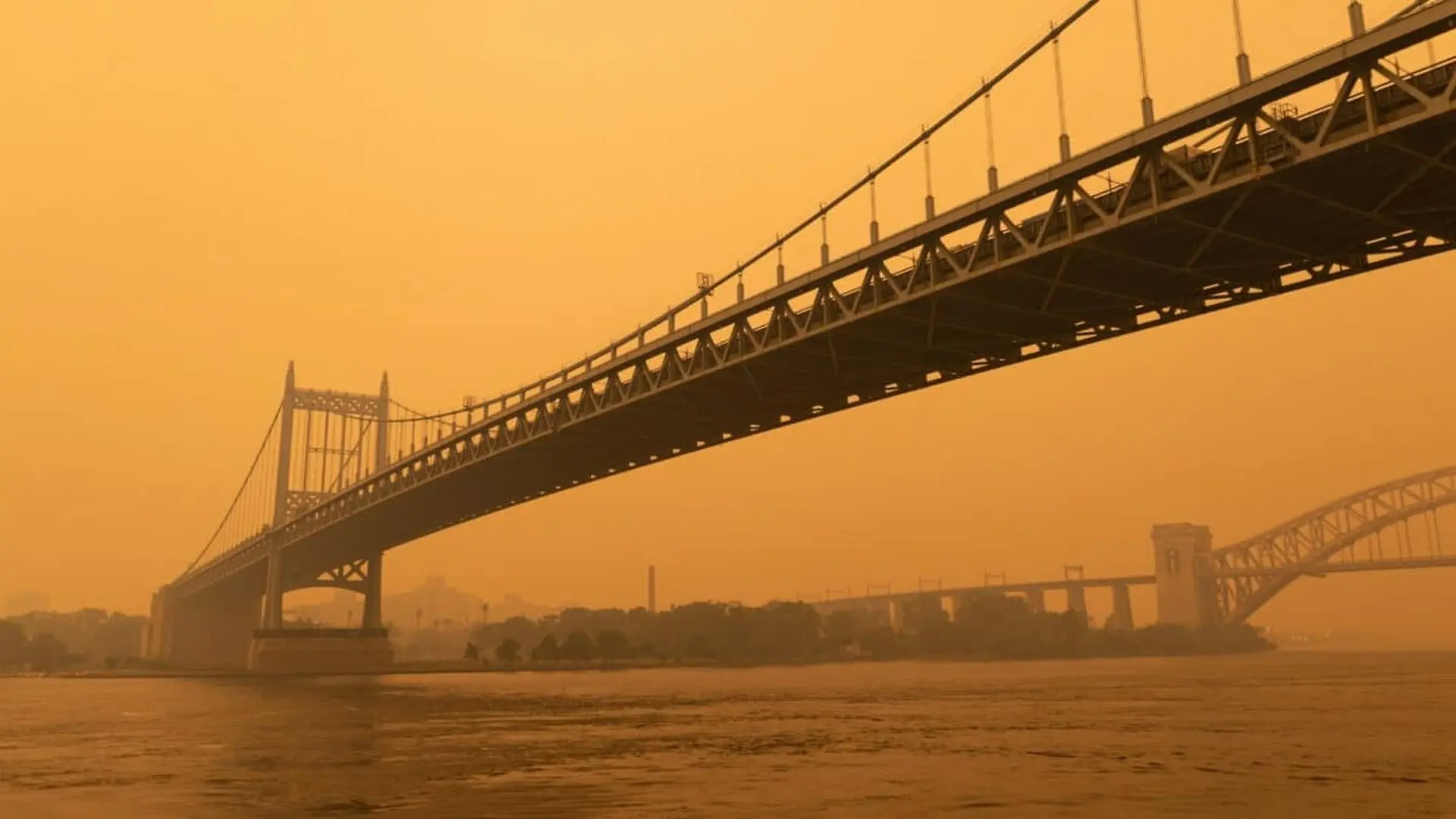
A thick haze blanketed New York City in early June 2023, slashing visibility and pushing the city’s air quality to its poorest level on record. Measurements placed the United States’ worst air quality in New York, with only Delhi, India ranking higher worldwide.
The smog originated far to the north, riding a low‑pressure system that swept smoke from a massive wildfire outbreak across Canada into the northeastern United States. The plume drifted over New York, New Jersey and Pennsylvania, delivering a blanket of particulate matter that triggered hazardous readings on the U.S. Air Quality Index.
Canadian Wildfires Fuel an Unprecedented Smoke Invasion
At the time of the event, Canada was battling 416 active wildfires, with the Canadian Interagency Forest Fire Center listing 240 as “out of control.” According to The Washington Post, the scale of the blaze season was a key driver behind the trans‑border haze. Popular Mechanics noted that the Canadian Interagency Forest Fire Center’s website remained operational, except for its current wildfire report, underscoring the intensity of the situation.
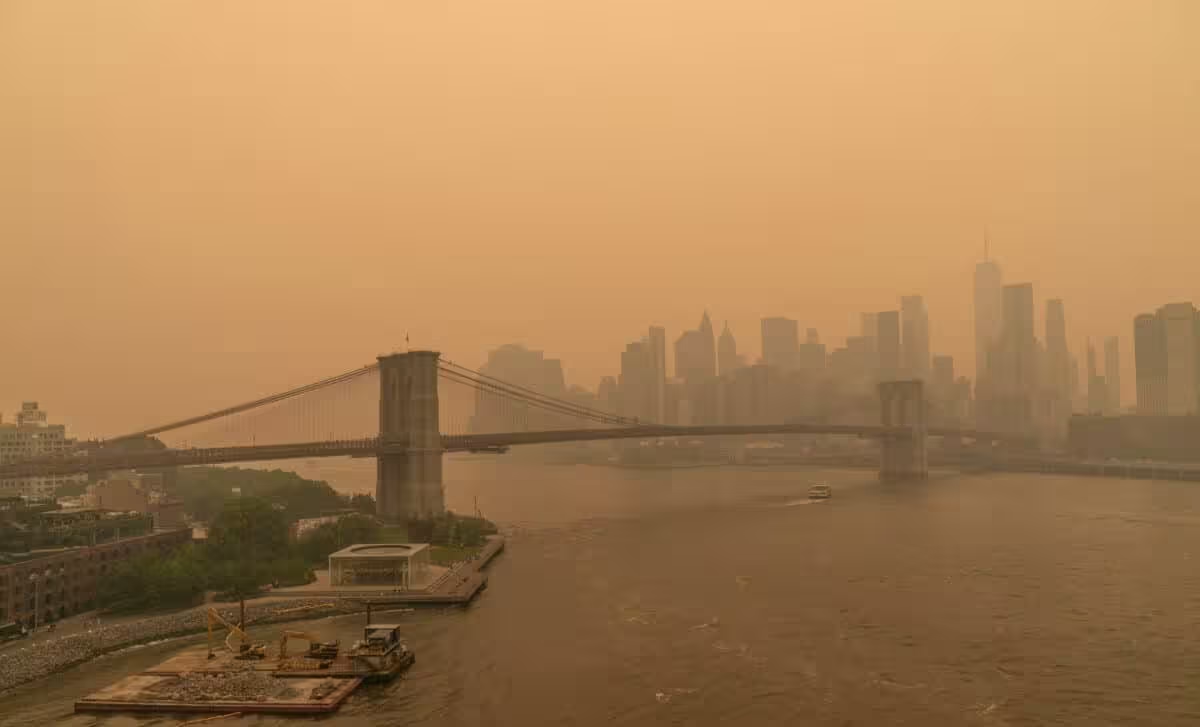
The air quality index in New York surged above 200, initially entering the “very unhealthy” (purple) tier before climbing into the “hazardous” (maroon) range. Health officials responded by urging residents to curtail outdoor activities, wear N95‑type respirators when exposure was unavoidable, and avoid exercising until smoke levels fell.
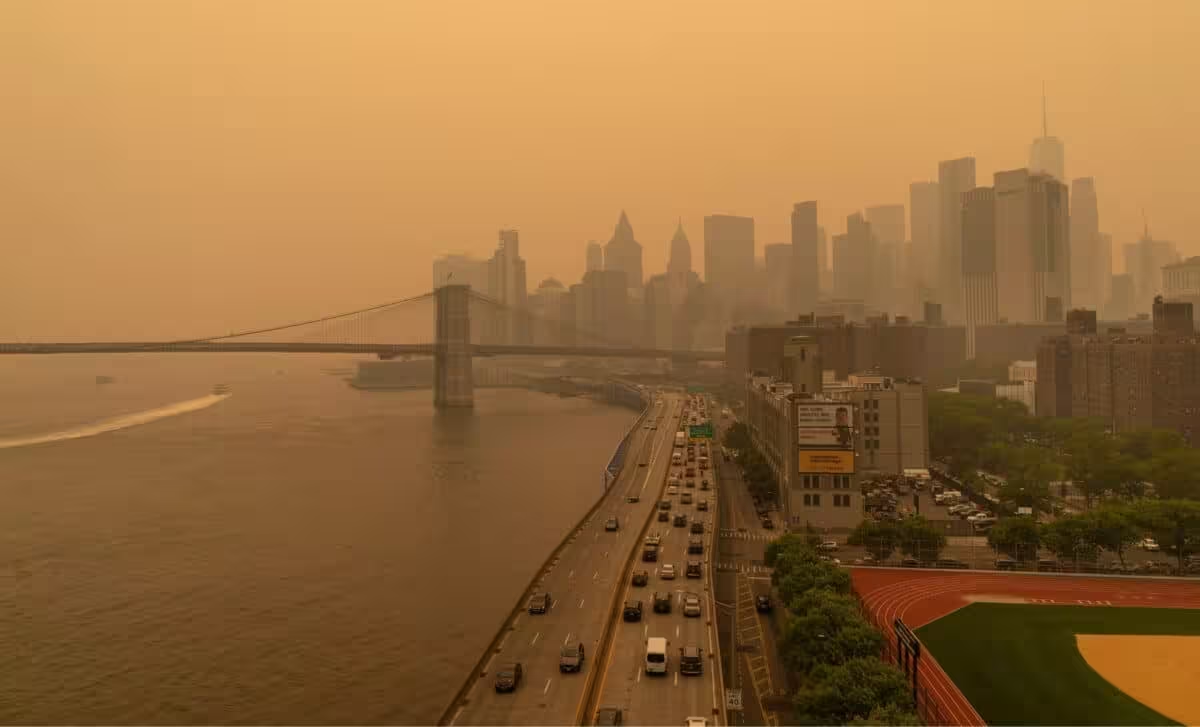
Beyond the metrics, the smog produced visible and physiological effects: sunlight turned amber as it filtered through the dense haze, while many residents reported coughing fits and irritated eyes.
East Coast Residents Confront Conditions Common on the West Coast
For most people along the Atlantic seaboard, the orange‑tinged sky was an unfamiliar sight, a contrast to the West Coast where similar smoke events have become a regular feature of wildfire seasons. In an essay for The New York Times, San Francisco resident Kevin Yamamura observed, “Some New Yorkers were out running this morning under orange skies, and all I could think was, why didn’t they check their air quality apps?”
The episode underscores a broader trend highlighted by a United Nations assessment released in February 2022, which warned of a “global wildfire crisis.” The report predicts a 57 percent rise in worldwide wildfire risk by the end of the century, driven by hotter, drier conditions and more frequent ignitions.
This article has been fact checked for accuracy, with information verified against reputable sources. Learn more about us and our editorial process.
Last reviewed on .
Article history
- Latest version
- Last updated by Dayyal Dungrela, MLT, BSc, BS
Reference(s)
- “Northeast Wildfire Smoke Canada Pollution.” <https://www.washingtonpost.com/weather/2023/06/06/northeast-wildfire-smoke-canada-pollution/>.
- “The Sky Is Yellow Smoke New York Air Quality Fire.” <https://www.popularmechanics.com/science/health/a44118831/the-sky-is-yellow-smoke-new-york-air-quality-fire/>.
- <https://www.nytimes.com/live/2023/06/07/us/canada-wildfires-air-quality-smoke>.
Cite this page:
- Posted by Zara Tariq