Byzantine Shipwreck Off Croatia Reveals Largest Mediterranean Gold Hoard and Emperor’s Ring
Divers find a millennium‑old Byzantine shipwreck treasure of gold in the Mediterranean, revealing a hidden ancient hoard.

A Byzantine merchant vessel discovered off Croatia’s island of Mljet has yielded the most extensive assemblage of gold artefacts ever recovered from a Mediterranean shipwreck, offering a rare glimpse into a scarcely documented era of early medieval history.
Submerged in the Adriatic Sea, the wreck lies among more than two dozen maritime finds surrounding Mljet, a site that preserves vessels spanning roughly 2,500 years of seafaring activity.
Since 2015, archaeologists from the Croatian Conservation Institute have examined the ship, quickly recognizing the extraordinary nature of its cargo, which points to a network of wealth, trade and elite connections during a time when few written sources survive.
Opulent Finds Reveal Imperial Ties
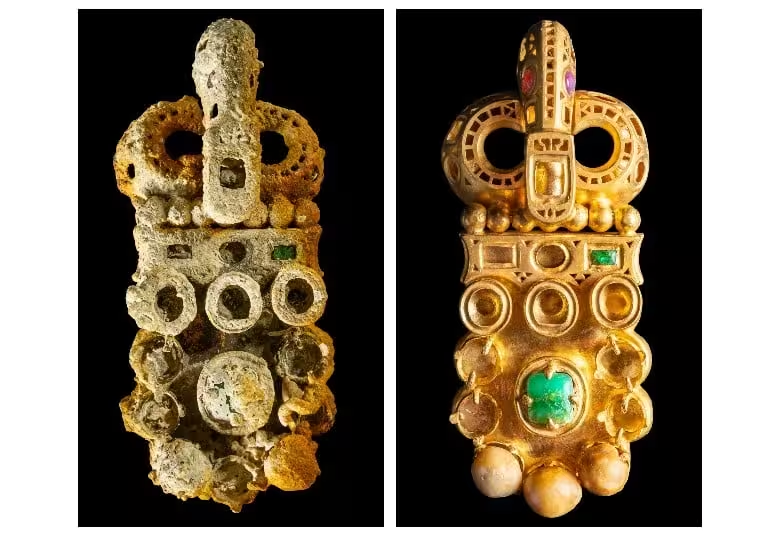
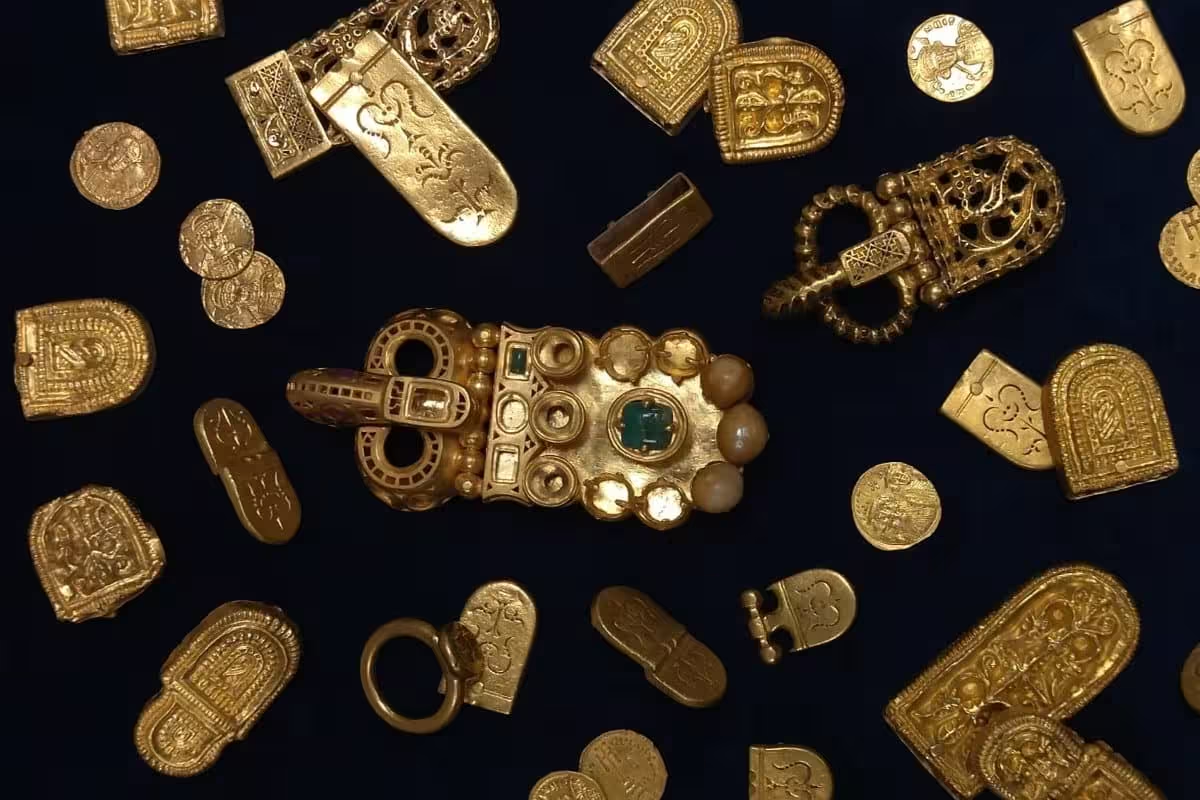
Among the most striking discoveries are several gold belt sets inlaid with rubies, emeralds and pearls, together with coins minted under four rulers of the Heraclian dynasty. The total weight of the recovered gold exceeds 21 ounces (over 600 grams after cleaning). Igor Miholjek, head of research at the institute, told Reuters:
“This is an impressive amount of gold, the largest ever found on a shipwreck in the entire Mediterranean.”
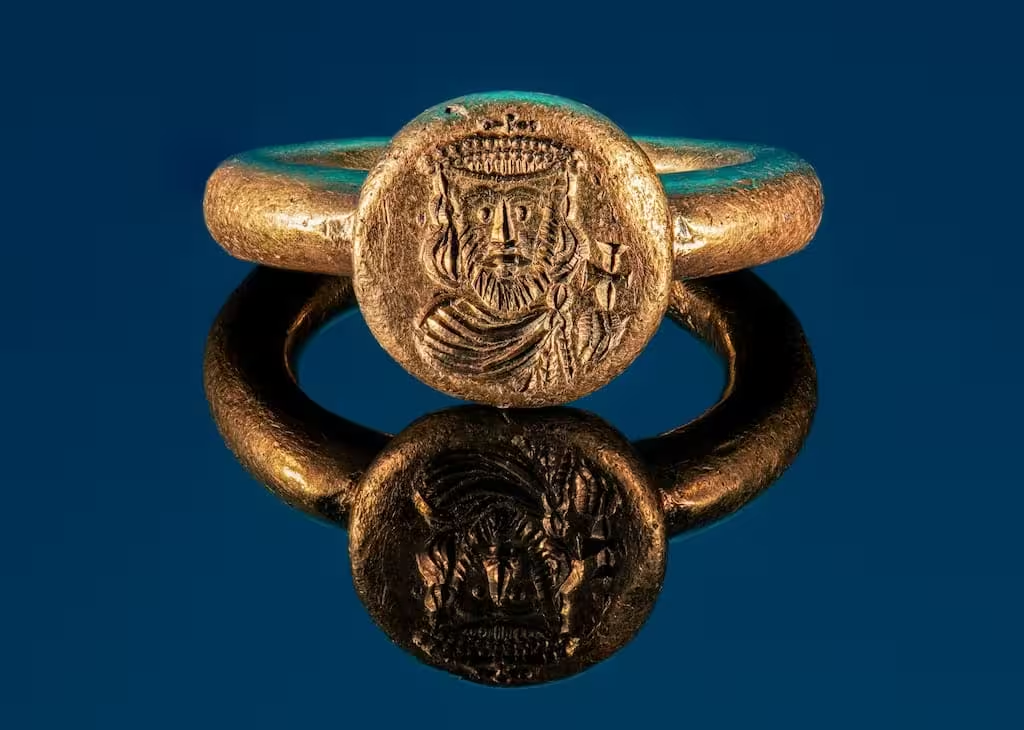
A gold signet ring bearing a possible portrait of Emperor Heraclius (reigned 610‑641 CE) was also recovered, suggesting a direct link to the highest echelons of Byzantine authority. The institute notes that such a seal would have been used only by a senior official empowered to authenticate imperial documents, though the owner’s identity remains unknown.
Illuminating a Murky Epoch
The vessel sank in the seventh or eighth century, a span traditionally labeled the “Dark Ages.” Modern scholarship has begun to challenge that characterization, yet the period remains poorly documented because of scarce textual evidence. Physical remains from the Mljet wreck therefore provide crucial data to fill gaps in our understanding of early medieval trade and elite mobility.
“It’s a blank,” said Francesco Borri, a medieval historian at Ca’ Foscari University of Venice, as quoted by National Geographic. “That’s why the discovery of this ship is so exciting.”
The find also contradicts earlier assumptions that the Adriatic region was economically marginal during this era. The presence of high‑value objects alongside everyday cargo indicates sustained maritime exchange, linking distant markets and elite circles even in a time often portrayed as isolated.
Unraveling the Ship’s Mission
Beyond the gold, the wreck contained amphorae, ceramic vessels and board‑game pieces, suggesting a mixed cargo. Some of the gold belts appear to have been several decades old at the time of sinking, raising the possibility that they were intended for melting and re‑crafting, or that they represented diplomatic gifts for a foreign ruler. The juxtaposition of luxury items with mundane goods complicates interpretations of the ship’s purpose.
“Whatever was going on here, this was no normal trading venture,” Miholjek said.
Current hypotheses range from a high‑ranking official on a diplomatic mission to a wealthy merchant aboard a routine cargo vessel. Ongoing analysis of the artefacts and further dives at the site aim to clarify the identities of those aboard, the intended destination, and the broader economic context of this extraordinary Byzantine ship.
This article has been fact checked for accuracy, with information verified against reputable sources. Learn more about us and our editorial process.
Last reviewed on .
Article history
- Latest version
Cite this page:
- Posted by Zara Tariq