Malaysia Halts Glow-In-The-Dark Road Markings After Cost and Durability Concerns Emerge
Malaysia’s glowing‑lane road safety test without electricity faced unexpected hurdles, prompting officials to rethink the plan.
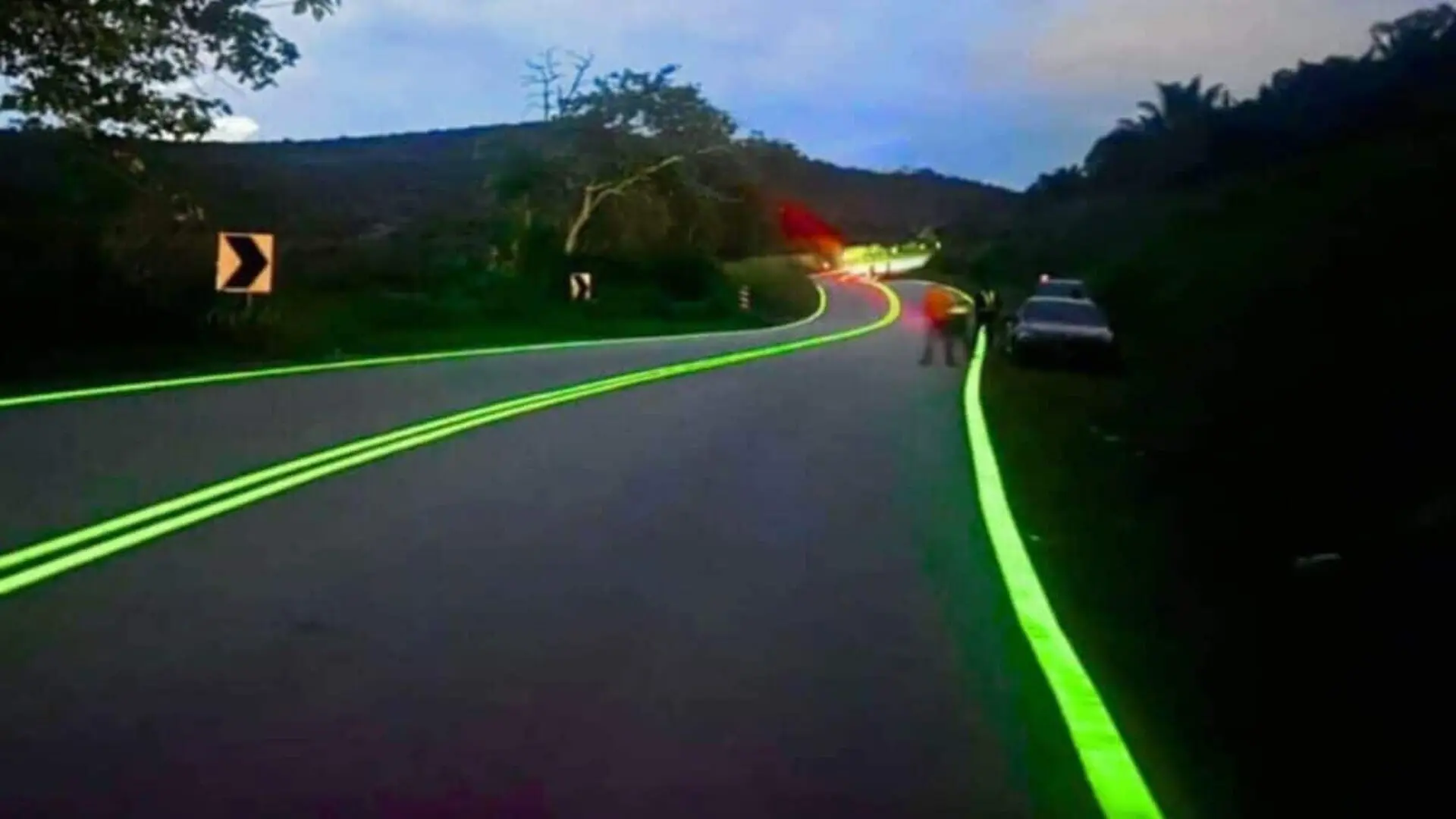
Malaysia’s government is set to abandon plans for luminous road markings after pilot projects proved both expensive and below the expectations of the Ministry of Works.
Deputy Works Minister Ahmad Maslan addressed the Dewan Rakyat in November 2024, indicating that the ministry would not pursue further installations following the trials. “The expense is prohibitive, so we are likely to discontinue the glow‑in‑the‑dark lanes,” he said, adding that the outcomes “did not satisfy the ministry’s experts.”
Cost comparisons underscored the dilemma. Works Minister Alexander Nanta Linggi previously disclosed that the photoluminescent paint applied in the pilots cost roughly RM749 per square metre, whereas standard road‑marking paint averages RM40 per square metre. This price gap translates to a material that is almost twenty times more costly, as reported by paultan.org.
First Glow‑in‑the‑Dark Segment Launched in Selangor
In November 2023, the Hulu Langat Public Works Department painted a 245‑metre stretch between Jalan Sungai Lalang and Jalan Sungai Tekali in Selangor with photoluminescent material.
Marketed as an alternative to traditional road studs, the paint absorbs sunlight during the day and emits a visible glow after dusk, with the Semenyih test designed to stay luminous for up to ten hours. Unlike conventional retroreflective paint that relies on embedded glass beads to bounce back headlight beams, the luminous coating contains strontium aluminate, a phosphorescent compound that requires no electrical supply.
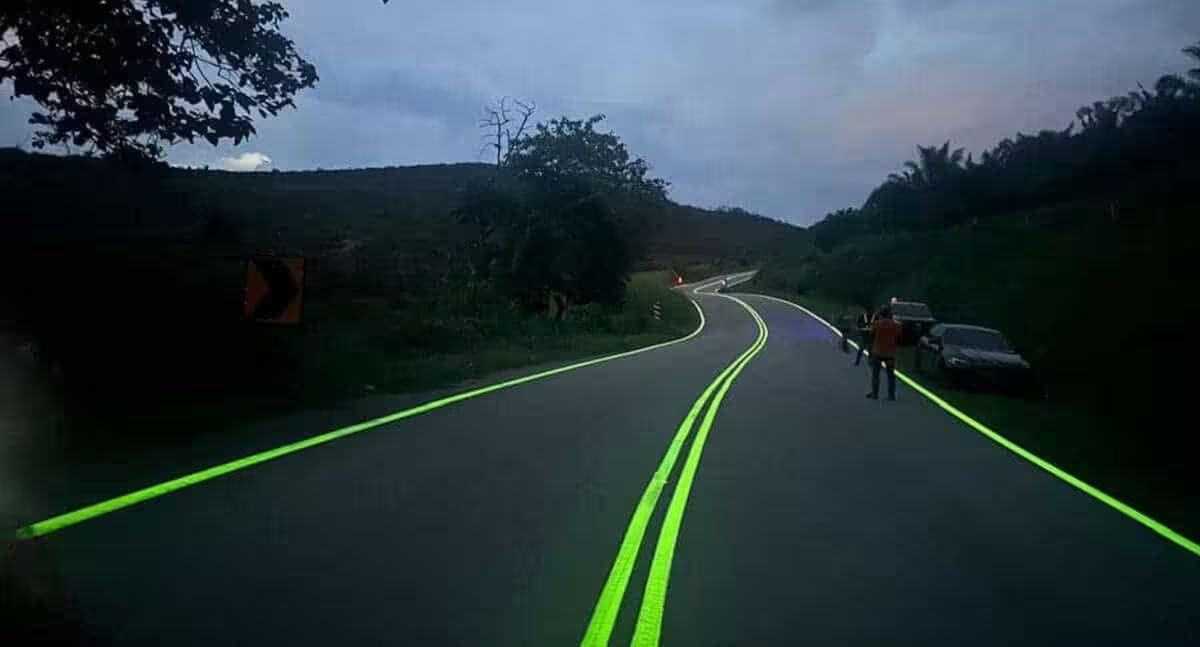
The technology was intended to provide its own lane guidance after dark, reducing dependence on vehicle headlights for visibility.
Plans for Wider Trials in Selangor and Johor
Following the initial rollout, state authorities announced broader pilots. In February 2024, Selangor’s government proposed extending the luminous markings to fifteen additional sites, covering roughly fifteen kilometres of roads across Sepang, Kuala Langat and Petaling.
Johor’s Menteri Besar Onn Hafiz Ghazi also identified thirty‑one roads for similar experiments in January 2024, aiming to boost driver safety through the new coating.
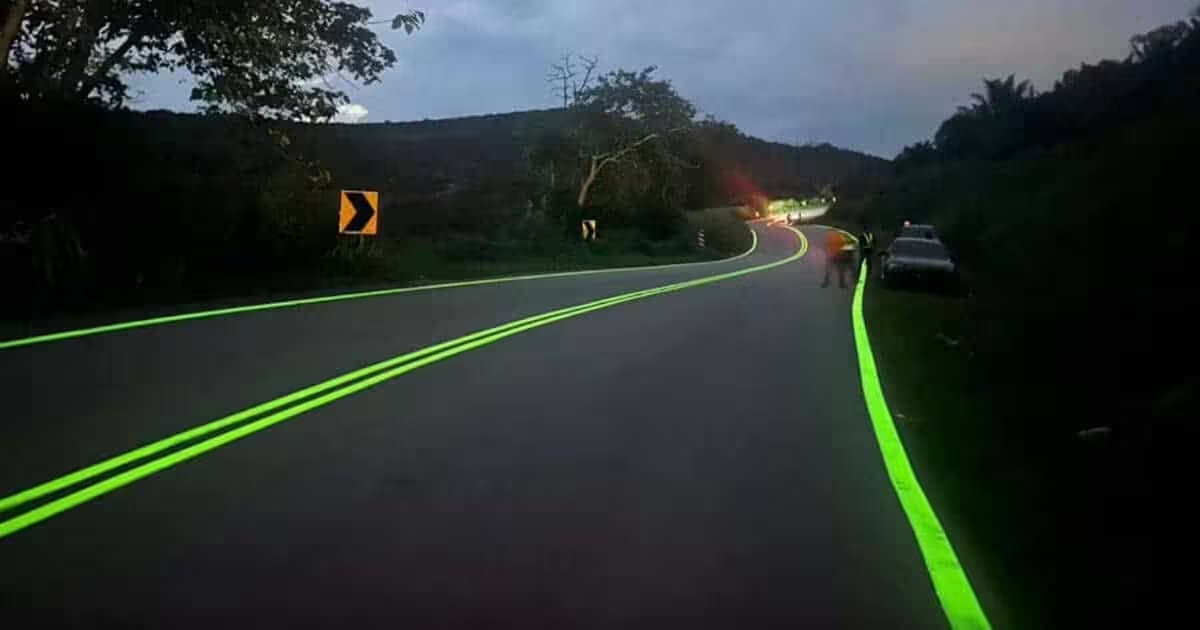
One highlighted location was a 300‑metre segment of Jalan Paloh J16 in Batu Pahat. However, by November the Ministry of Works had reassessed the pilots and signalled a halt to further expansion.
Tropical Climate Raises Longevity Concerns
Durability emerged as a key issue for photoluminescent coatings in hot, humid environments. A 2021 study cited in the source material observed that such coatings degrade more rapidly under tropical conditions, with performance dropping enough to necessitate reapplication after roughly eighteen months.
Prolonged exposure to heat, humidity and ultraviolet radiation compounds the challenge, adding ongoing maintenance costs on top of the already steep upfront price.
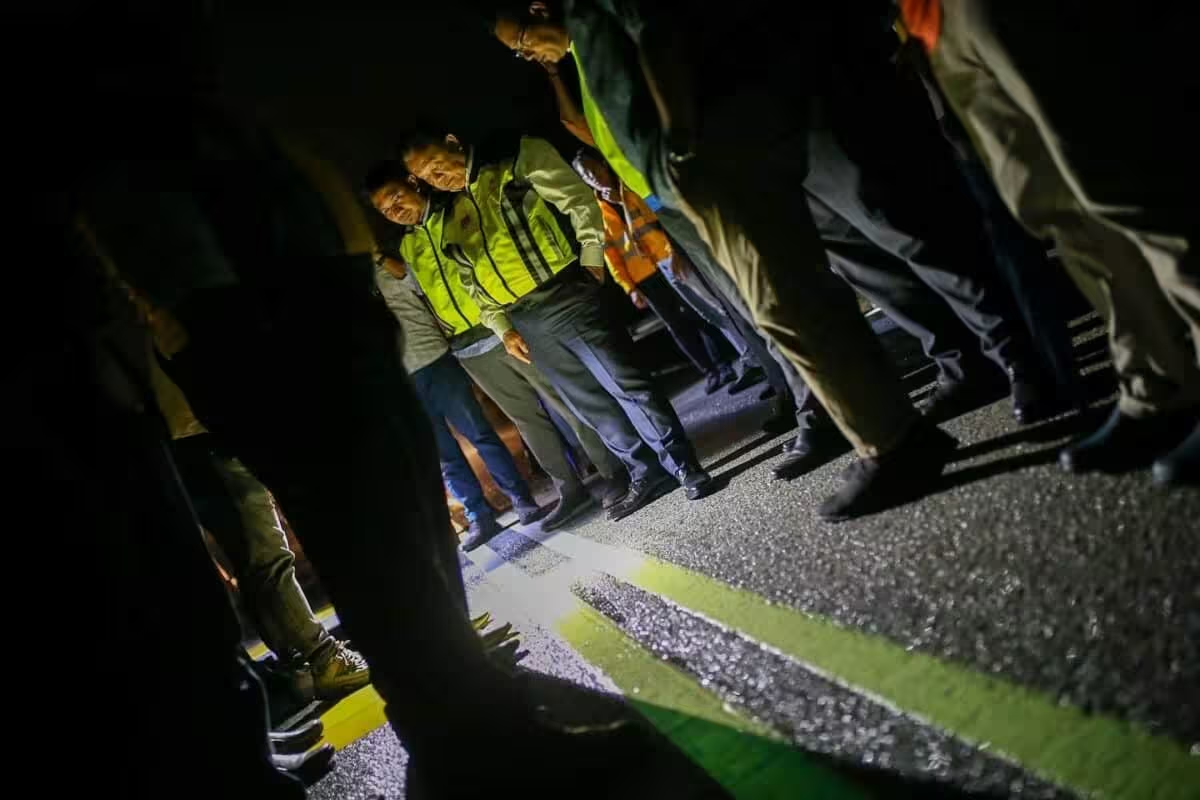
Earlier experiments outside Malaysia—such as small‑scale trials on cycle paths in the Netherlands and short highway sections in Japan—served primarily as feasibility studies rather than full‑scale replacements for conventional lighting.
Ongoing Research Aims to Cut Costs and Extend Life
Researchers at Delft University of Technology and Japan’s National Institute for Land and Infrastructure Management are investigating new strontium aluminate composites and protective layers to make photoluminescent coatings more affordable and durable. As of early 2026, neither institution had released deployment‑ready specifications.
For Malaysia, the definitive stance remains the one articulated by Deputy Works Minister Ahmad Maslan: after evaluating the pilot installations, the Ministry of Works finds the technology too costly and insufficiently effective to justify broader adoption.
This article has been fact checked for accuracy, with information verified against reputable sources. Learn more about us and our editorial process.
Last reviewed on .
Article history
- Latest version
Reference(s)
- Lim, Anthony. “Glow-in-the-dark road markings too costly, gov’t unlikely to proceed further with them – Ahmad Maslan.”, November 22, 2024 Paul Tan's Automotive News <https://paultan.org/2024/11/22/glow-in-the-dark-road-markings-too-costly-govt-unlikely-to-proceed-further-with-them-ahmad-maslan/>.
Cite this page:
- Posted by Zara Tariq