China’s Long March 7A Explodes 85 Seconds After Launch, Halting Zhongxing‑4B Mission
China’s Long March 7A blew up 85 seconds after liftoff, killing a communications satellite and sparking doubts over future launch plans.
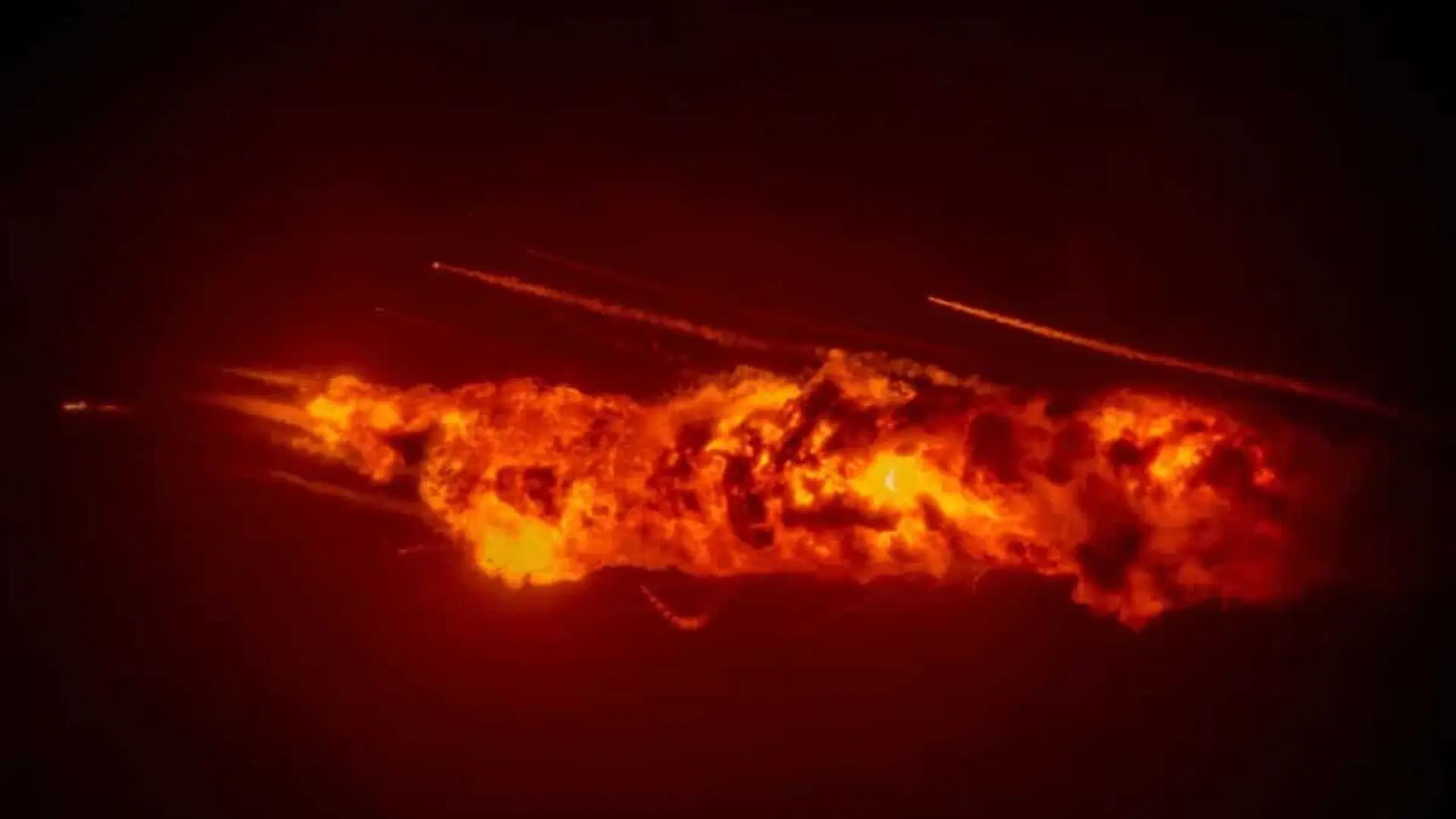
On August 10, 2026, a Chinese Long March 7A vehicle suffered a catastrophic failure roughly one minute and a half after liftoff, destroying the Zhongxing‑4B communications satellite and prompting scrutiny of a key element of China’s launch architecture. Space.com reported that the mishap occurred while the rocket was still climbing away from the Wenchang Space Launch Site on Hainan.
Failure Occurred During Early Flight Phase
According to Space.com, the Long March 7A lifted off at about 20:02 local time (12:02 GMT, 08:02 EDT). The vehicle progressed through the lower atmosphere for roughly the first minute before a sudden explosion generated a bright fireball.
Footage captured from the launch site displayed a burst of flame followed by a thick plume of smoke and debris spreading above the complex. The incident took place well before the planned first‑stage separation, a maneuver that normally occurs near the three‑minute mark. The launch system incorporates four strap‑on boosters that encircle the core and are typically jettisoned shortly after ignition.
At the moment of the explosion, the rocket was still completing its primary stage burn, meaning investigators will concentrate on the initial powered segment of the flight to pinpoint the trigger, though the exact cause remains unknown.
The China Aerospace Science and Technology Corporation (CASC) had not yet issued a technical brief on the failure. In the absence of telemetry data or an official inquiry, it would be speculative to attribute the incident to any specific subsystem such as the engines, structure, guidance, or propellant handling. Visual evidence confirms that neither the launch vehicle nor its payload achieved orbit.
Strategic Role of the Long March 7A in China’s Space Agenda
Standing at about 197 feet (60 meters) tall, the Long March 7A is engineered to ferry relatively massive payloads to high‑energy destinations. Its architecture merges the first two stages of the Long March 7 family with an added third stage that runs on liquid hydrogen and liquid oxygen.
This arrangement enables the vehicle to deliver up to roughly seven metric tons to a geostationary transfer orbit, a trajectory essential for large communications platforms that later maneuver into final geostationary slots.
Within China’s launch fleet, the 7A occupies a niche for heftier spacecraft destined for elevated orbits, while sharing its core stage with the standard Long March 7, which currently supports Tianzhou cargo missions to the Tiangong space station in low Earth orbit.
The failure does not automatically jeopardize ongoing Tianzhou flights; the impact hinges on whether the malfunction originated from a component unique to the 7A or from hardware common to both variants. Until a root‑cause analysis is completed, broader fleet implications remain uncertain.
Next Steps: Probing the Cause of the Anomaly
China’s launch timetable now faces a pause as engineers assemble data to reconstruct the events of those critical 85 seconds.
Typical post‑failure investigations draw on any telemetry transmitted before the vehicle’s destruction, alongside radar tracking, visual recordings, hardware documentation, and on‑site observations.
Because the accident occurred during a clearly defined propulsion phase, investigators can narrow their focus to the parameters governing that interval.
Key metrics such as engine pressure, temperature, propellant flow rates, acceleration profiles, guidance commands, and structural stresses will be examined to piece together the sequence of the malfunction.
The central question for upcoming missions is whether the issue is isolated to the Long March 7A configuration or reflects a systemic flaw affecting multiple launch vehicles within China’s roster.
This article has been fact checked for accuracy, with information verified against reputable sources. Learn more about us and our editorial process.
Last reviewed on .
Article history
- Latest version
Reference(s)
- Dinner, Josh. “Chinese rocket explodes less than 90 seconds after liftoff (photos).”, August 10, 2026 Space <https://www.space.com/space-exploration/launches-spacecraft/chinese-rocket-explodes-less-than-90-seconds-after-liftoff>.
Cite this page:
- Posted by Zara Tariq