Mohenjo-daro Housing Gap Shrank Over Millennia Defying Ancient Urban Inequality Trend
A study of hundreds of Bronze Age homes reveals a surprising shift that challenges traditional ideas about early city development.
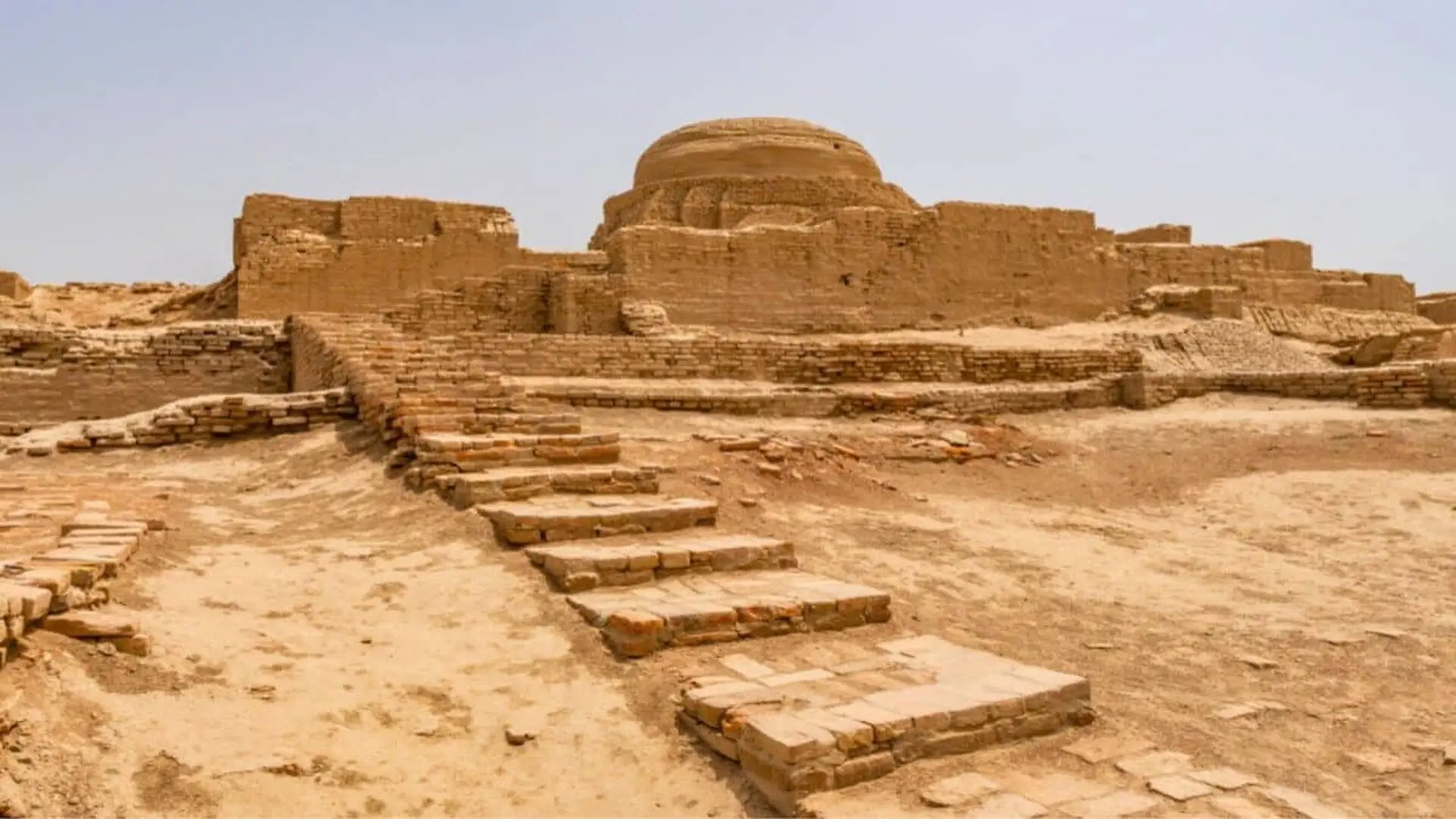
Analysis of 309 residential units at the Bronze Age metropolis Mohenjo‑daro indicates that household size disparities narrowed as the city expanded, challenging the notion that early urbanization automatically amplified economic gaps.
The research, released online in Antiquity on 18 May 2026, used residential floor area as a proxy for household wealth. In the sector where building phases could be sequenced, the Gini coefficient fell from roughly 0.39 around 2500 BC to 0.23 by 2100 BC.
Mohenjo‑daro was a principal settlement of the Indus Civilization, which thrived in South Asia between about 2600 and 1900 BC. Its ruins lie in present‑day Sindh, Pakistan.
The project was led by Adam S. Green of the University of York, with collaborators Iqtedar Alam and Cameron Petrie from the University of Cambridge. A University of York report highlighted the implication that the city grew more egalitarian as it prospered.
Residential Uniformity Emerged Over Centuries
Researchers built a geographic information system from early excavation records, converting house plans into measurable areas. By applying Gini coefficients to these data, they quantified how evenly residential space was distributed across different districts and time slices.
A Gini coefficient ranges from zero, indicating perfect equality, to one, indicating total inequality. Archaeologists employ this metric to infer disparities in access to wealth, labor and resources, while acknowledging that house size cannot capture every dimension of social stratification.
Across the entire site, the residential Gini coefficient averaged 0.44, lower than values reported for several contemporary ancient cities. For comparison, the Minoan palace at Knossos recorded a coefficient of 0.86, Palenque reached 0.75, and the West Asian centers of Ur and Ugarit both exceeded 0.60.
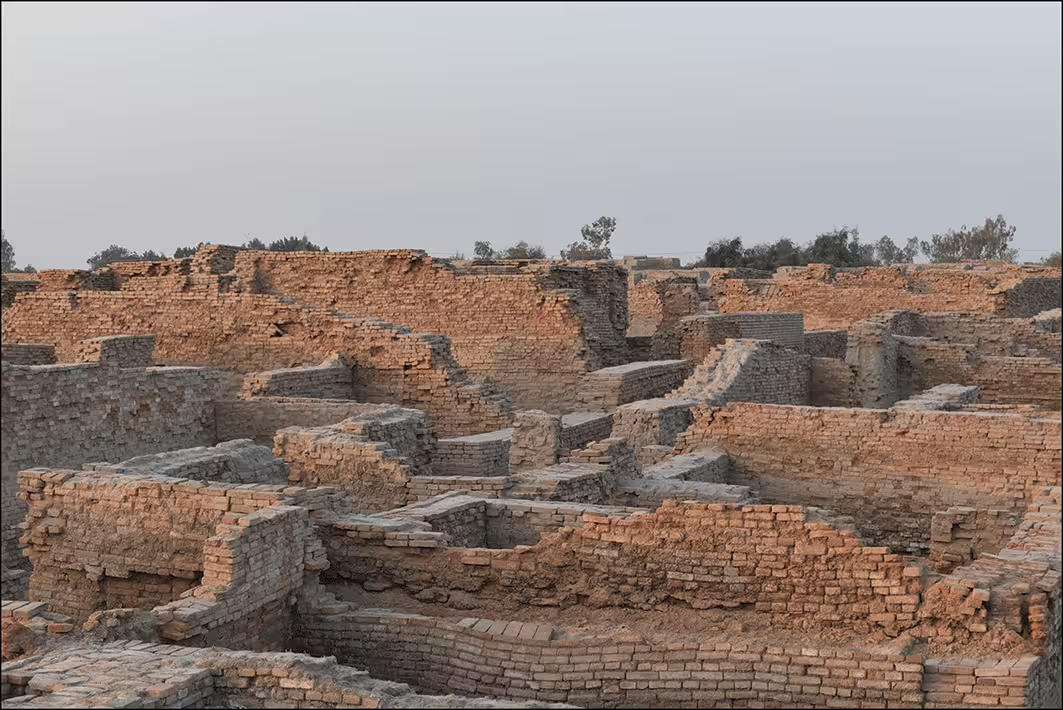
The most pronounced shift was observed in the DK‑G South sector, where early excavators documented sufficient structural depth to reconstruct a chronological sequence. The earliest large homes, dated to around 2500 BC, yielded a Gini of 0.39; by about 2100 BC the figure had dropped to 0.23.
Median residence area decreased from 161.39 m² in the earliest phase to 98.02 m² around 2200 BC, before rising again to 141.13 m² as the Gini fell to its lowest point. The authors caution that the apparent link between heightened productivity and reduced inequality rests on a limited dataset and is not statistically robust.
Planned Streets and Drainage Paralleled Housing Equality
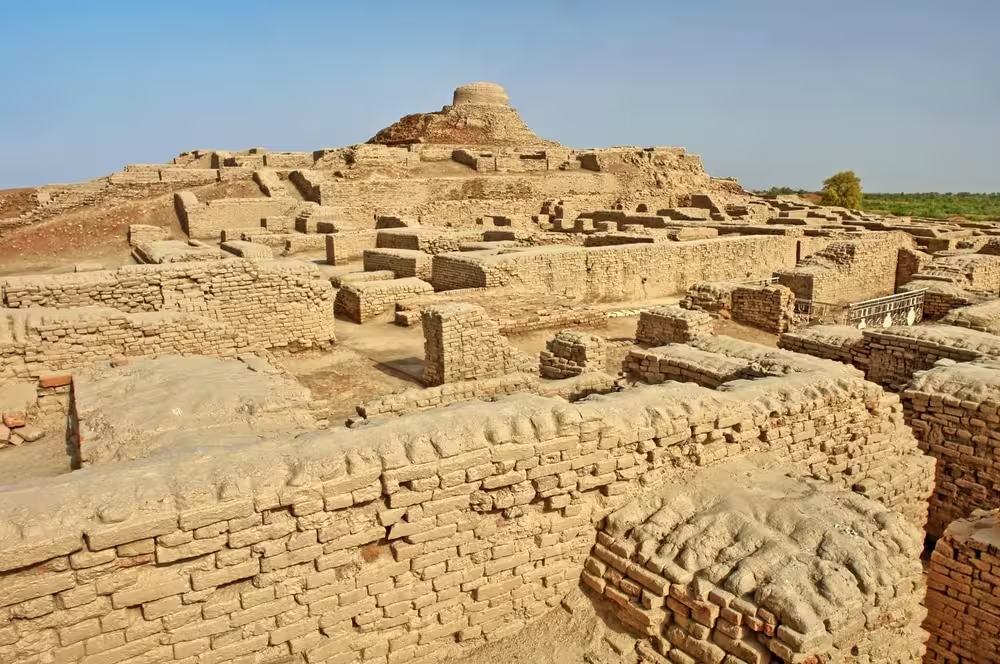
The reduction in residential disparity coincided with a transformation of the urban fabric. Houses grew more standardized and aligned with a grid of planned streets, while the archaeological record also reveals organized drainage channels and other civic amenities.
The authors suggest that evolving governance structures may have encouraged the construction of dwellings that conformed to the street network. They stress that this observation reflects correlation rather than direct causation.
Unlike many ancient capitals that display monumental palaces, elaborate tombs, exclusive temples or ruler‑centric art, Indus settlements such as Mohenjo‑daro lack overt symbols of elite dominance. Instead, the city featured uniform streets, sophisticated drainage, and standardized weights. Small stone seals—likely used for trade—are typically recovered from domestic contexts rather than from elite precincts, hinting at a more diffused control of resources.
Data Constraints and Paths Forward
The conclusions rely heavily on records from early 20th‑century excavations, which often lack the precision of contemporary archaeological methods. While DK‑G South offers a clear temporal sequence, many other areas of the site contain intermingled layers that prevent confident periodization.
Using house size as a wealth indicator carries inherent limitations. Larger dwellings do not necessarily reflect greater wealth, and spatial measurements cannot fully capture inequalities tied to gender, kinship or ethnicity. The authors therefore treat changes in residence dimensions as an indirect signal of economic productivity.
Overall, the study positions Mohenjo‑daro as a Bronze Age urban center with comparatively low economic inequality, and it documents a trend toward greater residential parity as the city’s infrastructure expanded. Future research aims to broaden the chronological framework beyond DK‑G South and to incorporate additional metrics of wellbeing and social disparity.
This article has been fact checked for accuracy, with information verified against reputable sources. Learn more about us and our editorial process.
Last reviewed on .
Article history
- Latest version
Reference(s)
- Green, Adam. “Inequality declined in the Bronze Age city of Mohenjo-daro | Antiquity | Cambridge Core.”, pp. 1-16. Cambridge Core, doi: 10.15184/aqy.2026.10359. <https://www.cambridge.org/core/journals/antiquity/article/inequality-declined-in-the-bronze-age-city-of-mohenjodaro/BF07ED4E516F2127F1C3E645C9C8F462>.
- “Study reveals one of world’s first cities prospered as wealth-gap shrank.” University of York <https://www.york.ac.uk/news-and-events/news/2026/research/world-first-city-prospered-wealth-gap-shrank/>.
Cite this page:
- Posted by Zara Tariq