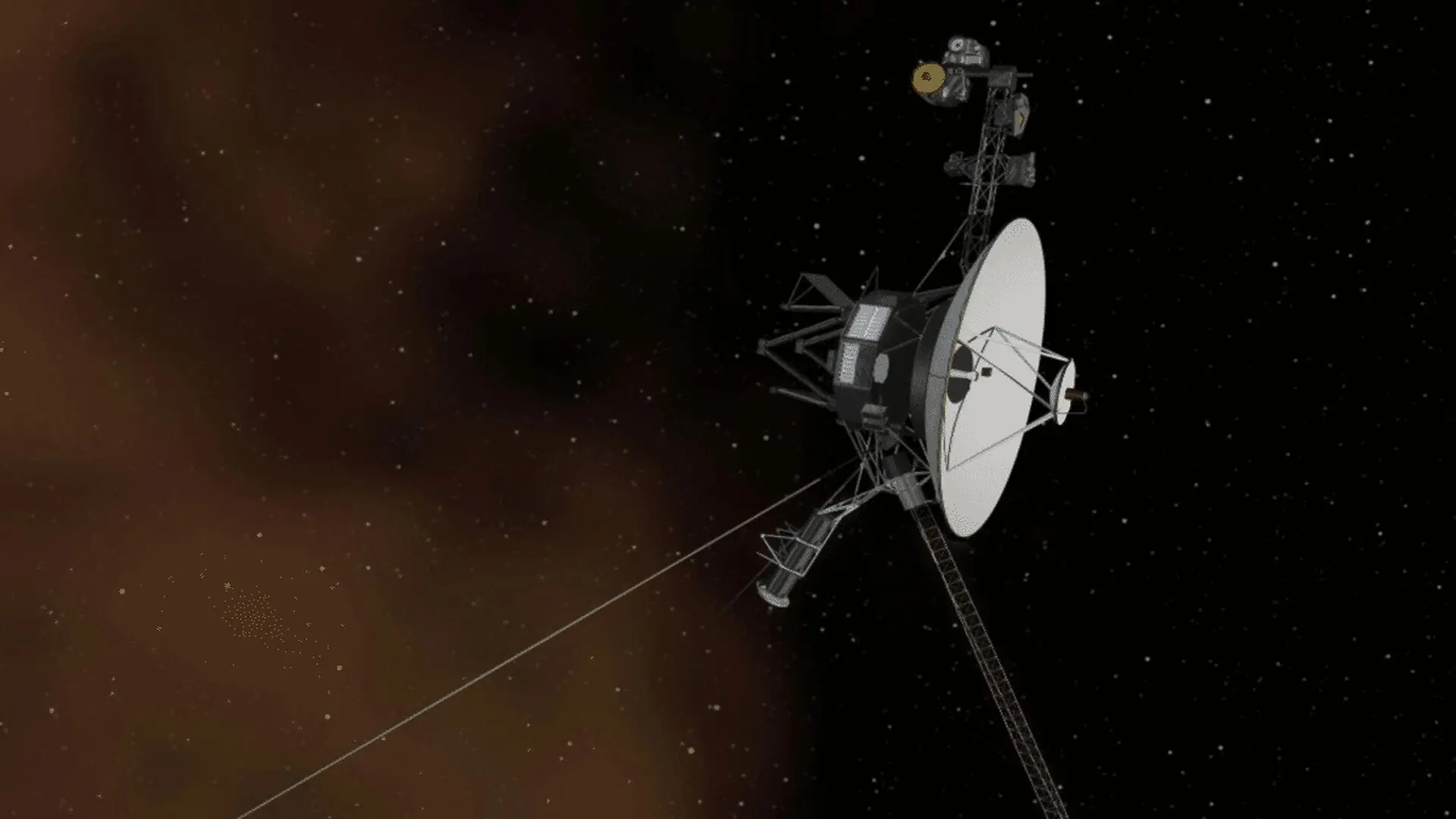
Voyager 1 Is About to Hit a Massive Milestone That Will Change How We Talk to Spacecraft
As Voyager 1 reaches a historic distance of one light-day from Earth, NASA faces the dual challenge of aging systems and mysterious communication glitches.
NASA’s Voyager 1 is on the verge of a historic threshold, preparing to reach a distance of one light-day from Earth on November 18, 2026. This monumental milestone means that any radio communication sent to the spacecraft will take 24 hours to travel the vast void, with a return trip taking another full day. As the probe nears its fifth decade in space, this achievement arrives alongside persistent technical challenges that highlight the fragility of managing a mission at the edge of the solar system.
Navigating the Final Frontier of Human Engineering
Launched on September 5, 1977, Voyager 1 has long held the title of the most distant human-made object in existence. While its primary mission was to conduct close-up observations of Jupiter and Saturn, the hardy probe has since journeyed deep into interstellar space, transmitting unique data from beyond the reach of the Sun’s influence.
According to NASA, the spacecraft will be roughly 16.09 billion miles (25.89 billion kilometers) away from our planet by mid-November. At these extreme ranges, the laws of physics dictate a 48-hour round-trip time for signals. This reality transforms the role of mission control from active pilots to long-distance observers, as any command sent must be meticulously verified, knowing the results will not be visible for two full days.
Happy November! This month Voyager 1 will become the first spacecraft to reach 1 light day from Earth.
#astro https://t.co/ZDZmXINoPB
Suzanne Dodd, the Voyager project manager at JPL, notes that the sheer scale of the delay dictates a new operational philosophy. Engineers can no longer rely on real-time adjustments. Instead, the spacecraft must possess a high degree of autonomy, as the distance renders direct, immediate intervention impossible should a critical error arise.
Sister ship Voyager 1 is currently ~23h 58m 41s of light travel time from Earth (2026:312:120000:1L)
The Recent Silence: A Stress Test for Aging Systems
The upcoming milestone follows a tense period in October 2026, when the Deep Space Network (DSN)—NASA’s global array of massive radio antennas—failed to detect signals from the probe during two consecutive daily attempts. This 48-hour communication blackout served as a stark reminder of the mission’s inherent risks.
Contact was eventually re-established on October 20, but the mystery of the silence remains a subject of intense investigation. Data suggests that Voyager 1 experienced a fault-protection event, prompting the probe to automatically switch to a set of backup thrusters. These components are essential for maintaining the craft’s orientation; without them, the high-gain antenna could drift away from its precise aim toward Earth, cutting off the fragile link entirely.
Kareem Badaruddin, a Voyager mission manager at JPL, characterized the event as an unprecedented challenge. While the activation of backup systems indicates the spacecraft’s automated safeguards are functioning as designed, the lack of a clear, singular cause for the signal loss underscores the complexity of troubleshooting hardware that has been operating in the harsh environment of deep space for nearly 50 years.
As the mission pushes into this new era of communication, NASA engineers continue to piece together the telemetry, balancing the need for scientific data with the caution required to preserve the lifespan of one of humanity’s greatest exploratory achievements.
Fact Checked
This article has been fact checked for accuracy, with information verified against reputable sources. Learn more about us and our editorial process.
Rehman, Nida. “Voyager 1 Is About to Hit a Massive Milestone That Will Change How We Talk to Spacecraft.” BioScience. BioScience ISSN 2521-5760, 09 November 2026. <https://www.bioscience.com.pk/en/subject/space-science/voyager-1-is-days-away-from-crossing-a-distance-no-spacecraft-has-ever-reached>.
Rehman, N. (2026, November 09). “Voyager 1 Is About to Hit a Massive Milestone That Will Change How We Talk to Spacecraft.” BioScience. ISSN 2521-5760. Retrieved November 09, 2026 from https://www.bioscience.com.pk/en/subject/space-science/voyager-1-is-days-away-from-crossing-a-distance-no-spacecraft-has-ever-reached
Rehman, Nida. “Voyager 1 Is About to Hit a Massive Milestone That Will Change How We Talk to Spacecraft.” BioScience. ISSN 2521-5760. https://www.bioscience.com.pk/en/subject/space-science/voyager-1-is-days-away-from-crossing-a-distance-no-spacecraft-has-ever-reached (accessed November 09, 2026).