Students Develop Ingenious Moon Landing Pad That Survives Rocket Heat Without Water Cooling
A student team in Alabama has developed an innovative solution to combat the persistent problem of lunar dust kicked up during spacecraft landings.
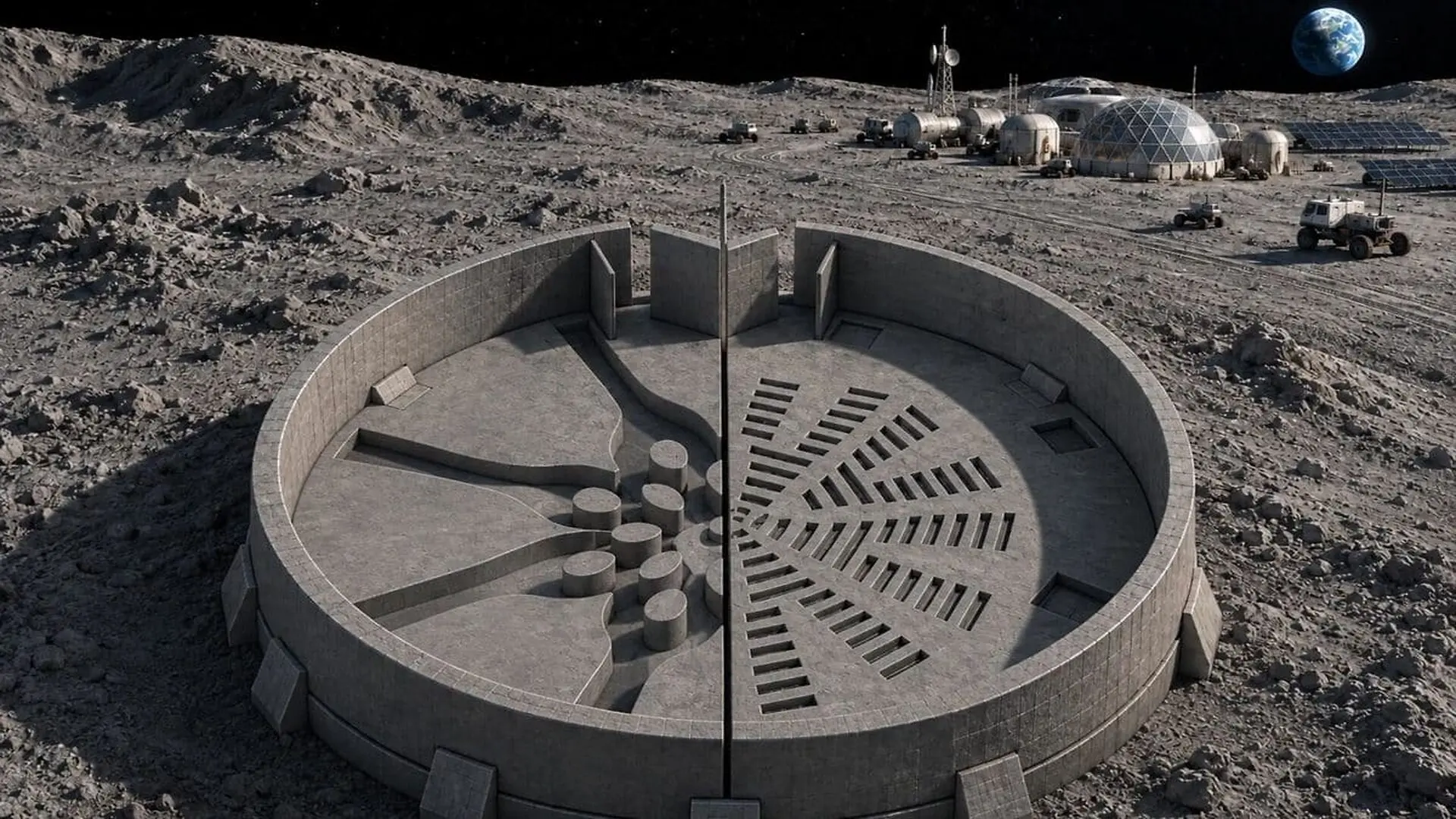
Researchers and students at the University of Alabama in Huntsville (UAH) have successfully completed a series of high-stakes firing tests on a prototype lunar landing pad. By utilizing an integrated vent system, the structure managed to capture and safely redirect the intense exhaust from a rocket motor, marking a significant advancement in the development of essential lunar infrastructure.
Establishing a permanent presence on the Moon requires more than just spacecraft capable of touchdown; it demands stable, protective landing sites. The harsh lunar environment presents unique engineering challenges, most notably the destructive potential of regolith. Unlike on Earth, where a dense atmosphere suppresses the spread of dust, the Moon’s vacuum allows rocket plumes to propagate freely, kicking up abrasive lunar soil at high velocities. These dust clouds pose a serious threat to nearby equipment, solar arrays, and habitats, and in extreme cases, could even be ejected into orbit to interfere with satellite operations.
Engineering Solutions for the Lunar Surface
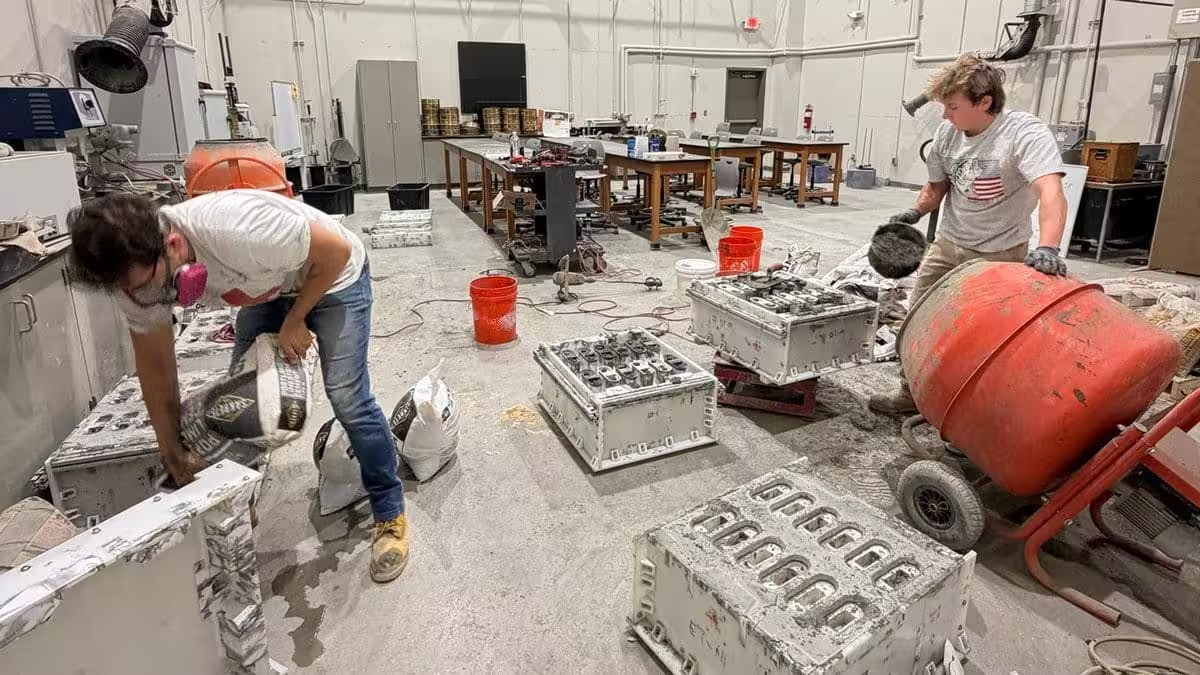
Traditional terrestrial landing pads are often monolithic slabs, but these structures are prone to thermal damage and cratering under the immense force of modern rocket engines, as demonstrated by the SpaceX Starship launch events. The UAH team has opted for a modular, interlocking design that features internal channels to manage heat and exhaust flow. This approach is not only more resistant to thermal stress but is also highly practical for lunar missions, where assembly space is limited and individual components must be manageable for transport and deployment.
The project aligns with broader agency goals regarding in-situ resource utilization (ISRU). By proving that such structures can be constructed from local materials—such as sintered ceramics or “lunacrete” composed of processed regolith—the research team is creating a blueprint for self-sustaining infrastructure that does not rely on costly imports from Earth.
Evaluating Performance Under Pressure
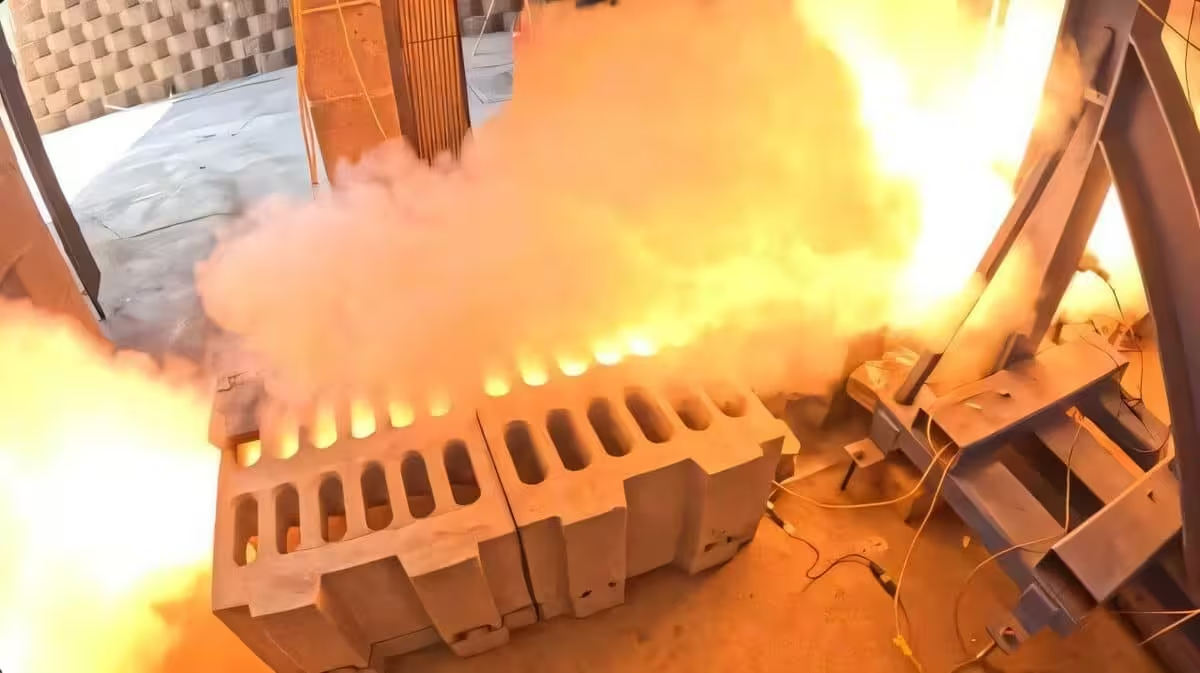
Led by Dr. Judy Schneider, a professor in the Department of Mechanical and Aerospace Engineering, the team conducted three hot-fire tests on a 3.65-meter (12-foot) prototype at the university’s Propulsion Research Center. The tests utilized sensors to monitor how exhaust gases navigated the vent system. According to UAH documentation, the design effectively mitigated the heat that would otherwise degrade a solid surface.
“We won’t have those resources on the lunar surface, where water will be in limited supply,” said Dr. Schneider, referring to the water-cooled flame trenches commonly used on Earth. “Our goal is to redirect the rocket plume so it doesn’t damage the landing vehicle or any surrounding structures. The hot-fire tests demonstrated that we could redirect the rocket plume. By using an internally vented structure, we were able to prevent the heat from damaging the pad as it could in a solid structure.”
The research is now moving into a new phase. The team is constructing a larger, 6-meter (20-foot) pad that will be transferred to NASA’s Marshall Space Flight Center for comprehensive evaluation. These upcoming assessments will be critical in determining the scalability of the vented, modular design and its long-term viability for repeated missions on the Moon.
This article has been fact checked for accuracy, with information verified against reputable sources. Learn more about us and our editorial process.
Last reviewed on .
Article history
- Latest version
Reference(s)
- “SpaceX.” SpaceX <https://www.spacex.com/vehicles/starship>.
- “In-Situ Resource Utilization (ISRU) - NASA.” NASA <https://www.nasa.gov/mission/in-situ-resource-utilization-isru/>.
- “UAH | News | The University of Alabama in Huntsville.” <https://www.uah.edu/news/items/built-take-the-blast-uah-students-test-prototype-landing-pad-make-moon-landings-safer>.
- “Marshall Space Flight Center - NASA.”, December 22, 2022 NASA <https://www.nasa.gov/marshall/>.
Cite this page:
- Posted by John Williams