Astronomers Identify Nearby Triple Star System That Could Eventually Explode As A Supernova
A rare triple star system just 54 light-years away contains a massive white dwarf that could trigger a violent Type Ia supernova in the future.
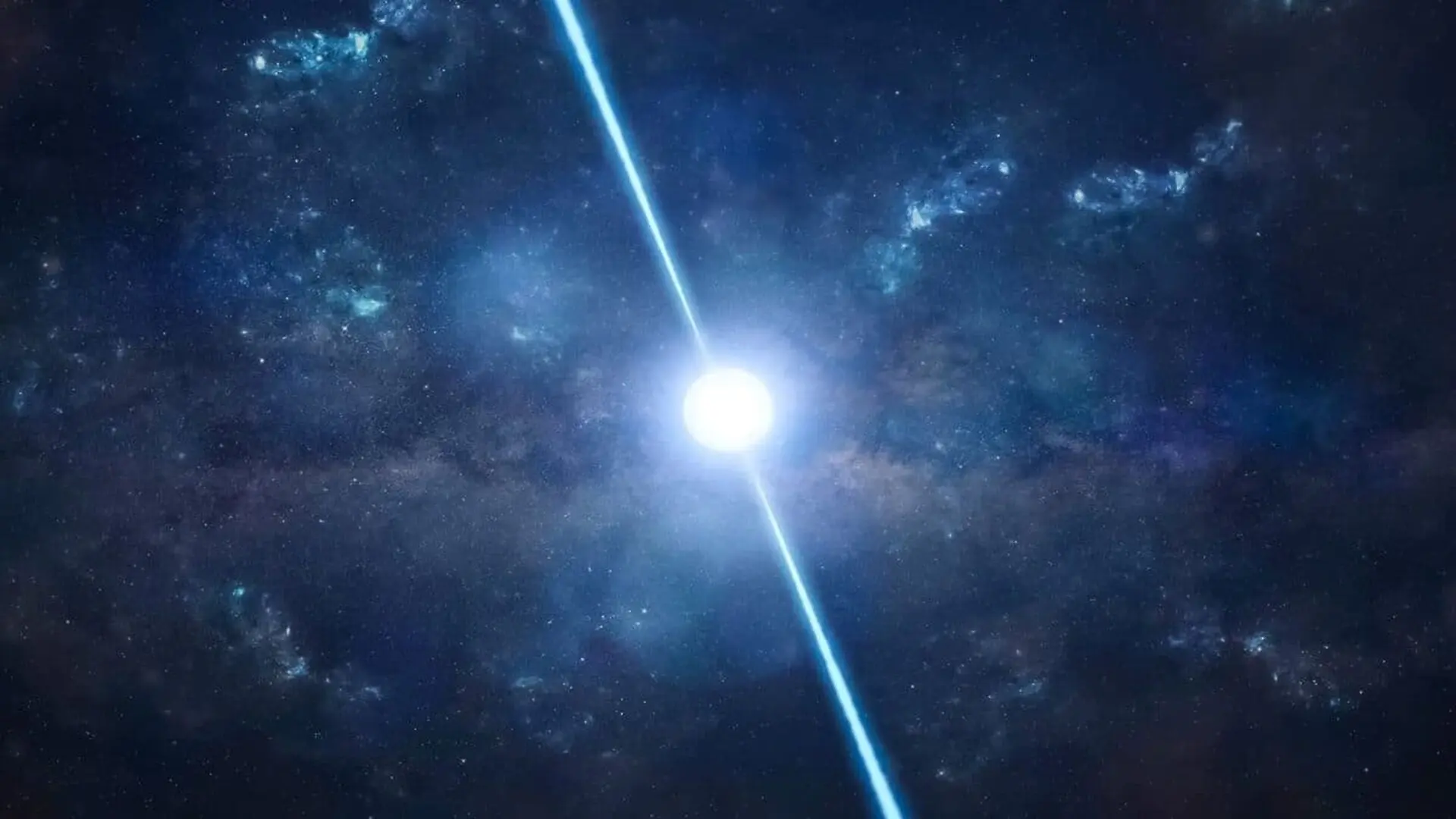
A Rare Cosmic Time Capsule: The Ancient Triple Star System Lurking Near Earth
Astronomers have long studied the Wolf 1130 system as a unique window into stellar evolution, but new analysis suggests this ancient arrangement could hold a much more volatile future. Located within our local galactic neighborhood, the system serves as an ultramassive laboratory that may eventually culminate in a cataclysmic thermonuclear explosion.
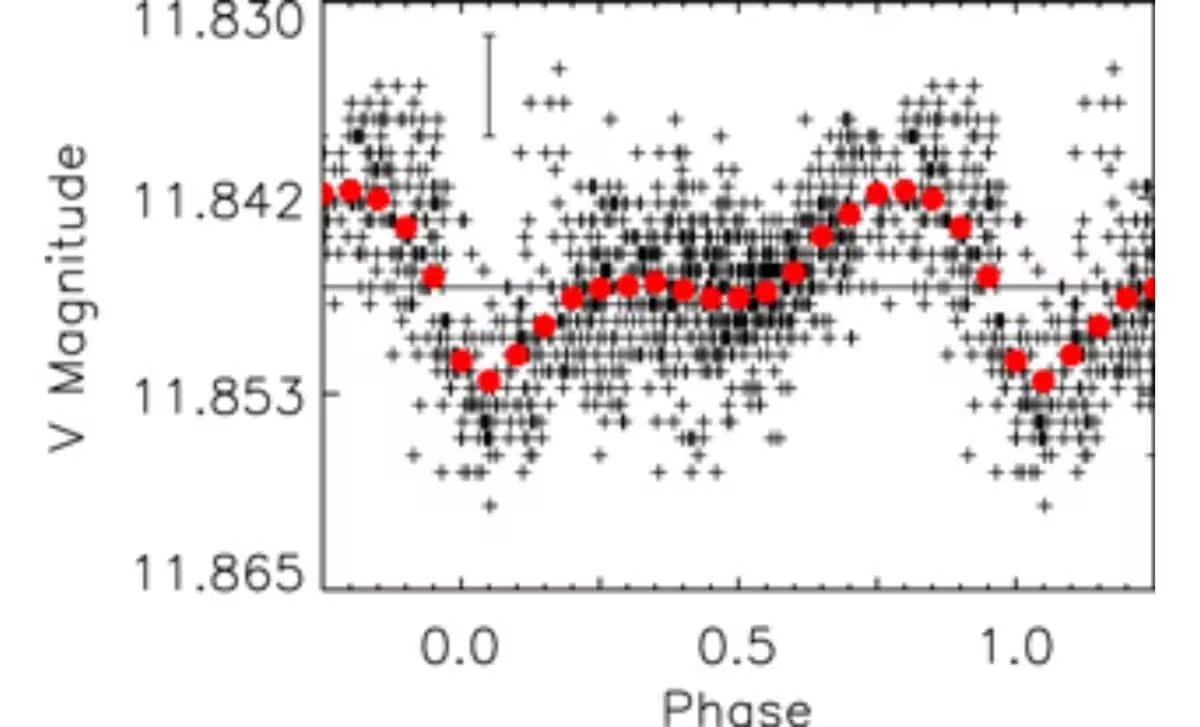
The Wolf 1130 system is composed of three distinct objects: a red subdwarf (Wolf 1130A), a massive white dwarf (Wolf 1130B), and a distant brown dwarf (Wolf 1130C). The core of this system features the subdwarf and the white dwarf locked in a frantic, tight-knit dance. According to research led by Gregory N. Mace and published in The Astrophysical Journal, this binary pair completes an orbit in just 0.4967 days, roughly 12 hours. The two objects are tidally locked, meaning their rotations have synchronized with their orbital periods over aeons.
The white dwarf itself is a point of significant interest for astrophysicists. With an estimated mass of approximately 1.24 solar masses and an effective temperature below 7,000 kelvin, it is classified as an ultramassive, ancient stellar remnant. Remarkably, it represents the first object of its kind discovered within 25 parsecs of Earth. While the central pair orbits in close proximity, the third member of the system, a T8-type brown dwarf, circles the pair from a vast distance of about 3,150 astronomical units.
A Long-Term Countdown to Catastrophe
Evidence suggests the system is older than 10 billion years, yet it remains a dynamic environment. While the red subdwarf and the white dwarf are not currently interacting, the laws of orbital mechanics dictate a change in their status. Magnetic braking is expected to strip angular momentum from the pair, gradually drawing the two stars closer together.
Current models predict that in approximately 6.2 billion years, the system will reach a tipping point. Once the red subdwarf expands sufficiently to fill its Roche lobe, it will begin dumping material onto the surface of the white dwarf. This transition would transform the system into a cataclysmic variable, a state where the white dwarf accumulates enough matter to potentially trigger a type Ia supernova—a violent, runaway thermonuclear explosion.
The possibility of such an event occurring in our cosmic backyard has naturally drawn attention. While the 2018 study notes that the system lies within a distance typically associated with potential supernova-related impacts on Earth, researchers emphasize that this event is purely hypothetical and remains billions of years in the future. There is no certainty that the accretion process will reach the threshold required for a full-scale supernova.
Understanding these systems is vital to modern cosmology. Type Ia supernovae are standard candles, providing the yardsticks astronomers use to calculate the expansion of the universe and study the elusive nature of dark energy, a core focus of NASA’s upcoming Nancy Grace Roman Space Telescope mission. Wolf 1130 stands as a nearby, observable example of a system that serves as a precursor to these high-energy cosmic milestones, offering a rare glimpse into the long-term survival of substellar companions through the volatile stages of stellar death.
This article has been fact checked for accuracy, with information verified against reputable sources. Learn more about us and our editorial process.
Last reviewed on .
Article history
- Latest version
Reference(s)
- Mace, Gregory N.., et al. “Wolf 1130: A Nearby Triple System Containing a Cool, Ultramassive White Dwarf.” The Astrophysical Journal, vol. 854, no. 2, February 21, 2018, pp. 145 American Astronomical Society, doi: 10.3847/1538-4357/aaa8dd. <https://iopscience.iop.org/article/10.3847/1538-4357/aaa8dd>.
- Brill, Jennifer. “Type Ia Supernovae - NASA Science.”, October 24, 2023 NASA <https://science.nasa.gov/mission/roman-space-telescope/type-ia-supernovae/>.
Cite this page:
- Posted by Aisha Ahmed