Scientists Finally Recreate The Mysterious Color-Changing Glass Of The Romans
Scientists have finally uncovered the secret behind Rome’s mysterious Lycurgus Cup, revealing how metallic nanoparticles create its unique color-shifting glow.
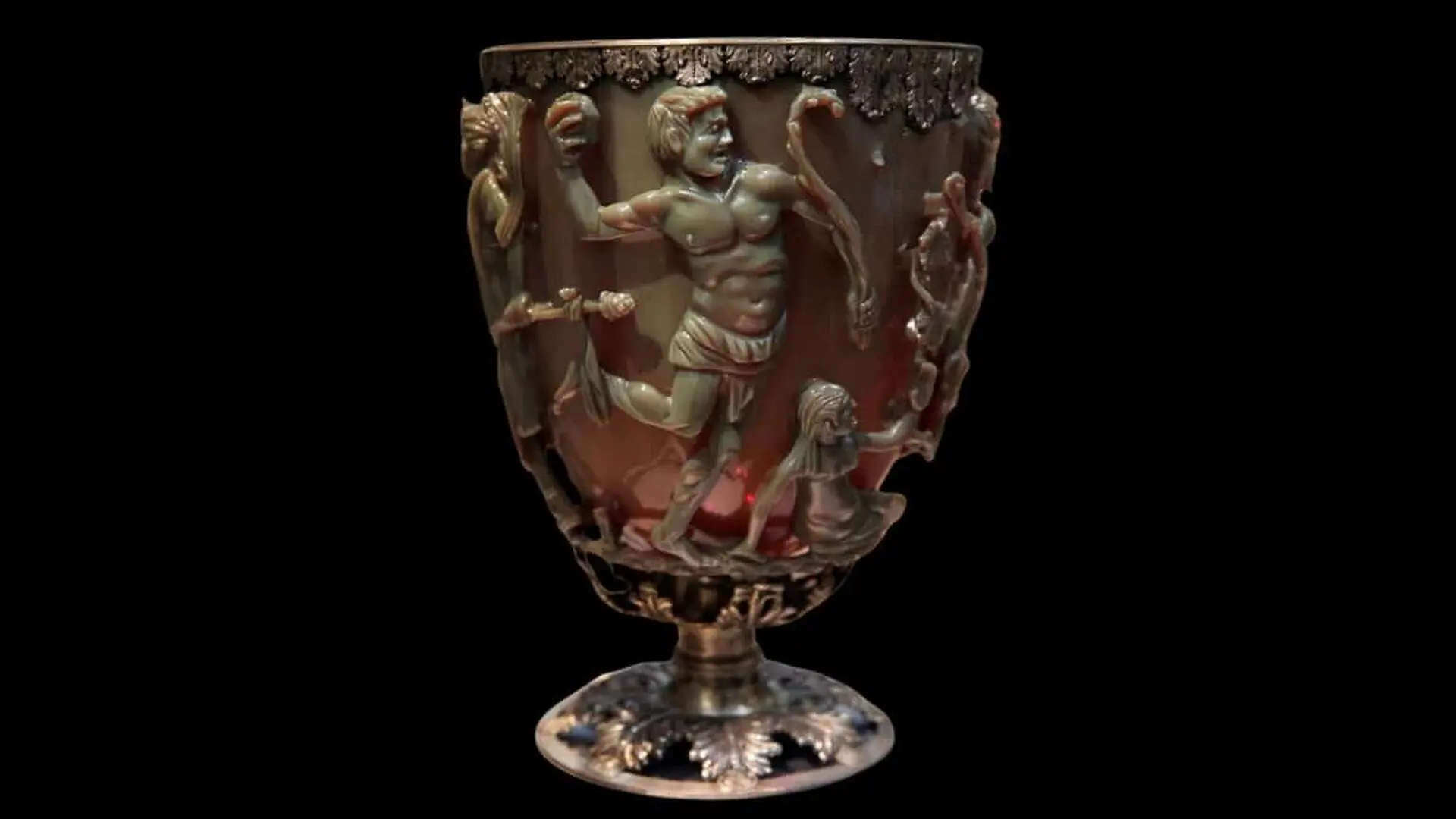
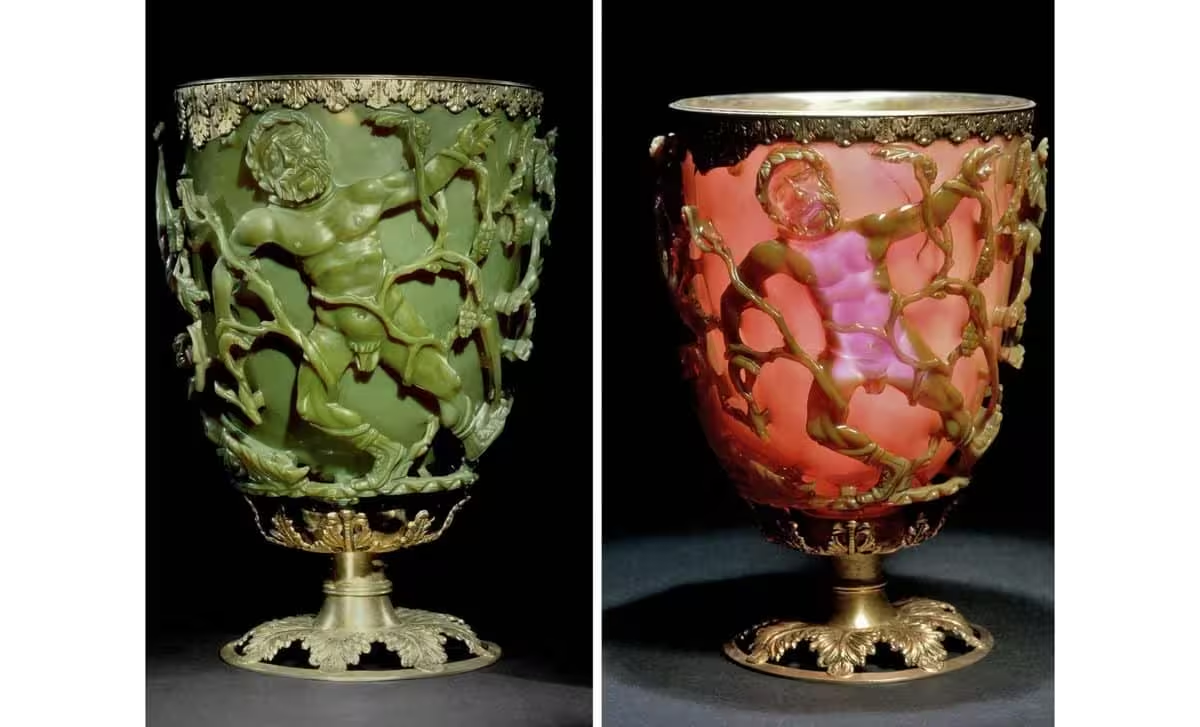
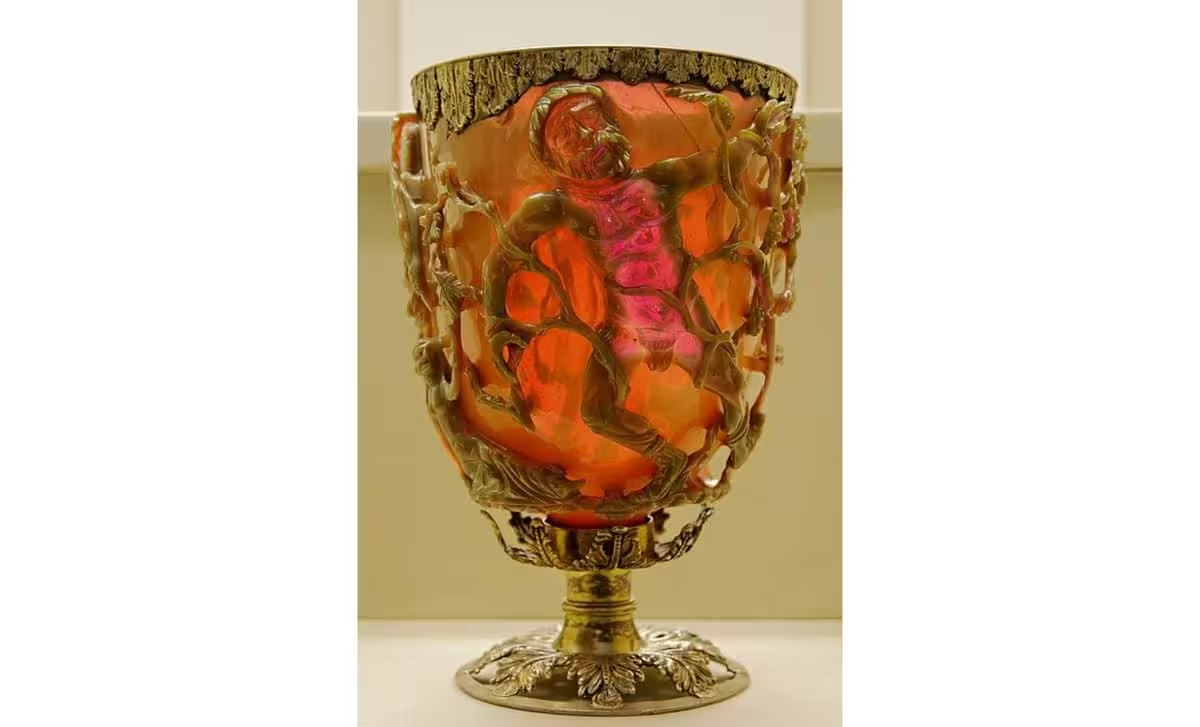
For more than 1,600 years, the Lycurgus Cup has confounded historians and scientists alike. Housed in the British Museum, this fourth-century Roman artifact possesses an otherworldly ability: it appears opaque jade green when lit from the front, but shifts to a glowing, translucent ruby red when illuminated from behind. Now, researchers at the University of Sheffield have finally decoded the ancient manufacturing process behind this extraordinary optical feat.
Decoding a Roman Masterpiece
The secret of the cup lies in the field of nanotechnology, specifically the manipulation of metallic nanoparticles. Roman glassmakers, likely by accident or through generations of refined trial and error, succeeded in embedding tiny quantities of gold and silver into the glass at a scale thousands of times smaller than a grain of sand. When light hits these nanoparticles, they scatter and absorb specific wavelengths, creating the dichroic effect that has mesmerized observers for centuries.
Recreating this effect proved to be a formidable challenge for modern materials scientists. Lisa Hollands, a team leader at the University of Sheffield’s School of Chemical, Materials, and Biological Engineering, spearheaded the effort to replicate the material. Working alongside Roman glass specialist Caroline Jackson, Hollands spent years investigating the precise furnace conditions, atmospheric oxygen levels, and chemical precursors required to achieve the elusive transformation. The experiments were complex, requiring the careful introduction of gold and silver using unlikely additives, including sugar, to act as a catalyst for nanoparticle formation.
Reflecting on the achievement, Hollands noted that if the original Roman artisans were to witness her struggle to rediscover their craft, they would likely find the modern effort amusingly over-complicated. “They’d probably laugh and ask: ’Why does she not know how to make this?’” she said.
From Ancient Art to Modern Science
To showcase the success of the project, the team collaborated with renowned glass artist Elliot Walker, winner of the second season of Netflix’s Blown Away. Walker used the recreated glass to craft a sculpture inspired by the classical Farnese Atlas, incorporating a cup that demonstrates the material’s color-changing properties. For Walker, the process felt like a direct bridge to the past, describing the experience of working with the ancient-inspired mixture as being “like shaking their hands.”
Beyond the aesthetic appeal of the sculpture, which will eventually be housed in the university’s Turner Museum of Glass, the research has significant industrial implications. Understanding how to precisely control the formation of metallic nanocrystals within glass provides vital insights for modern applications, including the development of advanced photonic materials capable of manipulating light.
Furthermore, the findings are informing research into nuclear waste management. By mastering the conditions under which crystals form within molten glass, scientists can improve the structural integrity and storage capacity of vitrified nuclear waste. This synthesis of ancient artistic technique and cutting-edge materials science underscores the enduring value of interdisciplinary historical inquiry.
This article has been fact checked for accuracy, with information verified against reputable sources. Learn more about us and our editorial process.
Last reviewed on .
Article history
- Latest version
Reference(s)
- <https://blownaway.cmog.org/bio/elliot-walker>.
- “The Turner Museum of Glass.” The University of Sheffield <https://sheffield.ac.uk/turner-museum>.
Cite this page:
- Posted by Vikram Desai