Satellite Scans Reveal 2,600 Year Old Egyptian Structure With Hidden Engineering Secret
Archaeologists have uncovered an ancient Egyptian engineering secret that explains how a massive structure survived for 2,600 years on unstable ground.
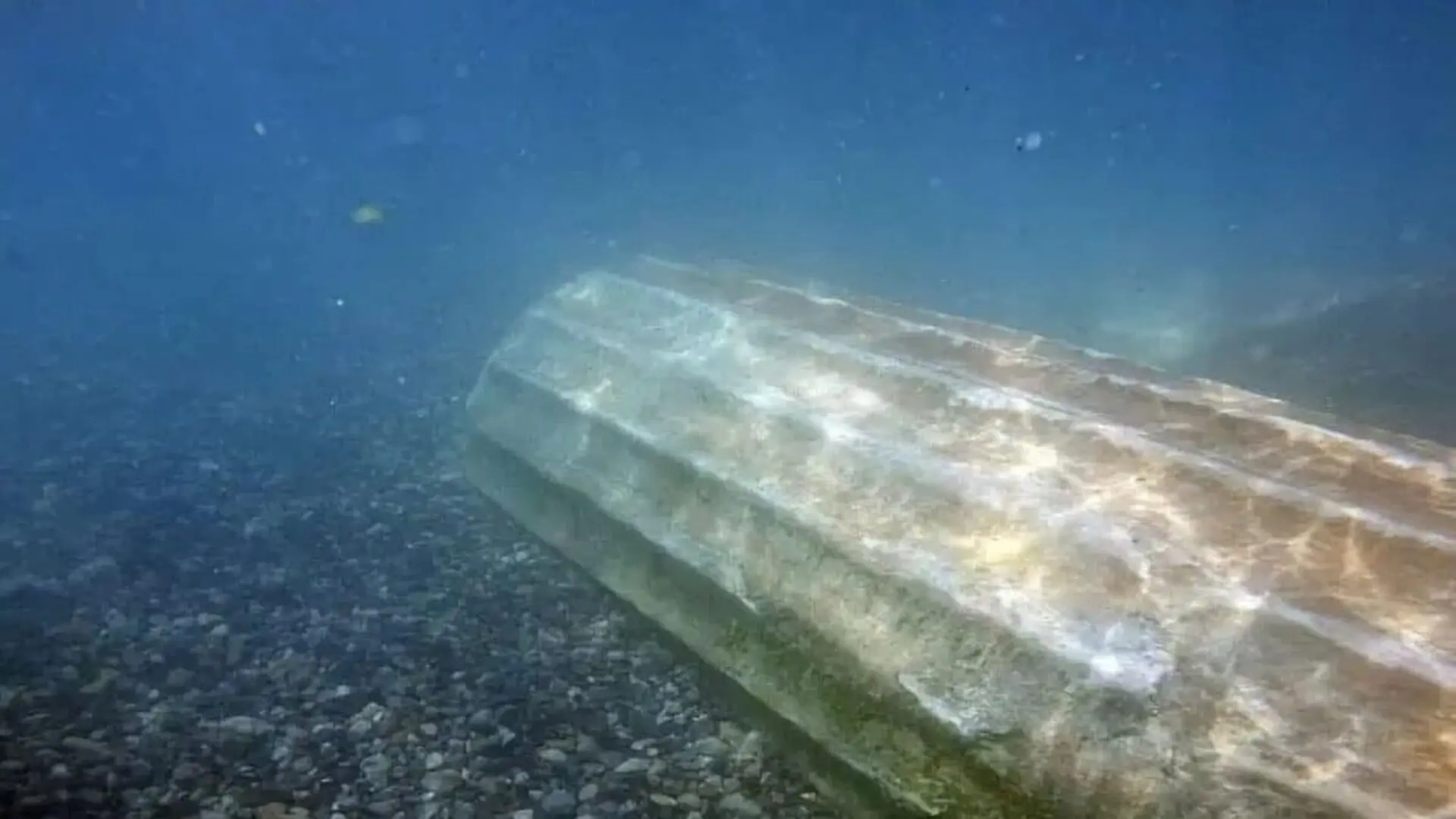
Archaeologists working in the northwestern Nile Delta have uncovered a massive, 2,600-year-old mudbrick complex hidden beneath the surface of the ancient city of Buto. By utilizing a combination of satellite radar and subterranean electrical imaging, the research team successfully mapped the structure, which dates back to the 26th Dynasty, or the Saite period.
The site, historically known as Tell el-Fara’in, served as the sacred seat of Wadjet, the cobra goddess who acted as the protective deity of Lower Egypt. While previous excavations at the location have yielded artifacts from the later Ptolemaic and Roman eras, the deeper, older history of the site had remained obscured by high water tables and waterlogged clay soil.
The findings, detailed in the journal Acta Geophysica, demonstrate how non-invasive technology can bypass the physical limitations of traditional digging in challenging environments.
High-Tech Surveying Reveals Subsurface Anomalies
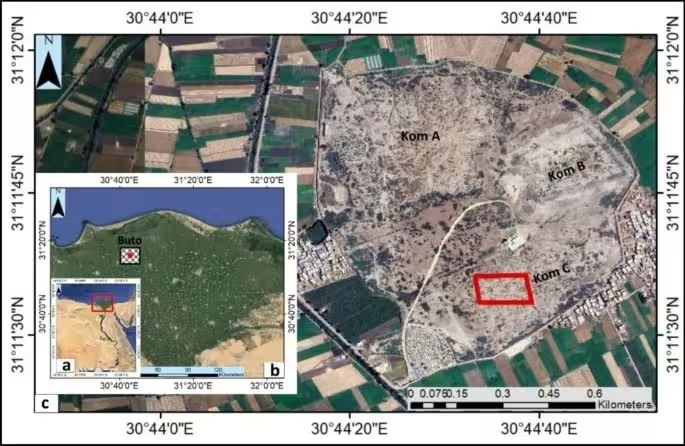
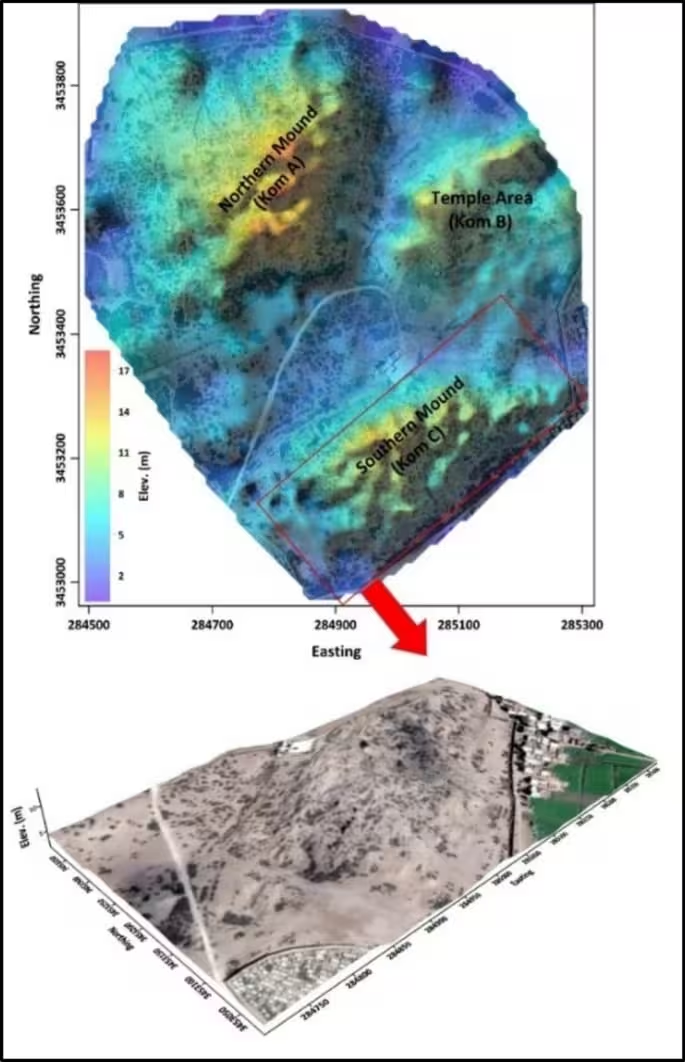
The research focused on a specific mound known as Kom C. Because the area sits below the groundwater level, conventional excavation efforts frequently reached a standstill once they hit the water table. To overcome this, the team employed the European Space Agency’s Sentinel-1 satellite. By analyzing radar backscatter—which detects subtle variations in surface moisture and topography—the team identified a distinct oval-shaped anomaly spanning roughly 128 by 62 meters.
To obtain higher-resolution data without physical disturbance, the team conducted electrical resistivity tomography across a 5,400-square-meter area. By measuring how electrical currents traveled through the ground, the researchers created a detailed map of the subsurface layers, which revealed a clear transition from recent debris in the upper three meters to a substantial, purpose-built structure between three and six meters deep.
Engineering Marvels of the Saite Period
The identified structure, originating from the 688 to 525 B.C. era, likely functioned as a shrine, a priestly residence, or a tomb. During follow-up testing, a test trench reached depths of seven meters, revealing thick mudbrick walls and significant finds, including an altar featuring traces of animal blood, ushabti figurines, and a rare faience baboon representation of the god Thoth.
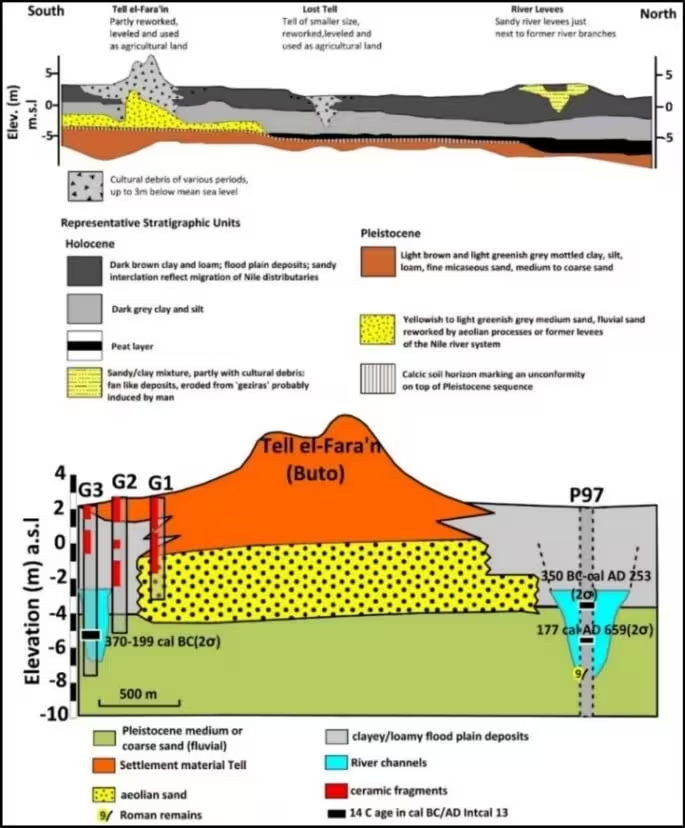
Perhaps most impressive was the discovery made at the base of the foundation. At a depth of six to seven meters, archaeologists encountered a thick, deliberate layer of clean sand. Study co-author Abdelaziz Elfadaly noted that this layer served as a sophisticated engineering solution to the region’s unstable, water-sensitive clay. By creating this sand cushion, ancient builders distributed the weight of the massive structure and allowed for proper drainage, effectively preventing the groundwater from causing the mudbricks to degrade.
Hussein Bassir of the Bibliotheca Alexandrina, who was not involved in the research, praised the find as evidence of the deep environmental expertise held by Saite-era architects. The construction of such an elaborate facility highlights the intense focus of the Saite pharaohs on reclaiming and elevating the religious significance of the Nile Delta after a period of foreign occupation.
This article has been fact checked for accuracy, with information verified against reputable sources. Learn more about us and our editorial process.
Last reviewed on .
Article history
- Latest version
Reference(s)
- Abouarab, Mohamed A. R.., et al. “Multi-scale detection of buried archaeological elements across different occupation phases: an integrated approach using radar satellite imagery and electric resistivity tomography at Buto, northwestern Nile Delta of Egypt.” Acta Geophysica, vol. 74, no. 2, March 10, 2026 Springer Science and Business Media LLC, doi: 10.1007/s11600-026-01809-4. <https://link.springer.com/article/10.1007/s11600-026-01809-4>.
- “Sentinel-1.” <https://www.esa.int/Applications/Observing_the_Earth/Copernicus/Sentinel-1>.
- <https://www.researchgate.net/profile/Abdelaziz-Elfadaly>.
Cite this page:
- Posted by Vikram Desai