Discovery of 52,503 Roman Coins Reveals an Ancient Mystery Hidden Under a Somerset Field
Archaeologists have unearthed over 52,000 Roman artefacts alongside a mysterious burial site that continues to defy conventional scientific explanation.
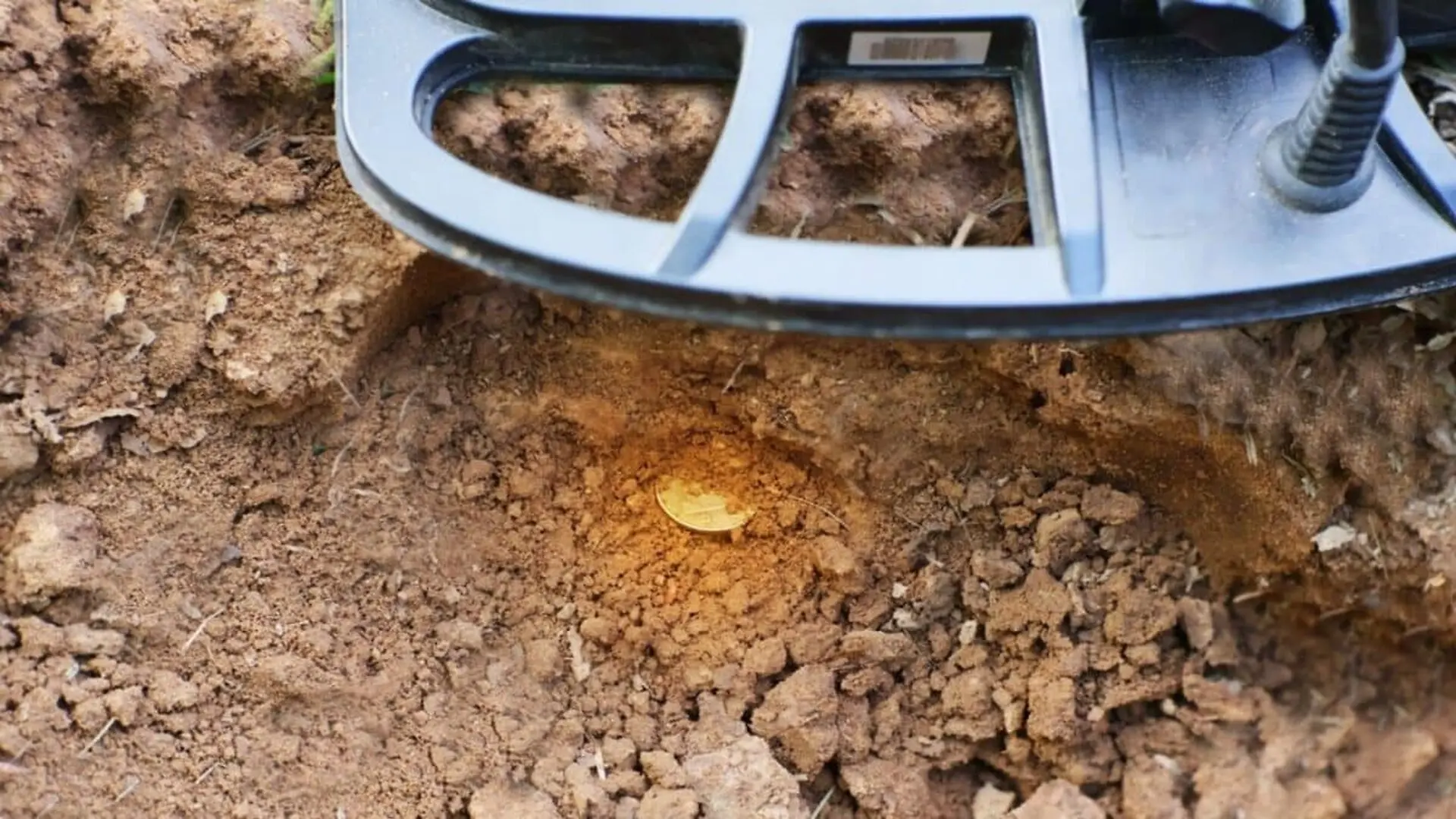
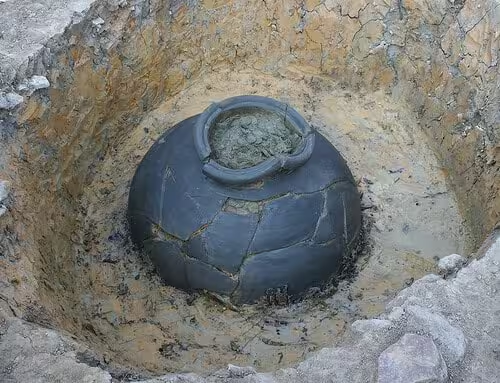
In April 2010, a routine metal-detecting excursion in a field near Frome, Somerset, led to one of the most significant archaeological discoveries in British history. Hobbyist Dave Crisp initially unearthed a single bronze Roman radiate coin, but his instinct to stop digging and alert professionals proved invaluable. Subsequent excavation revealed a massive ceramic vessel, buried nearly a foot deep, containing an staggering 52,503 Roman coins. Weighing approximately 160 kilograms, the sheer scale of the discovery required an immediate shift in archaeological thinking, as it would have been physically impossible to transport such a heavy, filled pot to the site.
Experts now believe the vessel was placed in the ground empty and filled incrementally. A secondary, dish-like container was found inverted over the opening, acting as a lid.
Evidence Suggests a Communal Ritual
The internal composition of the hoard, known as the Frome Hoard, challenges the traditional narrative that such collections were private savings buried for safekeeping. Typically, a personal cache would feature the most recently minted coins at the top, yet the latest pieces in this collection were discovered halfway down the vessel. According to the Frome Museum, this suggests the container was filled simultaneously from multiple sources rather than deposited over time.
The coins, which date from AD 253 to 293, represent a diverse span of Roman, Gallic, and Britannic imperial power. Out of the total haul, 44,245 were identifiable, while the rest were too heavily eroded to distinguish. Beyond the stratigraphic irregularities, the location itself—high ground near a spring that frequently turns boggy—is consistent with ancient votive deposits. This has led researchers to propose that the hoard represents a communal offering, with local groups contributing their own coins to a collective site.
The Rise and Fall of Carausius
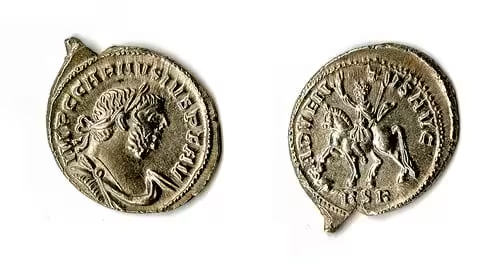
The collection provides a rare window into the brief reign of Carausius, the Roman naval commander who declared himself Emperor of Britain in 286. The Frome Hoard contains 766 coins bearing his image, marking the largest such assemblage ever discovered. These include five rare silver denarii, while the remainder consist of base silver or bronze.
The vast majority of the hoard, over 28,000 pieces, originated from the Gallic Empire, featuring notable figures such as Tetricus I. Other segments include thousands of coins from the reign of Gallienus and his wife, Salonina. The collection is remarkably comprehensive, capturing the turbulent political shifts of the third century, including the brief inclusion of rare figures like Magnia Urbica, wife of the emperor Carinus.
A Legacy of National Significance
Following its classification as treasure, the Museum of Somerset acquired the collection for £320,250. While the ancient monetary value of the coins was roughly equivalent to four years of a Roman soldier’s salary, its historical value is immeasurable. In 2017, the British public voted the find as the nation’s favorite piece of treasure.
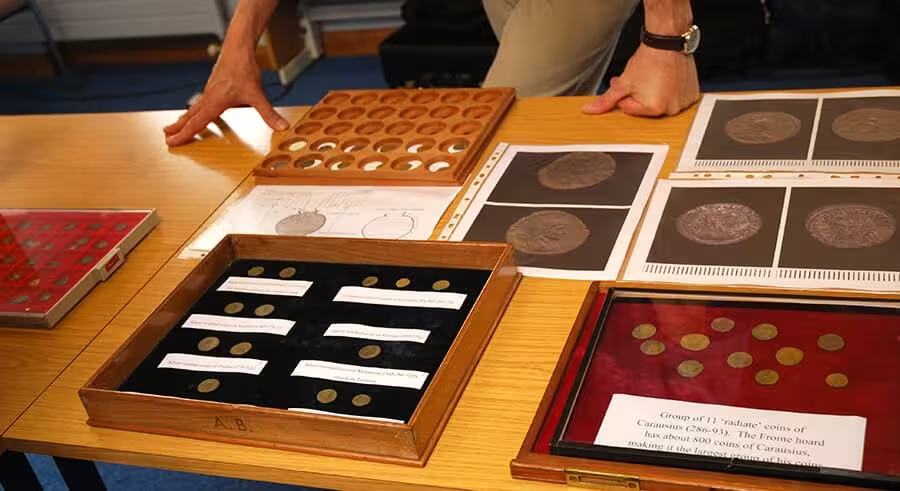
Although the original coins remain under strict security and insurance protocols in Taunton, the Frome Museum continues to host an exhibition featuring a replica urn and representative samples of the coins, ensuring the local history of the find remains accessible to the public.
This article has been fact checked for accuracy, with information verified against reputable sources. Learn more about us and our editorial process.
Last reviewed on .
Article history
- Latest version
Reference(s)
- “Frome Hoard – Frome Museum.” <https://frome-museum.org/frome-hoard>.
- <https://www.britannica.com/biography/Marcus-Aurelius-Mausaeus-Carausius>.
- “Frome Hoard of Roman coins to stay in Somerset.”, March 21, 2011 BBC News <https://www.bbc.com/news/uk-england-somerset-12800098>.
Cite this page:
- Posted by Vikram Desai