Massive 22-Foot Statue of Ramesses II Reunited After Being Split for Nearly a Century
After 96 years buried in plain sight, a discovered statue fragment has revealed an archaeological find far larger and more significant than experts expected.
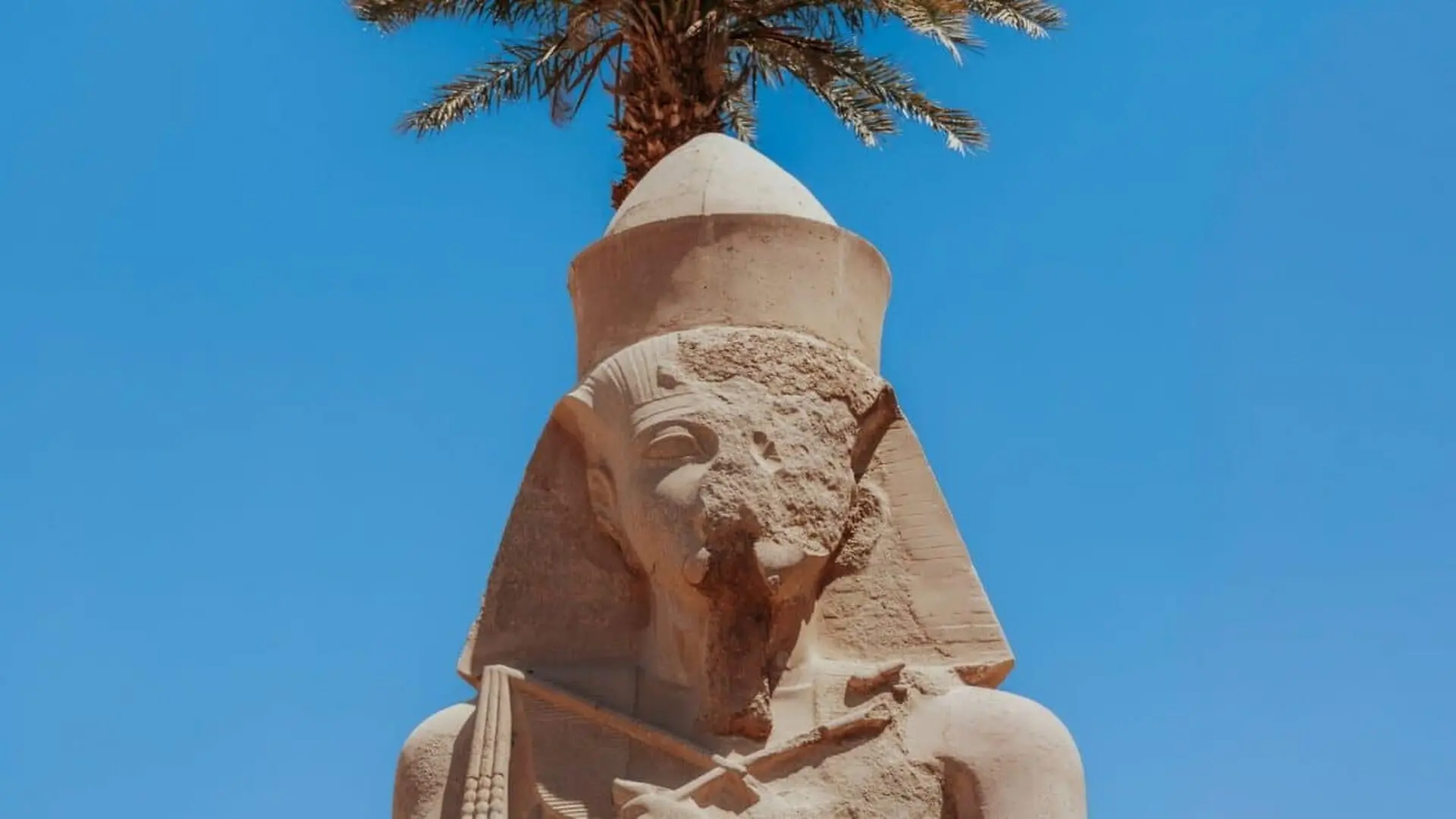
A towering monument to Ramesses II has been restored to its former glory at the site of its original construction in Egypt. The colossal statue, which stands approximately 22 feet tall and weighs more than 40 tons, was reunited after nearly a century of separation, effectively bridging a divide that began when the lower half was first unearthed in 1930.
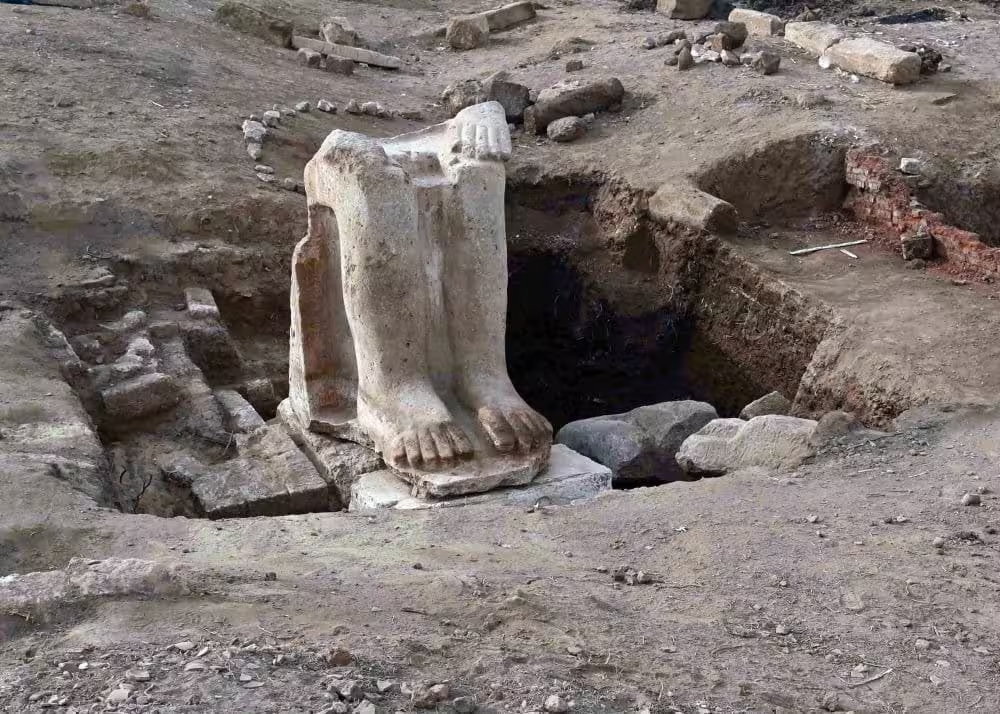
The journey to complete the monument took place at Hermopolis Magna, an ancient site located about 150 miles south of Cairo. Known in antiquity as Khemnu, the area served as a provincial capital during the Old Kingdom. German archaeologist Günther Roeder first discovered the bottom section of the figure nearly 100 years ago, but the upper portion remained lost to time, buried beneath the desert sands of Middle Egypt.
A Long-Awaited Reunion
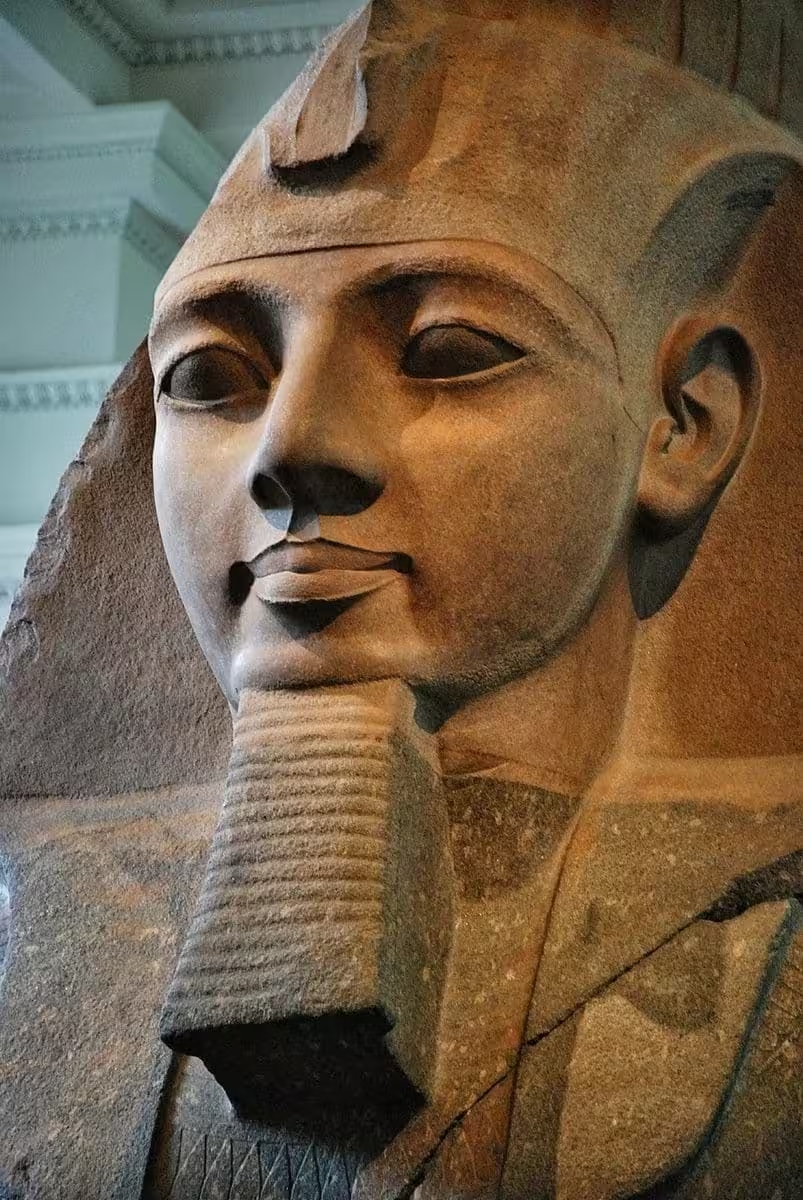
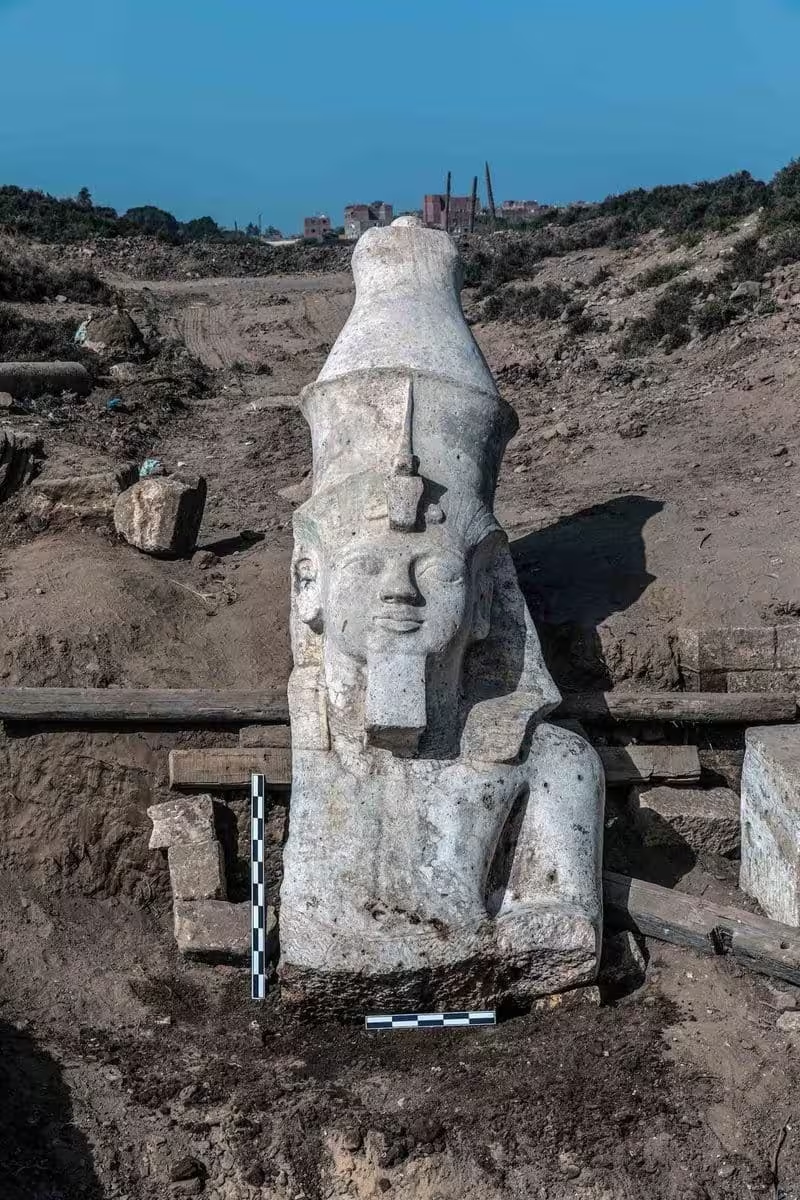
The missing upper segment was finally located in early 2024 by a joint Egyptian-American archaeological team. The fragment, which measures roughly 12.5 feet, depicts the pharaoh adorned in a royal headdress topped with a cobra. As noted by Reuters, the discovery confirms that significant remnants of the city’s ancient history remain hidden underground.
Yvona Trnka-Amrhein, an assistant professor of classics at the University of Colorado Boulder, noted that while the team was aware of the site’s historical significance, the exact placement of the missing piece was a stroke of fortunate timing. The excavation was particularly challenging due to the proximity of the Nile, which has caused high water table levels since the construction of the Aswan Low Dam.
Preservation Against the Elements
Concerns regarding the integrity of the stone were significant, as Trnka-Amrhein explained in a press statement. Researchers feared the buried stone might have succumbed to degradation, potentially rendering it little more than a pile of eroded material. Instead, the team found the relic in remarkable condition, even retaining subtle hints of blue and yellow pigment on its surface.
“One problem with Hermopolis is that it’s close to the Nile. After [the building of] the Aswan Low Dam, the water table became a huge issue. There was no guarantee that the stone would be OK,” she said. “Sometimes sandstone is uncovered that is basically just sand or degraded limestone. It could have just been a lump of rock.”
Modern Archaeological Synthesis
Following approval from the Permanent Committee for Ancient Egyptian Antiquities, the restoration process kicked off in September 2025. By early 2026, the four distinct pieces of the monument—including the primary body segments and the inscribed base stones—were successfully reassembled. As reported by Hyperallergic, this marks the first time a colossus in Middle Egypt has been fully restored and analyzed using contemporary scientific methods.
The project falls under the umbrella of the City of the Baboon Project, an ongoing collaboration between the Egyptian Ministry of Tourism and Antiquities and the University of Colorado Boulder. Researchers intend to continue their work through 2027, with plans to locate the foundations of the ancient temple pylon and further explore the archaeological potential of Hermopolis Magna.
This article has been fact checked for accuracy, with information verified against reputable sources. Learn more about us and our editorial process.
Last reviewed on .
Article history
- Latest version
Reference(s)
- <https://www.reuters.com/science/archaeologists-egypt-unearth-section-large-ramses-ii-statue-2024-03-04/>.
- Evans, Clay. “Archaeologists unearth top half of Ramesses II.” Colorado Arts and Sciences Magazine <https://www.colorado.edu/asmagazine/2024/04/17/archaeologists-unearth-top-half-ramesses-ii>.
- Pontone, Maya. “Massive Missing Head of Ancient Ramesses II Statue Uncovered.”, March 19, 2024 Hyperallergic <https://hyperallergic.com/massive-missing-head-of-ancient-ramesses-ii-statue-uncovered-in-egypt/>.
Cite this page:
- Posted by Vikram Desai