Archaeologists Found a Perfectly Preserved 800 Year Old Notebook in a Medieval Latrine
An 800-year-old notebook discovered in a medieval latrine has emerged remarkably intact, sparking new questions about its mysterious origins and owner.

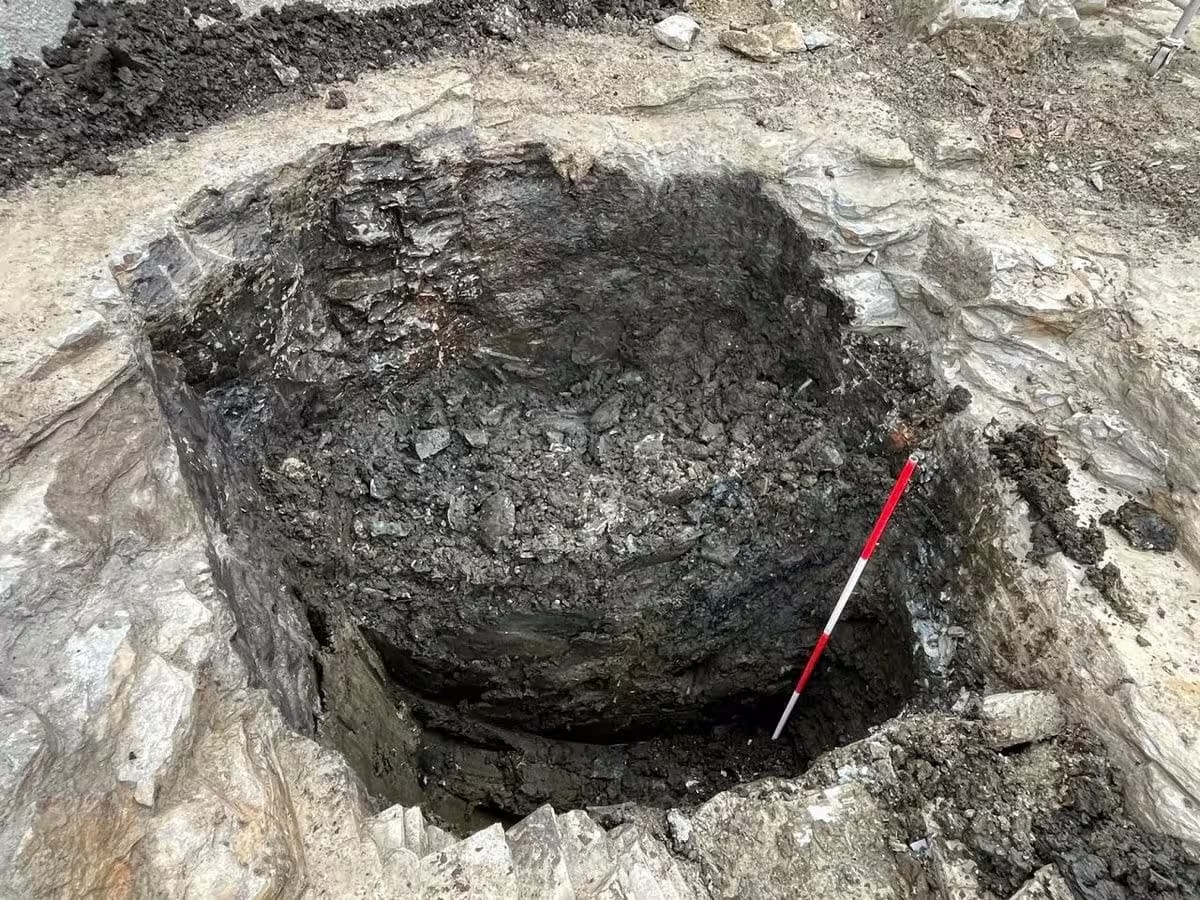
Archaeologists working in Paderborn, Germany, have unearthed an extraordinarily well-preserved artifact from the medieval period: a small, wax-filled notebook that had been buried in the damp soil of a former latrine for as long as 800 years. The discovery, overseen by the Landschaftsverband Westfalen-Lippe (LWL), offers a rare glimpse into the daily habits and literacy of high-status citizens in the 13th and 14th centuries.
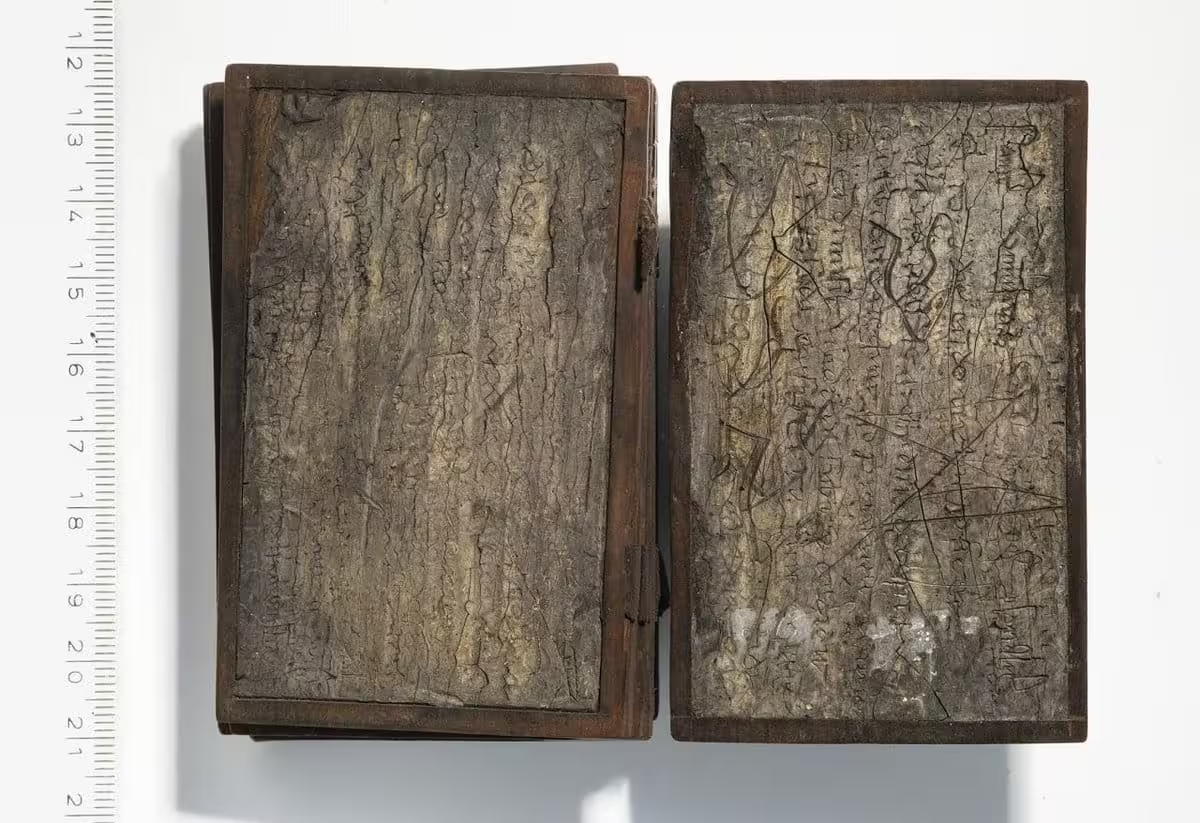
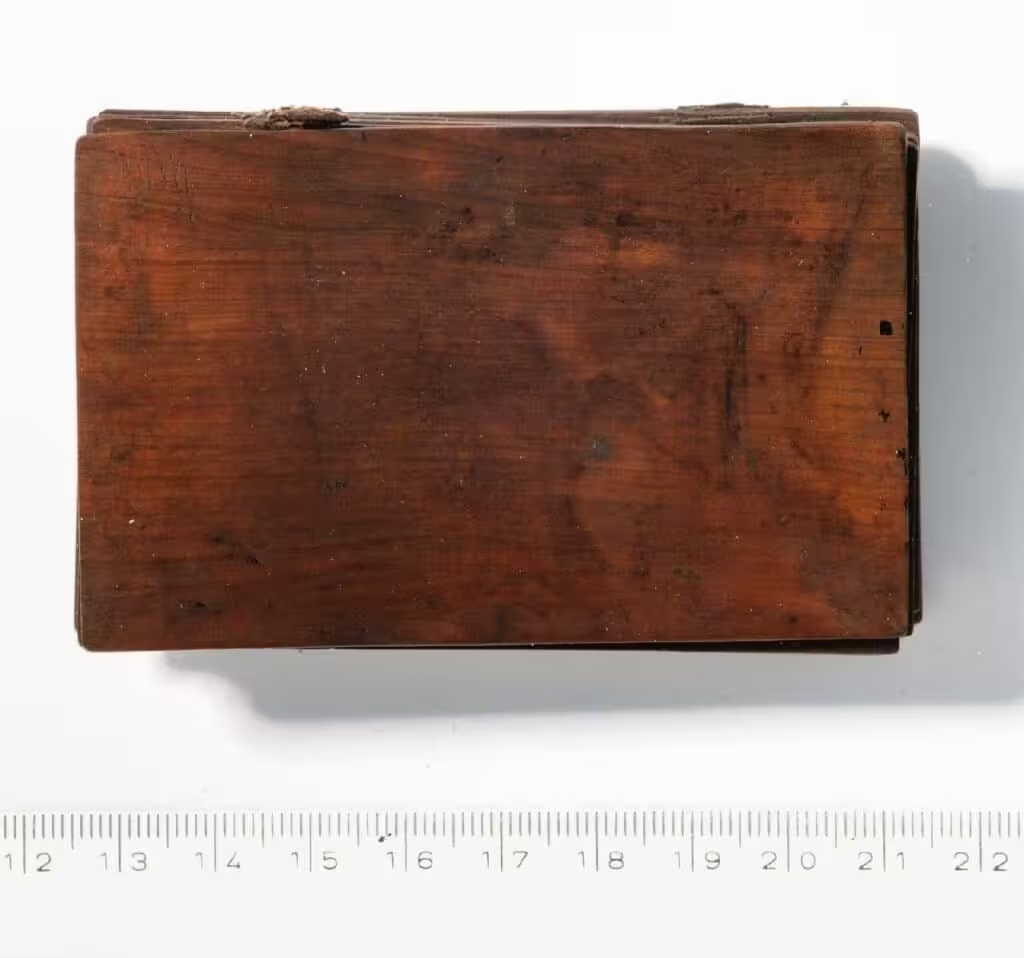
The object initially appeared to be little more than an unremarkable clump of earth. However, after undergoing meticulous cleaning at a specialized restoration workshop in Münster, the artifact revealed itself to be a sophisticated, ten-page wax tablet book. Measuring just 10 centimeters by 7.5 centimeters, it features wooden pages protected by a decorative leather cover embossed with lily motifs.
A Survival Story in the Soil
The remarkable condition of the notebook is attributed to the specific environment of the latrine. The damp, relatively airtight conditions of the site prevented the organic materials—the wood, leather, and wax—from succumbing to the typical decay processes that destroy such items over centuries. Even so, the history of the object was still lingering when it was uncovered; restorer Susanne Bretzel noted that the find retained a distinctly pungent odor even after hundreds of years in the ground.
Literacy and Status in the Middle Ages
The existence of the notebook provides significant evidence regarding the social standing of its owner. In medieval Paderborn, the ability to read and write was not a universal skill. The possession of a portable, erasable writing tablet suggests the individual was likely a wealthy merchant, an administrator, or a scribe. According to the Regional Association of Westphalia-Lippe, this status is further supported by the discovery of silk fragments in the same latrine, hinting at a lifestyle of relative luxury.
The Latin inscriptions found on eight of the ten pages are written in a cursive style consistent with the period. Experts are currently conducting a deeper analysis of the materials, including the pigments and specific wood types, to trace the notebook’s origins and its intended use.
“Enclosed in a clump of wet soil and barely recognisable at first, the object only became visible during cleaning in our restoration workshop in Münster,” said Susanne Bretzel. “Even after so many centuries in the ground, the latrine find still smelled distinctly unpleasant.”
The Mystery of the Abandoned Artifact
Despite the successful extraction, researchers remain puzzled by the item’s final resting place. The notebook was an item of clear value, making its disposal in a latrine a source of ongoing speculation. Whether it was discarded due to a mistake, a sudden event, or a deliberate act remains unknown.
For now, the notebook remains submerged in distilled water to stabilize it, a delicate conservation process that may take up to a year. While similar artifacts have surfaced in cities like Lübeck and Lüneburg, the Paderborn find remains an exceptionally rare window into the intellectual life of the Middle Ages.
This article has been fact checked for accuracy, with information verified against reputable sources. Learn more about us and our editorial process.
Last reviewed on .
Article history
- Latest version
Reference(s)
- “LWL-Kulturabteilung.”, October 15, 2024 <https://www.lwl-kultur.de/de/lwl-kulturabteilung/>.
- <https://independent.academia.edu/SusanneBretzel>.
- “Seltener Fund in Paderborn - Mitteilung 12.05.26.” <https://www.lwl.org/pressemitteilungen/mitteilung.php?urlID=63721>.
- Heidner, Nela. “Rare medieval notebook found in Paderborn latrine.”, June 21, 2026 Euronews <https://www.euronews.com/culture/2026/06/21/rare-medieval-notebook-found-in-paderborn-latrine>.
Cite this page:
- Posted by Vikram Desai