Amazon Rainforest Flipped to a Carbon Source During 2023’s Extreme Drought, Study Finds
A powerful drought in 2023 weakened the Amazon’s ability to absorb carbon dioxide, briefly turning the world’s largest rainforest into a net source of carbon.
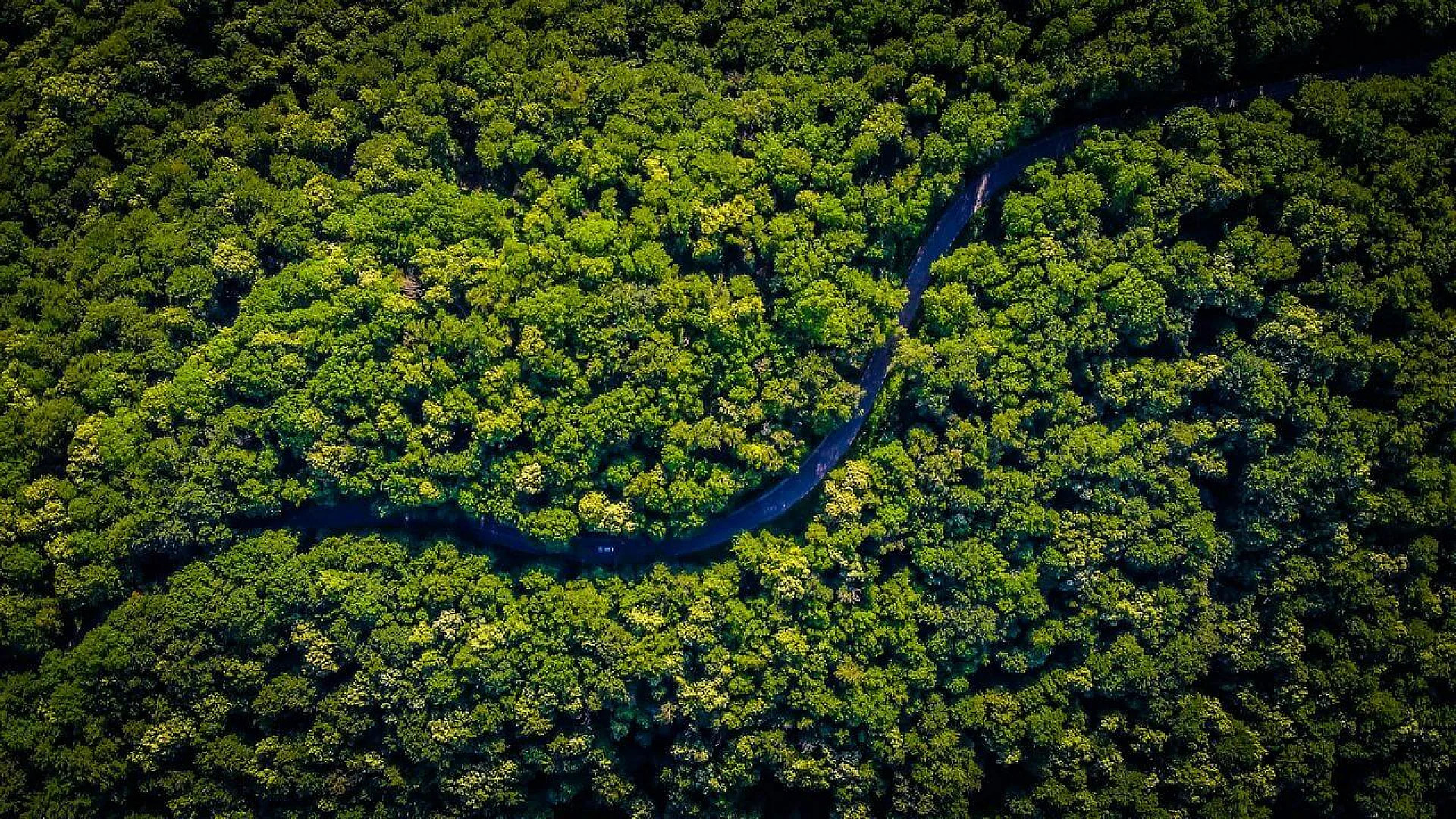
The Amazon rainforest is often called the lungs of the planet. That phrase is not scientifically exact, but it captures an important truth. The forest absorbs huge amounts of carbon dioxide from the air.
Trees pull in carbon dioxide during photosynthesis. They store that carbon in their trunks, branches, leaves, and even in the soil below. Over time, this makes the Amazon one of Earth’s largest carbon sinks, meaning it normally takes in more carbon than it releases.
But in 2023, something changed.
According to a new study published in AGU Advances, the Amazon briefly turned into a weak carbon source. Instead of absorbing more carbon than it released, it did the opposite.
The shift was not dramatic, but it was measurable. And it tells us something important about how climate extremes can affect even the world’s largest rainforest.
An Unusually Harsh Year
The second half of 2023 was especially tough for the Amazon.
From September to November, temperatures across the region were about 1.5 degrees Celsius above the average from 1991 to 2020. At the same time, the air became unusually dry.
Scientists linked these conditions to warmer-than-normal waters in both the Atlantic Ocean and the Pacific Ocean. When ocean temperatures rise, they can disturb normal wind and rainfall patterns.
In this case, less moisture was transported from the Atlantic into South America. The air over the forest became “thirstier,” a condition scientists call high vapor pressure deficit. In simple words, the dry air pulled more water out of plants and soil.
River levels dropped to record lows in some areas. Communities along the rivers struggled with transport and water access. Wildlife also faced stress.
While these impacts were visible on the ground, researchers wanted to understand what was happening in the atmosphere above.
How Do You Measure a Forest This Big?
The Amazon covers millions of square kilometers. Measuring its carbon exchange is not easy.
To understand what happened in 2023, scientists combined several types of data. They looked at atmospheric carbon dioxide levels. They analyzed satellite observations of vegetation and fire activity. They also used computer models that simulate how plants grow and exchange carbon.
In addition, they relied on data from the Amazon Tall Tower Observatory in central Brazil. This tall research tower rises above the forest canopy and measures carbon dioxide directly in the air.
Each method has its strengths and limits. But when different approaches point to the same conclusion, confidence increases.
And in this case, the signals matched.
A Year Split Into Two Stories
Interestingly, the year did not begin badly.
From January to April 2023, vegetation growth was actually stronger than normal. Trees absorbed more carbon than expected during those early months.
So at first, the forest behaved like a healthy carbon sink.
Then, conditions shifted.
By May, the balance began to change. As the dry season developed, trees started to experience water stress. When plants do not have enough water, they close tiny openings on their leaves called stomata.
These openings allow carbon dioxide to enter the plant. But when they close to prevent water loss, photosynthesis slows down.
That is exactly what happened.
From August to October, during the peak drought, vegetation uptake dropped sharply. The forest was no longer pulling in carbon at its usual rate.
By October, the Amazon reached its strongest carbon source phase of the year.
Across the full year, the reduced uptake outweighed the earlier gains.
Overall, the region released between 0.01 and 0.17 petagrams of carbon. One petagram equals one billion metric tons.
Were Fires to Blame?
When people hear about Amazon droughts, they often think of fires.
Fires did increase during the dry season in 2023, and the fire season extended into November. However, total fire emissions for the year were about 0.15 petagrams of carbon.
That number falls within the normal range observed from 2003 to 2023.
In other words, fires were not unusually extreme compared to recent years.
The main driver of the carbon shift was reduced vegetation uptake, not an explosion of fire activity.
This detail matters. Fire emissions are visible and dramatic. But a quiet slowdown in photosynthesis across millions of trees can also reshape the carbon balance.
A Global Ripple Effect
The Amazon does not operate in isolation.
Tropical forests as a whole usually act as important carbon sinks. When the Amazon weakens, the global carbon budget feels the effect.
The study estimates that the Amazon’s weak carbon source in 2023 contributed up to 30 percent of the total net carbon loss from tropical land areas that year.
Meanwhile, 2023 also saw record growth in atmospheric carbon dioxide.
Fossil fuel emissions remain the main long-term driver of rising CO2 levels. Still, year-to-year changes in forests can amplify or slightly slow down the increase.
In 2023, drought-related stress added to the upward push.
Understanding the Science in Simple Terms
Scientists use terms like “net ecosystem exchange” to describe the balance between carbon absorbed and carbon released.
If absorption is higher, the system is a sink. If release is higher, it becomes a source.
They also use “net biome exchange,” which includes extra factors like fires and disturbances.
In 2023, measurements showed that the Amazon shifted from being a sink early in the year to being a source during the dry months.
Importantly, this pattern appeared in atmospheric data, satellite observations, and computer models.
When independent lines of evidence agree, the conclusion becomes stronger.
What the Tower Observed
The Amazon Tall Tower Observatory provided direct confirmation.
During the peak drought months, measurements from the tower showed reduced carbon uptake. The air above the forest contained higher levels of carbon dioxide than expected.
Because this site is located in a relatively undisturbed area, the data reflect large-scale ecological changes rather than local deforestation.
This alignment between ground measurements and regional analysis gives weight to the findings.
Not the First Time, But Still Concerning
The Amazon experienced major droughts in 2015 and 2016.
The 2023 carbon source was similar in size to the 2015 event, but smaller than 2016.
Each drought has its own climate drivers. Ocean temperature patterns, atmospheric circulation, and seasonal rainfall all play a role.
Still, a pattern is becoming clear. When extreme heat and dryness hit the Amazon, its ability to absorb carbon weakens.
And even temporary shifts can matter for the global climate system.
What This Means for the Future
Climate models suggest that parts of the Amazon may face more frequent droughts as global temperatures rise.
If that happens, reduced vegetation uptake could occur more often.
The study does not claim that the Amazon has permanently become a carbon source. Instead, it documents a temporary reversal during an extreme year.
However, repeated temporary reversals could gradually weaken the forest’s long-term carbon storage role.
That possibility carries serious implications for global climate projections.
Remaining Questions
Despite the strong evidence, uncertainties remain.
Different models estimate slightly different carbon flux values. Atmospheric measurements are not evenly distributed across the basin. Satellite data can be affected by clouds.
The range of 0.01 to 0.17 petagrams reflects these uncertainties.
Still, the central conclusion is consistent. During the extreme drought of 2023, reduced vegetation uptake turned the Amazon into a weak carbon source.
Future monitoring will be critical.
Scientists continue to refine models and expand measurement networks. Understanding how tropical forests respond to climate stress is essential for predicting future carbon trends.
A Forest Under Pressure
The Amazon rainforest is not a fixed system. It responds to weather, temperature, and long-term climate change.
In 2023, unusually warm oceans and reduced moisture flow created conditions that limited the forest’s carbon absorption.
The change was subtle compared to global fossil fuel emissions. But it was large enough to influence the tropical carbon balance for the year.
That is a reminder of how closely connected Earth’s systems are.
A shift in ocean temperature can reduce rainfall. Reduced rainfall can stress trees. And stressed trees can change the chemistry of the atmosphere.
The story of 2023 is not one of sudden collapse. It is a story of sensitivity.
Even the world’s largest rainforest has limits.
And when those limits are tested by extreme climate conditions, the effects reach far beyond the forest itself.
The research was published in AGU Advances on February 13, 2026.
This content has been reviewed by subject-matter experts to ensure scientific accuracy. Learn more about us and our editorial process.
Last reviewed on .
Article history
- Latest version
Reference(s)
- Botía, S.., et al. “Reduced Vegetation Uptake During the Extreme 2023 Drought Turns the Amazon Into a Weak Carbon Source.” AGU Advances, vol. 7, no. 1, 13 February 2026, doi: 10.1029/2025AV001658. <https://agupubs.onlinelibrary.wiley.com/doi/full/10.1029/2025AV001658>.
Cite this page:
- Posted by Hassan Raza