A Massive Battleship Sank in Seconds off a Popular French Beach and Still Rests Below the Waves
A century ago, a French warship vanished in sixty seconds after striking an uncharted hazard. Discover the mystery of this forgotten maritime disaster.
A century ago, the pride of the French naval fleet, a 23,500-tonne dreadnought known as the France, vanished beneath the waves of Quiberon Bay in less than a minute. Despite its massive scale and formidable reputation, the warship was brought down by a geological hazard that appeared on no nautical charts of the time. Today, the vessel rests only 15 metres below the surface, remaining a silent neighbor to the popular tourist beaches of Brittany.
Engineering Might Defeated by an Uncharted Hazard
Commissioned in 1912, the France was the final iteration of the Courbet-class dreadnoughts. Measuring 165 metres in length and 27 metres across, the warship featured a deep draught of nearly 10 metres. It was built as a dominant projection of French naval capability, armed with an array of twelve 305-millimetre guns, twenty-two 138-millimetre pieces, and four torpedo tubes.
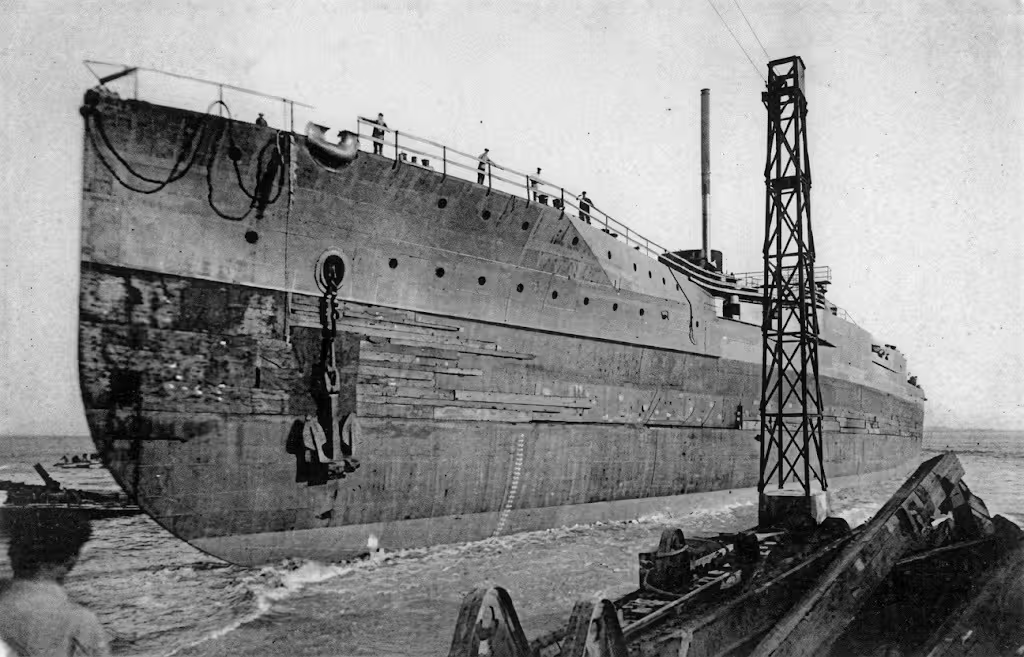
The tragedy occurred during the night of August 25-26, 1922. As the battleship returned from artillery exercises near Belle-Île, it navigated the Teignouse passage alongside the Paris. At 12:57 a.m., the hull struck an underwater rock formation that had not been documented by any maritime authority. The impact caused the vessel to capsize to port and sink with alarming speed, according to records analyzed by Science Post.
Legal Clearance and the Mystery of the Lost Rock
The subsequent maritime inquiry highlighted a significant failure in navigational safety. The obstruction that claimed the battleship sat only 8 metres below the surface, yet it was entirely absent from the nautical instructions provided to naval commanders. Because the threat was unknown and unmapped, the Maritime Tribunal of Lorient acquitted the ship’s commanding officer of any wrongdoing. The previously unnamed formation was eventually designated “Basse Nouvelle.”
The Fragmented Legacy of a Sunken Giant
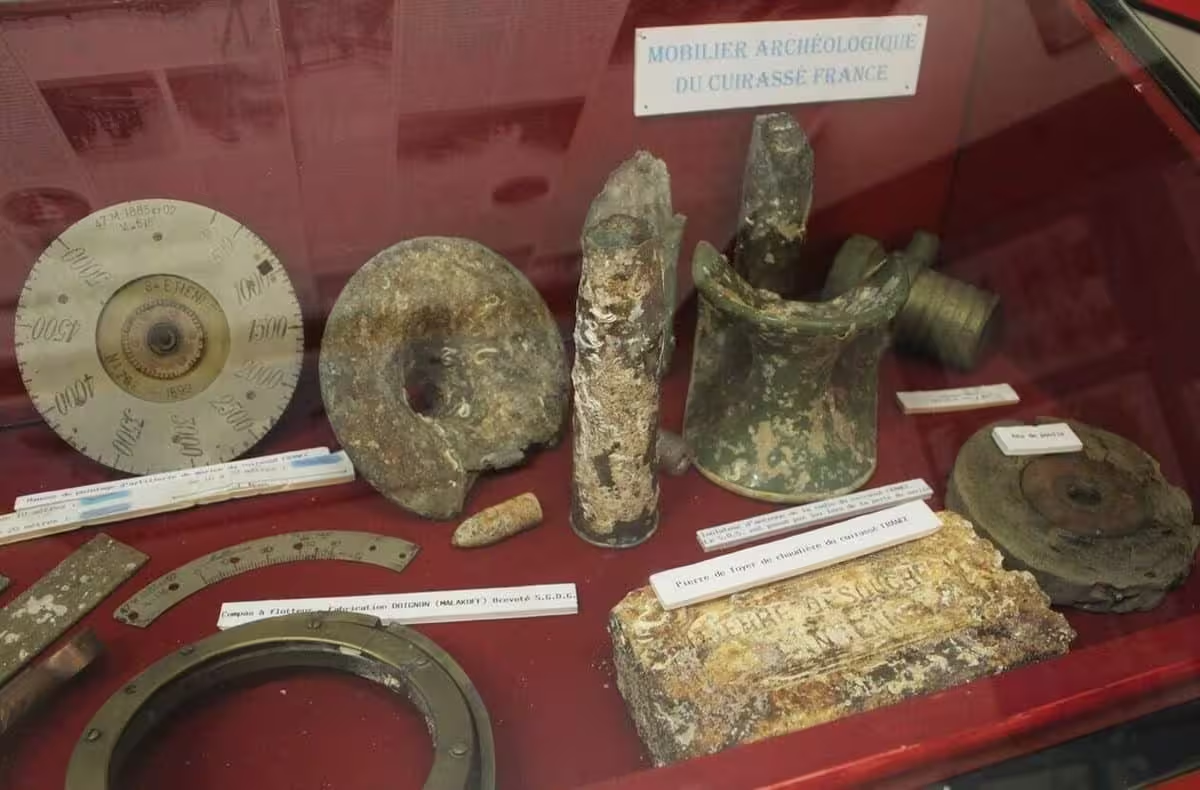
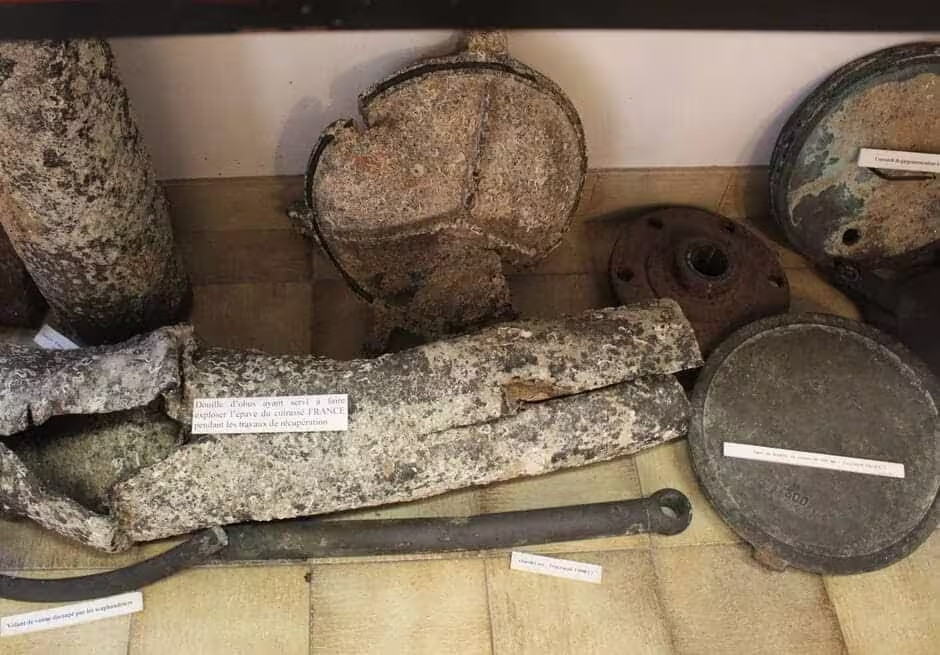
Despite being relatively close to shore, the wreck proved impossible to salvage in one piece. Efforts to clear the site began shortly after the sinking but morphed into a decades-long salvage operation. From the 1920s until 1958, various contractors worked to dismantle the ship, leaving behind only scattered debris on the seafloor. Today, remnants of the ship serve as historical artifacts at the Musée de Quiberon, preserving the memory of a disaster that, due to a remarkably low loss of life, has largely faded from the national consciousness.
This article has been fact checked for accuracy, with information verified against reputable sources. Learn more about us and our editorial process.
Last reviewed on .
Article history
- Latest version
Reference(s)
- Baptiste, “Le Cuirassé France.”, August 19, 2024 Archéologie sous-marine, les Epaves et naufrages en Manche et Atlantique <https://archeosousmarine.net/fiches/le-cuirasse-france>.
- L., Brice. “Par 15 mètres de fond en baie de Quiberon dort depuis 1922 un cuirassé de 23 500 tonnes jamais relevé.”, September 6, 2026 Sciencepost <https://sciencepost.fr/par-15-metres-de-fond-en-baie-de-quiberon-dort-depuis-1922-un-cuirasse-de-23-500-tonnes-jamais-releve/>.
Cite this page:
- Posted by Vikram Desai