Ancient Submerged Villages Discovered Beneath a Peaceful French Lake Reveal 3000 Years of History
Submerged under meters of water, these ancient, forgotten villages have revealed remarkably preserved wooden structures, pottery, and dozens of historic boats.
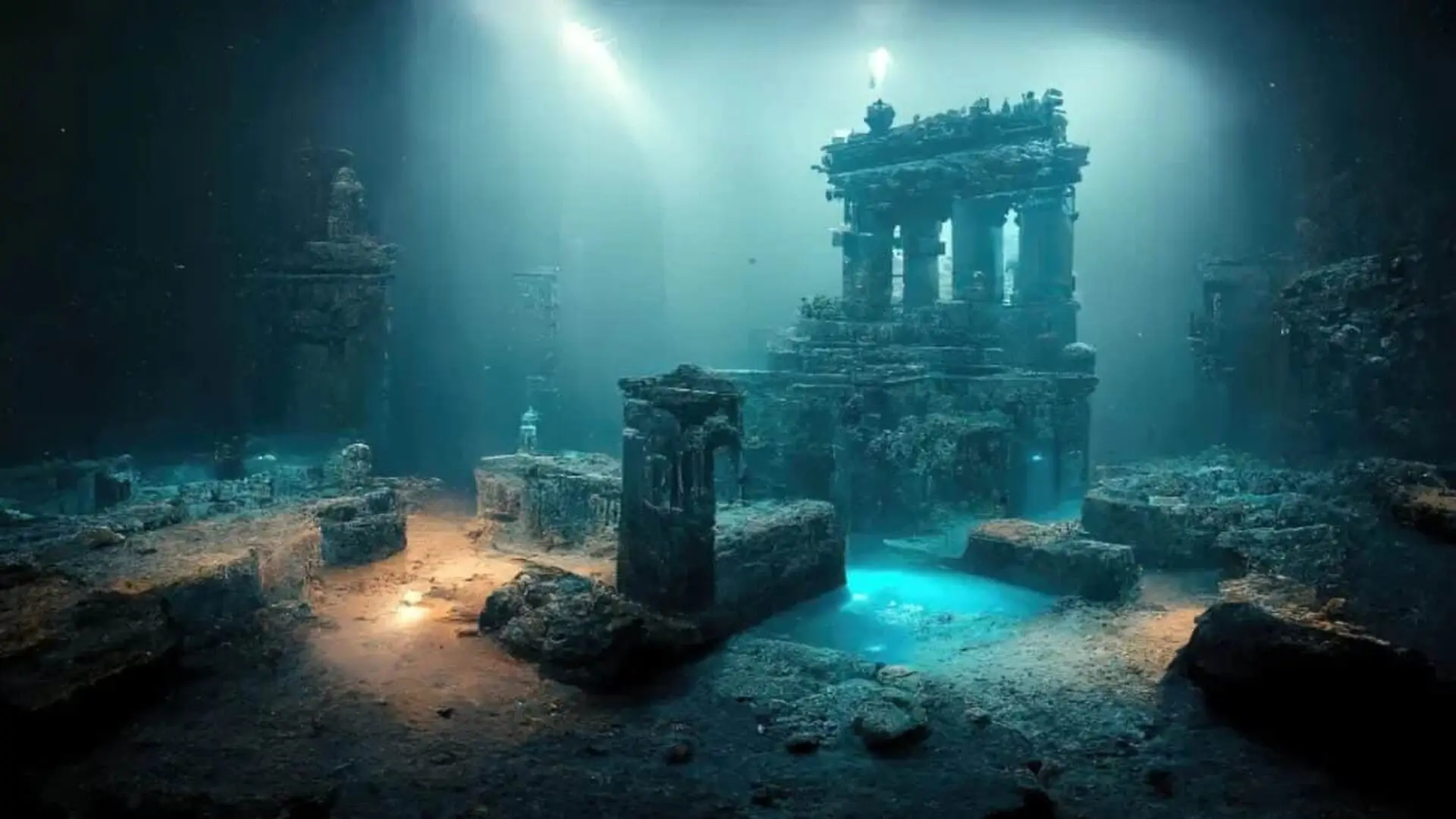
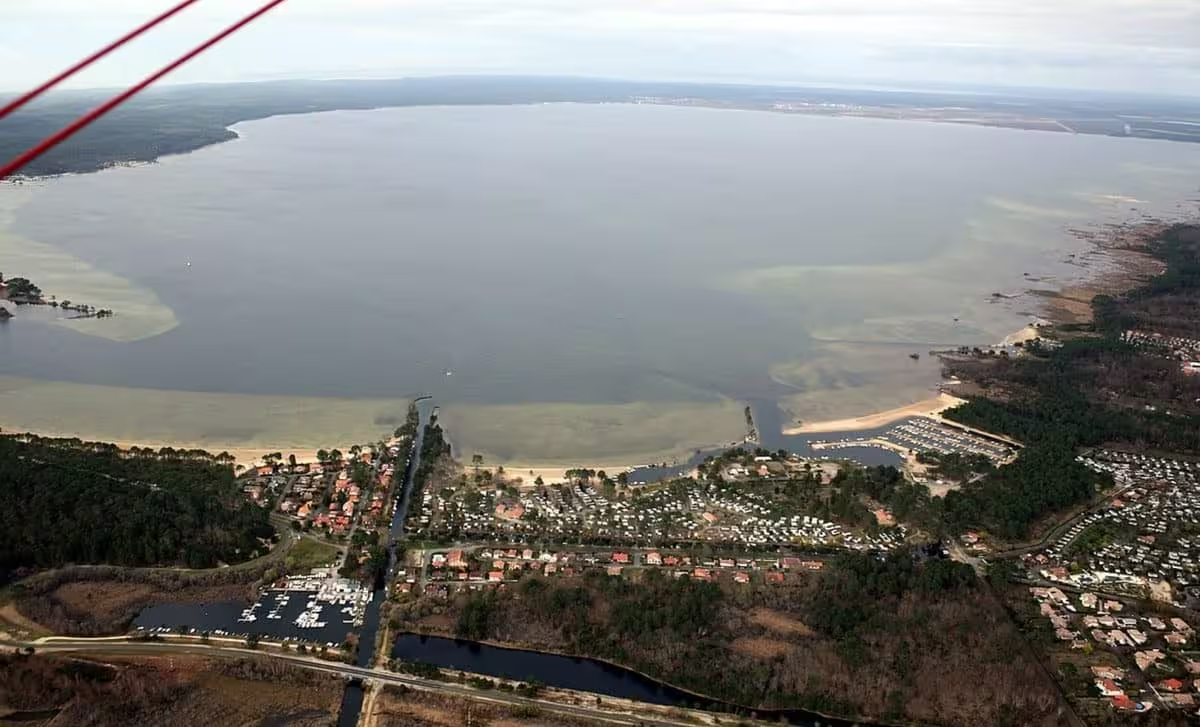
To the casual observer, the Étang de Cazaux-Sanguinet, nestled between the French regions of Landes and Gironde, appears to be a tranquil haven for swimmers and anglers. However, the calm surface conceals a remarkably preserved archaeological time capsule. Beneath these waters lie the remnants of ancient settlements, kept intact for millennia by the very rising tides that once forced their inhabitants to abandon their homes.
The history of the lake is a chronicle of a shifting environment. Long before it was a freshwater basin, the region was a coastal valley carved by the Gourgue stream, which flowed toward the Atlantic. As a dune barrier slowly formed and sealed off the coastline, the valley began to flood. This transformation was a gradual, inexorable process that compelled generations of settlers to repeatedly retreat and rebuild further from the encroaching water.
A Two-Millennium Legacy of Human Settlement
The submerged sites of Cazaux-Sanguinet offer a unique opportunity to track a continuous human presence spanning nearly 2,000 years. Instead of disappearing, these communities adapted to the changing geography, relocating as the water level rose from the Bronze Age through to the Gallo-Roman era.
Archaeologists have identified three primary settlements that document this evolution. The oldest, known as Put Blanc, dates to roughly 800 BCE. Excavations there have yielded a wealth of pottery, structural remains of dwellings, and nearly 20 pirogues, pointing to the site’s historical significance as a bustling river port during the early Iron Age.
Further investigations at the Matocq site, conducted between 2006 and 2012, uncovered eight distinct occupation phases, with findings such as bronze spearheads confirming activity stretching from the early Bronze Age into the Iron Age. The chronology continues with the Losa site, a Gallo-Roman settlement strategically positioned on a road that linked Bordeaux and Dax. Coins recovered from this location have enabled researchers to date the site’s active use between 70 BCE and 276 CE, according to Sciencepost.
Decades of Underwater Exploration
The systematic recovery of this history began in 1978, led by the Centre de recherches et d’études sublacustres de Sanguinet (CRESS). Between 1976 and 1998, teams of divers braved difficult conditions to document submerged structures located two to five meters below the surface. These archaeologists meticulously studied wooden construction methods that had remained protected by the water for ages.
Among the most significant artifacts are 27 monoxylous pirogues—boats hollowed out from single pine trunks—dating from the Bronze Age to the Merovingian period. These vessels, alongside remnants of stilt-house architecture and a Gallo-Roman temple (or fanum) discovered in 1970, reveal how these populations successfully engineered their lives to harmonize with a volatile, water-heavy landscape.
Preserving the Sunken Past
While the ruins remain on the lakebed, their legacy is showcased at the Sanguinet municipal archaeological museum, which holds the official Musée de France designation. The facility houses over 450 items, including restored pirogues that underwent specialized preservation work at the ARC-Nucléart workshop in Grenoble before returning for public display following the museum’s 2008 renovation.
The museum serves as an active hub for ongoing research. With five major sites identified in the vicinity, each new survey continues to yield insights into the resilience of these ancient societies. For today’s visitors, the Étang de Cazaux-Sanguinet offers more than just a recreational escape; it provides a profound look at how human civilization adapts when faced with an ever-changing world.
This article has been fact checked for accuracy, with information verified against reputable sources. Learn more about us and our editorial process.
Last reviewed on .
Article history
- Latest version
Reference(s)
- L., Brice. “Sous les eaux d’un lac des Landes dorment depuis l’âge du Bronze trois villages que personne n’a jamais relevés.”, September 6, 2026 Sciencepost <https://sciencepost.fr/sous-les-eaux-dun-lac-des-landes-dorment-depuis-lage-du-bronze-trois-villages-que-personne-na-jamais-releves/>.
- “Musée du Lac - Site officiel du musée de Sanguinet.” Site officiel du musée de Sanguinet <https://www.musee-lac-sanguinet.fr/>.
Cite this page:
- Posted by Vikram Desai