Toddler Finds 3,800-Year-Old Egyptian-Style Scarab Amulet at Biblical Azekah Site
Israeli trail find: a 3‑year‑old’s stone uncovers a 4,000‑year‑old Bronze Age artifact hidden beneath dust, revealing ancient history.
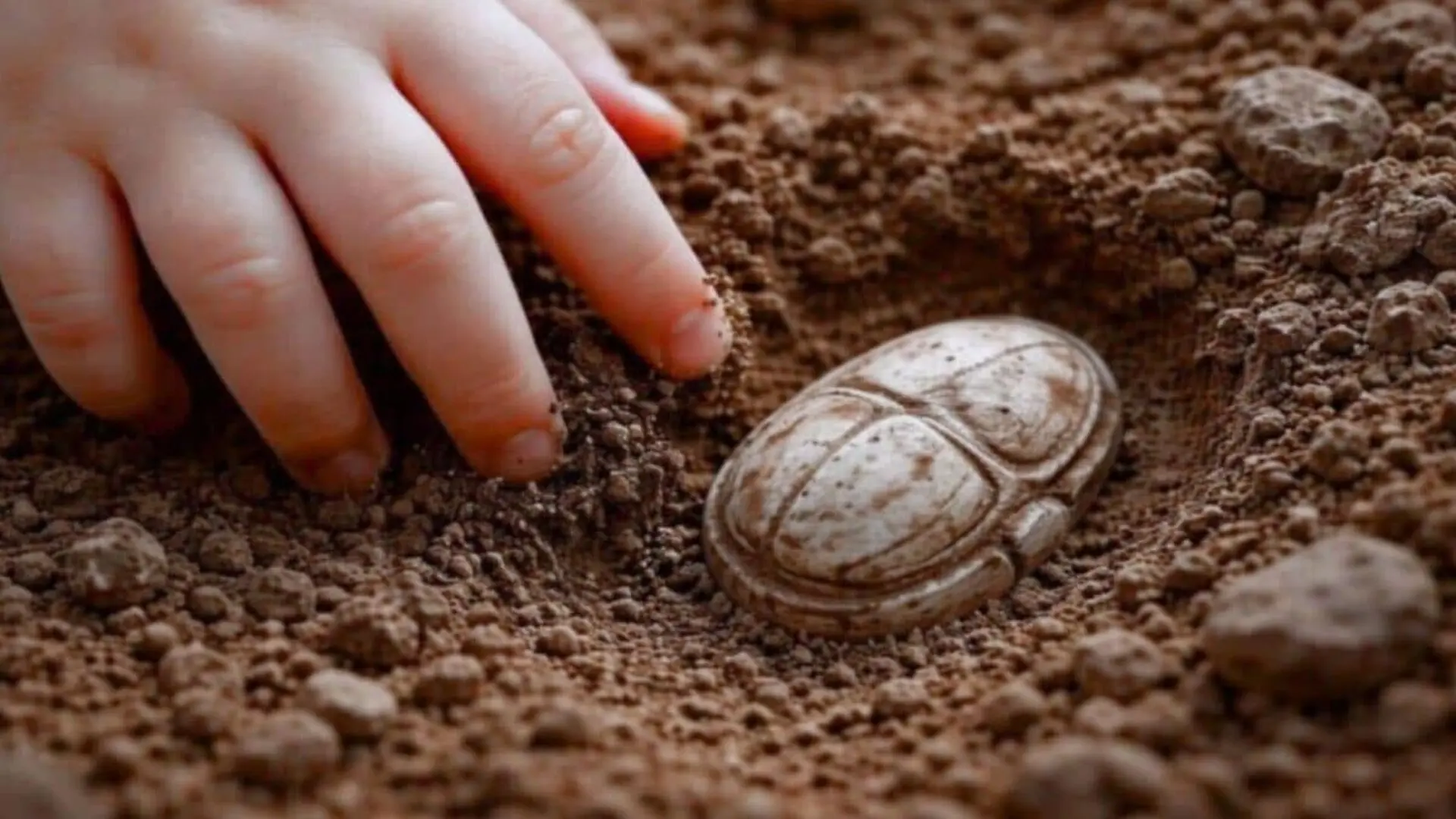
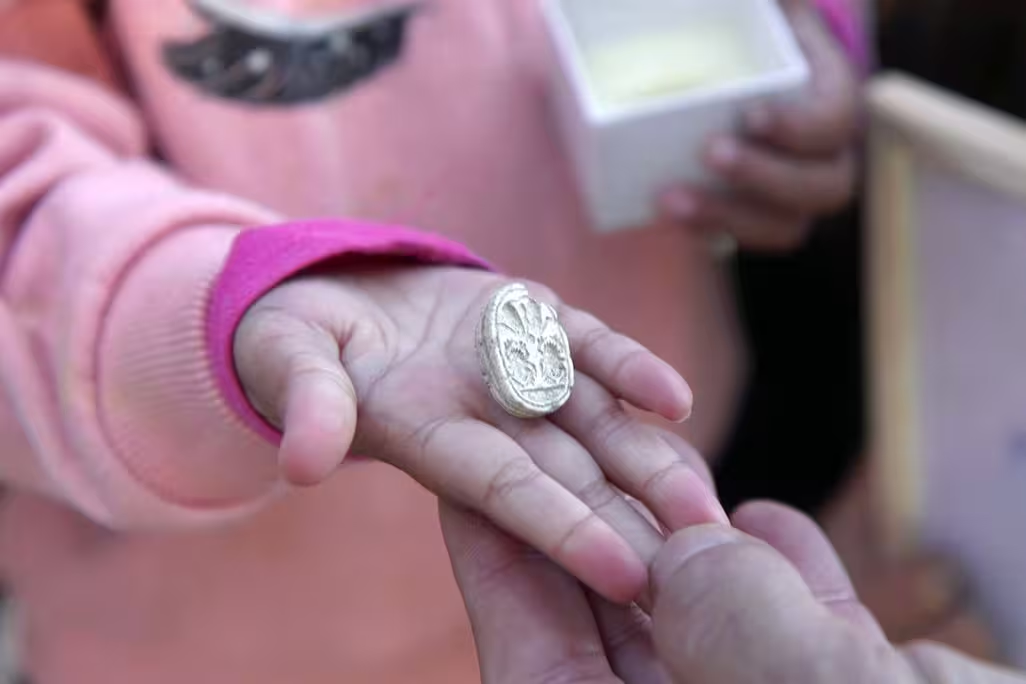
During a family walk on a gravel trail in Israel, three‑year‑old Ziv Nitzan stopped at an odd stone. She brushed away the surrounding sand, handed the find to her older sister Omer, and the siblings soon realized the object was far more than a simple pebble.
The children’s parents alerted the Israel Antiquities Authority, prompting specialists to examine the piece that the family initially described as a “beautiful stone.”
Young Explorer Uncovers Bronze Age Amulet
Laboratory analysis revealed the object to be a scarab‑shaped amulet dating to roughly 3,800 years ago, placing it in the Middle Bronze Age. Although crafted by Canaanite hands, its design follows an Egyptian artistic tradition that spread throughout the eastern Mediterranean.
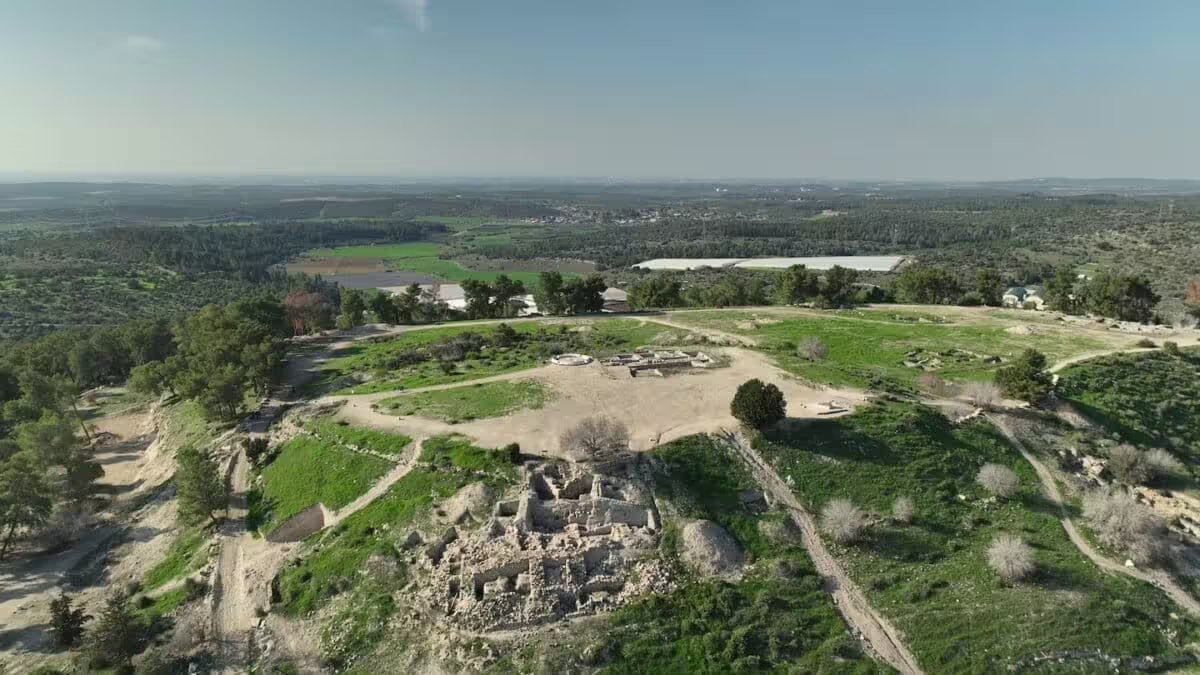
Tel Azekah rises in the Shephelah, the Judean Lowlands that once linked the Mediterranean coast with the Judean Hills. The mound sits about 45 kilometers from Tel Aviv and 30 kilometers from Jerusalem, offering a commanding view of ancient trade routes that carried merchants, travelers, and armies.
Tel Azekah: A Strategic Bronze Age Stronghold
Archaeological research shows that Azekah transformed into a heavily fortified city during the Middle Bronze Age (approximately 2000–1550 BCE). The settlement persisted into the Late Bronze Age before experiencing destruction and abandonment, later hosting Iron Age, Persian, Hellenistic, Roman, and Byzantine occupations.
Oded Lipschits, the lead archaeologist from Tel Aviv University, noted that the scarab adds to an already rich assemblage of Egyptian and Canaanite objects recovered from the site, underscoring the region’s long‑standing cultural exchanges.
Scarab Symbolism and Dual Function
In Egyptian thought, the dung beetle’s habit of rolling balls of dung across the ground was linked to the sun’s daily journey, inspiring associations with creation, renewal, and the god Khepri, who represented the rising sun. This symbolism turned the scarab into a ubiquitous motif in Egyptian material culture.
Small scarabs served both as protective amulets and as stamp seals. Daphna Ben‑Tor, an authority on ancient seals at the Israel Museum, explained that “scarabs were used in this period as seals and as amulets.” Their curved upper surface depicted the beetle, while the flatter underside could bear carved names, symbols, or brief inscriptions.
The Israel Museum’s scarab collection includes examples fashioned from glazed steatite and faience—materials that allowed artisans to carve detailed designs before applying a hard, glass‑like coating.
Cross‑Cultural Craftsmanship in Ancient Canaan
While the scarab’s shape originated in Egypt, many examples discovered in Canaan were locally produced. Canaanite artisans adapted Egyptian forms and symbols, creating objects that catered to Levantine tastes while retaining the iconic beetle motif.
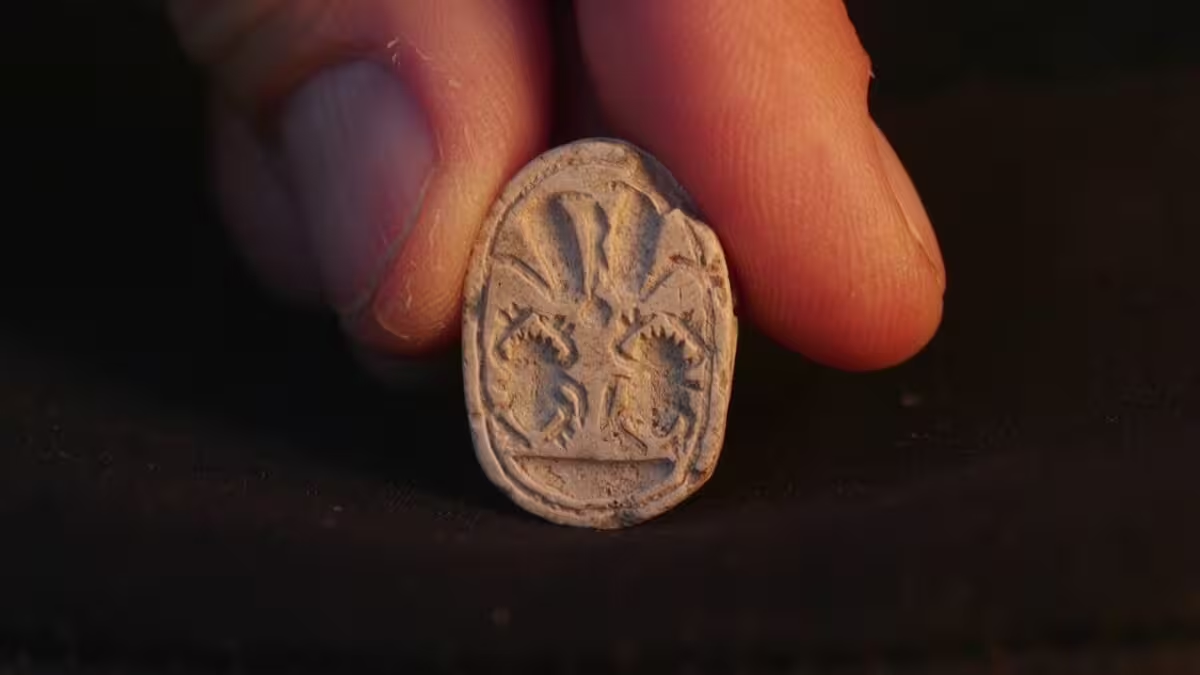
Because the scarab was recovered from a surface trail rather than a sealed excavation layer, its age was established through typological dating—comparing its form, decoration, and manufacturing technique with securely dated parallels.
From Discovery to Museum Display
The scarab now resides with the Israel Antiquities Authority, where it will be exhibited alongside other Egyptian and Canaanite artifacts at the National Campus for the Archaeology of Israel in Jerusalem. Its presence highlights the deep commercial and artistic ties that linked Canaanite cities to Egypt long before later biblical narratives, such as the story of David and Goliath, became associated with the region.
This article has been fact checked for accuracy, with information verified against reputable sources. Learn more about us and our editorial process.
Last reviewed on .
Article history
- Latest version
Cite this page:
- Posted by Vikram Desai