Red Lines in Welsh Cave Dated to 17,000 Years May Rewrite Britain’s Rock Art History
Scientists uncover ancient red lines in a Welsh cave, potentially reshaping Britain’s art history by solving a century‑old mystery.
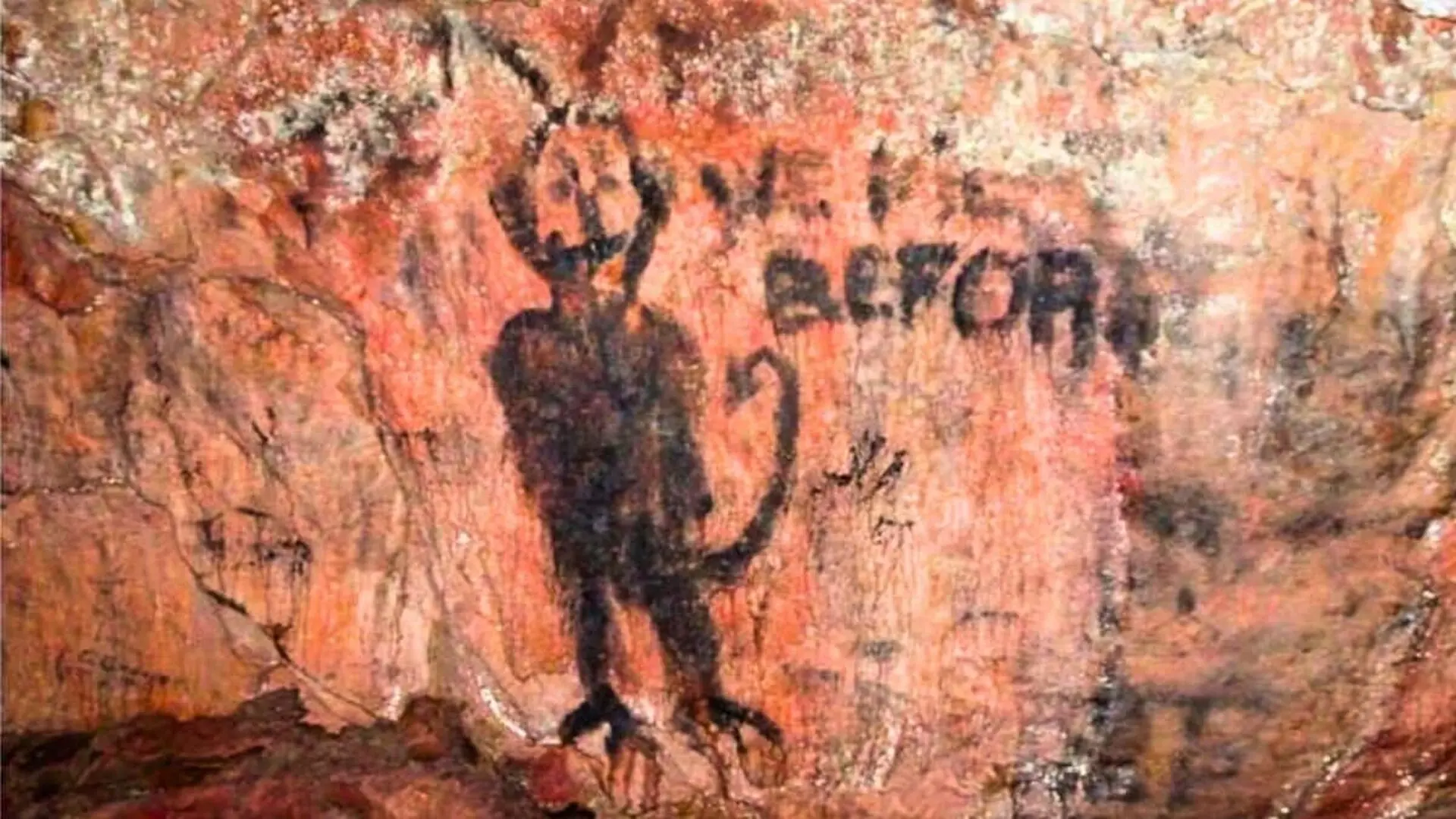
Researchers have dated a series of eleven red lines painted on a limestone wall in the Gower Peninsula to roughly 17,000 years ago, potentially making them the oldest known examples of rock art in the United Kingdom. The markings are located in Bacon Hole, a sea‑cliff cave that overlooks the Bristol Channel and was originally documented more than a hundred years ago.
A recent article in Quaternary employed pigment characterization and uranium‑thorium dating of the calcite crust that overlays the lines, concluding that the marks were deliberately applied by humans rather than formed by natural mineral processes. This finding revives a debate that began in the early twentieth century when the same panel was first recorded and subsequently dismissed as a geological stain.
Centennial Gap Ends as Scientists Re‑Locate the Hidden Panel
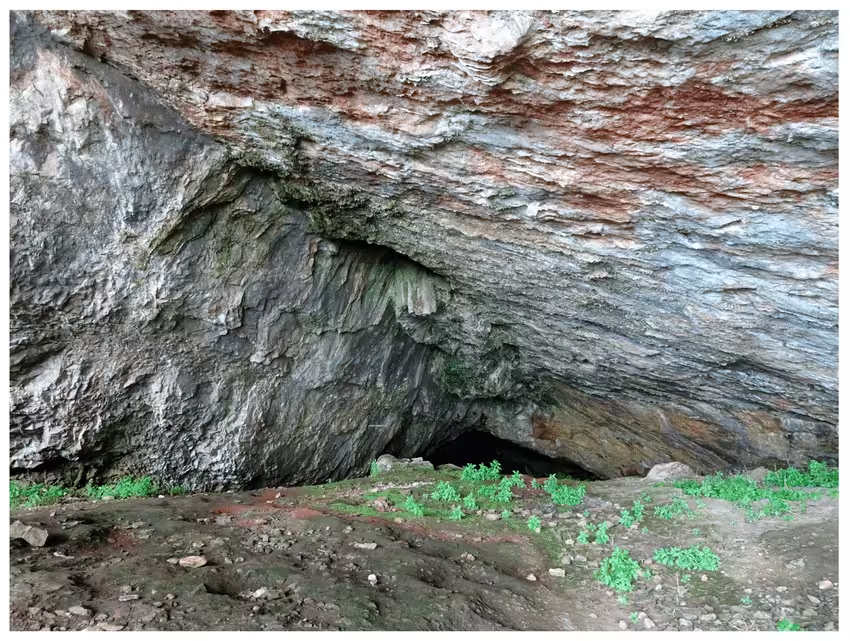
Bacon Hole sits in the parish of Pennard, embedded in the limestone cliffs of south Gower. The painted surface occupies a side chamber east of the main gallery, an area that never receives daylight and can only be reached via a steep footpath along the cliff top.
The panel was initially documented in 1912 by geologist William Sollas and prehistorian Henri Breuil, who identified the eleven horizontal strokes as the first Upper Palaeolithic cave art known from Britain. Their report attracted international interest, but by 1928 the consensus had shifted to view the red lines as iron‑oxide deposits that had seeped through the rock naturally. Over the following decades the exact position of the artwork was lost.


In September 2022 an international team succeeded in locating the forgotten panel. Over the next two years they combined high‑resolution imaging with laboratory analyses to reassess whether the markings were natural stains or purposeful artwork.
Microscopic Examination Reveals Hand‑Applied Hematite
Researchers first captured detailed photographs of the wall and processed them with D‑Stretch, a digital enhancement technique that accentuates faint patterns invisible to the naked eye. In April 2023, members of the First Art project extracted tiny pigment samples from the coloured area to test for organic residues and to identify the material used.
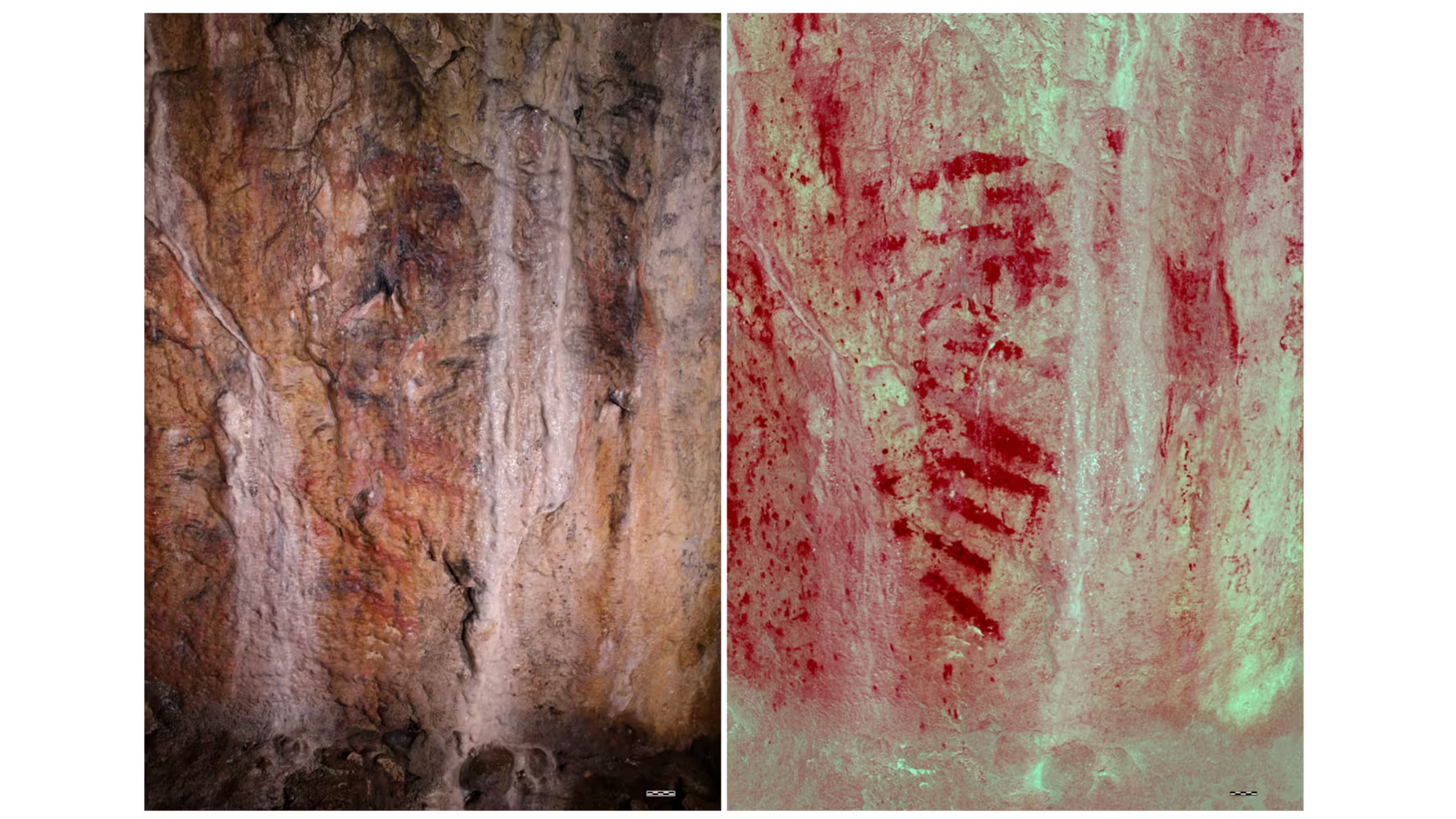
Spectroscopic analysis identified the pigment as hematite, an iron‑oxide mineral commonly employed by prehistoric peoples for red painting. Although hematite also occurs naturally within the cave, the team found additional traces of the same material in the form of finger‑dot impressions and small splashes—features that are difficult to explain as purely geological. The regular spacing of the eleven lines further supports a deliberate application.
Calcite Crust Dating Places the Art Near the End of the Upper Palaeolithic
To constrain the age of the artwork, scientists collected samples of the thin white calcite layer that had formed over the paint. Uranium‑thorium dating of one sample yielded an age of about 17,000 years, aligning with the terminal phase of the Upper Palaeolithic in Britain. A second laboratory in Nanjing Normal University performed an independent analysis to verify the result.
Not all calcite samples produced identical ages; some were considerably younger, a variation the authors attribute to successive groundwater flows that deposited new calcite layers over older ones. The researchers stress that the 17,000‑year figure rests on a single measurement and that additional testing is required. As noted by Live Science, uranium‑thorium dating can sometimes overestimate ages when uranium is leached from the calcite by infiltrating water.
A Multilayered Record of Human Use
Archaeological investigations have uncovered artifacts from several eras within Bacon Hole, including pre‑Roman pottery shards, a Roman bone pin, a seventh‑century Irish brooch, Saxon beads, and a medieval cooking pot. These finds demonstrate that the cave served as a focal point for human activity across millennia.
In 1894 a local fisherman added his own graffiti to the walls, superimposing contemporary markings on a site already rich with ancient visits. The cave’s proximity to the shoreline likely made it an attractive stop for peoples exploiting coastal resources.
Lead author George Nash, an archaeologist at the University of Liverpool, suggested that the darkness of the inner chamber may have been integral to any ritual purpose, noting that practical considerations such as access to food do not fully explain repeated use of this specific space.
Although Bacon Hole is not designated as a Scheduled Monument, it lies within an Area of Outstanding Natural Beauty and is classified as a Site of Special Scientific Interest. The National Trust currently oversees its protection.
This article has been fact checked for accuracy, with information verified against reputable sources. Learn more about us and our editorial process.
Last reviewed on .
Article history
- Latest version
Reference(s)
- Killgrove, Kristina. “17,000-year-old stripes of red in a Welsh cave are the oldest rock art in the UK, study finds.”, June 2, 2026 Live Science <https://www.livescience.com/archaeology/17-000-year-old-stripes-of-red-in-a-welsh-cave-are-the-oldest-rock-art-in-the-uk-study-finds>.
Cite this page:
- Posted by Vikram Desai