Scientists Reveal Two Previously Unknown Minerals Hidden Deep In Lunar Dust Samples
Two recently discovered minerals within lunar regolith are providing novel perspectives on the Moon’s formation and developmental history.
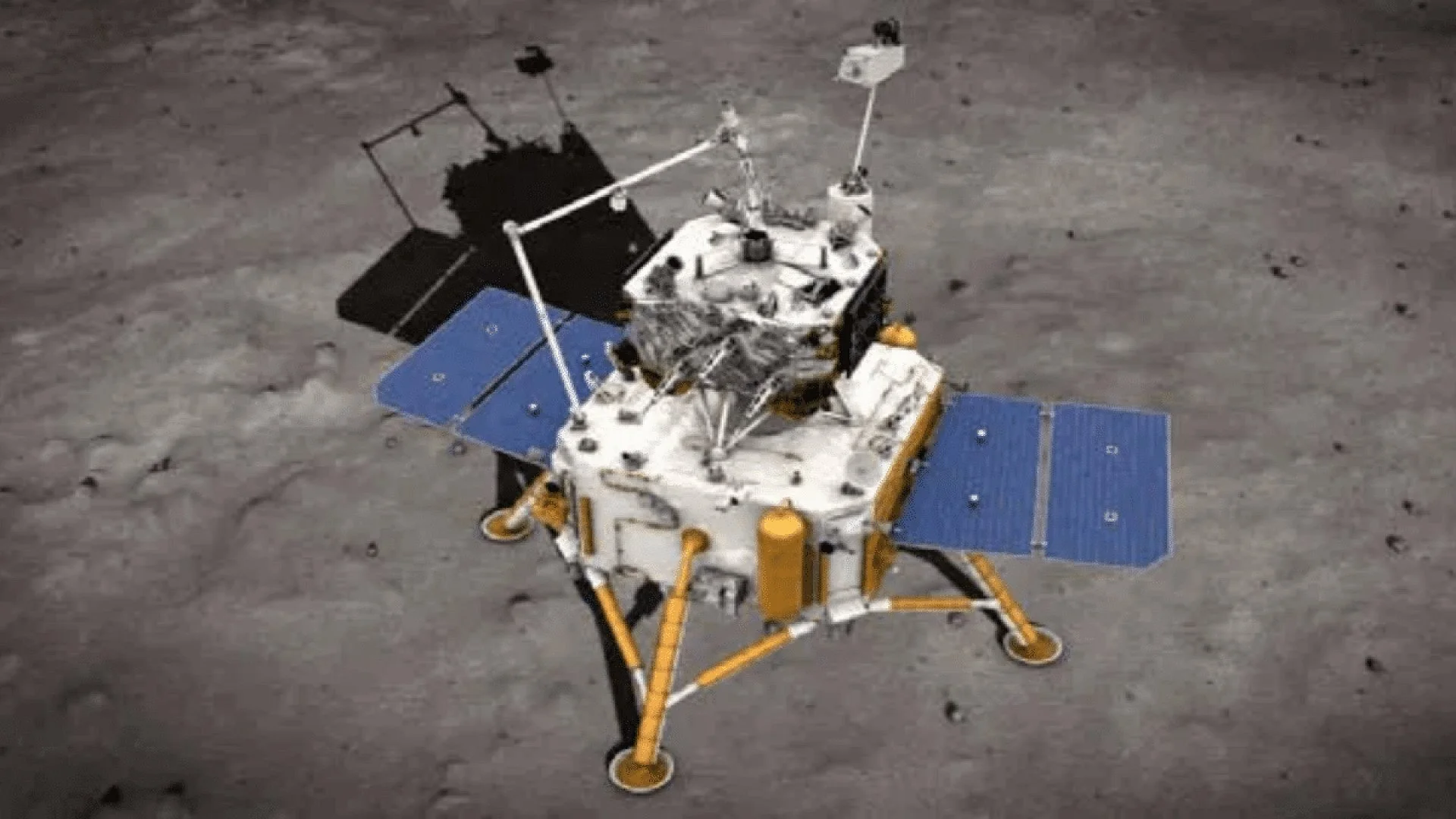
The groundbreaking discovery made by scientists at the Beijing Research Institute Of Uranium Geology is rewriting the history books on the Moon’s geological past. A microscopic analysis of Moon dust returned by China’s Chang’e 5 mission has revealed the presence of previously unknown minerals, carrying chemical signatures that tell the story of the Moon’s evolution from a molten surface to the layered world we see today.
Unlocking the Secrets of Lunar Grains
The journey to this breakthrough began with particles so tiny they were nearly impossible to handle. Scientists studying samples collected during the Chang’e 5 mission identified crystal structures that had never been documented before. These grains were embedded within volcanic debris from the Moon’s surface, preserving atomic patterns that differ from any known minerals on Earth.
Working under extreme laboratory precision, researchers isolated these particles and analyzed their structure atom by atom. The challenge was not only scientific but physical, as even minimal disturbance could displace or destroy the samples.
“During the operation, we had to hold our breath throughout and handle it with extreme care, fearing that a single breath might blow this ‘lunar treasure’ away without a trace,” said Ge Xiangkun from BRIUG.
This level of caution reveals how easily such discoveries could remain hidden. What appears to be ordinary dust becomes, under advanced instruments, a detailed archive of planetary processes. Each grain contains a record of the environment in which it formed billions of years ago.
The work conducted by the Beijing Research Institute Of Uranium Geology demonstrates how high-resolution analysis can uncover entirely new categories of matter from previously studied samples.
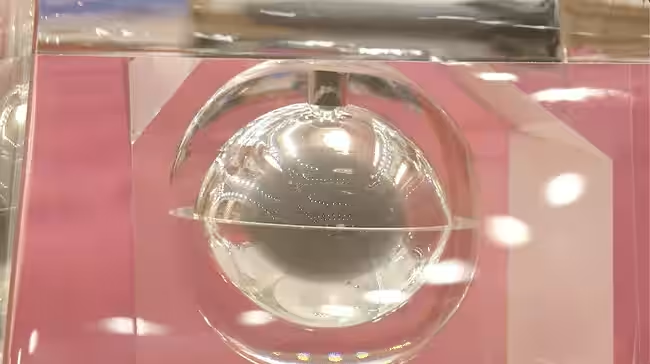
Unveiling New Minerals and Their Significance
The first mineral has been officially named magnesiochangesite-(Y), highlighting its composition rich in magnesium and yttrium. A second mineral, changesite-(Ce), was confirmed through additional studies, including comparisons with a lunar meteorite that landed on Earth.
These names follow strict international classification standards. Scientists must prove not only the chemical composition but also the precise atomic arrangement of a mineral before it is recognized as new. This ensures that discoveries are not the result of contamination or measurement error.
These additions mark the seventh and eighth new minerals identified from returned lunar samples. Their presence expands the known diversity of materials formed on the Moon, offering new reference points for planetary science.
Although these minerals contain rare earth elements, their significance is scientific rather than economic. The grains are extremely small and do not indicate accessible resources. Instead, they provide insight into how elements behave during planetary formation.
New Insights into the Moon’s Formation and Cooling
The chemical composition of these minerals provides new evidence about the Moon’s early history. When the Moon was covered by a global magma ocean, elements separated as the molten material cooled and crystallized.
The newly discovered minerals show enrichment in light rare earth elements, which contrasts with patterns observed in samples collected during the Apollo missions, where heavier rare earth elements are more common. This difference points to variations in how and when different regions of the Moon solidified.
The Chang’e 5 samples have already been dated to approximately 2.03 billion years old, extending the known duration of lunar volcanic activity by hundreds of millions of years. These minerals add another layer of detail, linking chemical processes to specific stages in that volcanic timeline.
By studying these variations, scientists can reconstruct how the lunar interior evolved, how magma moved, and how different rocks formed across the Moon’s surface.
The Importance of Tiny Crystals in Planetary Science
Minerals act as natural recorders of environmental conditions. Each crystal captures the temperature, pressure, and chemical composition present at the time of its formation. In these newly identified minerals, elements such as magnesium, yttrium, and cerium provide clues about the conditions inside ancient lunar magma.
The identification of the same mineral type in both Chang’e 5 samples and a lunar meteorite strengthens the reliability of the discovery. It suggests that these minerals are part of a broader geological pattern rather than isolated anomalies.
This research highlights the value of returning physical samples from space. Laboratory analysis on Earth allows scientists to apply techniques that are not possible with remote instruments alone.
Future missions will play a key role in determining whether these minerals are widespread across the Moon or limited to specific regions. Each new sample has the potential to refine our understanding of lunar evolution and the processes that shaped rocky worlds throughout the solar system.
The discovery shows that even the smallest fragments of Moon dust can transform scientific knowledge, revealing a complex and dynamic history hidden within seemingly simple material.
This article has been fact checked for accuracy, with information verified against reputable sources. Learn more about us and our editorial process.
Last reviewed on .
Article history
- Latest version
Cite this page:
- Posted by Vikram Desai