Archaeologists Discover 80-Ton Stones Beneath the Sea, Believed to Be Remains of One of the Seven Wonders of the Ancient World
A surprising find of large stones in the Mediterranean’s depths has uncovered an ancient structure that has been hidden underwater for more than sixteen centuries.
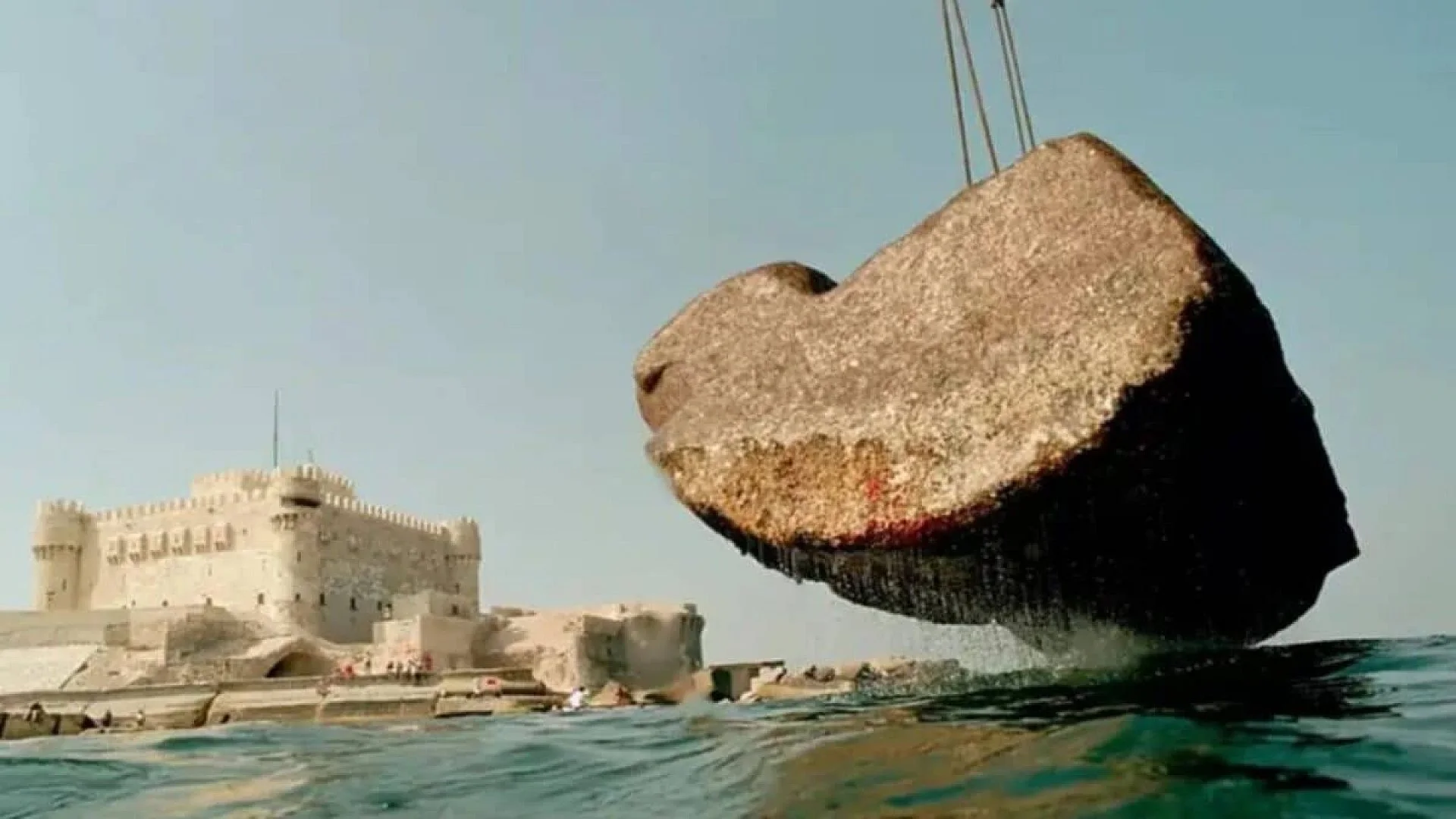
The long-lost remnants of the Lighthouse of Alexandria, a 7th wonder of the ancient world, are slowly rising from the depths of the Mediterranean. After over 1,600 years of being submerged, archaeologists have made a groundbreaking discovery, recovering massive stone blocks from the seabed.
The PHAROS project, a pioneering underwater research initiative, has been working tirelessly for nearly three decades to uncover the secrets of this ancient marvel. Led by the Isabelle Hairy, the team has successfully lifted 22 monumental stone blocks, weighing between 70 and 80 tons each, from the seabed.
The 3rd century BCE lighthouse, built under the guidance of Ptolemy I Soter and designed by Sostratus of Cnidus, stood tall at over 100 meters high, making it one of the tallest human-made structures of its time. Its light guided sailors through the treacherous waters of the eastern Mediterranean for centuries, until a series of earthquakes led to its decline.
Unveiling the Secrets of the Lighthouse
The recovered elements, including lintels, doorjambs, thresholds, and paving slabs, are being carefully documented and analyzed. Each block is being scanned using high-precision photogrammetry, allowing specialists to create detailed digital models. These models are then used to reconstruct the lighthouse virtually, piecing together the fragments like a giant puzzle.
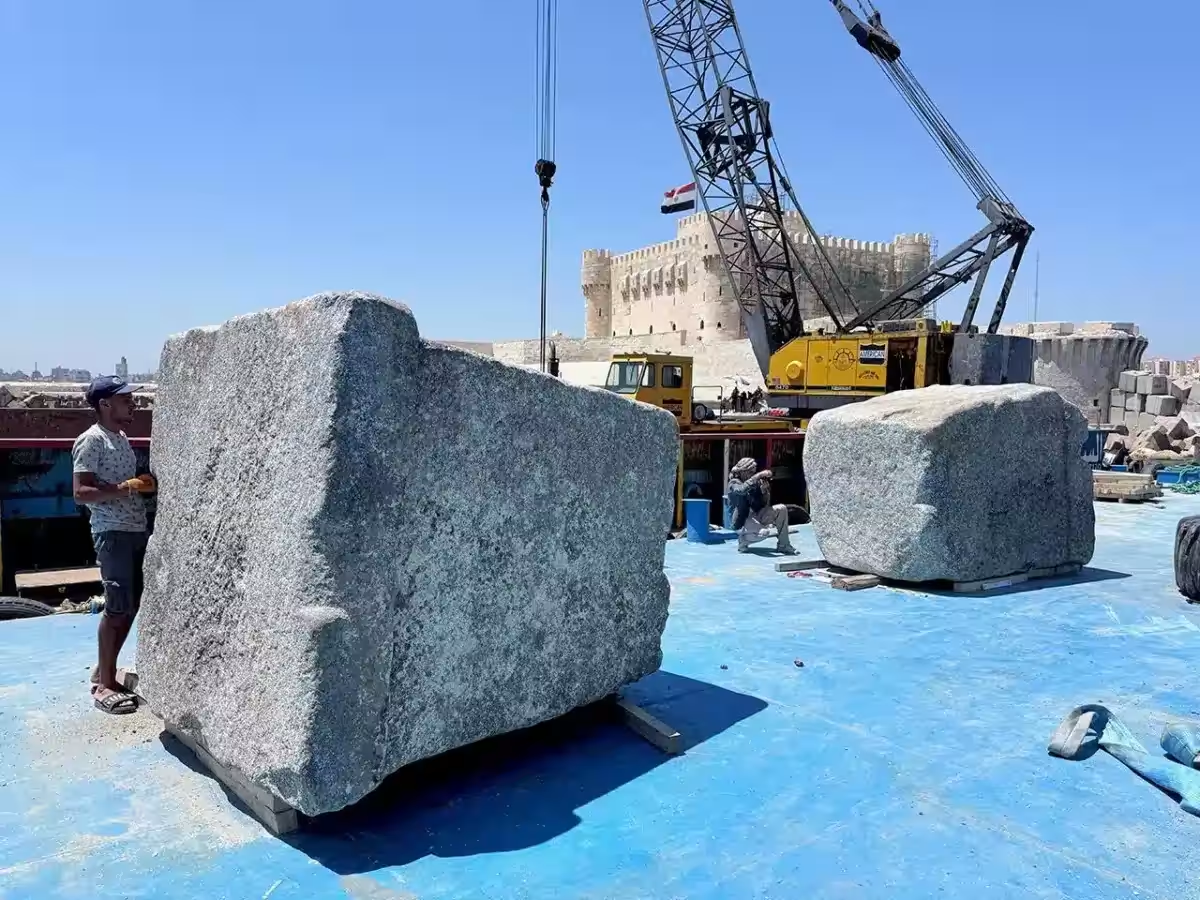
The researchers are combining physical remains with ancient descriptions and representations to create a coherent and accurate reconstruction of the lighthouse. This groundbreaking project is not only shedding new light on the history of the Lighthouse of Alexandria but also providing a unique opportunity to study the architectural styles of the ancient world.
Rebuilding the Lighthouse Virtually
The PHAROS project has made significant progress in reconstructing the lighthouse virtually. Using high-precision photogrammetry, the team has created detailed digital models of the recovered blocks. These models are being used to recreate the lighthouse’s monumental entrance, where architectural styles combined Egyptian and Greek influences.
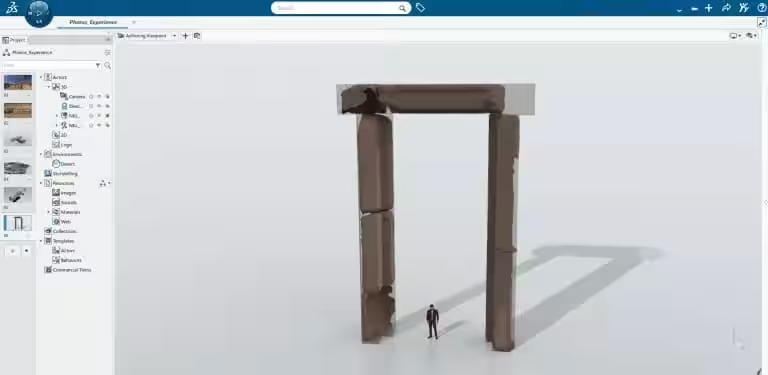
The reconstructed digital models are providing a unique insight into the architectural styles of the ancient world. The researchers are combining these models with physical remains and ancient descriptions to create a coherent and accurate reconstruction of the lighthouse.
A Legendary Structure Reborn
The Lighthouse of Alexandria was a testament to the ingenuity and craftsmanship of the ancient world. Its light guided sailors through the treacherous waters of the eastern Mediterranean for centuries, until a series of earthquakes led to its decline. The recovered stones and digital models are slowly bringing this legendary structure back to life.
This article has been fact checked for accuracy, with information verified against reputable sources. Learn more about us and our editorial process.
Last reviewed on .
Article history
- Latest version
Reference(s)
- <https://www.researchgate.net/profile/Isabelle-Hairy>.
- Project, PHAROS. “PHAROS Project.”, August 15, 2022 PHAROS Project - Marine Biodiversity Restoration in EU. <https://pharosproject.eu/>.
Cite this page:
- Posted by Vikram Desai