Radar Scan Fuels Viral Claim of Hidden Twin Sphinx, Egyptologists Say It’s Unfounded
A viral radar claim near the Great Sphinx revives a puzzling Egyptology mystery, but experts reveal a far messier reality.
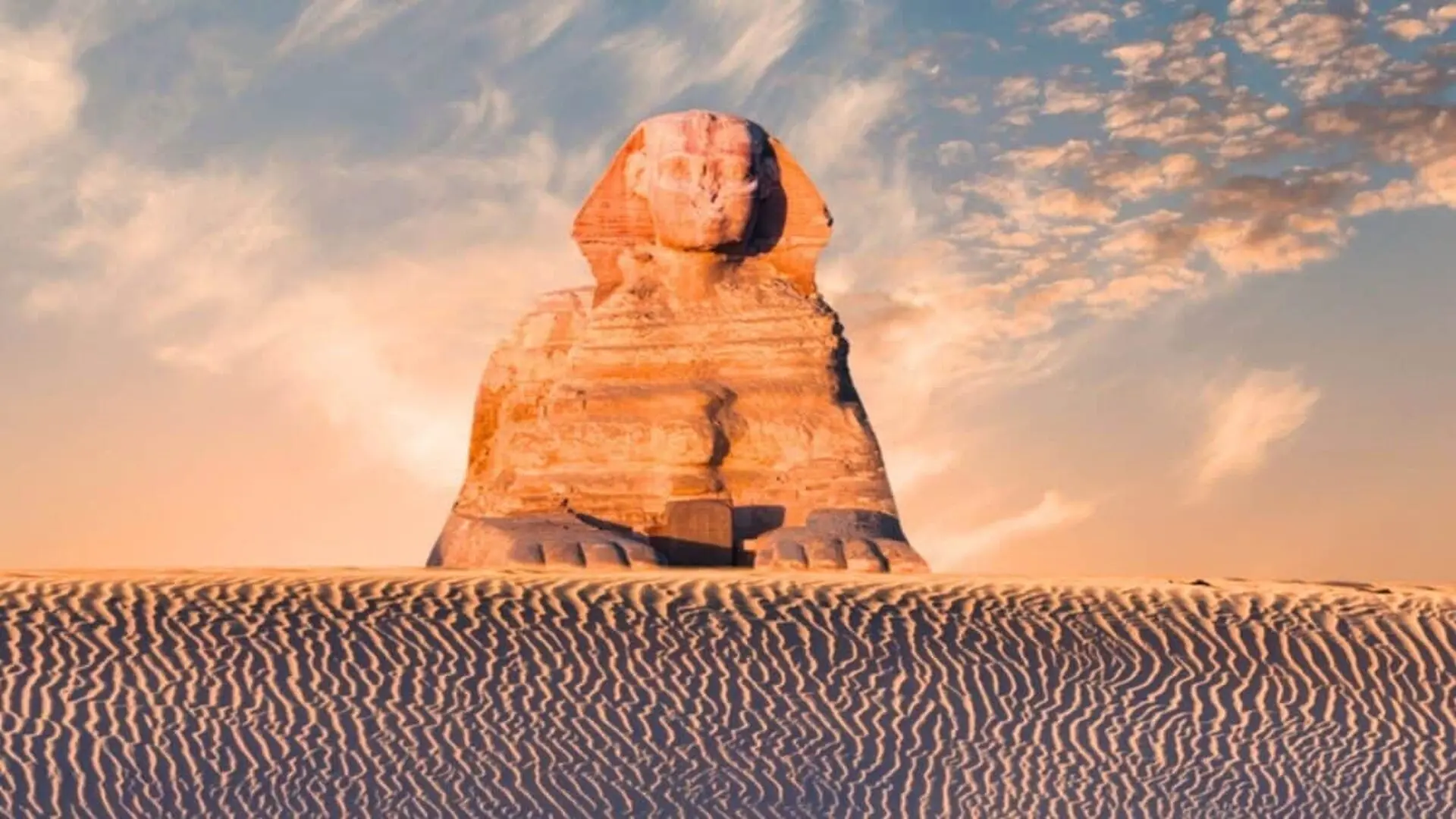
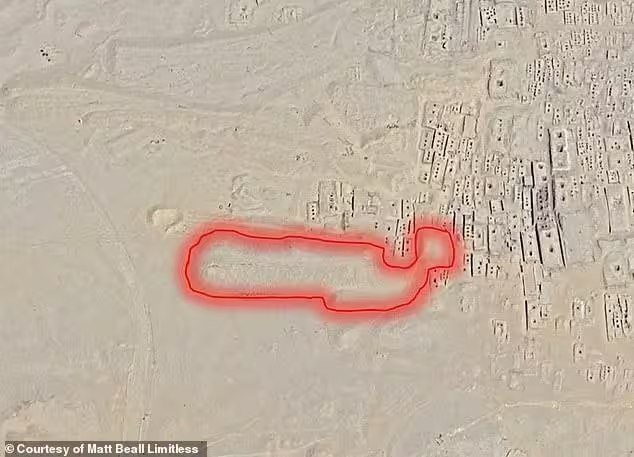
A modest rise of compacted sand on the Giza Plateau lies close enough to the Great Sphinx to invite comparison, yet most tourists pass it without a second glance. In recent days that mound has become the focal point of a fresh archaeological controversy.
A radar specialist says his team’s scans have revealed unusual forms beneath the surface, rekindling a long‑standing notion that a concealed counterpart of the Great Sphinx may still be hidden under the sand.
Engineer Claims Subsurface Scans Reveal Possible Twin Sphinx
Biondi said satellite and ground‑penetrating radar data point to a buried structure about 108 feet tall, positioned in a geometric relationship with the Great Sphinx and the nearby pyramids. He also noted indications of vertical shafts and horizontal tunnels beneath the sand, features he says mirror those already documented under the known Sphinx and suggest a larger underground complex.
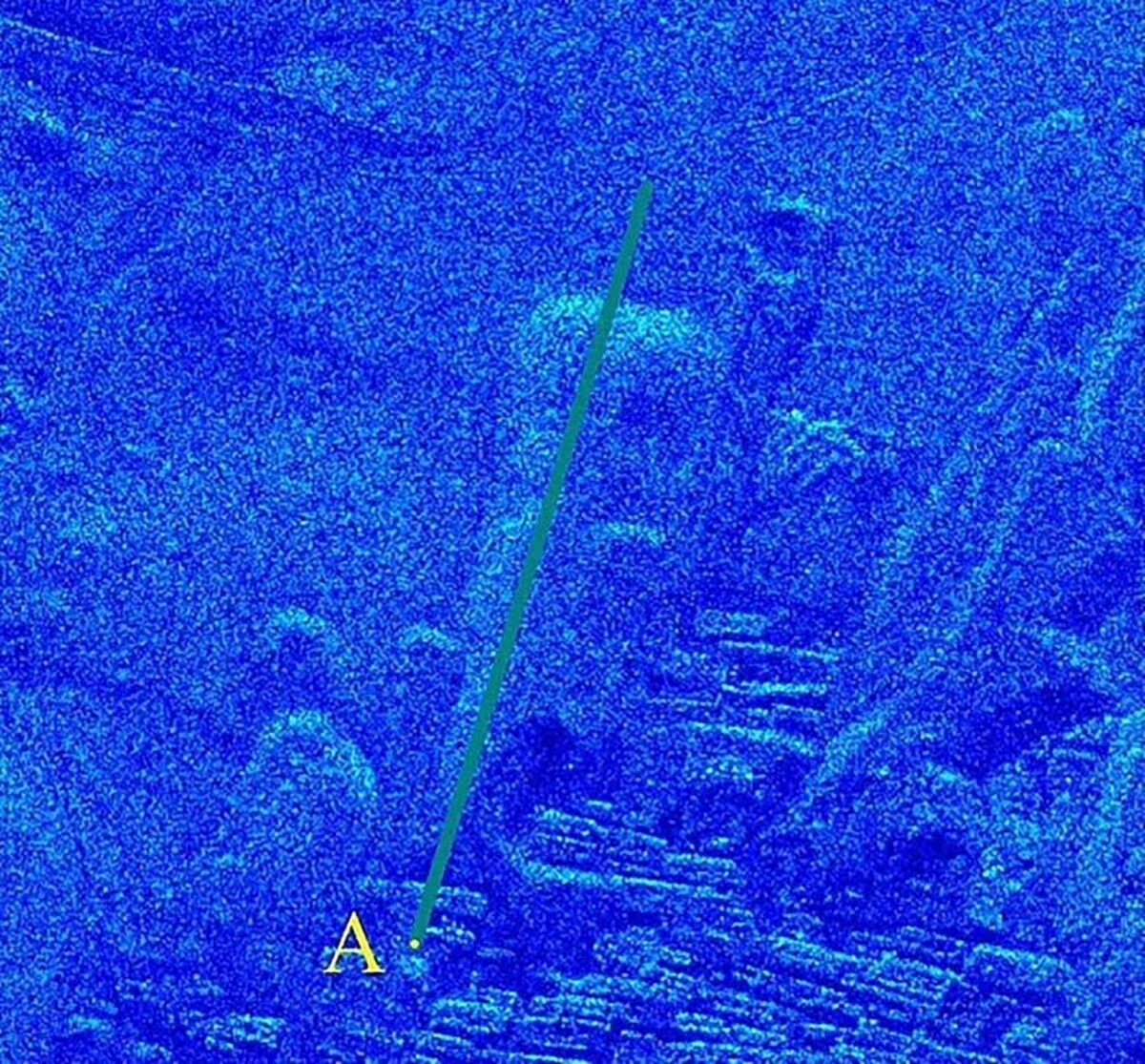
Biondi placed his confidence in the hypothesis at roughly 80 percent. That level of certainty, combined with the scale of the alleged feature, helped propel the story into mainstream media, including coverage by the Daily Mail.
Online attention surged quickly; a related post on X amassed around 10 million views, turning a technical radar interpretation into a viral narrative within days of the podcast appearance.
Link to 2022 Radar Technique and an Ancient Stone Slab
Biondi’s involvement with Giza predates the current claim. In 2022 he and Corrado Malanga published a paper in Remote Sensing describing a synthetic aperture radar tomography method that could reconstruct internal and subsurface structures of the Great Pyramid using satellite data and background seismic motion.
The 2022 study did not mention a second Sphinx; it simply outlined the scanning approach that is now being cited to support the newer claim.
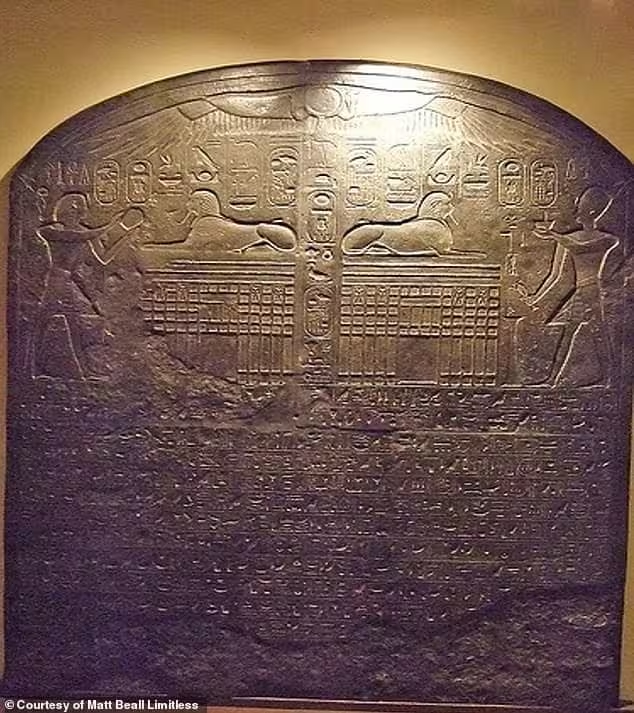
The team also references the Dream Stele, a stone slab positioned between the Sphinx’s paws around 1400 BC. Some observers interpret its carvings as depicting two sphinx figures rather than one. Biondi has cited this imagery as additional support for the hidden twin hypothesis, a reading that has circulated in alternative‑archaeology circles for years and contributed to the rapid spread of the latest claim.
Scholars Challenge the Interpretation
A fact‑check by Newsweek found no confirmed archaeological evidence for a second Sphinx at Giza. No excavation has been undertaken, and no peer‑reviewed study has validated the radar reading.
Egyptian authorities have not announced any such discovery. After consulting Egyptologists and geophysics experts, Newsweek rated the viral claim false.
Former antiquities minister Zahi Hawass rejected the idea outright, noting that the area around the pyramids and the Sphinx has been extensively studied for decades without uncovering any structure resembling a second monument.
Hawass described the megastructure speculation as fabrication lacking scientific foundation. Experts also question whether the radar and satellite techniques cited can reliably resolve detailed features at the depths Biondi describes, given that ground‑penetrating radar typically detects anomalies only a few meters below the surface, not carved monuments buried deep within dense limestone. Mainstream Egyptologists interpret the Dream Stele’s imagery symbolically and note that its inscription makes no reference to a second Sphinx.
Earlier Proposals Reappear in New Form
The notion of a second Sphinx is not new. A 2021 report by Ancient Origins traced a prior version of the idea to Reda Abdel Halim, an Egyptian tourism official, who claimed a statue matching the Great Sphinx’s size—about 73 meters tall—was buried nearby. That claim attracted attention before fading from the news cycle.
Hawass dismissed the 2021 allegation as well, calling the Great Sphinx unique and stating that no Egyptological community had any record of the study Abdel Halim cited as evidence. Professor Mohammed Hamza, then dean of archaeology at Cairo University, also labeled the earlier claim baseless, echoing the skepticism now directed at Biondi’s radar‑based assertion.
At present, what remains is a reported radar anomaly, a public narrative built around a podcast interview and subsequent media coverage, and a firm rejection from Egyptologists who maintain that Giza has not produced any confirmed proof of a second Sphinx.
This article has been fact checked for accuracy, with information verified against reputable sources. Learn more about us and our editorial process.
Last reviewed on .
Article history
- Latest version
Reference(s)
- <https://www.mdpi.com/2072-4292/14/20/5231?utm_source=chatgpt.com>.
- Blake, Suzanne. “Fact check: Is a second sphinx buried beneath Pyramids of Giza?.”, March 27, 2026 Newsweek <https://www.newsweek.com/second-sphinx-egypt-pyramids-giza-discovery-underground-11748676?utm_source=chatgpt.com>.
- cowie, ashley. “That Old “Second Sphinx” Chestnut Is Back – Is There or Is There Not A Hidden Sphinx?.”, November 3, 2021 Ancient Origins <https://www.ancient-origins.net/news-history-archaeology/second-sphinx-0016024?utm_source=chatgpt.com>.
- Posted by Vikram Desai