Bronze Age Settlement in Northern Ireland Challenges Europe’s Urban Origins
Groundbreaking study reveals Ireland’s massive Bronze Age complex may be one of Western Europe’s earliest town-like settlements.
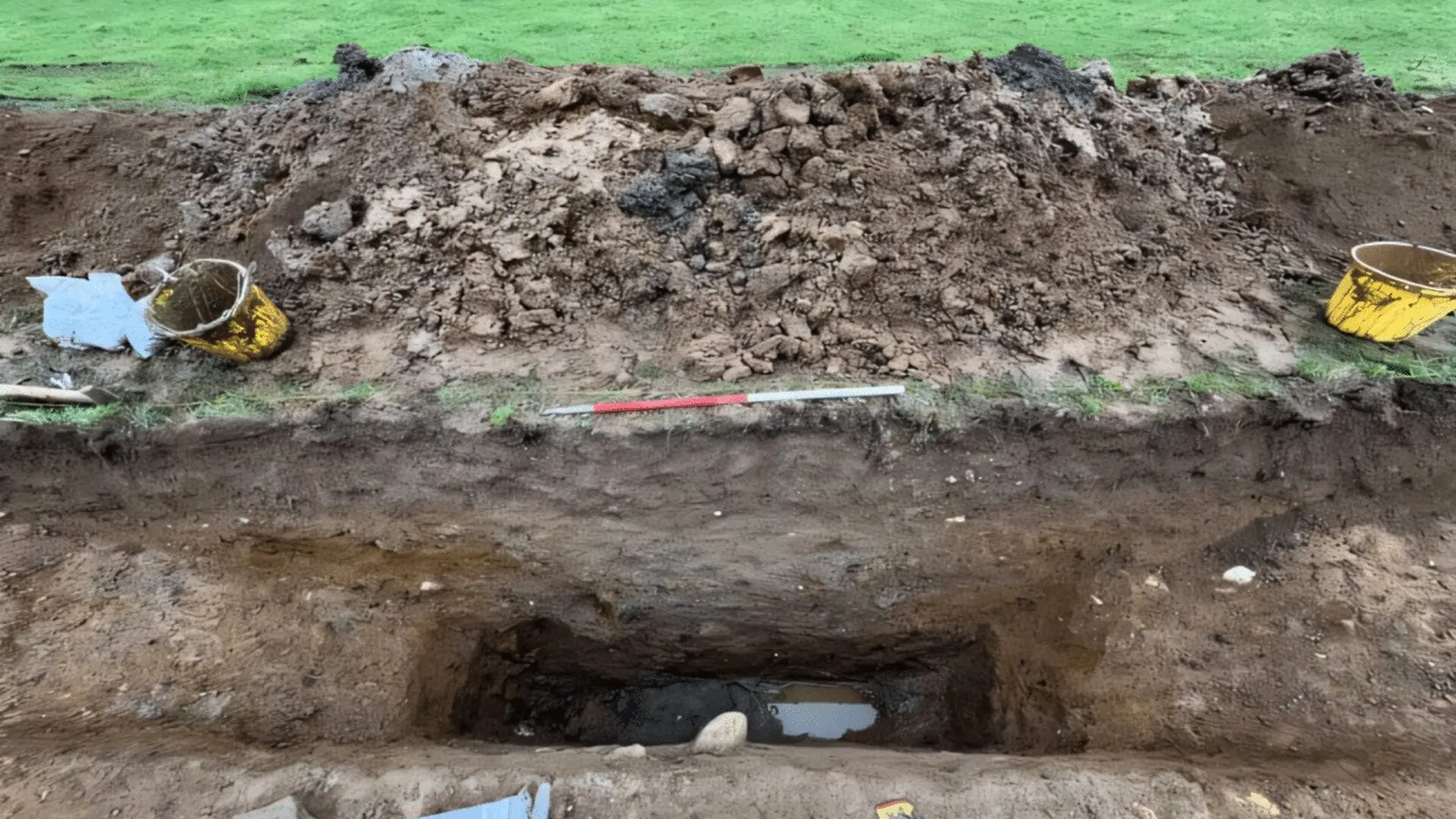
New research published in Antiquity reveals that Haughey’s Fort in Northern Ireland served as the focal point of an extensive Bronze Age complex more than 3,000 years ago. The site combined residential zones, specialised craft workshops, trade activities, feasting venues and ritual spaces, creating a landscape of a scale rarely documented in Western Europe.
A Massive Bronze Age Hub Uncovered in the Navan Region
While the Navan area has long been associated with Iron Age activity and the mythic capital of Ulster, the latest investigations push its importance back to around 1200 BC. By integrating high‑resolution remote sensing, geophysical mapping, focused digs and a fresh review of older archaeological records, the team identified more than 200 possible timber houses within the confines of Haughey’s Fort. This density of structures far exceeds expectations for a typical hillfort and points to a tightly packed, deliberately organised settlement.
Among the buildings are colossal circular edifices up to 30 metres (98 feet) across, likely intended for communal or institutional purposes rather than everyday domestic use. The coexistence of housing, monumental architecture, production zones and ceremonial features suggests an early form of urban organisation.
The study, appearing in Antiquity, adds a new layer to debates about the emergence of large settlements in prehistoric Europe and highlights Ireland’s previously under‑appreciated role in these developments.
Dr. James O’Driscoll, lecturer in geospatial archaeology at the University of Glasgow, summarised the impact of the findings:
“Our research demonstrates a level of scale, organization and connectivity in Bronze Age Ireland that has not been fully recognized until now. The evidence from Haughey’s Fort points to a large, densely occupied settlement where craft production, exchange and communal activity were all closely integrated.
“In a wider Western European context, this places Haughey’s Fort among the clearest examples of a proto‑urban center, showing that large, organized settlements were beginning to take shape around 3,000 years ago. This fundamentally changes how we understand the site and highlights the extent to which communities in Ireland were connected to broader developments across Bronze Age Europe.”
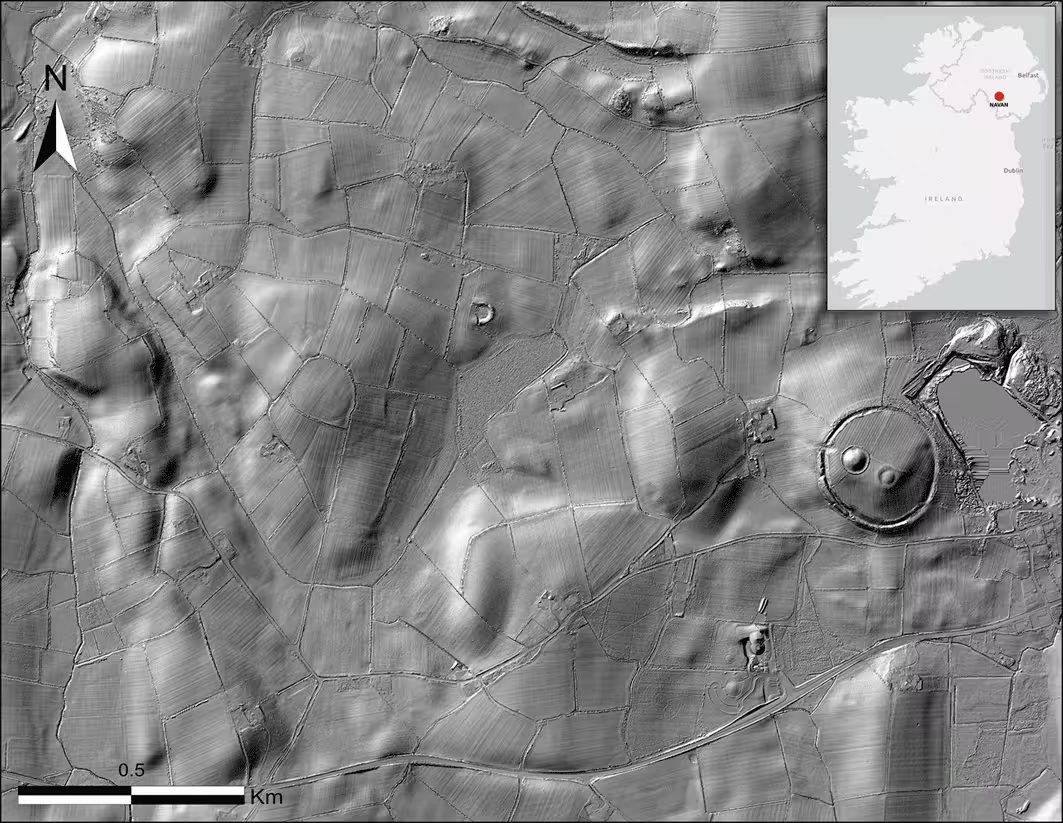
Specialised Metalwork and Far‑Flung Trade Networks
The investigation uncovered evidence of advanced bronze‑ and gold‑smithing, indicating that skilled artisans operated within the settlement. Large‑scale feasting, high‑status objects and imported items from the Iberian Peninsula and Central Europe demonstrate that the community was part of extensive exchange routes long before classical antiquity.
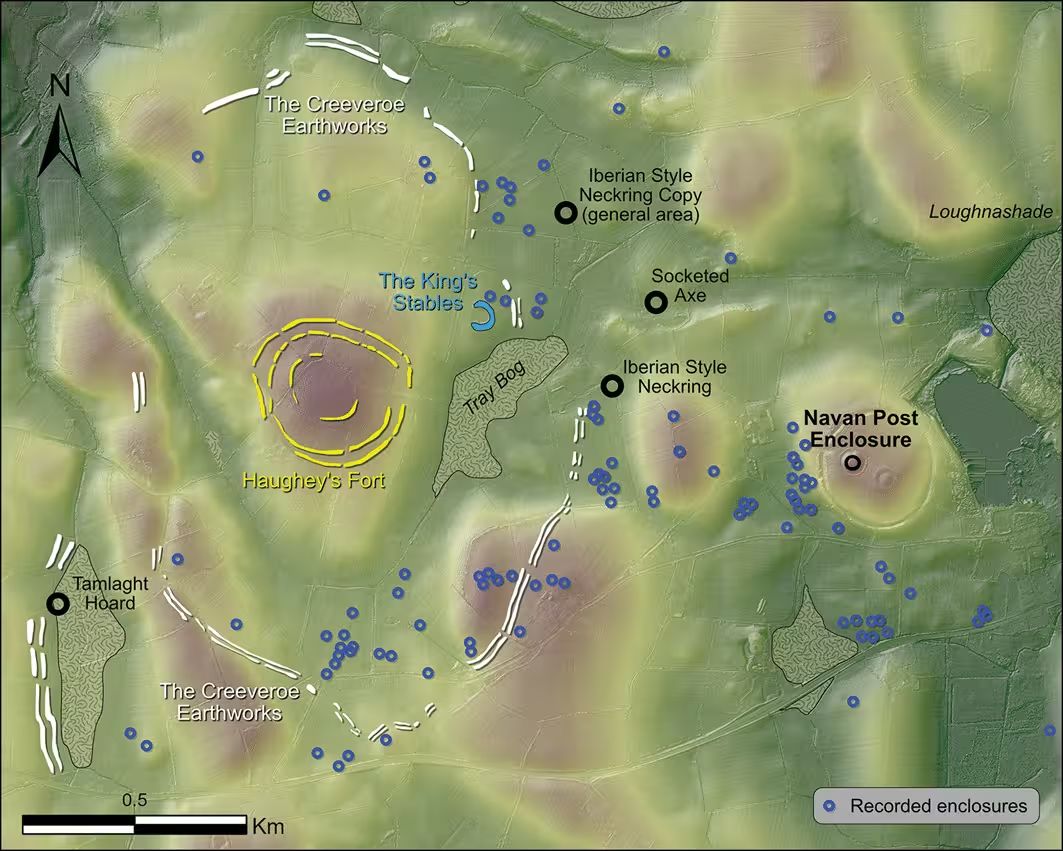
Nearby, the artificial pool known as the King’s Stables contained deliberately placed weapon moulds, animal bones and fragments of human remains. A timber‑lined ceremonial avenue linked the settlement to this ritual basin, suggesting that processional activities were integrated into daily life.
The researchers also re‑evaluated the Creeveroe Earthworks as an outer enclosure covering roughly 109 hectares, making it one of the largest known prehistoric monuments in Ireland or Britain. Together, these elements illustrate a landscape where production, ceremony, authority and everyday activities were woven into a single, coherent system.
Unified Landscape Shows Coordinated Planning
Rather than treating Haughey’s Fort, the King’s Stables and the Creeveroe Earthworks as isolated features, the authors argue that they formed a single, meticulously engineered environment. Evidence points to distinct functional zones: residential and manufacturing activities centred on the fort, while ritual deposition and ideological practices clustered around the pool.
Such spatial organisation implies a community capable of mobilising labour, directing movement and synchronising activities across a vast area. The team contends that this level of planning challenges conventional views of Late Bronze Age societies in Ireland and positions the site among the strongest examples of proto‑urban development in Western Europe.
Dr. Patrick Gleeson, senior lecturer in early medieval archaeology at Queen’s School of the Natural and Built Environment, echoed this interpretation:
“The study makes it clear that we are not looking at isolated monuments, but at a single, highly organized landscape. Our work shows that Haughey’s Fort, the King’s Stables and the Creeveroe Earthworks were all part of an interconnected system, carefully structured to bring together settlement, production and ritual.
“This allows us to reinterpret the entire complex on a new scale. It represents one of the most extensive and coherent Late Bronze Age landscapes in Western Europe and shows how communities actively organised movement, belief and authority across a monumental setting.”
Implications for Understanding Western European Prehistory
The findings have ramifications that extend well beyond Irish archaeology. Scholars have long debated the timing and geography of the first large, organised settlements in Western Europe. The evidence from Haughey’s Fort suggests that Irish communities had already achieved sophisticated social structures, economic specialisation, ceremonial traditions and far‑reaching trade links by the Late Bronze Age. The scale of construction, the integration of multiple functions and the clear signs of coordinated planning align the site with later urban centres.
O’Driscoll and Gleeson conclude:
“Individually, Haughey’s Fort, the King’s Stables and the Creeveroe Earthworks are unique and important monuments. Collectively, they constitute an unparalleled interconnected monumental landscape, serving as a regional hub of power, production and ritual in the Late Bronze Age. The scale and uniqueness of this landscape offer valuable insight into the complexity and influence of Late Bronze Age communities, significantly contributing to our broader understanding of social organization, economic activity and ritual practice within European prehistory.”
This article has been fact checked for accuracy, with information verified against reputable sources. Learn more about us and our editorial process.
Last reviewed on .
Article history
- Latest version
Reference(s)
- “95FD5478225A622BD24D4F2E39F04F75.” <https://www.cambridge.org/core/journals/antiquity/article/haugheys-fort-a-major-complex-of-power-production-and-ritual-in-late-bronze-age-europe/95FD5478225A622BD24D4F2E39F04F75>.
Cite this page:
- Posted by Vikram Desai