Hidden 400,000-Year-Old Cave Under Israeli Construction Reveals Early Human Fire Use
Archaeologists uncover a unique ancient cave at a construction site, revealing rare clues about life from hundreds of thousands of years ago.
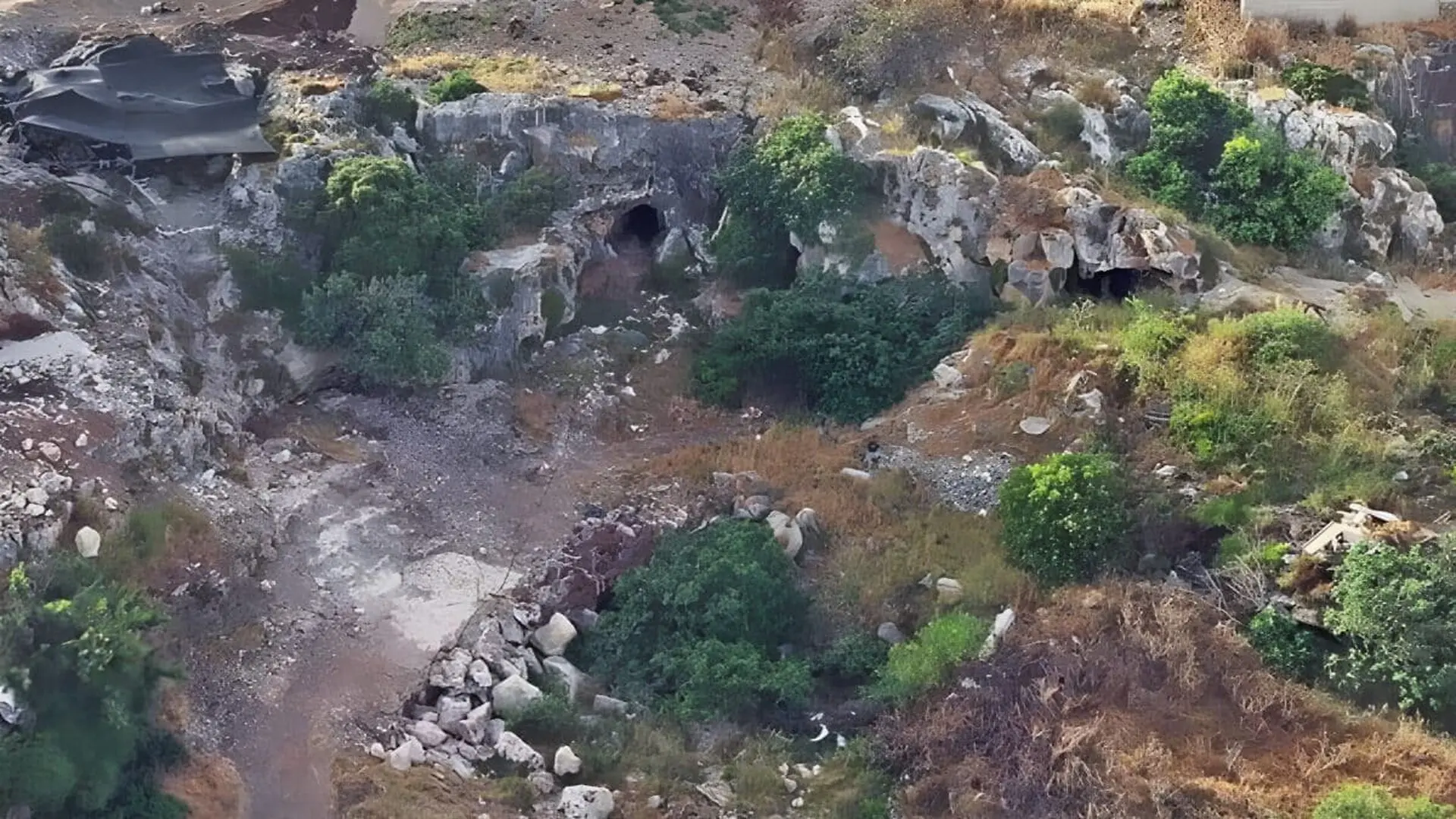
A hidden cavern beneath the hills outside Fureidis in northern Israel has yielded a suite of stone implements, animal remains and signs of controlled burning, suggesting that early humans repeatedly occupied the shelter many hundreds of thousands of years ago.
The site was initially surveyed as a safeguard before a nearby building project began. Further investigation revealed that the cavern belongs to the Acheulo‑Yabrudian cultural horizon and pushes the timeline of its use back to roughly 400,000 years, far earlier than the roughly 200,000‑year estimate that had long been accepted.
Flint Assemblage Extends the Cave’s Chronology
Archaeologists first visited the location in the 1970s and concluded the deposit dated to about two hundred thousand years ago. New digs led by Kobi Vardi of the Israel Antiquities Authority together with Ron Shimelmitz of the University of Haifa have uncovered a range of flint hand axes, scrapers and blades that are characteristic of the Acheulo‑Yabrudian industry, which flourished between roughly four hundred thousand and two hundred fifty thousand years ago. Vardi told CNN that the discovery “was a big surprise” because it rewrites the age of the occupation.

The stone tools were accompanied by bones from fallow deer, gazelles and other fauna, a combination that points to repeated hunting trips and prolonged stays within the shelter.
Evidence of Structured Camp Life and Fire Use
Researchers interpret the assemblage as proof that sizable groups of hominins exploited the cave as a recurring base, hunted wild game and managed fire on a regular basis. In a statement released by Israel’s Ministry of Foreign Affairs, Shimelmitz described the pattern as indicative of a “complex and rich camp life.”
Although the material culture is abundant, human skeletal remains have not yet been recovered. Shimelmitz emphasized the global significance of the site, noting that it falls at the close of the Lower Paleolithic, just before the emergence of Neanderthals and the eventual spread of anatomically modern humans.
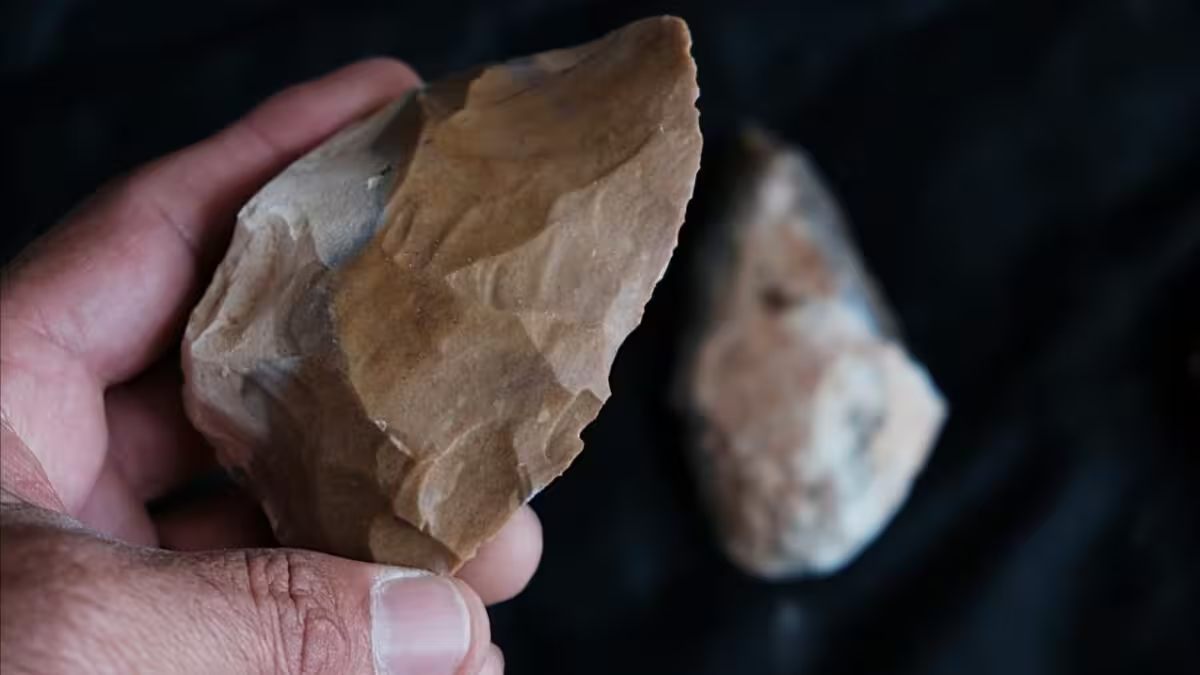
Vardi expressed optimism that further excavation could yield hominin bones: “Our big hope in the excavation of these caves is that maybe we’ll find hominin remains,” he said, “We’re very anxious to meet them.”
The discovery also influenced the nearby construction plan. After the findings were presented, the developer altered its design and added a road bridge to keep the cavern accessible while protecting it for future research.
International Scholars Highlight the Find’s Impact
Armando Falcucci, a Palaeolithic archaeology lecturer at the University of Southampton, remarked that the site shines a light on a pivotal era—roughly four hundred to two hundred thousand years ago—when major behavioral and technological shifts were underway across Africa and Eurasia, including the growing reliance on caves as focal points in the landscape.
Falcucci also pointed to the evidence of intensive fire use, noting that such sites provide some of the clearest archaeological proof of habitual, controlled burning—a milestone in human evolution.
Catriona Pickard, professor of prehistory and archaeometry at the University of Edinburgh, said the cavern offers a rare window into the material culture and daily activities of early hominins. She added that the find could reshape current models of the Lower Paleolithic in the Levant, where comparable cave deposits are exceptionally scarce.
This article has been fact checked for accuracy, with information verified against reputable sources. Learn more about us and our editorial process.
Last reviewed on .
Article history
- Latest version
Reference(s)
- <https://www.researchgate.net/profile/Jacob-Vardi>.
- “Ron Shimelmitz.” University of Haifa <https://cris.haifa.ac.il/en/persons/ron-shimelmitz/>.
- Guy, Jack. “Artifacts dating back 400,000 years, found in cave, show ‘complex and rich’ pre-human society.”, June 29, 2026 CNN <https://edition.cnn.com/2026/06/29/science/israel-prehistoric-cave-scli-intl?shem=dsdf,sharefoc,agadiscoversdl,,sh/x/discover/m1/4>.
- “Armando Falcucci.” Armando Falcucci <https://www.armandofalcucci.com/>.
- “Professor Catriona Pickard.”, March 13, 2026 The University of Edinburgh <https://edwebprofiles.ed.ac.uk/profile/catriona-pickard>.
Cite this page:
- Posted by Vikram Desai