Lost Medieval Town Unearthed in German Field After 600 Years Found During Wind Project Dig
Archaeologists discover remnants of a lost medieval German town beneath a quiet field, solving a centuries‑old historical mystery.
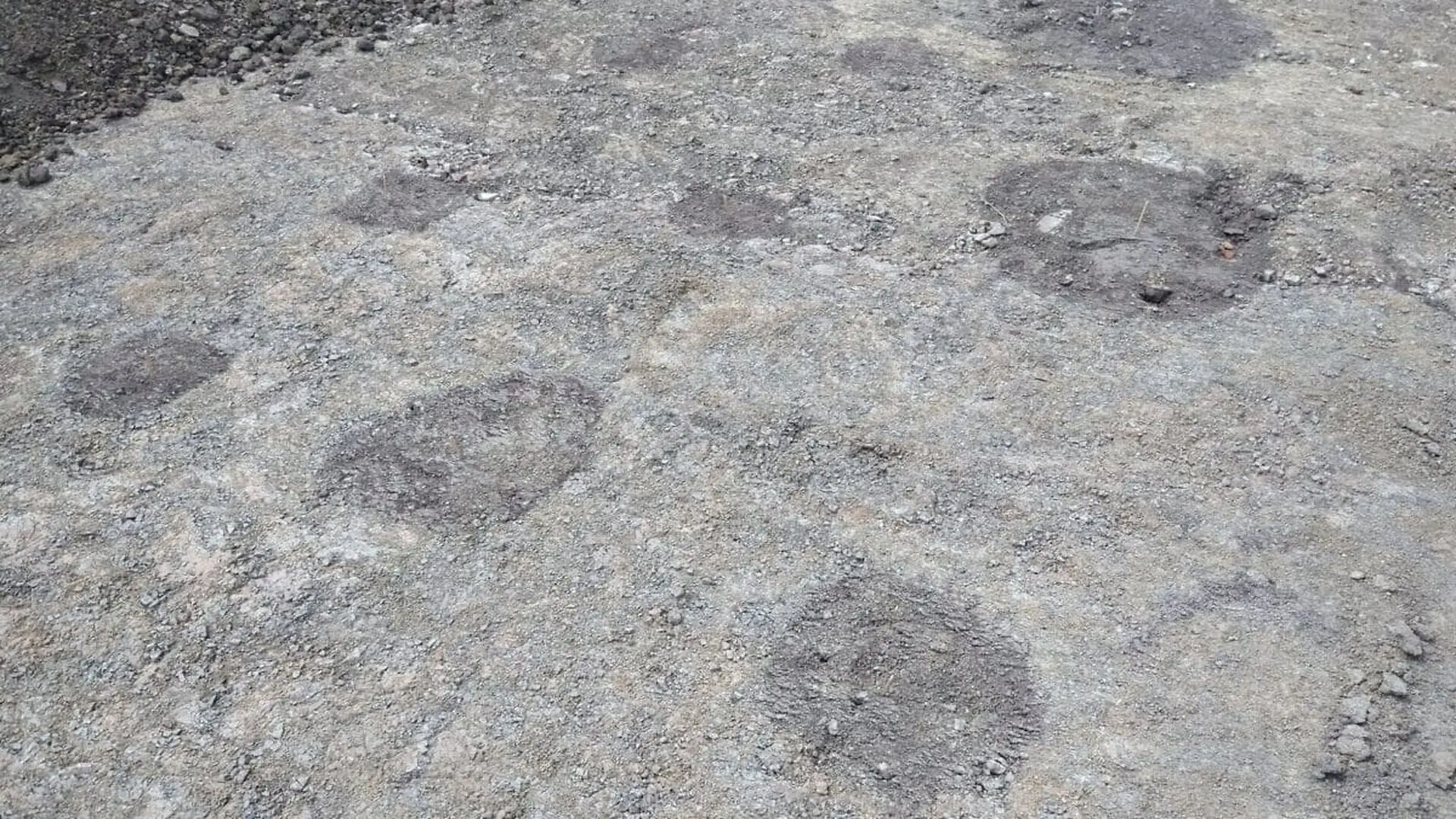
Excavators working in a field near Borgentreich in western Germany have uncovered the long‑lost medieval settlement of Echene, a village that vanished from written records about six centuries ago. The find, made during preparatory work for a wind‑turbine project, includes house foundations, pottery shards and a stone cellar that together confirm the town’s location for the first time.
Echene is known to historians only from medieval charters that first mention the place in 944 and later list it in various documents up to the fifteenth century. After that, the name disappears, leaving scholars with a gap in the region’s settlement history.
“The settlement simply fell into oblivion,” says Sven Spiong, head of the Regional Association of Westphalia‑Lippe (LWL) Archaeology. Although a nearby field carried the name “Echelen,” no archaeological proof had linked it to the historic village—until now.
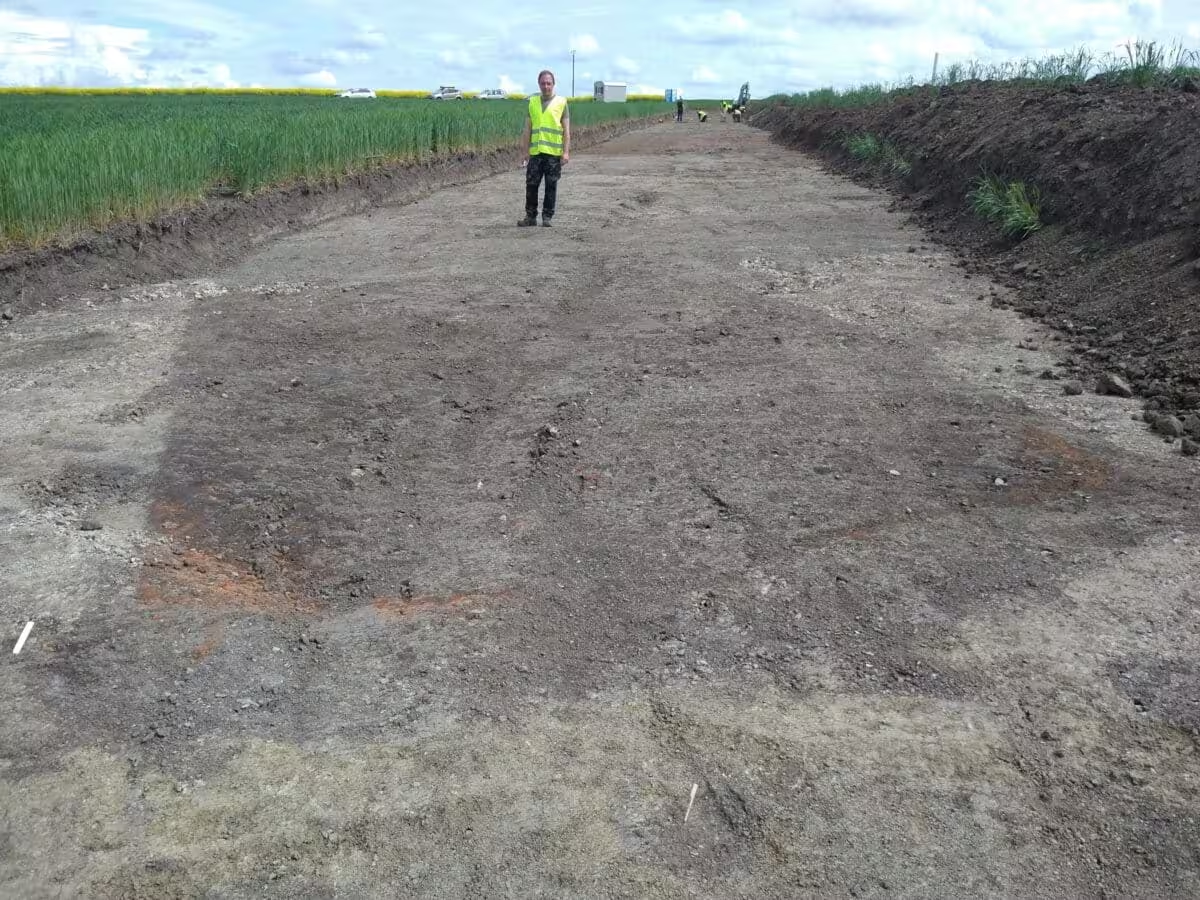
The discovery emerged from a survey of a stream valley southwest of Borgentreich, where archaeologists were mapping the route for a new power line. Below the surface they encountered a suite of features that match the expected layout of a medieval village, confirming that the long‑lost settlement had been hiding in plain sight.
Structural Remains Reveal a Once‑Thriving Community
A translated statement from LWL notes that the team quickly identified a dense network of postholes, the wooden supports of former houses, allowing a partial map of the settlement to be drawn.
Among the larger structures, timber buildings measuring up to 65 feet in length were recorded, suggesting substantial domestic or communal spaces. Smaller outbuildings, roughly 10 by 13 feet, were also documented across the site.
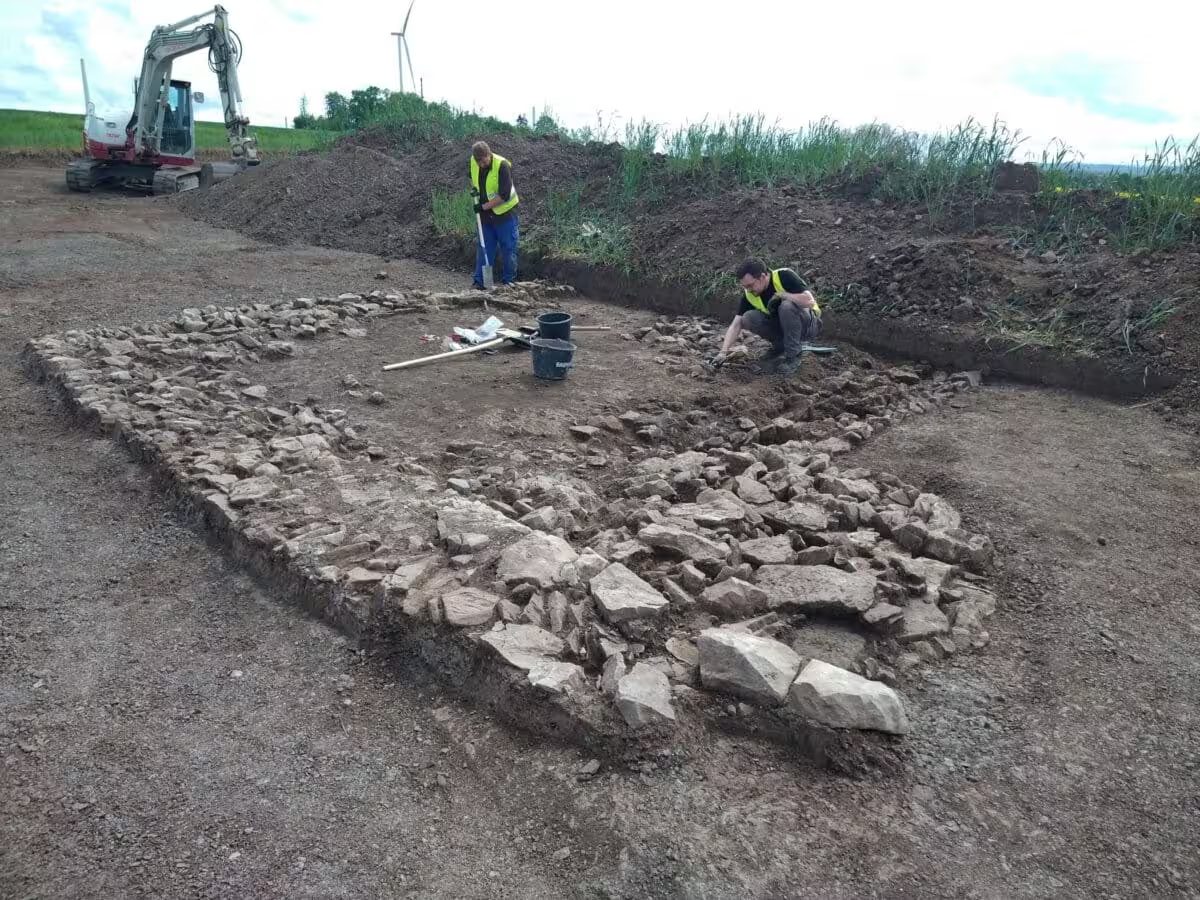
Pottery fragments dated to the 10th and 11th centuries were recovered, providing a chronological anchor for the occupation layer. A notable find is a stone cellar with a north‑facing entrance, uncovered by archaeologist Normen Posselt, which signals a shift in local building practices while retaining ties to earlier timber‑based techniques.
“The discovery of this medieval site demonstrates once again the richness of the history that still lies beneath our feet. Such discoveries are not only of great importance for archaeology, but also for the identity of our region and its inhabitants,” noted Mayor Nicolas Aisch.
Water‑Driven Settlements in the Medieval Landscape
Medieval settlements in the area typically clustered near streams or springs, a pattern that ensured reliable water for people and livestock. Authors of the LWL report highlighted that “the landscape has been characterized by a multitude of small hamlets of this type since at least the 10th century, which, notably, were always located near watercourses or around a spring,” and noted the added appeal of nearby fertile fields.
The newly identified village lay close to Borgentreich, which was fortified in the 1280s and likely co‑existed with Echene for a period. A drone image captured the excavation pits, a well and the stone cellar, illustrating the scope of the ongoing work.
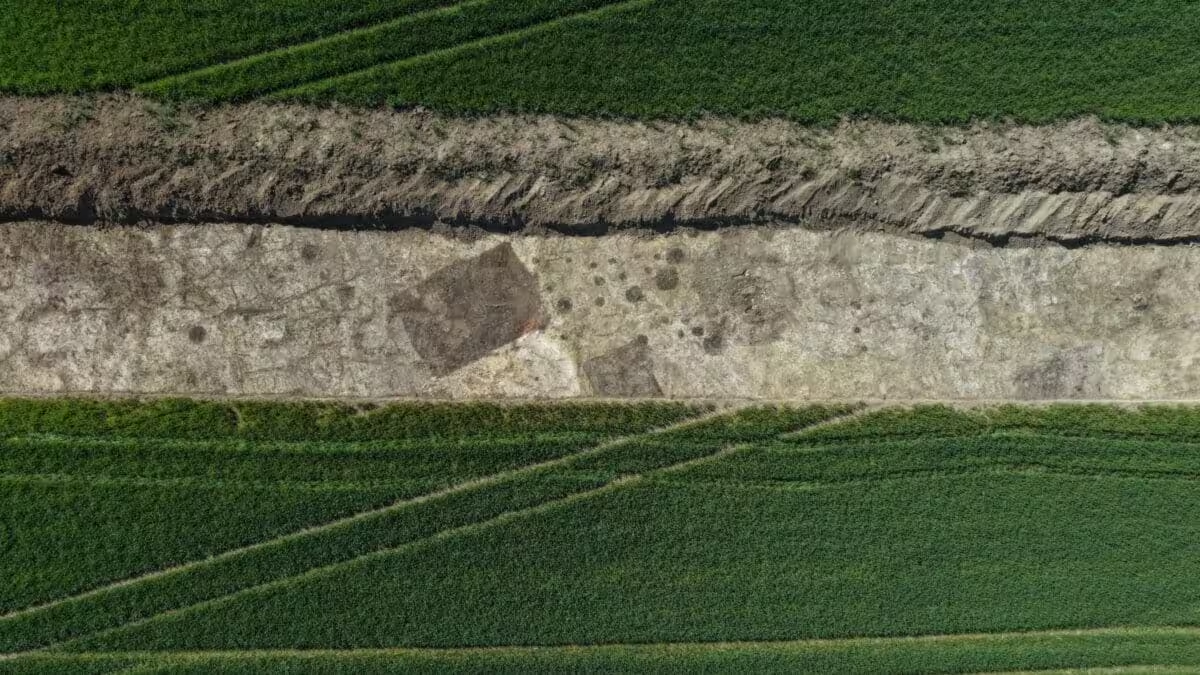
Less than a mile to the south, archaeologists have previously identified another deserted medieval settlement, likely the village of Broktrup, which was occupied from roughly the ninth to the fourteenth centuries. Researchers suspect that Echene may have spanned both banks of the stream, meaning that additional structures could remain unexcavated on the opposite side.
This article has been fact checked for accuracy, with information verified against reputable sources. Learn more about us and our editorial process.
Last reviewed on .
Article history
- Latest version
Reference(s)
- <https://independent.academia.edu/SpiongSven>.
- “Pressemitteilungen.” <https://www2.lwl.org/de/LWL/portal/presse/pressemitteilungen/mitteilung/63853/?fbclid=IwY2xjawSL0GBleHRuA2FlbQIxMABicmlkETF3QnNsbnpYNUlHbjloSHRHc3J0YwZhcHBfaWQQMjIyMDM5MTc4ODIwMDg5MgABHqPvSG_Vk4Q6ZXV9saBwriqdQ3xzh9sJF9qsdxDddDeLoJkSiYKD9rKNMCS5_aem_Agz0_8aD_YTYkD8X8Lmuzw>.
- <https://lda-lsa.academia.edu/NormenPosselt>.
- “Herr Brgermeister Nicolas Aisch / Orgelstadt Borgentreich.” <https://www.borgentreich.de/Rathaus-Politik/Rathaus/Mitarbeiter/index.php?ModID=9&object=tx%7C2564.10&FID=2564.10.1&NavID=2564.179&La=1>.
Cite this page:
- Posted by Vikram Desai