Ancient Spanish Skull Fragment Reveals Unexpected Traits Rethinking Human Evolution
A 200,000‑year‑old human skull discovered in Spanish rock shows strange features, offering fresh clues about ancient hominins.
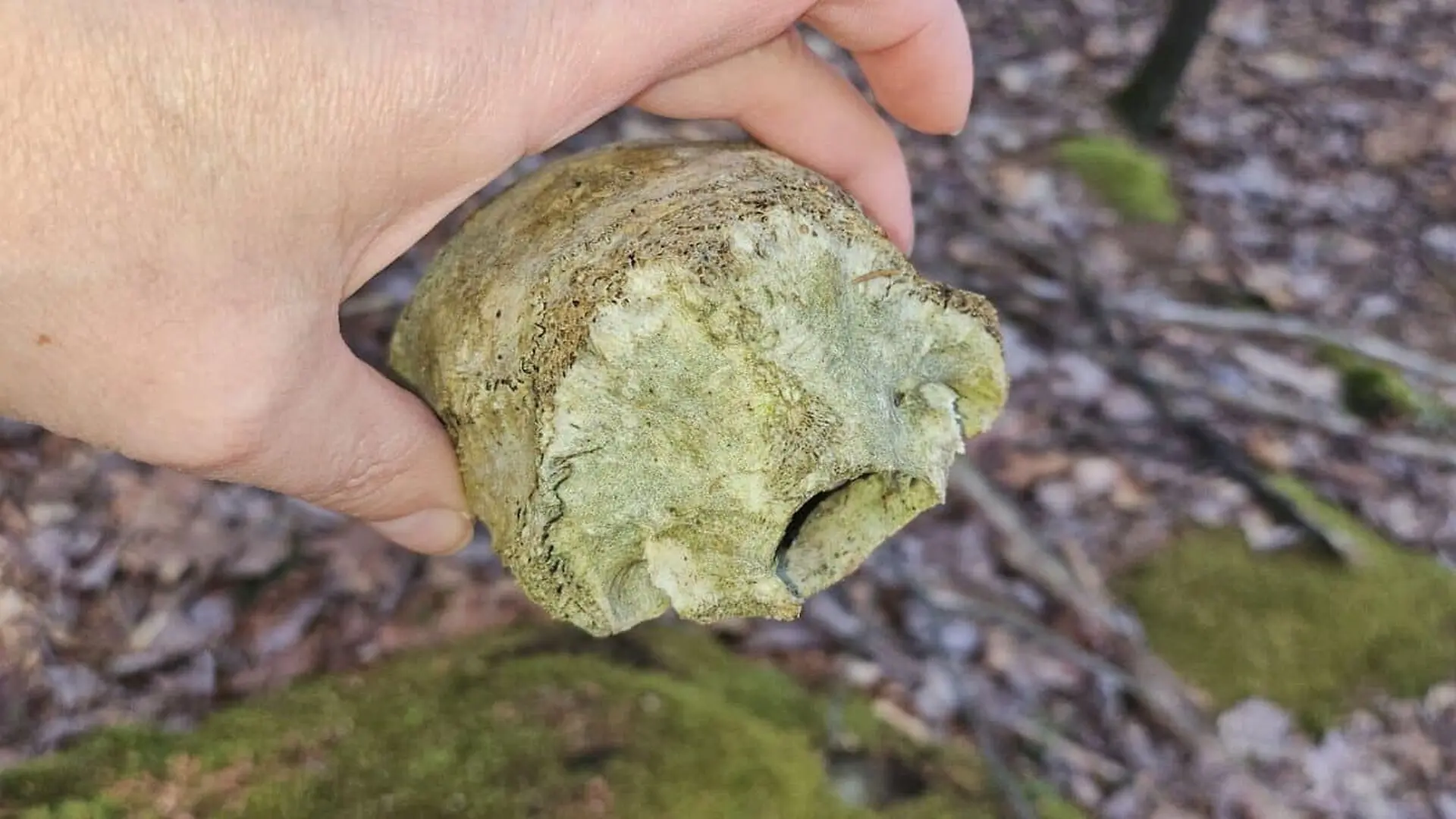
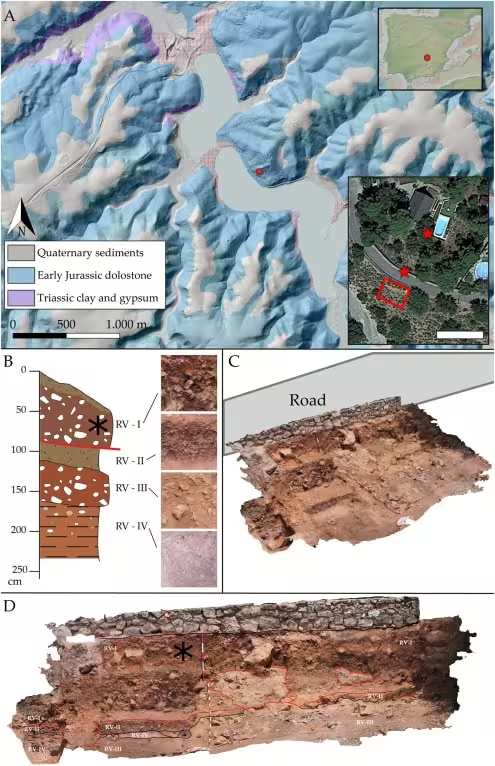
A fragment of a human parietal bone dating to roughly 224,000 years ago has been recovered from the Ruidera Lakes Natural Park in central Spain, offering fresh clues about the peoples who inhabited Europe during the Middle Pleistocene.
The piece, catalogued as RVH-1, marks the first hominin fossil uncovered at the Ruidera Middle Pleistocene locality in Castilla‑La Mancha, a region previously under‑represented in the archaeological record for this era.
Embedded in a brecciated matrix, the fragment was dated using uranium‑series techniques combined with optically stimulated luminescence, which together constrain its age to about 224,000 years.
Unusual Skull Features Hint at Early Human Diversity
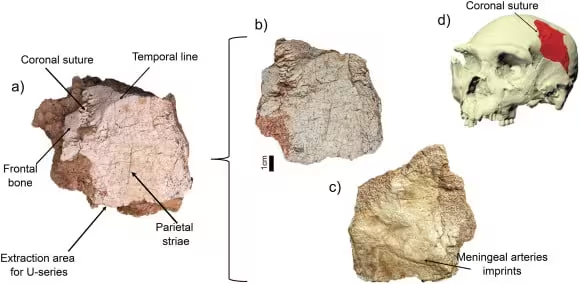
Analysis published in the Journal of Human Evolution highlights the fragment’s pronounced thickness and a steeply sloped temporal line—a ridge along the side of the skull. These dimensions place RVH-1 toward the upper extreme of measurements recorded for other Middle Pleistocene specimens across Europe.
Dr. Daniel García Martínez, a paleoanthropologist at the Complutense University of Madrid, compared the morphology with the Italian Ceprano fossil and the French Pyrenean remains from Caune de l’Arago, noting a shared “archaic‑type” cranial robustness.
The researchers describe the bone as unusually thick, a trait typical of early, more primitive hominin groups. Its presence suggests that lineages retaining such features persisted on the Iberian Peninsula well into the later Middle Pleistocene.
These ancestral characteristics may represent a genetic legacy inherited from earlier populations, lingering in groups that lived several hundred millennia ago.
Classifying a Fragmentary Fossil Remains a Challenge
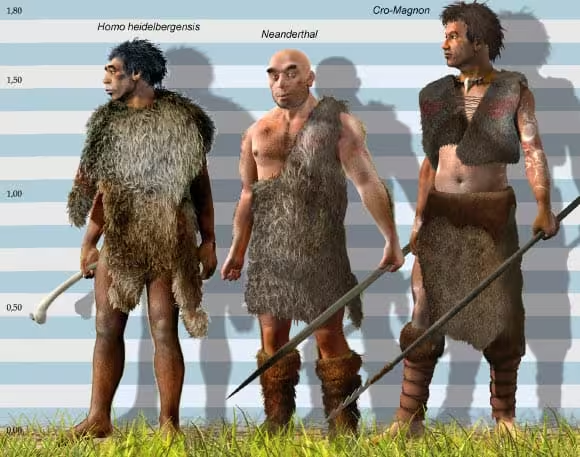
Although the specimen exhibits traits reminiscent of Homo heidelbergensis—a species that thrived between roughly 700,000 and 200,000 years ago—researchers refrain from assigning RVH-1 to a specific taxon. The fragment is currently labeled as Homo sp. because only a portion of the skull is available for study.
The team emphasizes that the limited material precludes a definitive species assignment, leaving the door open for future discoveries at the site to refine the classification.
“The discovery reinforces the idea that human evolution in Europe was not a linear process, but rather a complex scenario in which different populations with distinct evolutionary histories coexisted.”
Ruidera Emerges as a Key Window into Europe’s Prehistoric Past
The identification of RVH-1 elevates the Ruidera locality to a pivotal position among sites that illuminate Middle Pleistocene hominin diversity across the continent. The find adds a rare interior‑Iberian data point, expanding the geographic scope of known human occupation during this period.
“This fossil is only the tip of the iceberg,” she said. “Ruidera still has much to reveal about human evolution in Europe, and we are convinced that it will continue to yield discoveries of major scientific importance.”
This article has been fact checked for accuracy, with information verified against reputable sources. Learn more about us and our editorial process.
Last reviewed on .
Article history
- Latest version
Cite this page:
- Posted by Zara Tariq