Solar Storm Could Light Up Northern Lights Across 26 U.S. States This Fourth of July
Solar storm may light up the night sky, letting millions of Americans see the northern lights on the Fourth of July.
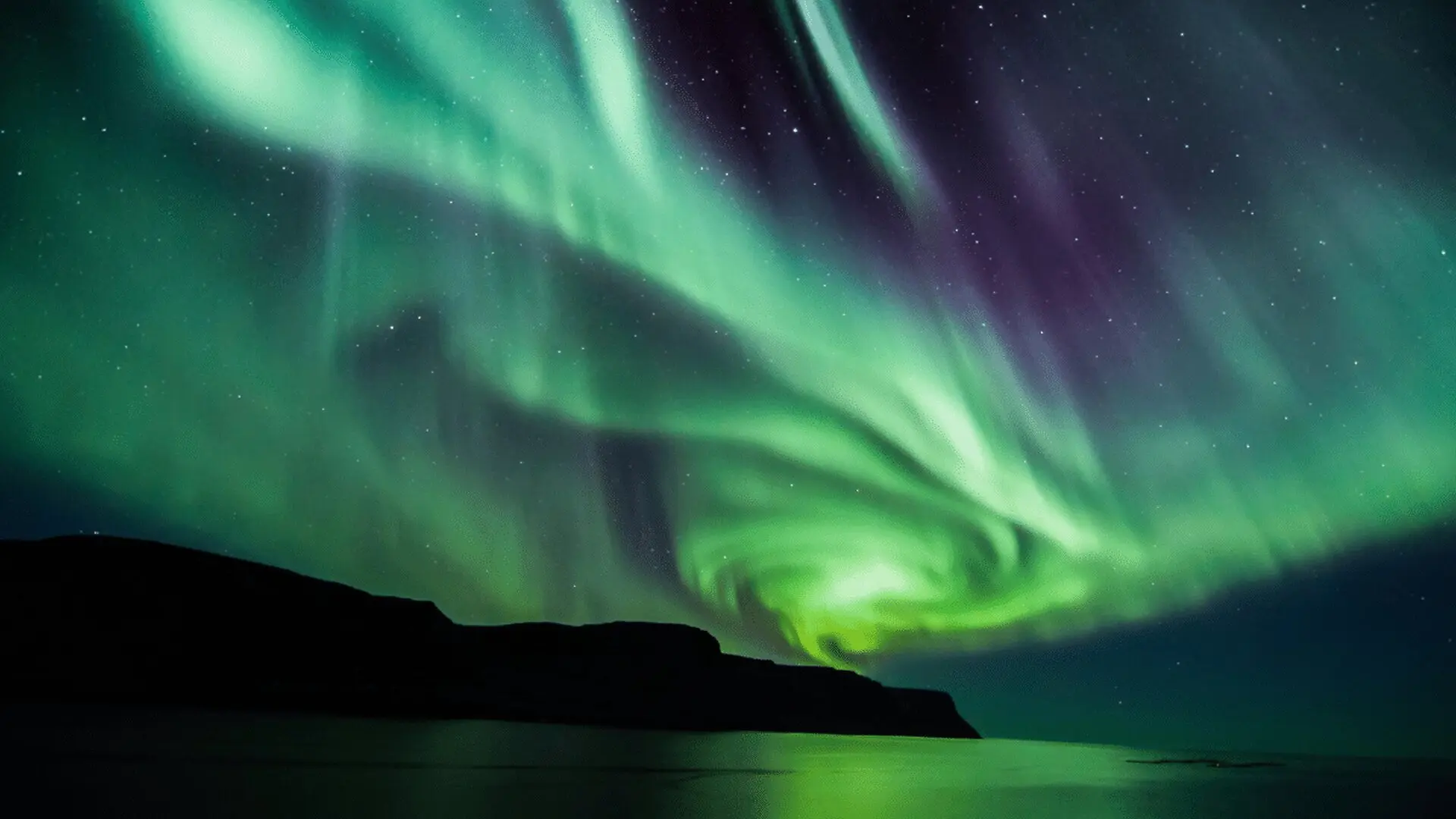
A chain of powerful coronal mass ejections from the Sun is slated to strike Earth during the Fourth of July weekend, setting the stage for a geomagnetic storm that could reach G3 (Strong) levels. NOAA’s Space Weather Prediction Center warns that, if cloud cover clears, residents in as many as 26 states may be treated to a rare northern‑light display.
Solar Bursts on a Direct Collision Course
The forthcoming aurora is being driven by multiple coronal mass ejections—enormous bubbles of magnetized plasma hurled into space during periods of heightened solar activity. Traveling at several thousand kilometres per second, these eruptions are expected to encounter Earth’s magnetic field between July 3 and July 4, potentially energising the planet’s upper atmosphere.
When the solar plasma interacts strongly with the magnetosphere, charged particles are guided toward the polar regions where they excite atmospheric gases, producing the vivid curtains of light known as the aurora borealis. NOAA predicts geomagnetic conditions could vary from G1 to G3, depending on how the incoming material couples with Earth’s field. Scientists continue to monitor the situation as the solar clouds close in.
EXTENDED WARNING: Geomagnetic K-index of 5 expected
— NOAA Space Weather Prediction Center (@NWSSWPC) July 4, 2026
Extension to Serial Number: 2247
Valid From: 2026 Jul 04 0100 UTC
Now Valid Until: 2026 Jul 04 2359 UTC
Warning Condition: Persistence
NOAA Scale: G1 – Minor
Issue Time: 2026 Jul 04 1412 UTC https://t.co/ZbtuNtJdza
Potential Viewing Belt Extends Deep Into the U.S.
Under the most intense storm scenarios, the aurora could be seen far beyond its usual high‑latitude confines. The greatest likelihood lies in northern states bordering Canada—Montana, North Dakota, Minnesota, northern Wisconsin, Michigan and Maine. If geomagnetic activity intensifies, the glow may reach Washington, Idaho, South Dakota, Nebraska, Iowa, Illinois, Indiana, Ohio, Pennsylvania, New York, Vermont and New Hampshire. A brief surge to G3 could also bring the lights into parts of Kansas, Missouri, Kentucky, West Virginia, Virginia and Maryland, provided observers have dark skies.
Nighttime Conditions Pose Challenges
Even with elevated magnetic activity, spotting the aurora is not guaranteed. The summer solstice keeps nights short across much of the northern United States, limiting darkness. A waning Strawberry Moon will add extra brightness after midnight, making faint auroral arcs harder to discern.
Experts advise heading to locations with an unobstructed view of the northern horizon and minimal artificial light. Long‑exposure photography on smartphones or dedicated cameras can reveal colours and structures that the naked eye may miss, increasing the chances of capturing a subtle display.
Solar Cycle Still Producing Notable Space Weather
Although the Sun has moved past the peak of its current 11‑year cycle, activity remains high enough to generate significant geomagnetic storms. Researchers are watching the orientation of the interplanetary magnetic field, especially the Bz component, because a sustained southward direction allows solar particles to couple more efficiently with Earth’s magnetosphere, boosting auroral intensity. Ongoing satellite observations will refine forecasts as the situation evolves.
A Celestial Companion to Fourth‑of‑July Fireworks
While fireworks will light up the night sky for Independence Day celebrations, a solar‑driven light show could appear above the northern horizon. If the incoming storms arrive with sufficient strength and the weather cooperates, millions of Americans might witness one of the most uncommon spectacles visible from the continental United States—a reminder that events on the Sun, 150 million kilometres away, can paint the night sky just days later.
This article has been fact checked for accuracy, with information verified against reputable sources. Learn more about us and our editorial process.
Last reviewed on .
Article history
- Latest version
Reference(s)
- “http://bit.ly/3wVgAKH.” <https://t.co/ZbtuNtJdza>.
Cite this page:
- Posted by Zara Tariq