Solar Storm Surge Could Light Up US Skies With Auroras Around July 4
Multiple coronal mass ejections head for Earth, promising moderate geomagnetic storms that could push the aurora borealis unusually far south this weekend.
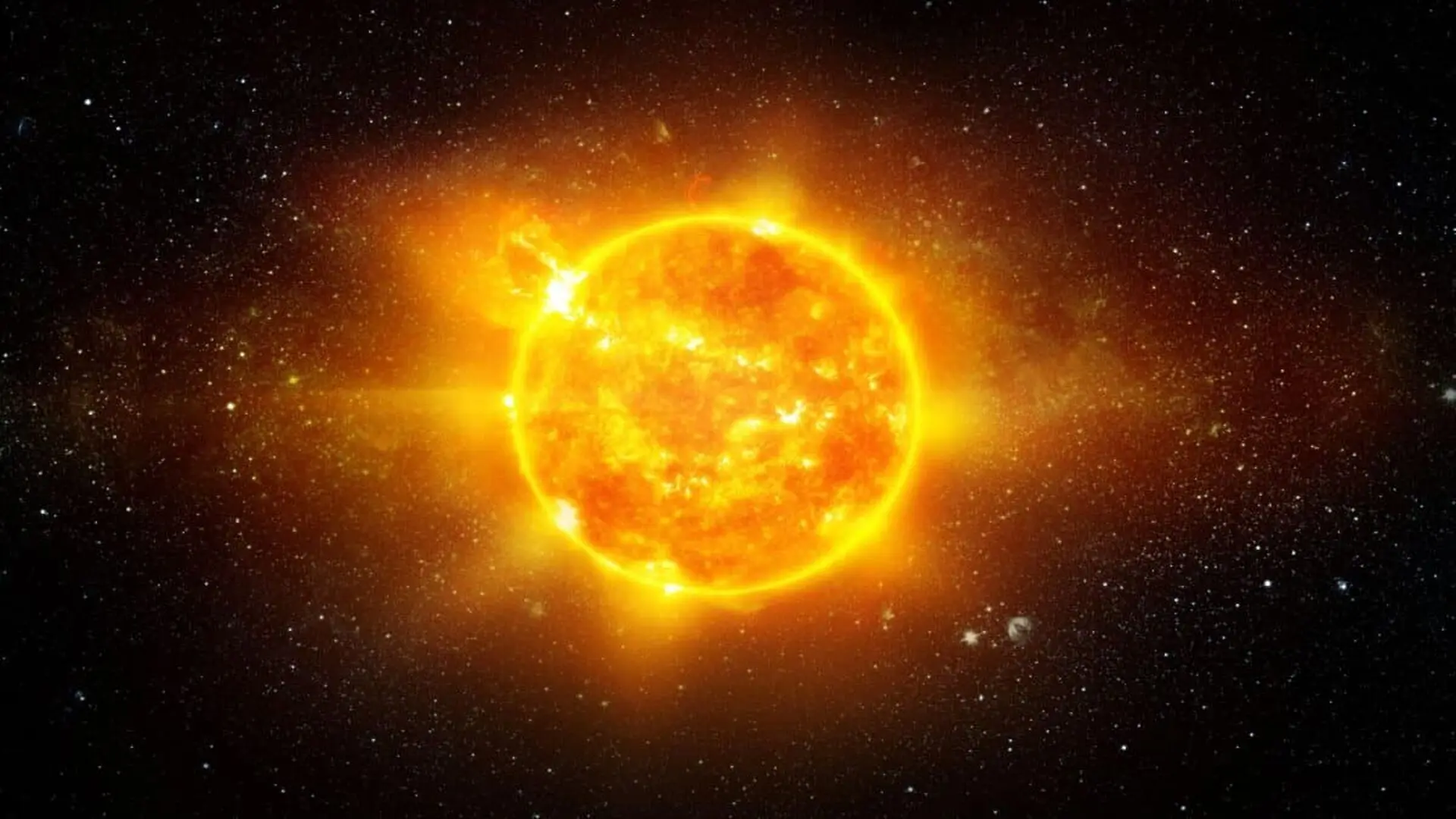
A powerful X1.1 solar flare erupted on June 30, setting off a rapid series of M‑class eruptions that have kept the Sun unusually active. The Space Weather Prediction Center reported that most of the follow‑up flares originated from active region 4479, sustaining heightened solar emissions throughout the next day.
The most intense burst of the sequence, an M8.7 flare, emerged from a different region on July 1. Solar physicist Tamitha Skov likened the Sun’s behavior to a “machine‑gun,” noting that more than five solar storms are now racing toward Earth.
Solar Surge Generates Multiple Earth‑Targeted CMEs
Forecasting the exact impact times is challenging because the eruptions occurred in quick succession. According to the Space Weather Prediction Center’s discussion, the July 1 flare was linked to a slow‑moving coronal mass ejection (CME) that showed an Earth‑directed component in coronagraph images later that afternoon.
A second CME appeared early on July 2, tied to a long‑duration M4.2 flare. Computer models indicate that this later ejection will overtake the earlier one, with a combined arrival window projected for July 5‑6.
The Sun has really woken up over the past 48 hours, producing multiple solar flares (including an “X-class” event), across 4 different regions. Further large flares are likely in the coming days! pic.twitter.com/DLK0hQg7Ua
— Dr. Ryan French (@RyanJFrench) July 1, 2026
The CME tied to the June 30 X‑class flare remains the dominant factor for imminent space‑weather effects. Recent 24‑hour data show only modest disturbances, with the interplanetary magnetic field weakening from 15 to 9 nanotesla and solar‑wind speeds hovering around 400 km s⁻¹. Forecasts predict a sharp rise in solar‑wind activity beginning early on July 3 and lasting into July 4, though an earlier arrival late on July 2 cannot be ruled out.
Northern Lights Expected to Shine Over Much of the U.S.
NOAA’s geomagnetic forecast anticipates a peak three‑hour Kp index of 5.67 between July 2 and July 4, corresponding to a G2 (moderate) storm. The most intense period is projected for 00:00‑03:00 UTC on July 4, with G1‑level conditions likely throughout July 3.
Under G2 circumstances, the NOAA Space Weather Scales note that auroral displays have historically been visible as far south as New York and Idaho. Power‑grid operators may see voltage alerts, and satellite crews could encounter minor drag and attitude‑control challenges, though no major outages are expected. Skov highlighted that at least three of the incoming storms should provide solid opportunities for visible auroras, provided the skies remain dark and clear.
The Space Weather Prediction Center’s outlook suggests that solar activity will stay at moderate levels for the next several days, with a small probability of additional X‑class flares from region 4479. Minor radio blackouts and low‑level solar radiation storms also remain possible as active regions rotate into a more Earth‑facing orientation.
For aurora enthusiasts, the timing presents both opportunities and challenges. Early‑July nights are short in the northern hemisphere, and lingering twilight may obscure faint displays even where geomagnetic conditions are favorable. Nevertheless, the convergence of several CMEs during the July 4 holiday window gives forecasters confidence that enhanced auroral activity could accompany the traditional fireworks displays.
This article has been fact checked for accuracy, with information verified against reputable sources. Learn more about us and our editorial process.
Last reviewed on .
Article history
- Latest version
Reference(s)
- “Forecast Discussion | NOAA / NWS Space Weather Prediction Center.” <https://www.spaceweather.gov/products/forecast-discussion>.
- “https://twitter.com/RyanJFrench/status/2072356808178483384/video/1.” <https://t.co/DLK0hQg7Ua>.
Cite this page:
- Posted by Zara Tariq