Silverpit Crater Confirmed As 160‑Metre Asteroid Impact That Triggered 100‑Metre Tsunami
New evidence reveals the mysterious North Sea crater was formed by a cataclysmic event millions of years ago, reshaping our view of Earth’s deep past.
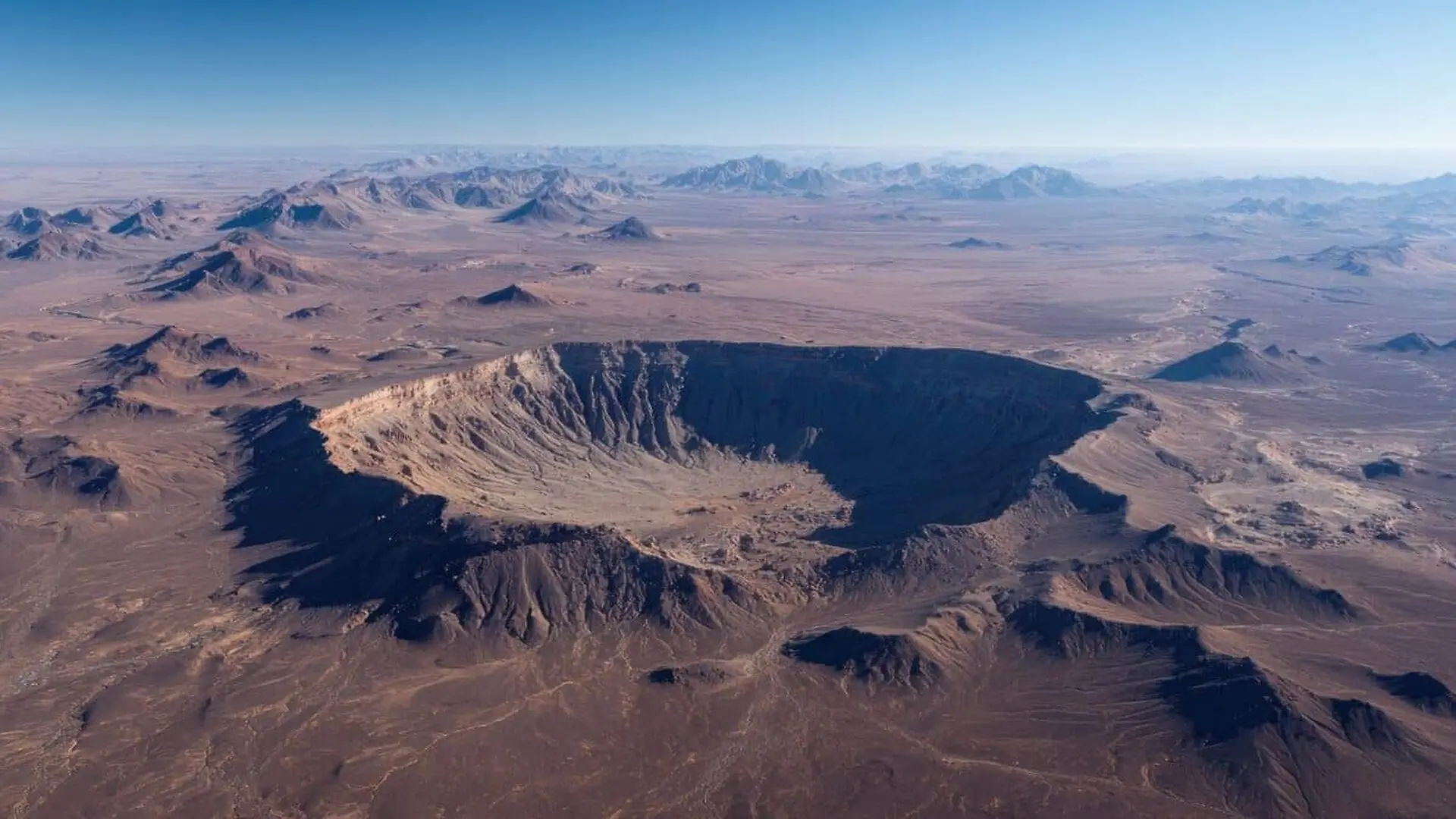
Scientists have finally solved the long‑standing puzzle beneath the North Sea floor. New data show that the Silverpit Crater, first identified in 2002 about 80 miles off Yorkshire, was produced by an asteroid impact that occurred roughly 43‑46 million years ago.
The finding ends a controversy that has split geologists for more than twenty years. While some experts argued that the depression resulted from the movement of subsurface salt layers or a volcanic collapse, others pointed to features typical of a high‑velocity impact. A research team from Heriot‑Watt University says that a combination of updated seismic surveys, petrographic analysis, and numerical simulations now provides decisive proof of an impact origin.
Two‑Decade Rift Over the Crater’s Genesis
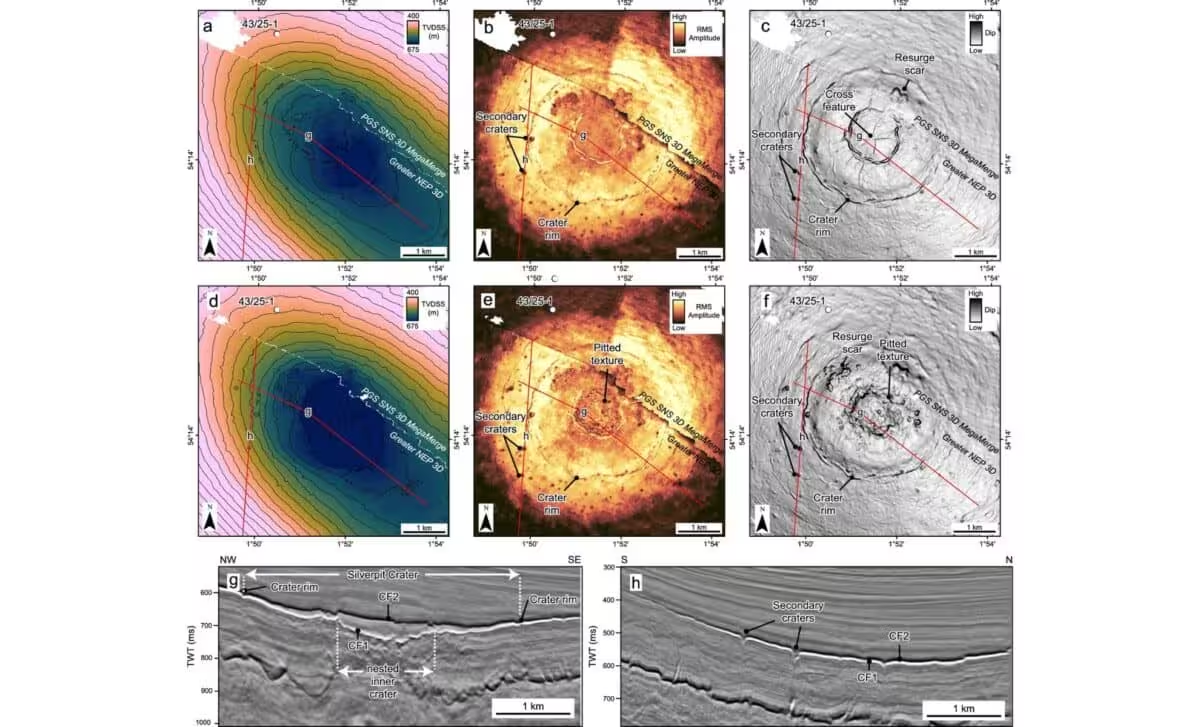
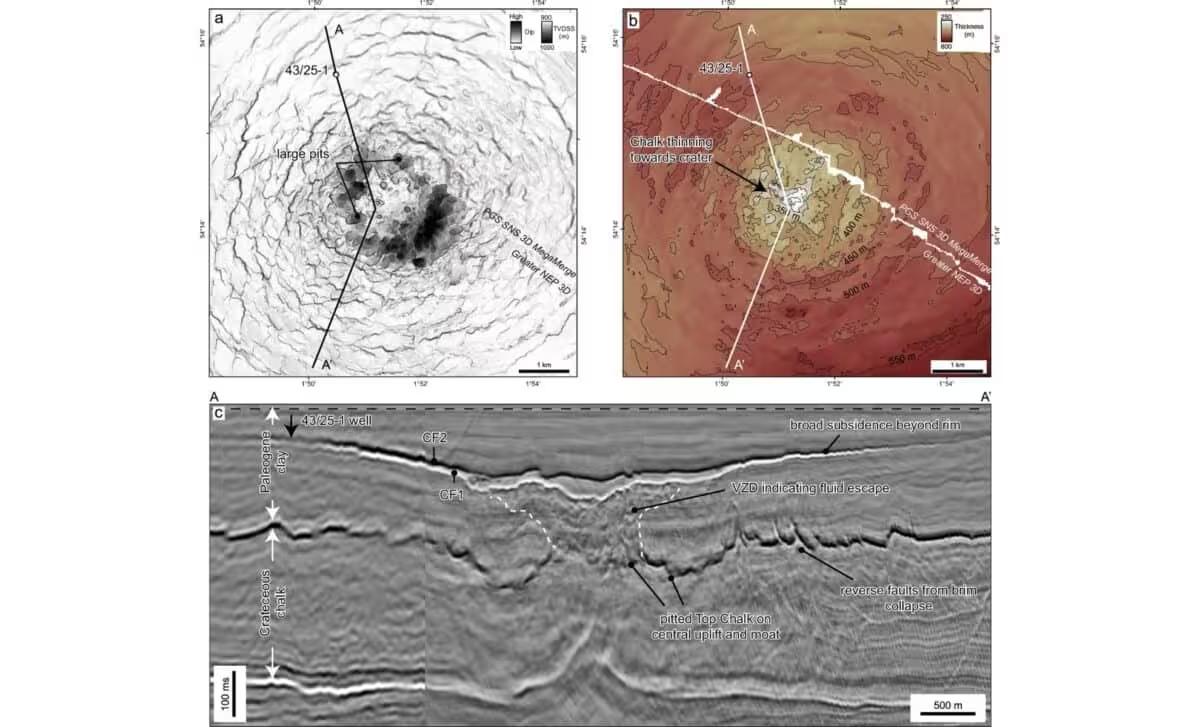
Located about 700 metres beneath the seabed, the Silverpit structure measures roughly three kilometres in diameter and is encircled by an extensive fault system that stretches another 20 kilometres. Since its discovery, the circular outline and central uplift have sparked debate over whether they stem from a meteor strike or from unrelated tectonic processes.
The dispute grew so intense that a formal poll was conducted in 2009, with the majority of participants then dismissing the impact hypothesis. Dr. Uisdean Nicholson of Heriot‑Watt University, who led the new investigation featured in Nature Communications, explains that the latest seismic images reveal the crater’s internal architecture in unprecedented detail. His group also identified shocked quartz and feldspar grains in samples retrieved from a nearby oil well—minerals that form only under the extreme pressures generated by an extraterrestrial impact.
A 160‑Metre Space Rock and a Gigantic Wave
The analysis estimates that the impactor was about 160 metres across and struck the seabed from the west at a relatively shallow angle. According to Nicholson, the collision would have launched a column of rock and water more than a kilometre high within minutes, followed by a collapse that generated a tsunami exceeding 100 metres in height.
Professor Gareth Collins of Imperial College London, who developed the computational models that simulate the event, says the impact scenario remains the most parsimonious explanation for the observed features. He adds that the new data open avenues for investigating how such subterranean impacts remodel planetary crusts—a process that is difficult to observe elsewhere in the solar system.
Impact structures of this scale are exceptionally scarce on Earth. Roughly 200 confirmed craters are known on continents, and only about 33 have been documented beneath oceans, as plate tectonics and erosion tend to erase ancient signatures. Nicholson describes Silverpit as an unusually well‑preserved example that can illuminate both the Earth’s impact history and the potential hazards of future collisions.
The confirmation places Silverpit alongside famous impact sites such as Mexico’s Chicxulub Crater, linked to the mass extinction of non‑avian dinosaurs, and the recently verified Nadir Crater off West Africa. With the debate finally settled, researchers anticipate that the site will serve as a natural laboratory for exploring how asteroid impacts reshape planetary surfaces across the solar system.
This article has been fact checked for accuracy, with information verified against reputable sources. Learn more about us and our editorial process.
Last reviewed on .
Article history
- Latest version
Reference(s)
- “Uisdean Nicholson.” Heriot-Watt Research Portal <https://researchportal.hw.ac.uk/en/persons/uisdean-nicholson/>.
- Nicholson, Uisdean. “Multiple lines of evidence for a hypervelocity impact origin for the Silverpit Crater - Nature Communications.”, vol. 16, no. 1, September 20, 2025, pp. 8312 Nature, doi: 10.1038/s41467-025-63985-z. <https://www.nature.com/articles/s41467-025-63985-z>.
- “Discovery.” <https://profiles.imperial.ac.uk/g.collins>.
Cite this page:
- Posted by Zara Tariq