Rare Gold Ring With Blue Stone Discovered Just Inches Under Norway’s Medieval Center
Experts date the artifact to the 9th‑11th centuries, noting its design reflects early medieval artistic influences that reached Norway.

Archaeologists working in Tønsberg’s medieval quarter uncovered a striking gold ring while preparing the site for storm‑water and drainage upgrades. The Norwegian Institute for Cultural Heritage Research reports that the piece was located just three inches beneath the ground, a depth that made the find both sudden and extraordinary.
The object draws interest for its intricate goldwork, filigree detailing and a deep‑blue central stone, offering scholars fresh clues about the material culture of one of Norway’s earliest towns.
Surprise Find Unearthed in Norway’s Historic Hub
In 2025, archaeologist Linda Asheim identified the ring during excavations in Tønsberg. Reflecting on the moment, she recounted that her immediate reaction was, “S***, is that gold?” She described feeling “completely shaken” and even asked nearby construction crews if they were playing a prank. Asheim later joked that the discovery marked the high point of her archaeological career.
The Norwegian Institute for Cultural Heritage Research notes that no gold ring had been recorded in Tønsberg for fifteen years prior. Project manager Hanne Ekstrom Jordahl called the artifact “a fantastically beautiful and rare specimen.”
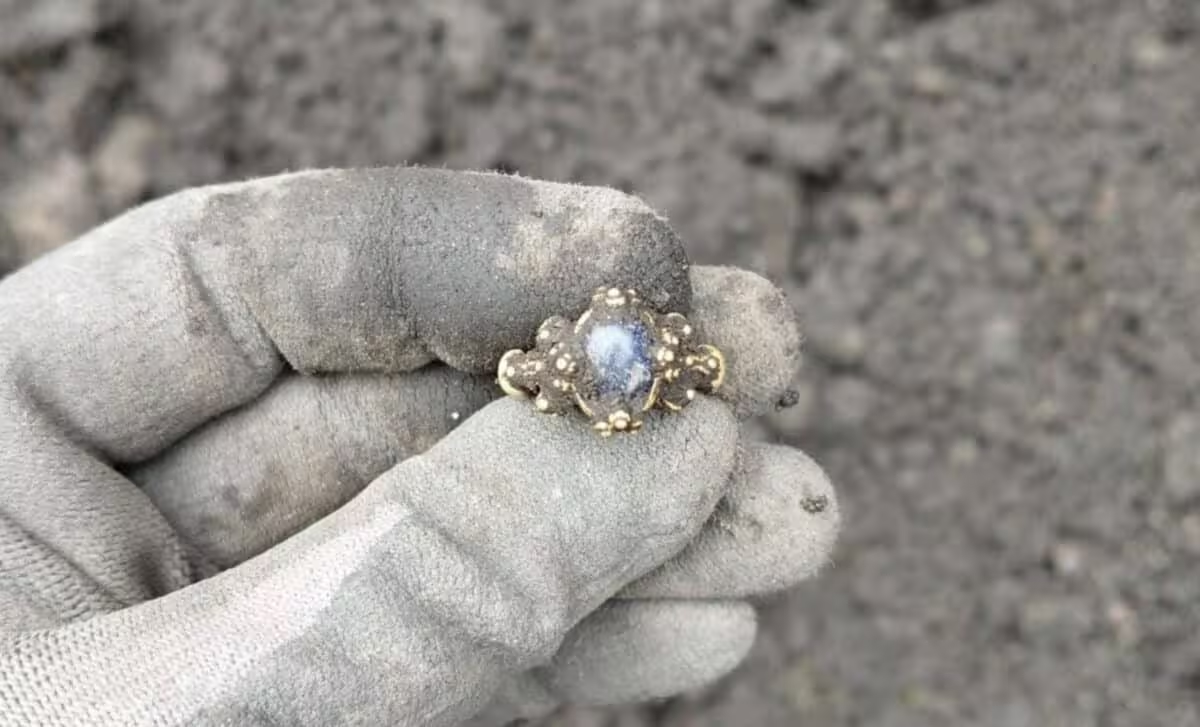
The ring was uncovered beneath a layer containing a spruce twig dated between 1167 and 1269. Contextual analysis suggests the jewelry itself originates from the 9th to 11th centuries.
Design Reflects Early Medieval Goldsmithing
The piece showcases filigree work, where fine gold strands are twisted, bent and fused into ornamental motifs. Tiny gold granules are soldered onto the surface, and an oval deep‑blue stone occupies the central setting.
Marianne Vedeler, a professor at the Museum of Cultural History, University of Oslo, told Popular Mechanics that the spiral patterns at the band’s top link the ring to early medieval styles. She explained that the combination of filigree and granulation likely arrived in Norway via Byzantine influences and Carolingian gold‑smith traditions.
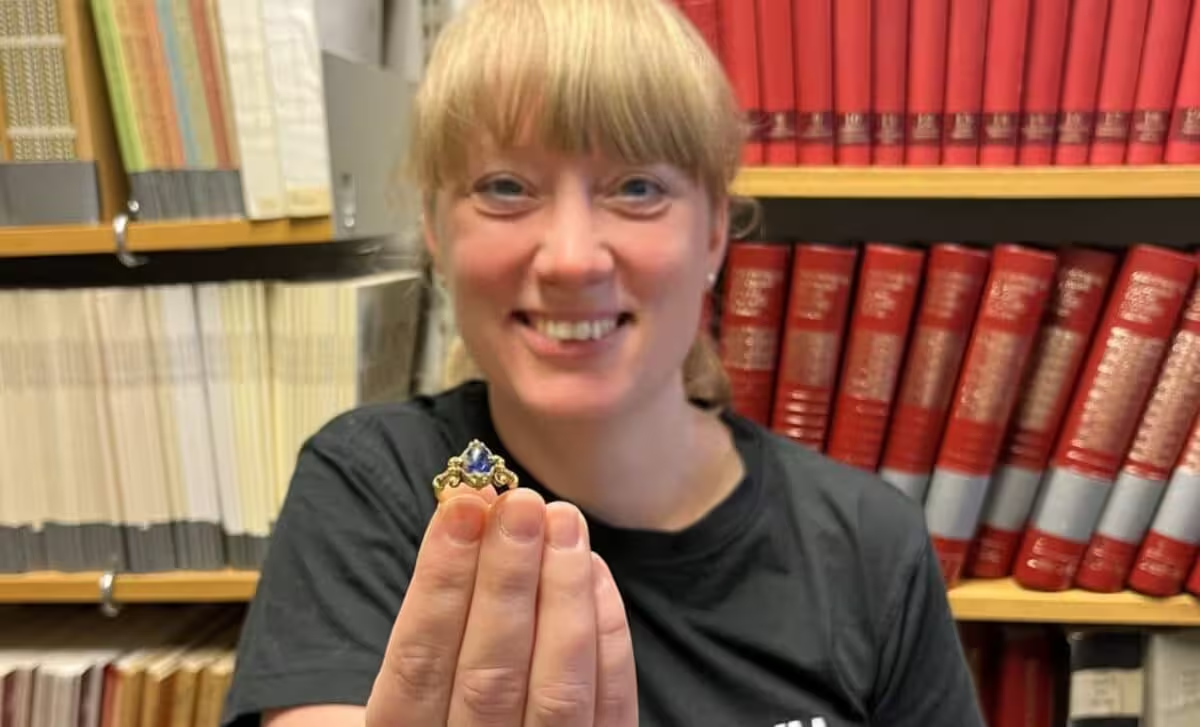
Vedeler added that similar spiral‑decorated rings have been recovered in England and dated to the 9th and early 10th centuries, while two comparable Danish examples with stone settings and granulation have been placed in the 11th‑century timeframe.
Symbolic Significance and Medieval Superstitions
Scientific assessment suggests the blue stone is likely glass fashioned to mimic a sapphire rather than a genuine gem. This imitation would have preserved the visual impact of a precious jewel while reducing cost.

Beyond its aesthetic appeal, the ring likely signified status and wealth. Its fine workmanship and gold composition point to a high‑ranking owner, while the modest dimensions suggest it was intended for a female wearer.
Tønsberg, founded in the ninth century near the royal fortress of Tunsberghus, historically hosted royal and ecclesiastical figures. The ongoing archaeological project runs alongside upgrades to the city’s drainage and storm‑water systems, aimed at curbing raw sewage discharge during the region’s increasingly frequent floods.
This article has been fact checked for accuracy, with information verified against reputable sources. Learn more about us and our editorial process.
Last reviewed on .
Article history
- Latest version
Reference(s)
- Newcomb, Tim. “Archaeologists Uncovered a Rare Medieval Ring—With Mystical Implications.”, June 22, 2026 Popular Mechanics <https://www.popularmechanics.com/science/archaeology/a71663615/rare-medieval-ring-found/>.
Cite this page:
- Posted by Zara Tariq